Tuesday Tip

Tuesday Tip: Vitamin D and COVID-19

Tuesday Tip: Vitamin D and COVID-19 🦠

There are mixed messages in the media about the link between Covid 19 and Vitamin D so I thought it was worth a quick overview.

Vitamin D is a fat soluble steroid hormone and is important for bone health, and regulation of the immune system. Vitamin D deficiency has been linked to numerous health problems including muscle weakness, various cancers, MS, Asthma, TB, heart disease, type I and II diabetes, depression, Alzheimers etc. Very few foods naturally contain vitamin D, so sun exposure is the main way that we obtain this vitamin. Even before the pandemic the recommendation was that people should consider taking vitamin D supplements between October and March (darker months) as there is a high rate of deficiency in the UK.

Many studies have shown that vitamin D can reduce the risk of getting acute viral respiratory tract infections and pneumonia, and can help with common colds and flu. So what about COVID-19? Studies are limited but a recent study found that 82.2% of patients hospitalized with COVID-19 were deficient in vitamin D. This was compared to the healthy control group of people without COVID-19, where 47.2% of people were vitamin D deficient. Studies have shown a correlation between lower vitamin D levels and higher levels of COVID-19 cases in the population. Some studies have also shown a correlation between vitamin D deficiency and COVID-19 severity and mortality. There are now 30 or so studies showing that optimal blood levels of vitamin D reduces the risk of covid-19 risk of infection, risk of severe disease and risk of dying. Many researchers now regard the evidence as ‘overwhelming’.

More research is needed, but there is little to be lost in supplementing with Vitamin D. Vitamin D supplements are inexpensive and have low risk of toxicity but do bring significant benefits, not just in relation to COVID-19, but to overall health and well being. So what dosage should you take? You need a minimum of 10 micrograms a day (or 400 IU (international Units)), and the maximum daily safe dose is 100 micrograms (4000 IU), so something in between is a good place to aim for.

Happy Tuesday 🤗

Xx
Nutrition and Calorie Tips

Just a walk…

Just a walk… 🚶🏼‍♀️

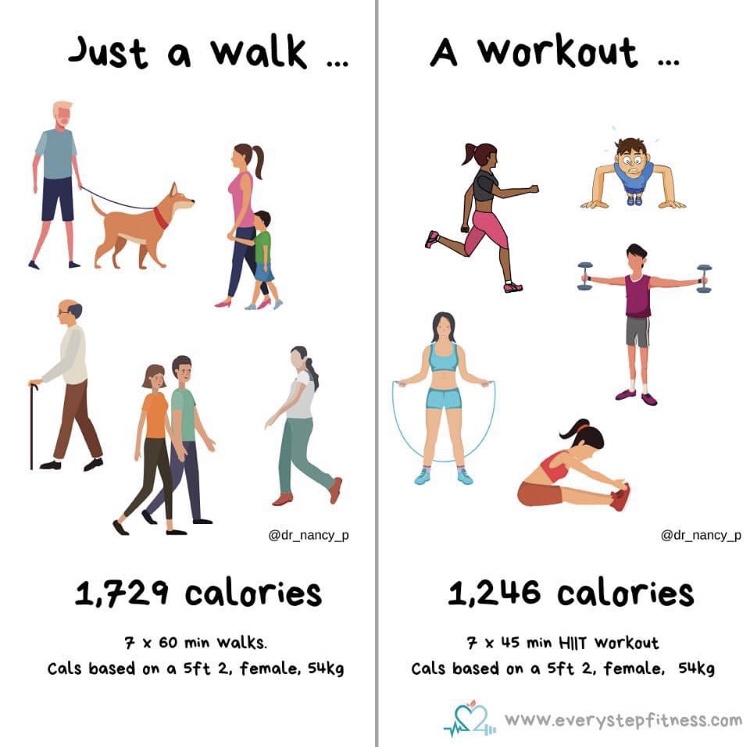
I shared this back in the summer but as this second lockdown progresses I’ve noticed a lot of my clients are beating themselves up over not doing “enough exercise”. In many cases they’ve been trying to work from home again, and run the household etc. Some days they’re managing to fit in a workout, others they’re not and they’re feeling guilty about it, and worrying about the loss of those activity calories they “should” be burning.

During this time one thing most people are can manage is to walk more, making the most of the allowed outdoor exercise. This is often not viewed as something which contributes to those activity calories, but it’s actually doing more good.

It’s natural to associate cardio workouts with burning loads of calories; you feel sweaty and breathless so you feel like you’re working hard. A 45 min HIIT for example is very tough and regardless how hard you’re working you’re going to be feeling it. However, it may be hard to motivate yourself to commit to a 45 min session at home when there are so many other things shouting for your attention (children (literally!), work, house chores etc). In contrast an hour’s walk doesn’t feel particularly strenuous, it may be something you do anyway to walk the dog, get the shopping or get out the house for bit, and it in fact burns more calories than the workouts.

I did this experiment on myself back in the summer so the numbers will vary according to your age, height, weight and fitness levels but the principal is the same (independent studies show this too). A one hour walk a day will burn significantly more calories than a 45 min HIIT workout. So if you’re not managing a workout every day – don’t stress, especially if you’re managing to go for a walk. In addition 7 days of HIIT workouts is actually NOT a good idea – studies have shown these workouts impact negatively on sleep if you’re doing too many a week. Obviously there are cardiovascular and health benefits to the HIIT workouts which are equally as important as calories burnt so don’t ditch them completely but my point is that you shouldn’t feel guilty if all you manage is a walk on some days.

🤗

Xx

Nutrition and Calorie Tips

Healthy alternative.. or what you actually wanted?

Healthy alternative.. or what you actually wanted? 🍫 🥜

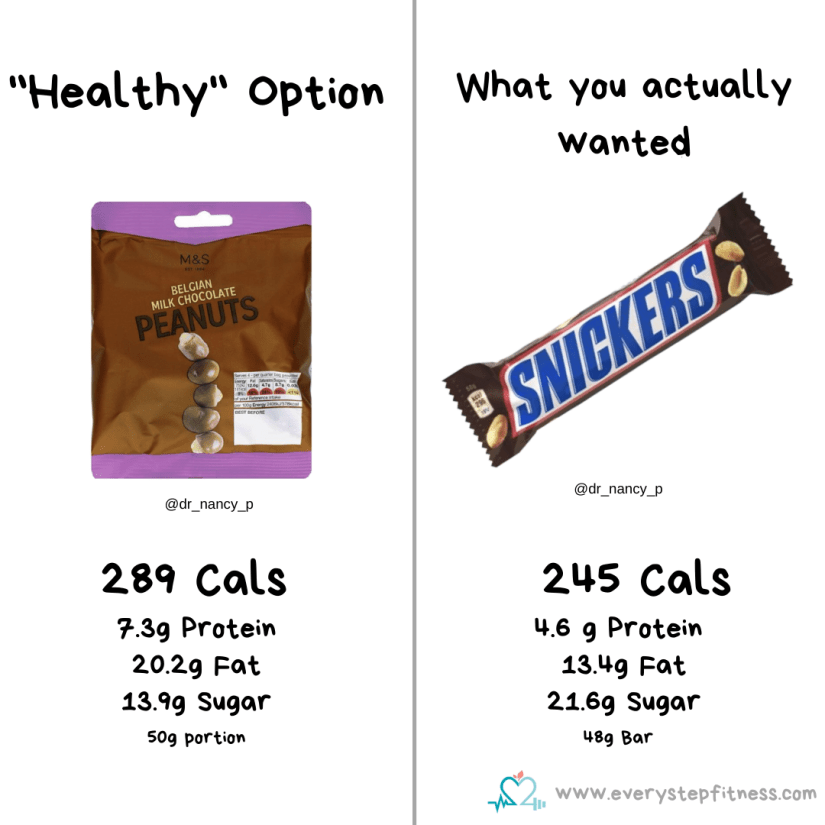
When trying to lose weight people will often go out of their way to force themselves to choose a “healthy” alternative. If you really fancy a snickers bar you may think you’re better off choosing chocolate covered peanuts instead (nuts are healthy right)? There are nutritional differences between the two options – the chocolate peanuts have higher protein and lower sugar levels, but also higher fat and overall calories.

Both these snacks contain relatively high levels of sugar and significant amounts of fat. The peanuts may have more “good” fats but when it comes down to it the source of that fat makes very little difference to how your body processes it – especially in the context of this example. Both taste good, but if you are really craving a snickers and instead force yourself to have the chocolate peanuts you’re taking in more calories. Now that’s fine if that’s where it ends, but often that craving will still be there. Also the peanuts come in a larger bag so you may not stop at the 50g portion, and end up with the whole bag which is 578 calories! The snickers on the other hand may also give you an emotional boost, as well as an energy one.

So if you’re choosing the chocolate nuts in an effort to lose weight, then think again. If you’re choosing them because you like them then brilliant – keep having them. If you fancy a snickers then have it!

There are no good or bad foods – all foods can be accommodated within a balanced diet. Being aware of the calories in different foods empowers you to make that choice.

🤗

Xx

Tuesday Tip

Tuesday Tip: Boost your B Vits

Tuesday Tip: Boost your B vits 🥦🥚🍗

As the nights get darker and the temperatures drop here it’s easy for our energy levels to take a nose dive. Couple this with the stress many will experience with the new lockdown and it’s easy for our health to suffer. Many studies have shown how important B vitamins are in helping to boost and maintain energy levels, and manage stress. All the B vitamins including B1, B3, B6 and B12 are involved to some degree in helping the body release energy from the food we eat and keeping the nervous system functioning. Many are also water soluble and excreted by the body which means you have to consume them regularly to say healthy. So when energy is low and stress levels are high adding some extra B to your diet will help to give you a lift.

Great sources of B vitamins include dark leafy greens, poultry, salmon, eggs, almonds, whole grains, soya beans, fresh fruit etc So grab a handful of greens and whack them in your morning smoothie, or snack on some almonds, or have an omelette for brekkie. Or you could consider taking a good B-complex supplement. This is going to help support you and get you feeling full of beans again! ✨👯

Happy Tuesday! 🤗

xx

Nutrition and Calorie Tips

Protein drink vs “just a” drink….

Protein drink vs “just a” drink…. 🥛

There are lots of brands out that that are using the marketing power of “protein” to sell their products. The unspoken idea is that protein = better or healthier etc. The reasoning behind this is the fact that increased protein can help with improved satiety (feelings of fullness) so CAN help to prevent overeating. Also those working out may want to focus on protein to help with muscle building. For most people a balanced diet will contain enough protein so you don’t need to go out of your way to take in extra protein unless you’re a bodybuilder or professional athlete. However you may still wish to focus on higher protein foods and snacks to help keep you feeling full.

So you may well see this protein fruit drink and think it’s a good option. However, it isn’t actually particularly high in protein, with only 2.2g per 100ml and it also has a significant amount of sugar (9.4g).

In contrast the strawberry milk probably wouldn’t be perceived as “healthy” nor a high protein drink. Yet the strawberry milk contains more protein (3.6g) for very similar calories, and contains less sugar. In addition the strawberry milk is over 3 times cheaper!

Neither are particularly “healthy” and neither would be classed as high protein. In terms of weight loss both will probably do the same basic job – they are very similar calorie wise and that’s what matters most. So don’t be swayed by the “protein” label – actually check the nutritional info and then choose the drink you want!

Enjoy

🤗

Xx