Nutrition and Calorie Tips

Menopause misinformation…

Menopause misinformation… 💁🏼‍♀️

Menopause Misinformation Is Out of Control. It’s the latest trend – everyone is suddenly a menopause specialist. Social media fitness ‘experts’ are overcomplicating menopause, health, and fitness, and using women’s vulnerability to sell unnecessary products.

What does the science actually say?

  • Hormone therapy may help with symptoms, but it won’t build muscle. Lift weights, but not necessarily heavy ones. Resistance training to failure works, whether that’s heavy with low reps or light with high reps.
  • All exercise is good for health. Cardio remains important during and after menopause. Don’t skip it in favor of just lifting
  • Weighted vests? Not needed unless you like them. There’s no solid evidence they help build muscle or bone just by wearing them while walking which is the current trend.
  • Calorie deficits still work. Menopause doesn’t break biology. Your calorie requirement may change, but fat loss still comes down to a calorie deficit consistently, over time, and patience.
  • Glucose and cortisol spikes are normal and necessary if you’re healthy. You don’t need to monitor or control them.
  • Your liver and kidneys detox your body. No magic food, drink, or cleanse is needed. Eat nutritious meals with enough protein and fiber.
  • Menopause supplements? They’re unregulated and untested and most don’t do much. Many have too little of anything useful to matter.
  • Biohacks like cold plunges and red light therapy sound exciting, but there’s no strong scientific backing. Save your money

You’re not broken. Your body still responds to exercise before, during, and after menopause. Pick a routine you’ll stick with. Fat loss and muscle gain take time so stay patient.
There’s no magic diet, workout, or supplement. If a message sounds overly complicated or too good to be true, that’s a red flag. And usually the person giving that message is selling something.

The boring basics work. Consistency is key. Patience is paramount.
🤗
Xx

Tuesday Tip

Tuesday Tip: Common mistakes that prevent weight loss

Tuesday Tip: Common mistakes that prevent weight loss 🤔

Here are some of the common mistakes I see people make with their diet/nutrition that may be preventing them from losing weight/fat.

#1 Thinking that there Is a “perfect” diet.

There is no ideal diet that you can follow to lose weight. You have to learn about calories and nutrition, go through some trial and error and figure out what works best for you.

#2 Trying to do too much too quickly

Many people try to completely overhaul their diet overnight. Small, simple, step by step changes that can be sustained over time often lead to better long term results.

#3 Eating too little

Now just to clarify – I do not mean that you can ‘hold on to fat’ if you under-eat. If you’re in a calorie deficit you will lose weight/fat (consider the extreme case of some eating disorders etc). But you can hinder your progress by eating too little because most people can only under eat for so long before the mind and body fight back and they binge. A lot of people are stuck In a cycle of bingeing and restricting because they are eating too little Instead of properly nourishing themselves. So it’s about finding a sustainable calorie deficit.

#4 Not being willing to make sacrifices.

Sorry but if you aren’t happy at the weight you are, eating and drinking as you are, then you are going to have to make changes and that may mean sacrificing some of the things you currently enjoy consuming.

#5 Too much variety

Finding a few go-to meal options and sticking to them consistently helps simplify your nutrition choices and make grocery shopping and food prep easier. Variety is great, but don’t overdo It to the point that eating at home becomes a huge chore.

#6 Expecting results too quickly

You can’t expect to change your diet and see changes In a week or a month. It took longer than that to gain the weight and it will take longer to lose it. Changes take time so be patient.

#7 Inconsistency

It may be boring but consistency is key. You can’t expect results if every weekend you have a massive blowout. You need to find a happy medium if you want to reach your goals.

Happy Tuesday 🤗xx

Nutrition and Calorie Tips

‘Diet’ red flags

‘Diet’ red flags 🚩

Diet culture is full of ‘solutions’ for weight loss. People pray on people’s desire for ‘guaranteed’ fixes and social media is FULL of “guaranteed” ways you can lose weight/fat. You’ll see plenty of self proclaimed fitness/health/well being “coaches” and influencers trying to suggest you really need to do whatever it is they’re selling.

There are a number of red flags to look out for when thinking about ‘dieting’.

Replacing whole foods with Juice Cleanses / Supplements or going on a ‘detox’ can result in fewer calories and rapid initial water loss and a possible calorie deficit from meal replacement. Supplements may also provide a laxative effect or promote excessive bowel movements etc which result in water loss. None of which are sustainable or healthy long term aproaches
to weight loss.

Labelling foods as ‘good’ or ‘bad’, or having ‘cheat’ meals are other terms to be wary of.
No food is good or bad – all foods are good, it’s just about quantity. Food and morality have nothing to do with each other and we shouldn’t attach guilt to eating certain types of food which we enjoy.

Excluding whole food groups (carbs/sugar/ etc) is also unnecessary and unsustainable. Unless you have a medically diagnoses reason to exclude a food then all foods can fit into a healthy diet.

Labelling foods and taking about diets and foods in these ways that cast judgment just leads to increased anxiety and confusion. Allow yourself food freedom, remove the guilt from certain foods and accept that all foods are permitted – it will lead to a far healthier relationship with food and a far happier path to weight loss. It also means you can save your pennies and avoid paying people for these products which make promises they can’t deliver.

🤗
xx

Nutrition and Calorie Tips

‘One Medium Avocado…’

‘One Medium Avocado…’ 🥑

If you like them then avocados make a great addition to your meals. They’re full of unsaturated fats, high in fibre and vitamins C, E and K. They’re also high in magnesium and folate.

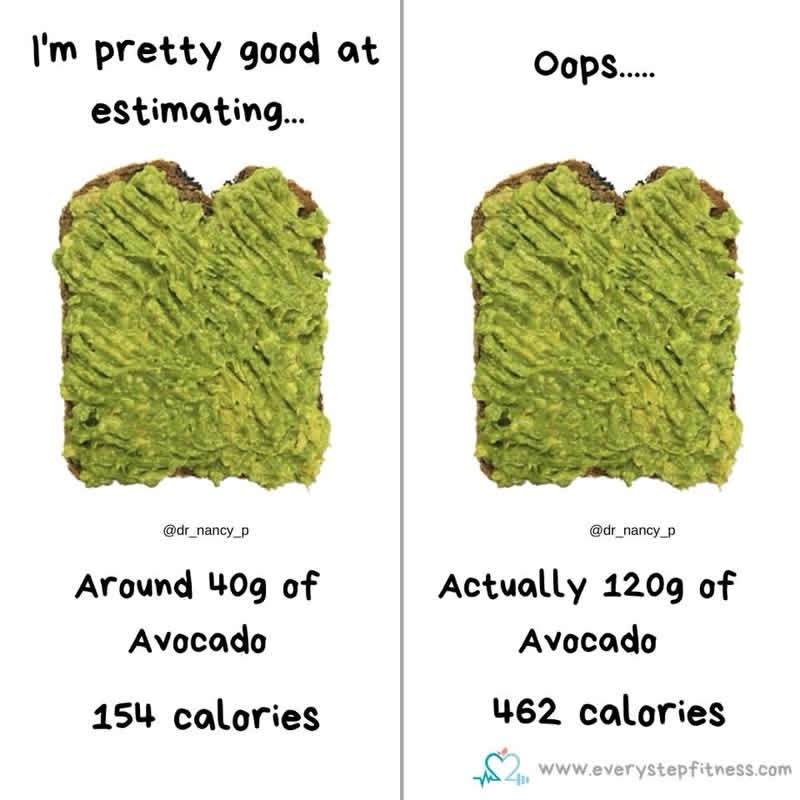
However, if you are trying to lose fat/weight and watching those cals then it’s worth just being aware that avocados can pack a punch when it comes to calories and they also vary significantly. If you’re using a calorie tracking app you’ll often find entries like ‘one medium avocado’ or ‘half a medium avocado ’ with the associated calories. You’d probably just enter that and assume you were pretty much right. But what exactly is ‘medium’? Medium to me may be small to someone else and the calorie differences are pretty significant!

The difference between these two avocados is nearly 100g and both are sold as ‘medium avocados’ – not small or large. So if you were regularly eating the larger one you’d be taking in almost 160 extra calories every time. That may not sound like much but over the course of a week or month that will add up. I’m not suggesting you stop having avocados if you like them – they’re fab! But just have a go at weighing your portion the next time you have some
avocado you have and see exactly how many calories it does contain.

Knowledge is power right? And if you’re trying to lower that bodyfat then every calorie counts! The more aware you are of what goes in to your mouth the better!
Enjoy 🤗
Xx

Tuesday Tip

Tuesday Tip: Dance to health

Tuesday Tip: Dance to health 💃

Many people don’t think of dance as ‘proper’ exercise but not only is it a fun way to burn calories, improve fitness and get steps in research suggests dance may be doing something even more powerful.

Dance helps to keep our brains healthy as we age.

Unlike many forms of exercise, dance combines movement, coordination, balance, memory, rhythm and social interaction all at once. Your brain is constantly learning patterns, remembering steps, reacting to music and adjusting your movements. That combination appears to give it a unique advantage.

A recent study found that regular dancing was associated with a significantly lower risk of developing dementia. Interestingly, dance was the only physical activity in the study linked with this reduced risk. Other studies have found that dance-based exercise classes and traditional forms of dance can improve memory, attention, balance and executive function in older adults. Researchers believe this is because dance challenges both the body and the brain at the same time, while also providing social connection and enjoyment.

The good news is you don’t need to be a professional dancer. DanceFit classes, Sh’bam, Zumba, ballroom, salsa, line dancing, tap or simply dancing around the kitchen all count. The key is moving regularly and challenging your brain with new patterns and movements.

So if you’re looking after your future health, don’t just think muscles and calories. Think brain health too. Exercise that makes you smile, think, learn and connect with others may be one of the best investments you can make for healthy ageing. Dancing isn’t just great for fitness, balance and mood, it also helps keep your brain sharper for longer.

Happy Dancing 🤗Xx