Nutrition and Calorie Tips

Weight loss is rarely linear….

Weight loss is rarely linear…. 📉

Most people measure their fat loss progress by stepping on scales. This can create an all or nothing mentality and can impact not only your happiness but your behaviour. If the scales don’t go down when you’ve been ‘good’ then what’s the point? You may as well throw in the towel and enjoy that cake!

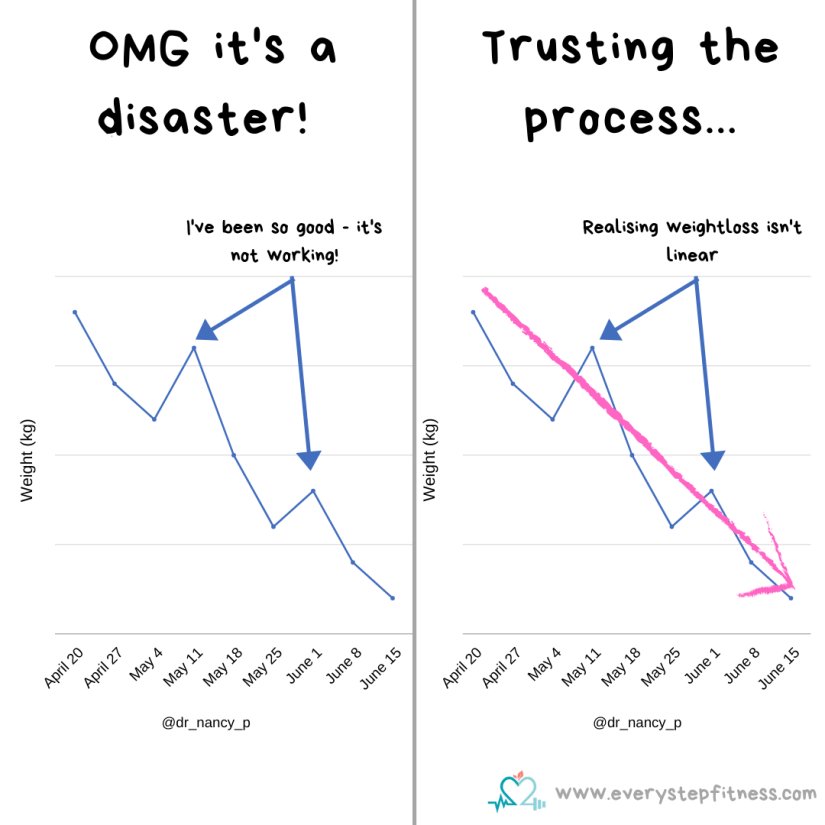
Weight loss is rarely linear. It’s normal for your weight to fluctuate on a day-to-day basis. There will be days where your scale weight goes up, just like there will be days where your weight will drop, and there will also be days (maybe even weeks) where your weight will stay exactly the same. Your weight can fluctuate up to 6kg during the day depending on what you eat and drink, and how you exercise. If you drink 2-3 litres of water a day that’s up to 3kg. Then how much do you pee, sweat and breathe out over the day? It’s impossible to measure. Our bodies are mainly water so changes in hydration cause significant weight fluctuations.

In addition a bowel full of food, a big meal the night before, fibrous or salty meals, and menstrual cycle hormone changes can all influence weight and cause greater daily fluctuations so real change can be hidden. Exercise can affect the scale both ways; if, after a workout, you’ve refuelled properly your muscles will be full of glycogen and water. On the other hand if you’ve sweated loads your weight will drop due to dehydration. Alcohol does the same; it’s a diuretic so will dehydrate you initially, but can cause cravings for salty foods leading to water retention.

For many of us, seeing that weight go up, despite ‘being good’, can make us give up. It’s vital to trust the process and think long term. The graph above is real client data. Look at how the weight fluctuates and look at the overall trend. By trusting the process and not giving up when the scales went up they’ve continued their weight loss over time.

We’re conditioned to focus on weight but instead try to use other measures e.g. items of clothing and how they fit, or cm measurements etc. If you must step on the scales then look at averages over time rather than daily variations and focus on long term trends.

🤗 xx
Tuesday Tip

Tuesday Tip: isn’t tracking food a bit obsessive?

Tuesday Tip: isn’t tracking food a bit obsessive? 🤯

People often tell me they’ve tried everything but can’t reach their goal. When I ask if they track their food they respond with ‘isn’t that a bit obsessive?’ or ‘no I don’t want to do that’. Not wanting to is fine, that’s your choice, but if you’ve been struggling to reach your goals and you haven’t been tracking then why not try it?

Do you track your finances? Most people do so they have an idea of how much they’re earning, spending and saving. That’s not obsessive, so why would tracking your calories be?

Can tracking food become obsessive? Yes, like anything, of course it can. Does it have to? No! Do you have to do it forever? No! Does it have value? Yes! It’s a tool – and its value is determined by how it’s used and what you learn from it.

We don’t have an innate working knowledge of portion sizes and calorie content. In fact, studies show that people are awful at estimating how much they eat. We underestimate ALL the time, even nutrition experts do! We are surrounded by highly palatable, calorie dense foods and we have evolved to seek them out. So it’s unsurprising, when these sorts of foods are so readily available, that we need to do some tracking to keep an eye on what’s actually going in our mouths.

The main reasons we don’t track are fear, time and being unsure of how many cals to aim for. The fear is of what we’re going to find out and that we really are eating more than we thought. Time is really about priorities. Yes it can take a few days to get the hang of it, but then it takes seconds to log before you eat. Most people have time to check Instagram/Facebook/watch tv. Even the busiest person has 2 mins to log their food, if they want to. In terms of how many cals to aim for; if you’re not sure, ask! I’m happy to help!

You don’t need to track food forever. You’ll learn about portion sizes, calories in the things you eat and drink, and develop that skill. Then you can cease tracking if you want and see how it goes. You can easily go back and check if you feel that skill needs more honing.

You don’t have to count calories forever, but calories will always count!

Happy Tuesday

😁

Xx

Fitness and Exercise

Bodyweight Circuit 13 – unlucky for some!! 😬

Workout 13 – unlucky for some… you lot today lol!!

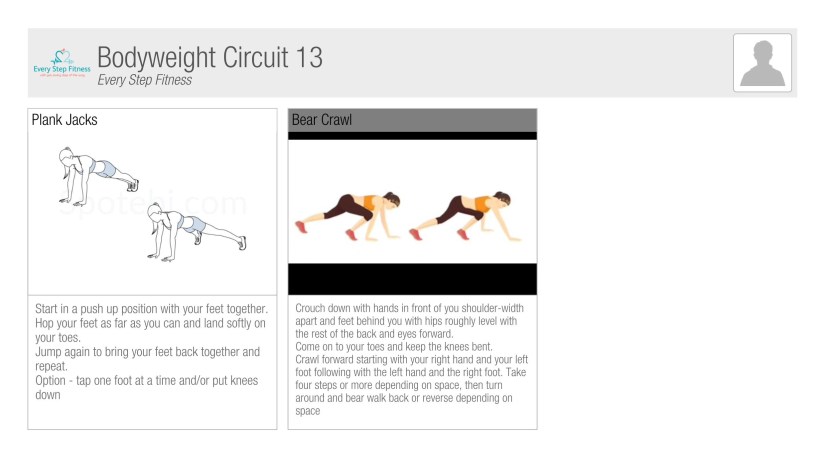
We’ve got seagulls, bears and a bit of basketball today! 🐦🐻🏀

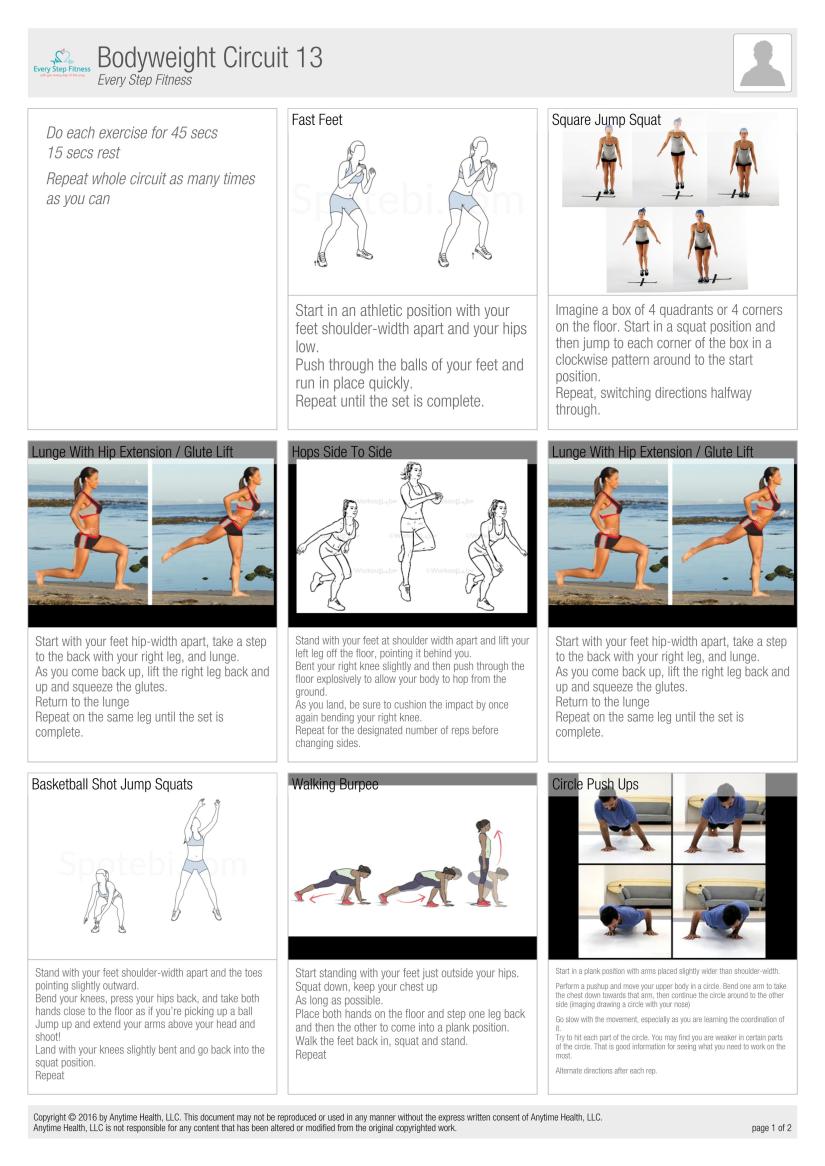
You know what to do – ten exercises, ten mins in total and no equipment required – just yourself, a watch/iphone to time it, and a mat if you want one for your knees/hands.

If you have more time then you can always do it twice or three times, if you don’t have ten mins then just do half! Get everyone involved! 🙂

If you want to do it “with me” then the video is below.

Or you can use the pics below or download a pdf of the workout here: Bodyweight Circuit 13

Have fun! 🙂

xx

Ps. If you missed the previous workouts they’re here: Bodyweight Circuit 12, Bodyweight Circuit 11, Bodyweight Circuit 10, Bodyweight Circuit 9,  Bodyweight circuit 8, Bodyweight Circuit 7  Bodyweight Circuit 6 ,   Bodyweight Circuit 5Bodyweight Circuit 4,  Bodyweight Circuit 3, Bodyweight circuit 2 and my first one is here (Bodyweight circuit 1)

IMG_4825IMG_4826


Nutrition and Calorie Tips

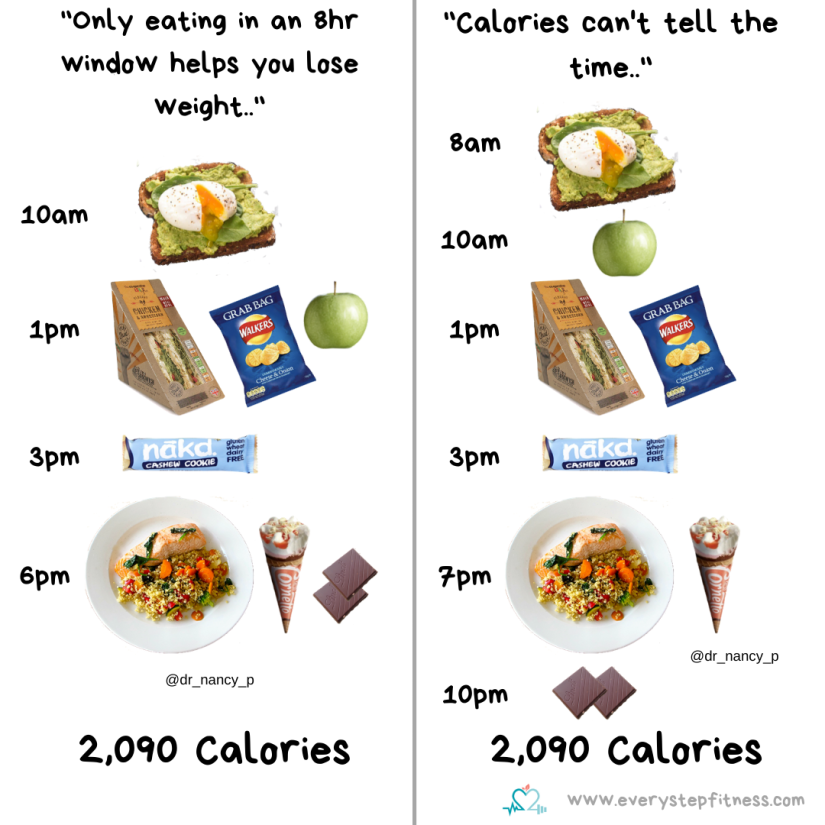
“Calories can’t tell the time…. “

“Calories can’t tell the time…. “ ⏰

It’s really easy to fall into the trap that eating your meals/snacks etc at certain times of day (or not eating at certain times of day) will help you lose weight (fat) more quickly.

One common idea is that you should fast for a certain number of hours during the day and only eat within a certain window of time. This varies but is usually an 8hr window or so. Proponents of this method suggest that by only eating during certain hours you can forget “complicated” diets etc and lose weight without doing anything more. You’ll hear lots of people saying they’ve achieved great fat loss using this method and they undoubtedly have. So surely it works then? Well yes it works – but only because those people have ended up eating fewer calories and therefore been in a calorie deficit, and lost fat/weight.

The problem with this method is that it doesn’t account for individual’s daily caloric requirements. So if someone started this method, but was eating more than their daily calorie requirement within that 8hr window, then they wouldn’t make any progress. Studies have shown that this method ONLY results in fat /weight loss when participants eat fewer calories than they are expending, and are therefore in a calorie deficit. Meal timing is irrelevant in terms of fat loss, it’s energy in vs out that matters.

Having said that, for some people, it’s easier to eat fewer calories if they restrict the hours in which they are “allowed” to eat. So if skipping breakfast, or not allowing yourself to eat after 8pm works for you then go for it! BUT you still need to be eating in a calorie deficit. For some people though, fasting for long periods of time, or skipping meals, isn’t a sustainable strategy long term. It can result in reduced energy levels, and excessive hunger, leading to periods of “binge” eating and therefore eating more than their daily calorie target. It can also lead to less activity (and therefore fewer calories burned) due to low energy levels.

So basically – do what works for you, but remember it’s the total calories that count – not when you eat them

🤗

Xx

Tuesday Tip

Tuesday Tip: Small changes, big results

Tuesday Tip: Small changes, big results 🤗

Fad diets and massive changes to eating and exercise habits work well for some people, in the short term but research shows that for most people these drastic changes don’t last and only increase the likelihood of gaining back the weight when we go back to our old ways. It’s also overwhelming and much more likely to lead to failure. So stop trying to change everything at once!

Instead, identifying lots of smaller changes and trying to do them daily works much better. This ‘habit stacking’ has been shown to be more successful than making one massive change. Big goals are overwhelming and scary, and you’re far more likely to stick to small, easy changes and you’ll also get a confidence boost from sticking to them.

So for example rather than going cold turkey on sugar try reducing your 2 spoons of sugar in your tea to one, then none, try reducing your soft drinks to one a day instead of three, try adding one portion of veg to your meals, then two etc. A recent study showed that it takes approximately 8 weeks for a new habit to form so stick with them and you’ll find these new habits will stay with you!

Happy Tuesday

😁

Xx