Tuesday Tip

Tuesday Tip: Snack Triggers

Tuesday Tip: Snack triggers 🍪

Snacking can be a real issue when trying to lose fat. Being aware of the triggers can help to keep it in check.

# 1. Social Media

A recent study showed that socialising online with friends (via Facebook, Instagram etc) causes more snacking. It temporarily raises your self esteem, which lowers your self control, leading to increased snacking afterwards.

# 2 The News

Another study showed a link between watching/reading ‘bad’ news and high calorie snacking. The survey found that contemplating economic hardship and being subconsciously primed with messages to ‘live for today’ makes us seek out higher calorie foods.

# 3 Environment

The environment can trigger food cravings. A study showed that moviegoers would eat the same quantity of popcorn regardless of whether it was fresh or very stale, simply because they were ‘at the cinema’. In the same way sofa time after dinner can trigger snacking on chocolate or crisps etc.

# 4 3.23pm

3.23pm is the most likely time we are to snack, usually due to boredom, stress, and a dip in energy levels. To combat this have a balanced lunch (with protein and fats), plan in a healthy snack and save more enjoyable tasks for after lunch if you can.

# 5 Stress

Lower levels of serotonin when stressed also lead to carb cravings. Salt inhibits the body’s responses to stress. Craving salty food is the body’s way to cope with stress, so a salty, carby snack can help.

# 6 Lack of Sleep

Lack of sleep reduces your self control and willpower, and stimulates production of the hunger hormone ghrelin and lowers leptin levels (the satiety hormone). Studies found that those who are sleep-deprived eat 300 more calories per day.

# 7 Red 

The colours red, yellow and orange are appetite stimulants, making you snack and eat more. Research shows that eating in a blue room reduced calorie consumption by 33 %. So try going for bluer hued lighting, blue crockery etc.

Being aware of the possible triggers can help you to not only recognise why you’re snacking more than you want to, but make changes to prevent it.

Happy Tuesday 🤗

Xx
Nutrition and Calorie Tips

‘Too Much sugar….’

‘Too Much sugar….’🍬 🍎

Sugar – so often vilified as something to be avoided, something bad, the root of all our health problems… yet is it really?

The simple answer is no. We need sugar – it’s a great source of easy energy and it also tastes great. Sugar is made up of two components, fructose and glucose. The molecular structure is the same no matter where they come from. Fruit contains fructose, glucose and also some sucrose (a combination of fructose and glucose). Sweets will tend to be higher in sucrose.

Once digested the sugar from 40g of haribo has the same effect in terms of calories as the sugar from an apple. It’s not worse, and no better. There is a however a difference in how it’s metabolised – fructose is metabolised in the liver so doesn’t produce the same blood sugar high and insulin response – fruit is therefore a better choice in that respect.

In the case of the haribo you’re getting mostly just sugar (and a small amount of protein), with an apple you’re getting the sugar, fibre, vitamins and minerals. The fibre slows digestion making it more filling (and good for your gut heath). This means you’re less likely to want to eat more later, and it’s better for your blood sugar levels. So objectively the apple is a better choice health-wise.

However, foods also provide other things – such as pleasure, convenience etc. So if you’re trying to watch your calories, and you really fancy some sweets you’re better off just having them. If you’re rushing and need a quick burst of energy before a run you’re also better off going for sweets. In terms of the impact on weight/fat loss there will be no difference as long as you stay within your daily calories and are aware they will be a less filling option. And in terms of sugar content the apple is actually higher.

I’m not suggesting sweets are better than apples for you, nor that you swap all your fruit for haribo. I’m just suggesting we recognise that no foods are ‘bad’, and that as part of a balanced, healthy diet you can have both! Sometimes the haribo will be what you need, sometimes the apple!

Enjoy 🤗

Xx

Nutrition and Calorie Tips

‘Just a banana…’

‘Just a banana…’ 🍌

Bananas make a fab snack option or addition to your breakfast or lunch. They’re full of carbs for energy and a reasonable amount of fibre and are a great source of potassium. They’re also easily portable and have their own in build packaging so are handy for when you’re on the go.

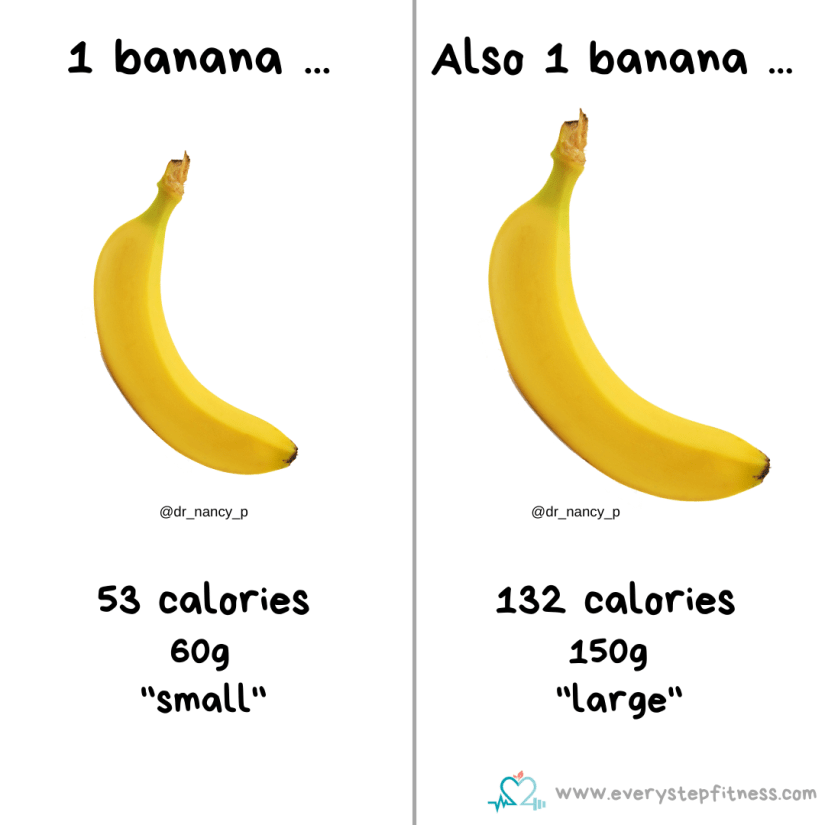
However, if you are trying to lose fat/weight and watching those cals then it’s worth just being aware that bananas can pack a punch when it comes to calories and they also vary wildly. If you’re using a calorie tracking app you’ll often find entries like ‘one small banana’ or ‘one medium banana’ with the associated calories. You’d probably just enter that and assume you were pretty much right. But how small is small? What exactly is ‘medium’? Small to me may be medium to someone else and the calorie differences are pretty large!

The difference between these two bananas is nearly 100g and both are sold as ‘bananas’ – not small or large. So if you were regularly snacking on the larger one you’d be taking in almost 80 extra calories every time. That may not sound like much but over the course of a week or month that will add up. I’m not suggesting you stop having bananas – they’re fab! But just have a go at weighing the next banana you have and see exactly how many calories it does contain.

Knowledge is power right? And if you’re trying to lower that bodyfat then every calorie counts! The more aware you are of what goes in to your mouth the better!

Enjoy 🤗

Xx

Recipes

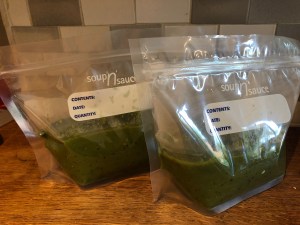
Courgette, leek and spinach soup

The clocks have gone back and it’s chilly out there today, so it’s definitely soup season!

This is a quick, easy, light soup for these cooler days. It is ridiculously low calorie – at around 100 cals a bowl (less if you leave the goats cheese out)! I made a massive batch as we had an over-grown courgette (basically a marrow) that I wanted to use up so it made over ten servings but the amounts below will make at least 5-6 portions.

You will need:

500g Courgettes

250g Leeks

400g Spinach

75g Soft Goat’s cheese (optional)

500ml strong vegetable stock

Mixed herbs, salt and pepper to taste

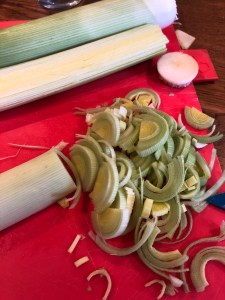
Slice the leeks thinly and pop in a large pan over a low heat and allow to soften.

Chop the courgettes thinly too and then add them to the pan and allow to cook through for around 5 mins with the lid on.

Add the stock and herbs and cook for a further 5-10 mins. If your vegetable stock isn’t very strong it’s worth adding an extra stock cube too.

Add the spinach and stir thoroughly, and then cook through for 3-5 mins.

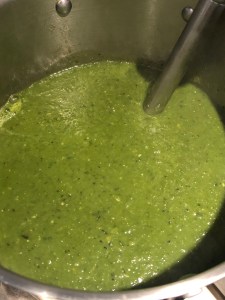
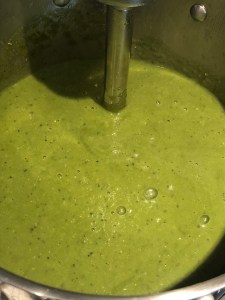
Remove from the heat and allow to cool for 5 mins and then blend thoroughly.

Add salt and pepper to taste and then, if you’re using it, add the goat’s cheese and blend again to combine.

Serve immediately or you can keep it in the fridge or freezer for handy lunches or dinners in the week!

Enjoy 🙂

Xx

Nutrition and Calorie Tips

The ‘health’ halo effect ….

The ‘health’ halo effect 😇….

The “health halo” effect is something we all fall prey to. It’s the perception that certain foods are better for you than others due to their perceived health benefits. Usually terms like “organic”, “plant based”, “high protein”, “contains one of your five a day” are used on the packaging and there’s an assumption that this means they’re the best choice.

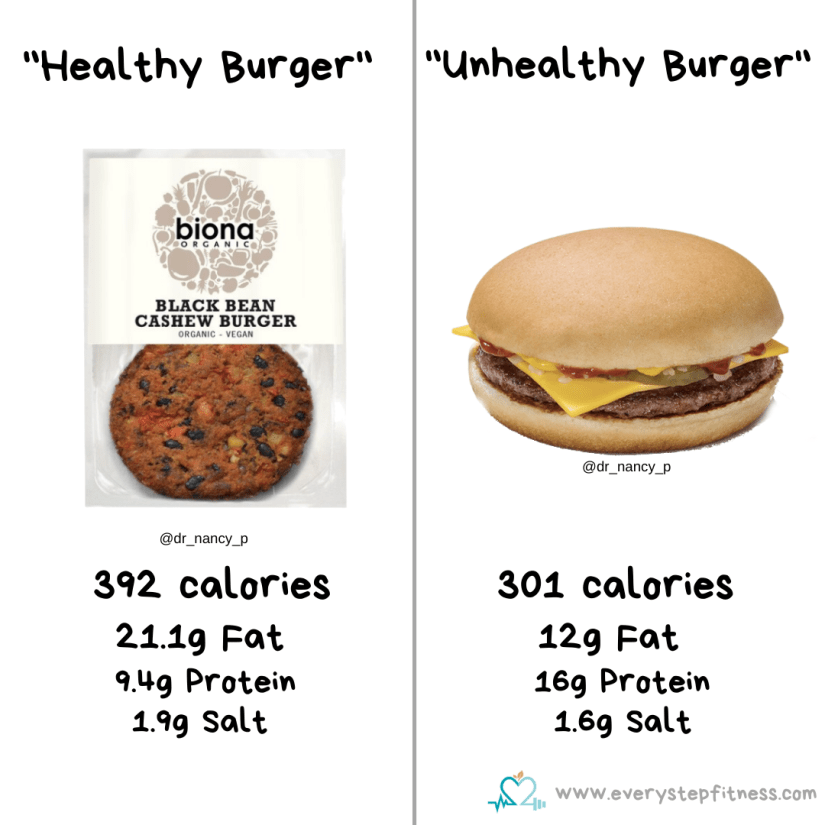
Now before anyone reacts – I’m not suggesting a Mcdonalds cheeseburger is a “healthy” option, nor am I suggesting it’s got more health benefits than the Biona Black bean and cashew burger. They’re both very different nutritionally, and they both taste very different too. But for many people trying to lose fat or weight they might naturally assume that instead of having a cheeseburger for lunch, they’d be better off having the Biona burger. However in actual fact that “healthy” burger has more calories and fat than the cheeseburger, and less protein. The cheeseburger is also lower in salt. The Biona burger doesn’t include the bun and other extras (including cheese) either so you’d be looking at perhaps another 300 or more calories on top (and the associated extra fat and salt).

So if you needed a quick lunch, and really fancied a cheeseburger, you’d be far better off just having one. I’m certainly not suggesting your whole diet be made up of “junk food”, but it’s important to be wary of these marketing ploys which make you perceive things as being “healthy” and therefore lower calorie and helpful for weight loss. At the end of the day, as always, it comes down to calories. If you want to lose fat or weight, then you need to be at a calorie deficit. And it’s important to still have foods you enjoy as part of an overall balanced diet. So have the cheeseburger for lunch if you want it, and then have a dinner with a range of whole foods and vegetables etc.

Be curious about what you’re putting in your body, look at the nutritional labels on food and don’t always assume the branded “health” food is the best choice.

🤗

Xx