Nutrition and Calorie Tips

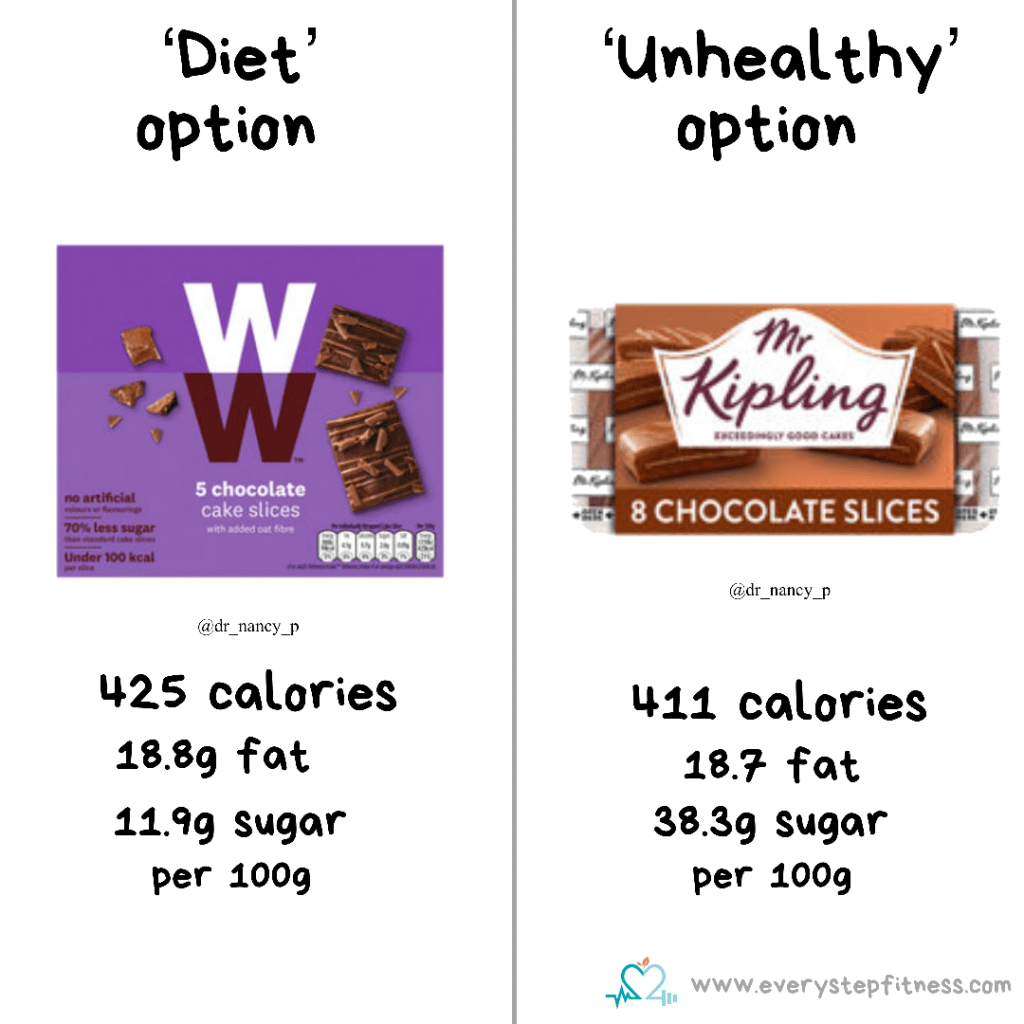
‘I’m being good and having a weight watchers cake bar….’

‘I’m being good and having a weight watchers cake bar….’ 🍰

Most people would assume that the weight watchers cake bars (or other weight loss brand foods) are automatically a more virtuous choice of snack. Whilst the Mr Kipling chocolate cake slice would be considered the less healthy choice.

In reality they’re almost the same in terms of overall calories and fat. And in fact the My Kipling slices are actually lower in calories per 100g. So in reality you could have either and it would make little difference to your overall calories. The weight watchers slices are also over double the price per gram too!

So don’t automatically assume these weight loss branded foods are always the better option. Sometimes they’re the same or worse than other brands. And usually pricier! If you enjoy them then definitely have them, but if you’re only having them because you think they’re ‘good’ then think again.

Read the labels and look at the calories and then make sure choice. If you’re trying to lose weight then go for the lowest calorie option, that you actually want to eat!

🤗xx
Tuesday Tip

Tuesday Tip: Fresh vs Frozen

Tuesday Tip: Fresh vs Frozen 🥦🫐

I am a big fan of frozen veg and fruit – both as a way to help save time for myself and my clients, for convenience, cost and also freshness! But there still seems to be a bit of a stigma around frozen fruit and veg.

The concerns around frozen produce tend to centre on issues of freshness and perceived nutrient loss and a view that it’s ‘lazy’. For most brands, prior to freezing the produce is blanched (boiled / steamed briefly). This stops enzyme activity and ensure the colour and flavour remain intact. There can be a small amount of nutrient loss in this process – although recent improvements mean these are minimised. Fresh produce on the other hand is not quite as fresh as we might think. Unless it’s been grown yourself or locally, it’s spent days/weeks/months being stored and transported to the shop. Studies show that the transportation and storage of fresh fruit and vegetables can often lead to more severe nutrient losses than the blanching and freezing. For most shop bought produce it will be at least 14 days after harvest (and that’s a low estimate) vs frozen produce which is frozen within hours of harvest.

Most importantly frozen produce can be more convenient, and avoid waste. This means you may be more likely to actually eat more fruit and veg. It can also meal prep easier and faster. A recent study of more than 16,000 people found that those who purchase frozen fruit and vegetables consume more servings of them, compared to those who do not.

That’s not to say fresh produce isn’t good – in an ideal world fresh produce would be affordable and delivered the day it was harvested. And the more of this that you can source locally, the better! But frozen fruit and veg are great too!

Enjoy!

Happy Tuesday 🤗

Xx

Nutrition and Calorie Tips

Healthy vs unhealthy option?

Healthy vs unhealthy option? 🥗

Restaurant dining can be a bit of a minefield if you’re trying to watch your calories or lose weight. As I’ve said before, we often have a number of preconceived ideas about which the ‘healthier’ option is and equate that with lower calorie. In reality sometimes things aren’t quite as you’d expect.

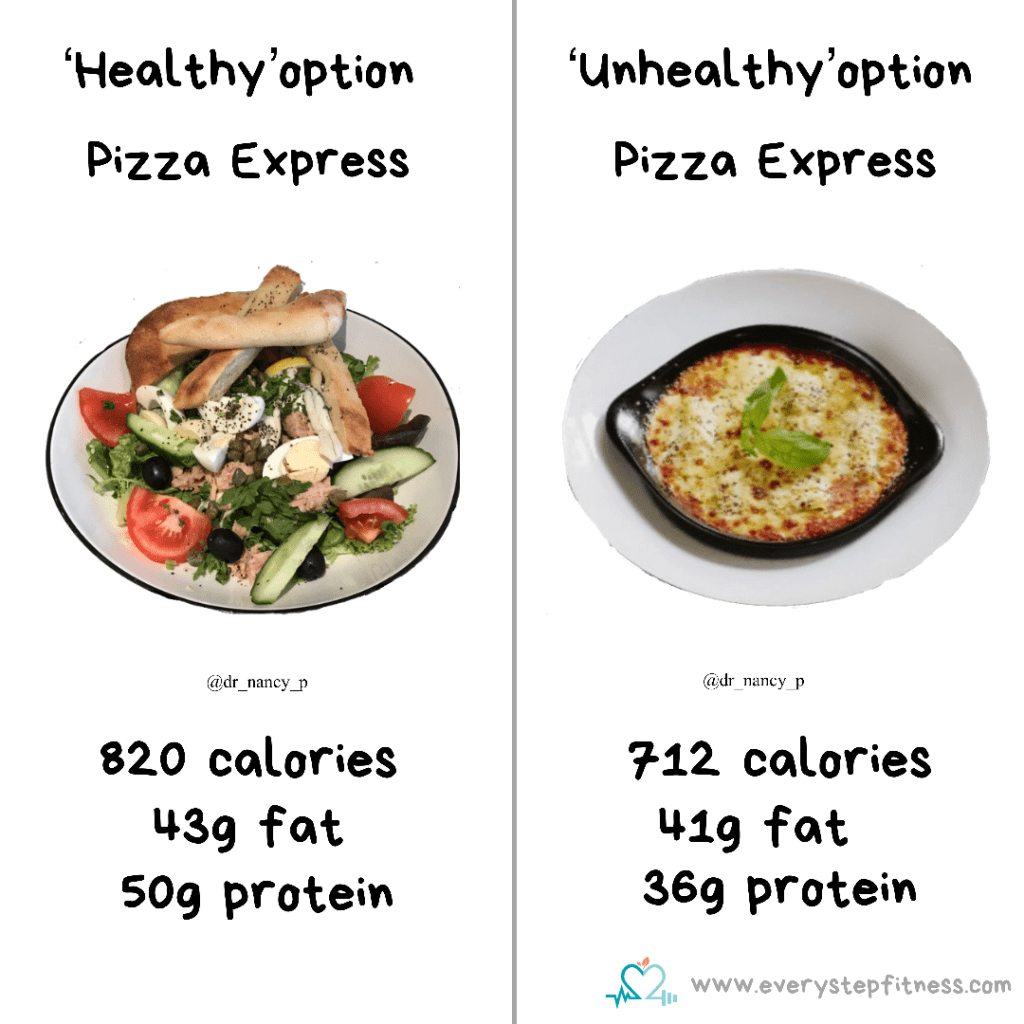
Another great example of this is pizza express option. The Nicoise Salad with dough sticks is certainly a healthy option – full of fibre, lean protein and micronutrients.

You may order it assuming it’s one of the best options to go for – and it is a great choice! But you may also assume it was a lower calorie option, and therefore probably not think twice about having the dough sticks with it etc. You may even avoid what you really wanted, a lasagne or pizza, because you assume the salad is lower.

However that’s not actually the case. In reality the lasagne is actually lower calorie and fat than the full salad with dough sticks. The difference isn’t that large but it is there nonetheless. Now if you want the salad because you like it then definitely go for it, but if you’re choosing it when you’d prefer the lasagna maybe stick to what you like! If you do want to reduce the calories then the Nicoise without the dough sticks or dressing is the best option.

Enjoy 🤗

xxx

Tuesday Tip

Tuesday Tip: Don’t Avoid Carbs

Tuesday tip: Don’t Avoid Carbs 🍞

Many people believe that cutting carbs is the answer to weight loss. Whilst cutting out carbs can work for some people, it’s the reduction in calories that may accompany it that provides the benefit, not the avoidance of carbs per se. This is usually because avoiding carbs has resulting in avoiding highly palatable, calorie dense foods which are often high fat too e.g. pizza, chips, pasta dishes etc. So rather than focusing on carbs as a food group, you’re better off focusing on the high calorie, low nutrient quality, easy to over eat, aspects of your diet and work on reducing them rather than focusing on carbs.

But don’t low carb diets and keto diets result in better fat loss? No actually they don’t. A recent review of studies looked at studies where food was controlled – so participants were given specific foods to eat (ie a tightly controlled study). Comparing diets with the same calories, same amount of protein but different proportions of carb, and fats found that there was NO difference in fat loss, weight loss or energy expenditure. These were lab conditions so any confounding factors were reduced. There was a small difference between the low fat diet and low carb diet – showing that low fat was marginally better for fat loss but the difference was so small that it isn’t enough to make a real difference to overall weight loss.

So what does this mean? It means you shouldn’t avoid carbs – they’re good – we need them for energy and brain function. However there are certain types of food we tend to associate with ‘carbs’ that it is worth reducing or having in moderation if you’re trying to lose fat. These include restaurant meals/takeaways, fancy coffees, alcohol, ‘junk’ food snacks etc. These can all be included in your diet but you may wish to reduce the frequency or quantity to help with fat loss.

Keeping carbs in your diet will keep you happy and if you’re happy you’re far more likely to stick to it. If you stick to it it will be sustainable and that’s what we want!

Happy Tuesday 🤗

Xx

Nutrition and Calorie Tips

Protein smoothie for protein….. erm… or not?

Protein smoothie for protein….. erm… or not? 🥛

I’ve talked before about the marketing power of “protein” and how snacks (and other products) are often promoted as “healthy” or better because they contain X amount of protein. The reasoning behind this is the fact that increased protein can help with improved satiety (feelings of fullness) so CAN help to prevent overeating. Also those working out may want to focus on protein to help with muscle building.

Unless you’re a bodybuilder or athlete you probably don’t need to go out of your way to take in extra protein as most balanced diets contain far more protein than the average person needs. However you may still wish to focus on higher protein foods and snacks to help keep you feeling full.

So you may well see this protein smoothie and think it would be a good option as a post workout drink or snack. However for 350ml it’s around 207 cals (which is fine for a snack) and contains 7.7 G protein which is pretty good I guess for a fruit drink.

Oh but this is awkward… you could instead have a 350ml of skimmed milk for a mere 123 cals, and it will actually provide you with MORE protein – 12.6g in fact! And aside from the fact it’s lower calorie, and has more protein, it’s also far cheaper – costing around £0.24 for that amount (vs £1.86 for the same quantity of smoothie). The lacto-free skimmed milk also has similar calories and protein (though it is a bit pricier at £0.48) but also a great option – and there are flavoured options out there too if you want a fruity drink that also have similar protein and calorie levels! So plenty of options!

Cheers!

🤗

Xx