Tuesday Tip

Tuesday tip: Taming post-workout hunger

Tuesday tip: Taming post-workout hunger 🍕

Do you find you’re famished after a workout? It could be down to the type of workout you’re doing. A recent study in The International Journal of Obesity found that strenous interval training dulls the urge to splurge. Participants who did high-intensity intervals were less hungry afterwards than people who spent the same amount of time on the treadmill or cycling at a steady rate. 🚴🏼

Why? Bursts of high intensity, hard effort actually helps to suppress the appetite as it decreases the production of the hormone ghrelin (the hunger hormone) and also increases the levels of blood lactate and glucose which reduce the desire to eat lots. In contrast, steady state, moderate intensity exercise can reduce blood glucose levels and suppress grehlin which makes you hungry. This is also the classic ‘runger’ that runners get!

So if you’re trying to watch what you eat consider focusing on shorter bursts of higher intensity workouts – either in the gym or in a class (HIIT, insanity or Bodyattack are great examples). If you love your longer runs or steady cycles etc there’s no need to stop them, just make sure you fuel yourself properly to prevent that post workout need to stuff your face! Have something with protein, fats and carbs before you do your workout – e.g. something like peanut butter on toast, and then try to get something in shortly after your workout that’s easily digested but high in protein and carbs – if you like it something like chocolate milk (normal or dairy free) is a fab option. If you want any specific tips for your own recovery then do drop me a line 🤗

Happy Tuesday 🤗

Xx

Tuesday Tip

Tuesday Tip: Don’t Detox

Tuesday Tip: Don’t Detox 🥗

Across social media people are peddling “detoxes” and “cleanses”. We’re told our bodies are full of toxins, and if you follow plan X / buy the pill/tea/shake you’ll get rid of them and feel/look amazing. You don’t need it, your liver and kidneys do a great job of “detoxing” you, and these products can make your health worse. But they sell them because WE want them; why?

#Post holiday detox

Over holidays we eat and drink more, so we crave simple, nutrient dense food – like salads. Physically it feels good, and psychologically it feels good to; drawing a line under all the junk. This sort of “detox” isn’t silly, it’s just a word we use to say “lets get back to eating well”

#Bloated

Over-indulging, or eating certain foods makes you bloated; rich foods, alcohol, beans, fizzy drinks, or foods high in salt, certain starches and sugars. If it’s a chronic issue see a Dr. If you’ve been eating lots of salt you will retain water, making you look and feel bloated, reduce the salt for a few days and you’ll be fine. Overdo the food and drink? You don’t need to do anything just eat normally for a few days.

#Bunged up

If you’ve been eating badly you may be constipated. Most detoxes /cleanses are laxatives, which can permanently damage your intestines. So first of all, increase water and fibre intake, then increase fruits, veg, and whole grains, but do it gradually; a sudden fibre increase can make you feel worse. If that doesn’t help, see a Dr, not a Facebook detox salesman.

#Fatloss detox

No, just no. A pill/shake won’t do that! Sometimes just buying something special is a powerful psychological message that you’re making a change and acts as a kickstart; which is why we fall for it. Sadly it won’t last, and you’re left out of pocket and likely to rebound. The more radical approach to losing weight, the more likely it is to fail. Slow and steady wins the race; make small, sustainable habit changes and you’ll reap the rewards.

It’s normal to want to reset, feel better and make changes, but you don’t need a “detox”. Just try to get some sleep, drink more water, eat veg and get moving. You’ll look and feel far better for it!

Happy Tuesday 🤗xx

Tuesday Tip

Tuesday tip: Watch Those Swaps

Tuesday tip: watch those swaps 🥦🥛

Food fads and ‘healthy’ swaps are all the rage but they may not always be the best option for you and your gut. Sometimes too drastic a cutback or too dramatic a switch can result in GI issues such as bloating, constipation or abdominal pain — or exacerbate pre-existing GI issues. Here’s a few common swaps you may want to rethink.

#1 Cauliflower for Carbs

We’ve all heard of cauliflower rice or pizza crust and whilst it does reduce carbs (and calories) it’s also high in fermentable oligosaccharides, disaccharides, monosaccharides and polyols (FODMAP). These can cause gastrointestinal distress, gas and bloating. Instead stick to white potatoes – full of energy, soluble and insoluble fibre and low FODMAP.

#2 Non-dairy milk

There is nothing wrong with non dairy milk in itself but it lacks the probiotics our gut needs. So if you’re not allergic to dairy then try to have some yoghurt or kefir as well which contains live active cultures. If you are sensitive to lactose these may still be an option for you as the cultures break down the lactose before it reaches your intestines. If you’re vegan then consider going for a probiotic supplement or foods like kimchi, sauerkraut, tempeh etc.

# 3 High fat in place of carbs

Keto is all the rage with people ditching carbs for protein and high fat foods. But this can cause both diarrhoea or, due to low fibre, constipation. So just go a bit easy – have half an avocado not a full one, add a little coconut to smoothies rather than 2 tbsp of coconut oil etc. And get lots of fibrous veggies in too.

#4 Sugar alcohols

Sweeteners such as erythritol, sorbitol, mannitol and xylitol are used to sweeten foods with less calories and impact on blood glucose levels. But these sugar alcohols can cause gas, bloating and diarrhoea. You may be better off simply using less sugar and adding spices (ginger, cinnamon etc). Studies have shown the difference in sweetness isn’t even perceptible with the spices.

Happy Tuesday 🤗

Xx

Recipes

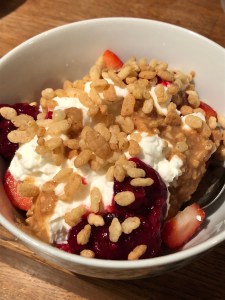
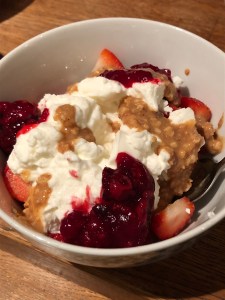
Delicious, healthy pud

This is one of my favourite puds. It’s creamy and sweet and perfect for combatting sugar cravings – especially after dinner. It’s also really quick and easy to prepare. If you have any stewed fruit this is also a great addition too!

Calories vary depending on what fruit you use but you’re looking at roughly 250 – 300 cals.

You will need:

Half a bowlful of mixed fruit – I like strawberries, raspberries and pineapple

A large dollop of greek yoghurt (or non dairy yoghurt) (approx 150g)

1 tsp peanut butter (15g)

Sprinkling of Rice Krispies or some seeds and nuts

Drizzle of maple syrup (or sweetener of choice) – if more sweetness required

Stewed fruit (optional)

Chop the fruit and pop in the bowl.

Add the dollop of greek yoghurt and drizzle the peanut butter over. If you’ve got any stewed fruit then add a dollop – I cooked up a batch of apple, red currant and blackberries which is great to add to desserts and porridge etc.

Sprinkle the rice krispies or nuts/seeds and if using then add the sweetener (I don’t think it really needs it to be honest!).

Enjoy!

🙂 xx

Recipes

Roasted butternut and apple soup

It’s getting to that time of year when we want to curl up on our sofas under a blanket and fill up on warming foods.

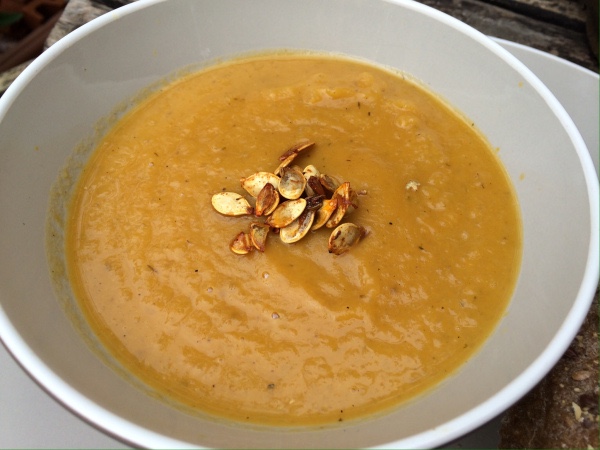
This soup will definitely hit the spot when you are feeling a bit autumnal. Roasting the butternut squash and the apples adds a lovely rich flavour and the sweetness of them both compliment each other brilliantly!

This soup is dressed with the seeds from the butternut so you don’t waste anything either!

You can substitute any sort of pumpkin for the squash too if you prefer.

This will serve 3 – 4 people.

You will need:

1 Butternut squash (approx 1.5kg in size before peeling etc)

2 Apples (Braeburn work best)

2 large white Onions

2 sticks of Celery

1/2 tbsp dried Thyme

1 tsp ground Cumin

1/4 tsp ground Allspice

1 litre Vegetable stock

500ml Water

Salt and Pepper to taste

For the topping:

Seeds from the Butternut squash

1 tsp Olive oil

1/2 tsp Cumin seeds

1/4 tsp ground Paprika

Preheat the oven to 200 C.

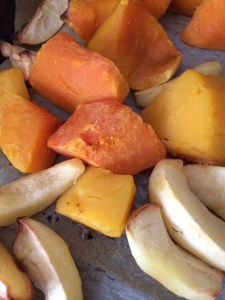
Cut the butternut in half and scoop out the seeds (keep the seeds for the topping). Peel and cut into chunks. Peel, core and chop the apples into wedges. Place on a baking tray and drizzle with olive oil and season. Place in the oven  and roast for 20 – 25 mins or until tender and golden.

Slice the onion and celery finely and pop in to a large pan with a little olive oil. Saute gently for about 10 minutes until soft. Add all the spices and saute for another minute. Add the butternut and apple and stir gently for a minute or 2. Then add the vegetable stock and water and bring to the boil. Allow to simmer for 20 minutes.

Let it cool for a while and then pop in a blender and blitz it (do this very carefully if still warm – it may be worth doing it in 2 batches).

Take the seeds that were removed from the squash and toss in the olive oil and topping spices. Spread on to some baking parchment and place in the oven at 200 C for 5 – 10 minutes until they are starting to turn brown.

Pop a serving of soup in a bowl, sprinkle with the seeds and enjoy with some toast.

(This post was originally published on pureformfitnesskitchen.com)