Nutrition and Calorie Tips

If it’s made from cauliflower it must be healthy…. You

If it’s made from cauliflower it must be healthy…. 🍕

I’m sure we’ve all heard of, if not tried, having cauliflower in place of various carbs. Cauliflower is a vegetable so if something is made from cauliflower, it must be healthier than the “normal” version right?

Cauliflower pizza bases have become quite trendy and they’re marketed as being a healthier, better for you version, of your favourite Pizza.

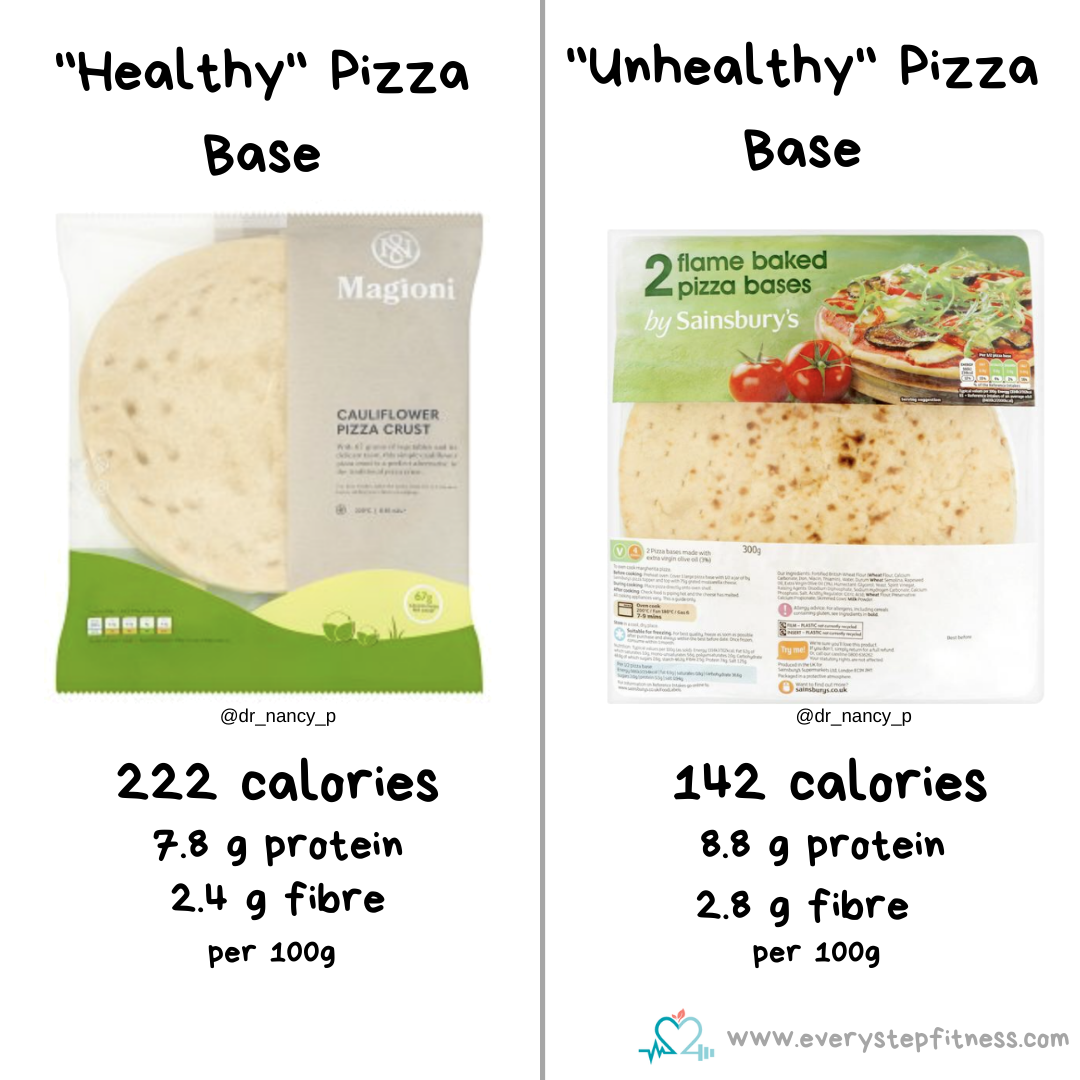
Cauliflower is great – it’s a fab high fibre vegetable and is definitely a good thing to be eating if you like it. But just because something is made from cauliflower doesn’t automatically ,make it better for you. But in the case of a pizza base it’s very misleading. Have you ever tried to make a cauliflower pizza? It’s actually quite hard to make a “dough” without adding a whole of of other things too. At home you could probably make one with very little flour, but it’s not very stable and certainly wouldn’t survive being packaged and sold in supermarkets. So the sort you buy in health food shops/supermarkets etc are actually mostly flour of one type or another. In this example the main ingredient is actually wheat flour… exactly the same main ingredient as in the “normal” pizza base.

The cauliflower pizza is actually higher in calories and lower in protein than the “normal” one and despite often marketed as being high fibre (thanks to the cauliflower) it’s actually lower in fibre than the “normal” pizza base as well.

So all in all, you’re better off sticking to a normal pizza base, unless you particularly enjoy the taste of the cauliflower one!

Enjoy 🤗

Xx
Tuesday Tip

Tuesday Tip: Post-workout Munchies

Tuesday Tip: Post-workout Munchies 🥤🥪

Feeling very hungry after your workout? Regular workouts boost your metabolism and often increase your hunger. Those dreaded post-workout munchies can make you reach for extra snacks and eat more than you want to which could derail your fitness goals.

# 1 Reconsider your burn

Did you really burn as much as you’re about to eat? Studies have shown that we usually underestimate the calories consumed through food and overestimate the number of calories burned by exercise. As I’ve said in previous posts those fitness machines almost always over estimate and even fitness trackers aren’t as accurate as we’re led to believe. So be realistic when it comes to choosing post-workout foods. Go for something with protein, carbs and fat – and if it’s not a main meal then aim for only about 150-200 cals. A glass of milk (dairy or soya) or chocolate milk is an excellent post workout refuel.

# 2 Are you really hungry?

Ask yourself are you really hungry? Unless it’s a definite yes don’t reach for that protein shake or snack (and remember as I said last week – protein shakes aren’t really necessary for most of us anyway!)

Drink a big glass of water first and then decide. Try not to just get in to the habit of eating after workouts for the sake of it.

#3 Eat regular meals

If you’re starving after your workouts then maybe you haven’t eaten enough earlier in the day. Studies have shown regular meals with a good balance of proteins, carbs and fats results in less desire to eat extra snacks post workout and curb that hunger.

# 4 Schedule your workouts

If you always feel hungry after working out, then simply make sure to schedule exercise before one of your main meals.

That way you won’t need to eat any extra snacks, and thus additional calories, between meals.

# 5 Don’t try to earn calories to eat later

Try not to workout simply for the reward of eating later. Again something I’ve talked about before – try not to reward yourself with food. Exercise itself should be the reward so find something you enjoy – cycling, running, classes, dancing etc and then enjoy the endorphins!

Happy Tuesday 🤗

Xx

Nutrition and Calorie Tips

Coco-nuts!…

Coco-nuts!…. 🥥

Coconuts are heralded as a “superfood” So coconut yoghurt must be better for you right?

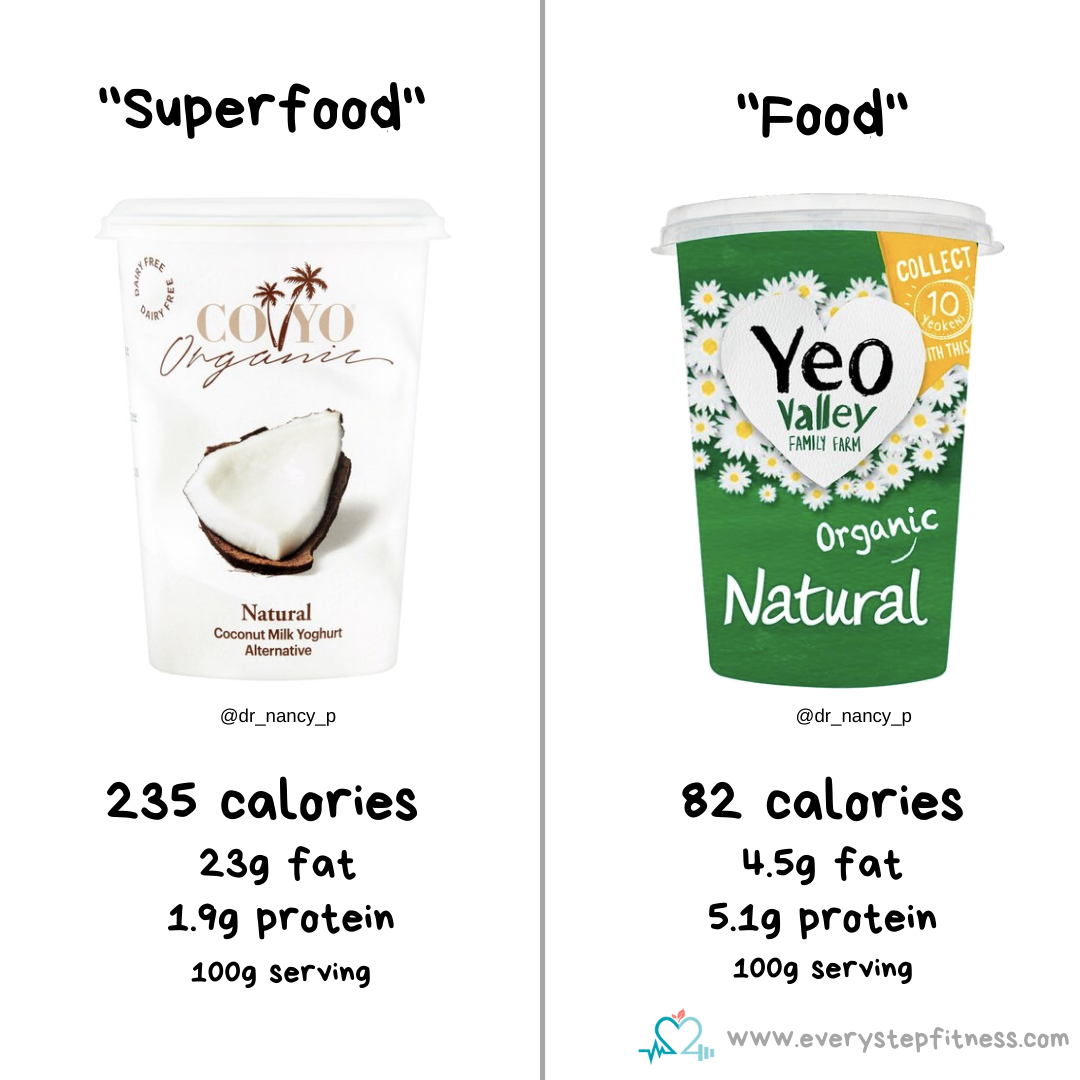
Coconut yoghurt contains fewer carbs than dairy yoghurt as it is lactose free (the natural sugar in milk). It also contains saturated fat, specifically medium-chain triglycerides, which are easily absorbed by the liver and converted to ketones (an alternative energy source in the brain) and could be beneficial for dementia and related conditions. There is also evidence that coconut may help type-2 diabetes, elevated cholesterol levels and may assist weight loss. Critically though many of these benefits are associated with coconut oil or meat,not yoghurt.

It’s plant-based and suitable for those with dairy/lactose allergies or vegans (but not all coconut yoghurt are actually vegan, many also contain dairy milk or gelatin). Natural yoghurt is dairy based but contains live probiotics and is good for gut health. There are no naturally occurring probiotics in coconut yoghurt (though some brands do add them in). If you are aiming for weight/fat loss however then natural yoghurt has some benefits.

Coconut yoghurt contains significantly more calories than natural yoghurt and approx 5 times as much saturated fat. Whilst the fat in coconut yoghurt is the more beneficial medium-chain triglycerides thats still a large amount of fat and that has it’s own risks. There’s also significantly less protein in coconut yoghurt. Higher protein can help keep you fuller for longer – which from a weight loss perspective is helpful.

So if you were assuming coconut yoghurt is “healthier” and therefore better option for weight loss then think again. The “good” fats in coconut yoghurt don’t offset the extra calories I’m afraid. There are lower calorie coconut yoghurts out there so if you really love coconut yoghurt then check the labels (a lot is watered down reducing the calorie content). If you are unable to eat dairy then consider some of the lactose-free yoghurt which have comparable calories, or go for a soya based option.

As always – calories count guys so check those labels – and have what you want, within your calories. Knowledge is power!

Enjoy 🤗

Xx

Tuesday Tip

Tuesday Tip: Carbs are ok

Tuesday Tip: Carbs are ok 🥖🍞🥔

Carbs are the devil right? We all know someone that cut carbs and lost a stone in 4 weeks or whatever… so obviously carbs are bad?

There is so much conflicting, scientific sounding rhetoric out there blasting carbs – saying you shouldn’t eat them, or if you do eat them you should only eat them at certain times, or that cutting them will result in massive weight loss (well yeah if you cut any major food group out of your diet you’ll lose weight – you’re eating less!).

This is not actually true. The common argument is that carbs cause insulin to be released and to spike and therefore it’s bad because that insulin will somehow cause fat to be stored ….well sorry but all meals do this and in fact some proteins cause a greater response than carbs! In addition those insulin level changes have no direct impact on weight gain or weight loss. You have to be eating more than you’re using to store fat.

Carbs are the body’s preferred fuel source – breaking them down to glucose, but if there are no carbs around the body simply breaks protein to glucose instead. This applies at any time – not just when you’re exercising- because we need glucose to function – both physically and mentally.

Does that mean that there is no point in eating more carbs at certain times and fewer at others? No – you can definitely choose to have more carbs when your body may need extra fuel e.g. when working out, or in the morning when you’ve not eaten all night. But it’s not black and white and you certainly don’t need to ONLY eat carbs at these times and you definitely shouldn’t be avoiding carbs altogether.

How many carbs you eat doesn’t determine your weight loss – it’s total number of calories eaten and calories expended that matter. Carbs are just one part of the equation that you can play around with to help you meet those goals. There’s no need to obsess over carbs – yes small tweaks may help and you MAY find it easier to only eat carbs in the morning, or whenever, but if you like carbs eat them – just manage your portion size.

Happy Tuesday 🤗xx

Nutrition and Calorie Tips

Avoiding cravings… or listening to them…

Avoiding cravings… or listening to them… 🍫

We all have cravings for certain foods or drinks at certain times. It may be for chocolate, biscuits, cheese, toast, wine – etc, whatever it is it’s usually perceived as a “bad” food.

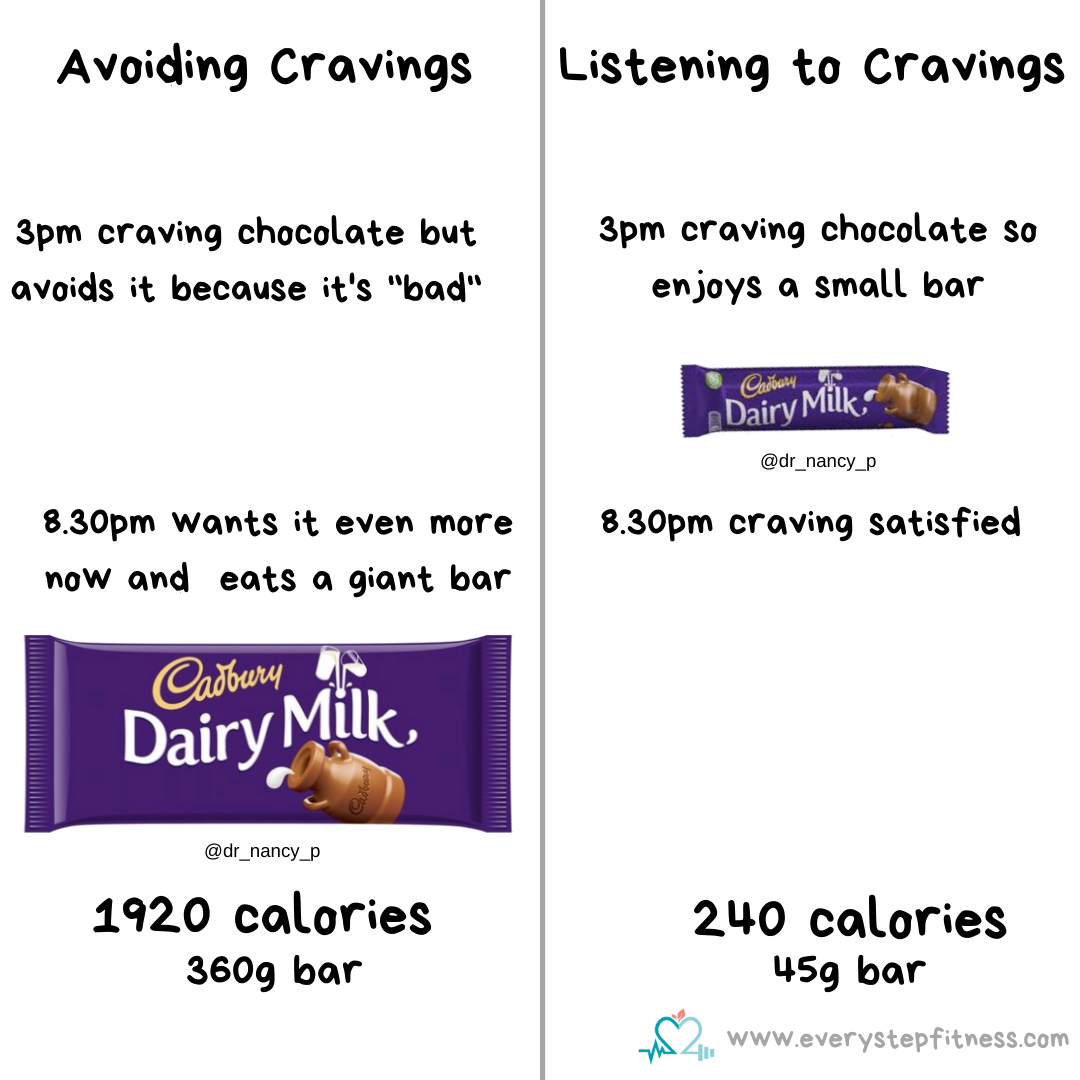
If you’re trying to lose fat/weight then when a chocolate craving hits you may avoid it at all costs. Why? because it’s “bad”. It’s not a snack packed with protein or fats, or vitamins or all those things we know we should be eating. It’s full of sugar (omg!) so it is definitely evil and must be avoided at all costs…..So you avoid it when you’re desperate for some at 3pm. But you spend the rest of the day thinking about it… By the time you’re back from work and have had your dinner the craving is so strong that you dive straight into the a giant bar and inhale it without even tasting it. Then you’ll feel guilty, probably fairly stuffed, uncomfy and miserable. You’ll also have taken in an extra 1920 cals.

Instead, if you really want some chocolate at 3pm – have it! You don’t need to earn it. You don’t need to justify it. Not every item of food you eat needs to be packed with vitamins, protein etc. If you have a balanced diet overall then it’s absolutely fine to have some foods in your diet that aren’t nutritionally great but that give you pleasure!

Chances are that in most cases if you enjoy that chocolate for your snack, factor it into your day’s calories, then you won’t feel the need to inhale a giant bar later that day. So instead of ending up gorging on 1920 cals of chocolate you will have had 240 cals of it when you wanted it.

So rather than creating rules about foods that are good or bad, try to view all foods as things you can have – in moderation.

Enjoy 🤗

Xx