Tuesday Tip

Tuesday Tip: Don’t rely on the scales

Tuesday Tip: Don’t rely on the scales 🤗

I tell clients not to weigh themselves too often, or worry about short-term weight fluctuations, but why? Your body is 60% water and it’s one of the first things you lose (or gain). Fat mass can’t change overnight so being 1-2kg heavier in a day won’t be fat. Average water loss/gain over 24hrs ranges from 0.5 – 2.5 kg. To lose a 1/2 kg fat in a day you’d need to burn approx 4,500 cals; a massive extra calorie burn for one day! Water however is lost (and gained) due to:

#1 Low-carb diets – when you cut carbs you lose water as the body uses glycogen for energy. It’s stored with water so using it releases water which you pee out.

#2 Increased protein – Protein breakdown creates urea and nitrogenous waste which need water to be removed from the body – the water flushes them out, so more water is lost.

#3 Salt – If your diet is high salt your body retains water to dilute the excess sodium e.g. a particularly carb heavy, high salt meal will lead to greater water retention. In addition high salt results in high blood pressure which can cause cardiovascular damage long term.

#4 Caffeine – is a mild diuretic i.e causes water loss and increased urination. This is more pronounced if new to caffeine. If you regularly drink it the effect will be small, but a very heavy coffee day could impact your water weight.

#5 Alcohol – this prevents the release of vasopressin, a pituitary hormone that regulates water loss. Water loss (dehydration) is a side effect of alcohol (hence the hangover) so this will reduce your water weight too.

#6 Exercise – if you exercise intensely, or in hot weather, you will sweat more and lose water. Try it – weigh yourself pre and post a really intense session and see how much water you’ve lost.

So it’s normal for weight to fluctuate which is why weighing daily or multiple times a day is pointless (unless you are using them for weekly averages). Long term weight changes result from changes in fat and lean muscle so if you’re seeing big losses in only a day or so then you know it’s water loss, and if you wake up a few kg’s heavier than the day before you know that’s not fat either!

Happy Tuesday 🤗

Xx
Nutrition and Calorie Tips

“But I need to have a protein shake to get enough protein…”

“But I need to have a protein shake to get enough protein…” 🥤

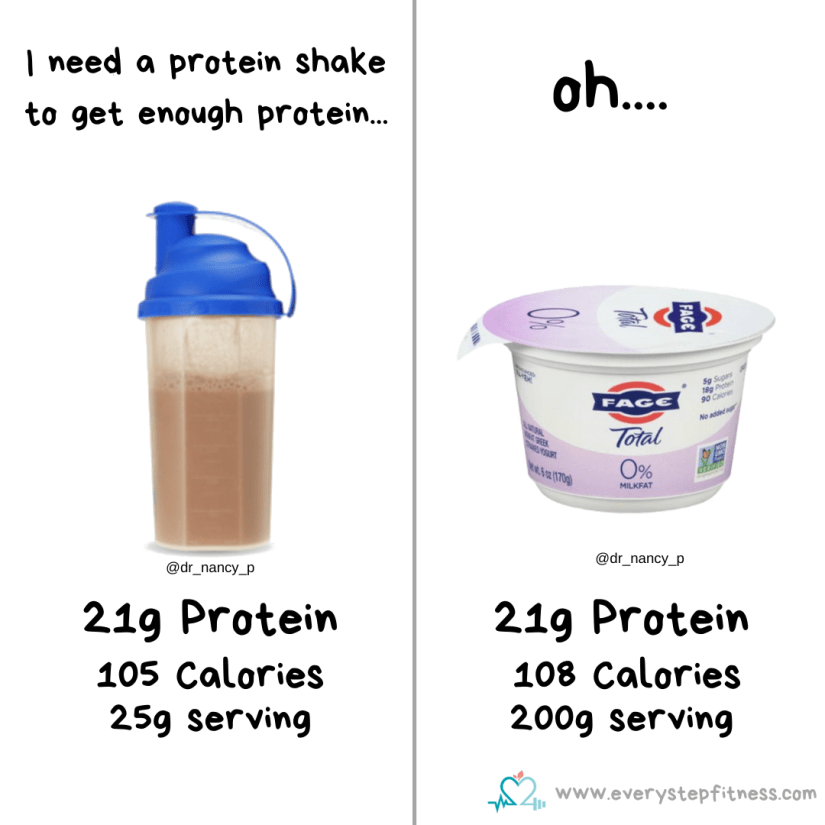
I’ve talked about whether you really need protein shakes or not before. There’s often an assumption that to get “enough” protein when you’re working out that you need to start having protein shakes. I’ve spoken about these before but this is a nice illustration of why they’re not really necessary for most people unless you actually want to have them.

Protein itself is essential, especially for maintaining and building muscle, so it helps with recovery and is also great at keeping you feeling full. But most people’s diet includes more than enough protein as it is and it’s pretty easy for most people to eat the required amount, with no shakes or powders required. Unless you’re an olympic athlete or a serious body builder you won’t need to be taking in excessive amounts of protein anyway. If you do however want to have a protein-rich snack or meal then a great option is 0% greek yoghurt – same calories as a generic protein powder serving and actually has more protein! And for many people it’s a nicer option than a shake. And it’s real food which is also an added bonus (plus it’s delicious with fresh fruit).

So if you don’t fancy protein shakes you definitely don’t need them! If you like them and they’re a handy way to get a snack in then go for it though! Just don’t believe the marketing hype!

Enjoy 🤗 xx

Tuesday Tip

Tuesday Tip: Back to the Gym

Tuesday Tip: Back to the Gym 🏋🏼‍♂️

After months of lockdown walks, home workouts, online classes etc the gyms are finally open again and many people are keen to return. Here are some tips for returning

# Familiarise yourself

New measures such as one way systems, time limits, reduced capacity, lack of changing rooms etc will be in place. Read the gym’s info and check their rules – that will help reduce anxiety about returning. Remember this is new for all the staff too so be understanding of that too.

# Plan your workout

With limited time in the gym it’s important to plan your workout. Your body’s ability to handle a high volume of training will have decreased, so aim for whole body workouts rather than targeting specific muscles etc. Let your body acclimatise with lower weights and reps etc. Be sure to warm up and include recovery time. Having just got back to the gym you don’t want to get injured and be out of action again!

# Book

You will need to book for many activities so plan in advance. With capacities reduced that also means you need to cancel if you can’t make it and if you’re on a waitlist then it’s your responsibility to check that waitlist and either be prepared to come and hope you get in, or cancel off the list so others have the chance.

# Do what you enjoy

After months away, you may find that your motivation is flagging so pick something you enjoy!

# Expect some soreness

You may be sore after your return. That’s normal; delayed onset muscle soreness is a natural response to using your muscles in diff ways. It usually occurs 1-3 days after the workout. The best advice is to keep active; walk, swim, do a diff style class, but keep the muscles moving.

# Hydrate

When you go back to the gym your body will need more hydration than usual. Many gyms will require you to bring your own water bottle as fountains will be out of use.

# Look after yourself

How you take care of yourself during downtime can have a significant impact on your exercise regime. Stay hydrated, eat well, don’t rely on coffee and sugar to get you though, and try to prioritise sleep.

Can’t wait to see you back!

Happy Tuesday 🤗

Xx

Nutrition and Calorie Tips

‘I’ve switched to dark chocolate because it’s healthier ’…..

‘I’ve switched to dark chocolate because it’s healthier ’….. 🍫

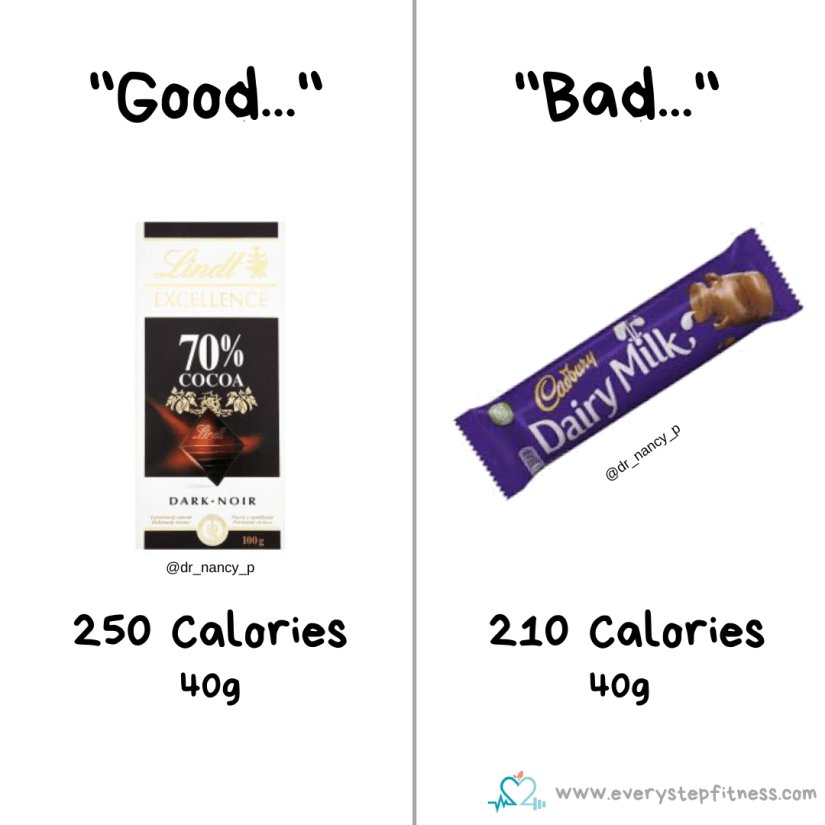
Dark chocolate is better than milk chocolate because it’s healthier right? So it must be better for weight loss right? Maybe not! There is some merit to choosing dark chocolate over other types in terms of some minor nutritional benefits. Dark chocolate provides more antioxidants, whilst tending to contain less sugar, but when it comes to calories you’re often taking on far more than you would have with a typical ‘unhealthy’ chocolate bar. And let’s be honest – even dark chocolate is still a treat so if that’s you’re main source of antioxidants then you probably need to rethink your diet.

Chocolate is not a ‘healthy’ food, but neither is it an ‘unhealthy’ food – it’s just a food to be enjoyed in moderation. As you can see the calories in dairy milk are actually lower than the same quantity of Lindt dark chocolate. So if you love dark chocolate – great! Have it. If you love milk chocolate – have it! If you’re trying to lose fat just ensure you factor it in to your calories and you’ll be fine. But if you’re tucking in to dark chocolate thinking it’s healthy and not even considering the calories it contains you may want to think again.

And if you’re eating it when you don’t like it just because it’s ‘healthy’ then don’t bother – if you want some chocolate have the type you want, in moderation as part of a balanced diet 🤗 🍫

Enjoy xx

Tuesday Tip

Tuesday Tip: Pre-workout coffee?

Tuesday Tip: Pre-workout coffee? ☕️

Coffee as a pre-workout is something that’s often recommended social media and fitness blogs but does it really help?

A recent study found that consuming even a small amount of caffeine before and during exercise can help people exercise almost a third longer. A study tested found that those who consumed caffeine whilst cycling were able to keep going for longer than those who drank water, delaying fatigue by up to 60%. The only drawback is that caffeine is also a diuretic, so it can cause dehydration. Other studies have however shown the dehydrating effect to be minimal and the consensus is that moderate consumption of caffeine is ok.

Other studies have shown that caffeine can trigger muscles to start using fat as an energy source, but this is only occurs when other energy sources are depleted. In endurance athletes for example, caffeine is used to get extra energy out of the body’s reserves during an event So in isolation it won’t magically burn body fat for you sadly.

Researchers have also found that caffeine can help reduce muscle pain. The study in The Journal of Pain found that caffeine (compared to a placebo) reduced thigh-muscle pain during exercise (which can mean being able to continue for longer) .

So overall caffeine does indeed enhance performance and makes it ‘easier’ to put in more effort during exercise. These effects are more noticeable during endurance exercise (over 90 mins). Caffeine also plays a role in helping contribute to clearer thinking and greater concentration. The effects are greater in those that rarely have caffeinated drinks as tolerance is built up, and the effect varies wildly from person to person.

So do you need to start necking an espresso before you workout? Probably not, but it could help on days when you need a little extra boost to get through your workout. However, caffeine can also have unwanted effects and its use can result in caffeine jitters, headaches, upset stomach or insomnia, and excessive consumption can have serious health risks, so best to use it only if you’re already a caffeine drinker.

Happy Tuesday 🤗

Xx