Tuesday Tip

Tuesday Tip: Lemon water

Tuesday Tip: Lemon water 🍋

There are many claims on social media that lemon water aids digestion, detoxifies, rejuvenates skin, aids weight loss, boosts metabolism, balances pH, reduces inflammation, cures cancer, boosts the immune system.. etc. So is lemon water really an elixir of life? Nope!

# Weight loss

Lemon contains pectin (fibre) which aids the feeling of fullness, but a squeeze of lemon only leaves trace of pectin. It’s more likely that the water is filling you up and stopping you reaching for a snack. No magic from the lemon. 

# Detoxification

The only things in your body that are going to get rid of toxins are your liver and kidneys. They don’t need help, certainly not from lemon water. Nothing you eat or drink can ‘detox’ your body.

# Balancing pH

The idea is that our bodies are too acidic (causing issues from ill health to weight gain), and you must neutralize this with ‘alkaline’ foods. If your blood pH changes it is a physiological problem (which can result in death) and needs urgent medical attention. Nothing you eat or drink alters the body’s pH. Similarly countless studies show that cancer growth has nothing to do with alkalinity. Even if you could alkalise your body enough to kill cancer cells you’d be dead from the alkalinity!

# Boost metabolism

Lemon water has no impact on your metabolism. Most “metabolism boosting” foods actually do very little or create only a temporary effect – certainly a little squeeze of lemon won’t do it.

# Digestion

Staying hydrated is what benefits your digestive system, helping your body absorb nutrients. Adding lemon won’t make a difference. 

# Immune boost

A whole lemon contains 18.6mg of Vit C. The daily recommnded dose is around 80mg! Unless you’re seriously malnourished, it’s unlikely that you need the additional micronutrient benefit that lemon water might give you.

Lemon water can actually do you harm. It causes tooth enamel erosion and digestive issues e.g. gastroesophageal reflux disorder (heartburn, nausea, and vomiting) and recent studies have shown a link to migraines.

So drink it if you like the taste or the ritual of it, but don’t expect any health benefits from it!

Happy Tuesday 🤗

Xx
Nutrition and Calorie Tips

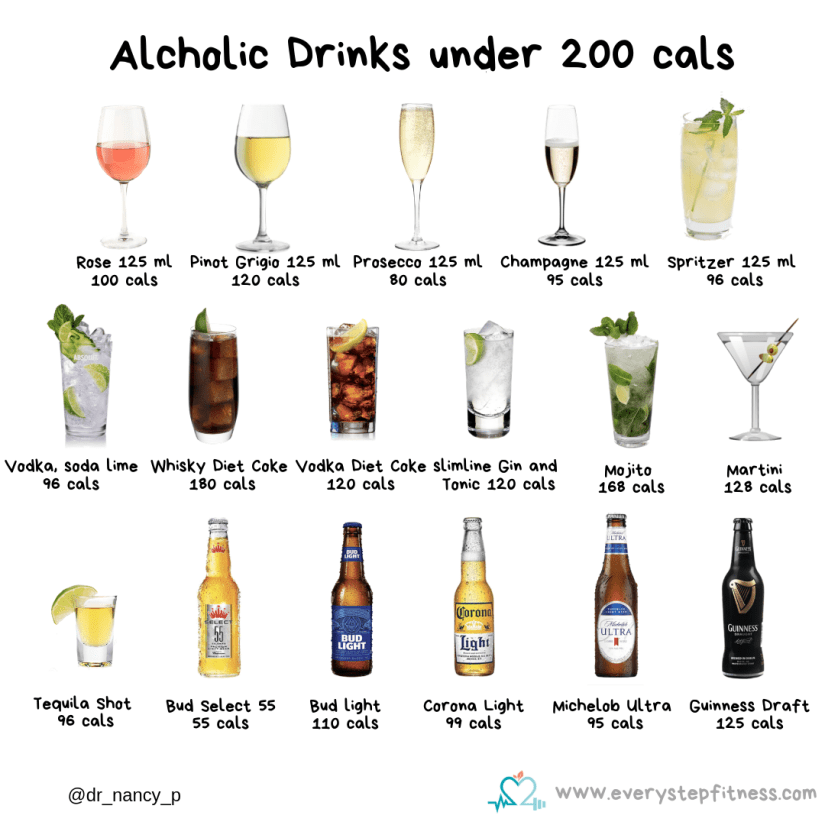
Alcoholic drinks under 200 cals

Alcoholic drinks under 200 cals! 🍸

If you are trying to lose weight/fat then alcohol is often one of the ‘easier’ things to cut down on to save calories. When I say easier I mean it’s an easily identifiable part of your diet which you can choose to either consume or avoid, not that it’s necessary an easy habit to change.

There’s no reason you have to give up alcohol to lose weight as it ultimately comes down to whether you’re in a calorie deficit. However it’s very easy to rack up several hundred calories in alcoholic drinks with little or no nutritional benefit. Meaning you will usually have the booze on top of whatever food you’re eating. In addition alcohol consumption can lead to poorer choices when it comes to food and you’re far more likely to end up eating more calories if you’re drinking or hung over.

So if you do want to still enjoy a drink but stay within your calories then here are a selection of lower calorie options. This list is by no means exhaustive – there are loads of other options out there but it’s a good overview of a range of different types of drink.

So you can still go out and enjoy yourself and have that drink without worrying it’s going to derail your progress!

Cheers! 🥂

Xx

(Nb the gin and tonic is a standard double bar serving – a single is around 60-90 cals)

Tuesday Tip

Tuesday Tip: Why Weight Loss Plateaus

Tuesday Tip: Why weight loss plateaus 📈

Usually a few months into a new diet (or eating regime) we start to see plateaus – this is despite people claiming they are still eating the same amount (at a calorie deficit) and exercising the same. Why?

It could be that you’ve lost so much that your caloric requirements have dropped slightly and therefore you need to adjust your calorie goals, but there’s another more common reason.

A couple of recent studies found that as weight (fat) loss dropped participants subconsciously increased their calorie intake. For every 1kg of fat lost, they were consuming an extra 100 calories per day, without realising they were doing it. This is due to increased hunger in response to weight loss, and as the kgs drop, the extra calories sneak back in. So after losing 3-4kg that’s an extra 300-400 cals a day which puts you back at maintenance calories, stalling weight loss.

Another study also fund that for every 1kg lost participants expended 20 – 30 cals less energy per day. This is a subconscious reduction in NEAT (non-exercise activity thermogenesis) such as standing less, walking less etc and a decrease in bodily functions e.g. blinking less, breathing slower etc

Over the course of several months, with a fat loss of say 4kg you could be unknowingly consuming an extra 400 cals, and burning 120 cals less, that means a extra 520 cals a day which wipes out your deficit, can stall any fat loss and even cause weight regain.

So what can you do?

Usually a few months in, with fat loss going well, people go back to eyeballing portion sizes and that’s where those extra calories will sneak in from slightly larger portions, an extra 5g here and there etc so I encourage my clients to go back to basics and measure portions. Also be mindful of extra mouthfuls of things you’re not tracking (grabbing the odd handful of cereal, crisp, etc).

Focus on more filling foods to help combat the hunger too – foods high in fibre, protein and good fats.

In terms of energy expenditure – try to be as active as possible – add a few more steps to your day for example, be mindful of standing more than sitting etc.

Happy Tuesday 🤗

Xx

Nutrition and Calorie Tips

‘Healthy’ day of snacks vs ‘I’ve blown my diet’

It’s amazing how we categorise our food choices in to good and bad. 😇😈

Having a day where you snack on a fruit smoothie, some dried fruit and a handful of nuts leaves you feeling virtuous, on track and having had a great, healthy day! Whilst if you’d had a doughnut, Mars bar and a couple of chocolate digestives you’d likely be feeling guilty, like you’d ruined your diet and were off the wagon totally right?

Now obviously in terms of nutritional value the dried fruit, smoothie and nuts are arguably a better choice – some good fats, a little protein and lots of vitamins and minerals. But they are also high in sugar – and yes it’s fruit sugars, but frankly that makes very little difference to how your body uses and processes them – sugar is sugar!

In contrast the ‘bad’ snacks are high in fat and sugar and lower in vitamins, minerals and good fats and protein. And I know someone will point out they’re more ‘processed’ but honestly that makes very little difference – everything we is processed and that smoothie is just as processed as the doughnut.

So if your goal is to increase the nutrients in your diet and to eat more ‘healthily’ then yes the fruit and nuts are the way to go. But if you’re goal is weight or fat loss then you really need to stop and consider the calorie differences.

That day of ‘good’ snacks is well over 50 percent of most people’s daily calorie requirement. The ‘bad’ snacks are almost 500 cals less….

So if you were trying to lose weight then maybe the ‘bad’ snacks are actually not so bad…. and you certainly haven’t ‘blown’ your diet. In fact you can probably still have a balanced couple of meals (to get all those other nutrients in) and finish the day within your calories.

No food is inherently good or bad… they’re just food. They have different nutritional profiles and different caloric values and all are fine as part of a balanced diet 🤗

Enjoy! Xx

Tuesday Tip

Tuesday Tip: Calorie Cuts

Tuesday Tip: Calorie Cuts ✂️

When you’re trying to lose weight it’s all about being in a calorie deficit so finding ways to cut calories easily without leaving you hungry is the key. There are a few easy cuts you can make that you’ll barely notice.

# 1 Non-stick Pan

Cooking with oils can add hundreds of calories to a meal without really contributing much to the taste. So invest a a good non-stick pan and some light 1 cal oil sprays and you can cut those cals without even noticing.

# 2 Skip the condiments

Often we don’t even consider the calories in the sauces and dressings we have with our meals. Avoid these sneaky calories but skipping them or going for smaller amounts, or swapping for a lower calorie version. Things like balsamic vinegar, mustard and salsa are great options that are lower calorie but pack a punch.

# 3 Reduce liquid calories

We often forget the calories we drink but they can really add up – all the milk in coffees/teas, soft drinks, smoothies, and booze. Try swapping milky coffees for Americanos, teas for herbal tea, soft drinks for diet versions, and lower calorie alcoholic drinks (e.g. slimline gin and tonic instead of beer)

# 4 Fill up

Opt for more filling foods whenever possible whilst still being mindful of calories. Foods higher in fibre and protein will keep you fuller for longer (but read the labels and check the cals). A recent study found foods such as potatoes, fish, oats, apples and oranges, wholewheat pasta, beef, beans, grapes, popcorn and wholemeal bread kept participants fuller for longer so consider including these in your meals.

# 5 Alternatives

Find alternatives for the foods you like that taste good but have less calories. Swapping your normal ice cream for low calorie ice creams (like halo top) is one way, or swapping your dessert/snack to strawberries and 0% Greek yoghurt is another great way. If you’re a savoury fan opt for things like popchips instead of crisps, and low fat cheese for a savoury snack (e.g. lite mini babybel)

Happy Tuesday 🤗

Xx