Tuesday Tip

Tuesday tip: Tips to stay on track

Tuesday tip: Tips to stay on track 🤗

Here are some tips beyond just changing what you eat and how much you move, to help stay on track.

#1 No distractions

Are you multitasking whilst eating – on the phone or watching tv? This affects our ability to control what we eat. So when you eat – just eat. Focus on how it tastes, savour the meal and take your time, rather than having your phone in one hand and a fork in the other.

# No good or bad

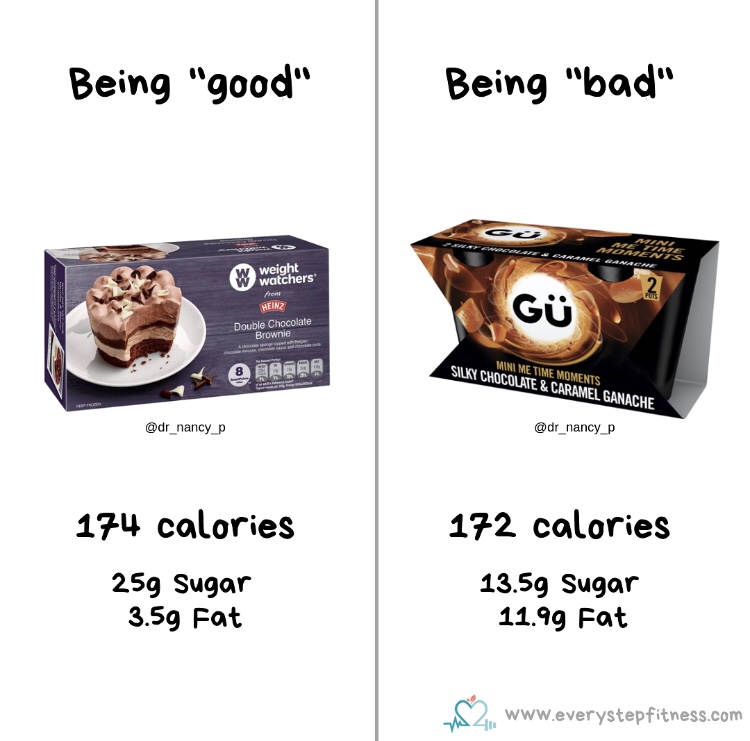
Foods aren’t good or bad. “Bad” foods aren’t going to kill you with a few bites, the problem is when we eat too much of them. Instead, think of foods you can eat a lot of, and those you can only eat a little of. Then fit foods you love in your overall plan. e.g. 1 scoop of ice cream with a bowl of fruit, rather than 4 scoops!

# Add don’t cut

Focusing on what to cut from our diets makes us feel deprived and likely to binge later. Instead focus on adding; add MORE veg, if you fill your plate half full of veg you’re far less likely to eat loads of other stuff.  Celebrate the things you can eat and all the exciting new foods or recipes you can add to your diet.

# Brush your teeth

An easy and effective habit to help the post-dinner snacking or any time of day. Brushing your teeth after you eat removes the taste of food, and acts as a cue that the meal is over, so you’re less likely to eat more.

# Track why

Tracking not only what, how much and when you eat, but also how you’re feeling can help identify any patterns or emotional eating that you may not be aware of. Just being aware of the fact you’re eating because you’re bored can help you stop yourself doing that. And you can look at the overall pattern and think of other ways to address those emotions, without food.

# What are you NOT willing to do

As well as setting goals for why we want to lose weight, it helps to be clear on what you’re not willing to do. e.g. “I’m not willing to be unable to play sports with my kids” – whatever it is, write it down. Then when motivation is failing re-read it and it will help you choose that lower calorie option, avoid the junk, go for your workout. It will help you make decisions that get you to that goal.

Happy Tuesday! 🤗

xx

Tuesday Tip

Tuesday tip: Turning fat in to muscle

Tuesday tip: Turning fat in to muscle 💪🏼

How do you turn fat in to muscle?

Sadly you can’t! Fat is fat, muscle is muscle – totally different types of tissue. Both can be lost or gained – that’s it. So what’s happening when people say this? Well in reality people are losing some fat, and gaining some muscle, which is why it may seem like fat has “turned into” muscle. Fat is lost when you have a calorie deficit, muscle is gained by having a calorie surplus, working out (a muscle building stimulus) and having the raw materials to do it – protein. In most cases if you’re losing weight you are mostly losing fat, though if you are also upping your exercise then there will be some increase in muscle too – which is one reason why weight loss is often not a perfectly linear process. This will work best for those with a reasonable amount of fat to lose, on a moderate calorie deficit i.e. no starvation diets, who also increase their activity. This is what I design for many of my clients. It means you’ll be losing fat and also gaining a little muscle too. As muscle is denser than fat you’ll also shrink (they weigh the same… muscle just takes up less space than fat).

So what about when you stop working out? Does muscle magically turn in to fat?

Nope! it can’t! What happens though is if it’s short term your muscles are just less “pumped” so you “feel” fatter. Longer term you simply lose some muscle and probably gain some fat. This is because when you remove the stimulus which tells your body to build/maintain muscle (i.e. strenuous physical activity) you will lose the muscle mass. You’ll also end up burning fewer calories both through less activity, but also less muscle mass means a lower bmr (basal metabolic rate – i.e. calories burnt at rest), and so you are more likely to end up in a calorie surplus and put on fat.

The only way to prevent muscle being lost long term is to continue to workout! But you can prevent fat being gained – simply by ensuring you don’t eat more than your maintenance level of calories (easier said than done – though not impossible!)

So bottom line – fat can never be turned into muscle, and muscle is never turned into fat!

Happy Tuesday 🤗

xx

Tuesday Tip

Tuesday Tip: Meal frequency and weight loss

Tuesday Tip: Meal frequency and weight loss 🥘🥗

There’s lots of confusion about meal frequency and weight loss: eat more often to lose weight, or eat less often to lose weight? Actually how much you eat matters more than how often you eat. If you want to lose fat the most important thing is to reduce your calorie intake.

Eating more small meals = faster metabolism = more weight loss?

Sadly not – yes digestion increases metabolic rate BUT it depends on the amount of cals, not how often you eat. Eating 1200 cals in one meal or 3 small meals makes no difference. Studies have shown that when total cals are controlled eating more or less often makes no difference. What it might do though is affect your ability to stick to those calories!

Skipping meals is bad? Scientifically it’s not, it won’t suddenly cause you to enter starvation mode and magically store fat – it all comes down to calories. What it may do is make you hungrier later or cause you to snack more or make bad choices, equally it could mean you don’t have the energy to workout and make you less active, burning less cals. So stick to what works for you.

Consider eating less often if:

⁃ many small meals doesn’t fit your lifestyle

⁃ you don’t want to think about food all the time

⁃ you have any digestive problems (longer breaks between meals gives your body a chance to digest)

– you enjoy larger portions

Consider eating more often if:

– you struggle not to snack and want to spread your cals over the day

– you’re trying to gain weight and can’t eat enough in one meal

– you have an active job and high cal demands

– you’re an athlete

– you feel “hangry” all the time

There’s no magic number of meals per day for weight loss. Trust yourself – if you like smaller meals more often then go for it, if not stick to 3 meals or whatever. Whichever you choose though? stick to it as studies show that meal irregularity can have negative health impacts – so whether it’s 2, 3, or 6 meals a day that’s fine. But don’t forget – regardless of how many meals you split it in to, it’s the total calories that matter!

Happy Tuesday 🤗

xx

Tuesday Tip

Tuesday Tip: Lunchtime mistakes

Tuesday Tip: Lunchtime mistakes 🥪

Lunch is one of the meals I’m definitely worst at and many of my clients are the same. Here are some of the biggest lunchtime mistakes that can derail your weight loss journey and how to prevent them.

#1 Eating out every day

Do you just end up buying lunch instead of bringing it? If you’re making yourself dinner each night then there’s no excuse for not making a bit extra for lunch too. Obviously there are good options you can buy but if you’re finding yourself only buying junk, or have limited options, then take lunch instead. Save calories and money!

#2 Eating too fast

I get it, you’re racing around, back to back meetings, no time to stop…. stuffing your lunch in on the go… but this is when we tend to forget about portions and over eating. A recent study in the Journal of Nutrition and Diatetics found a direct relationship between faster eating and weigh gain. Try to take at least 20 mins over your lunch.

#3 Eating too little

I often hear clients saying they only have a small salad for lunch.. and they wonder why they end up craving snacks at 4pm or tucking in to the biscuits late at night. Salad is a great lunch but it needs to be more than just leaves and a bit of cucumber. Use some dark leafy greens as a base (e.g. spinach), add veg (carrots, pepper, cucumber etc), then a protein (chicken, egg, feta, chickpeas, tofu etc) and then add some complex carbs (quinoa, brown rice, beans etc).

#4 Choice of drink

Going for a juice or soft drink at lunch in your meal deal is just extra empty calories. Ditch it and go for water (add lemon, cucumber or zero cal squash for flavour if you need) and save the calories for your food.

#5 You’re too hungry

You rush to work, skipping breakfast and by lunchtime you’re so hungry you end up making bad choices. Avoid this by either having breakfast or having a 100 – 200 cal mid morning snack (yoghurt and berries, apple and nut butter etc). This will help you make better choices at lunch.

Happy lunching! 🤗

xx

Tuesday Tip

Tuesday Tip: Surviving lack of sleep

Tuesday Tip: Surviving lack of sleep 💤 We all suffer from bad night’s sleep from time to time. I’ve talked before about how to ensure you sleep better but here are some tips on how to cope when you just don’t get the sleep you need, without resorting to endless coffees!# 1 Stay hydratedDehydration makes you feel even more tired so start the day with a large glass of water (add a squeeze of lemon for extra freshness). Ensure you keep drinking plenty during the day. # 2 Cold showerTry contrast showers – alternating between hot and cold water stimulates your circulation. Also splash cold water on your face or use a cold damp cloth on your neck to give you a boost.# 3 Use Peppermint oilTry dabbing peppermint essential oil on your clothes, or on a little on a tissue and inhale the scent with a few deep breaths. If it’s in a skin-safe carrier then also rub some on your wrists and neck for an energy boost.# 4 MoveEven if you’re exhausted it’s important to move as much as you can. Walk or cycle to work, go for a walk at lunch, or just try 5 mins of exercises when you get up. Do something outside as the daylight blocks the production of the sleep hormone melatonin, preventing you feeling too drowsy.# 5 Eat rightIt’s tempting to reach for starchy carbs and sugar to get you through the day. Avoid these and instead grab some fresh fruit and protein rich foods (e.g nuts, yoghurt, chicken, fish etc). Avoid heavy meals that use lots of energy for digestion. You can also try chewing peppermint gum; a recent study found it significantly increased alertness.# 6 Power napIf you can take a mini nap at some point in the day it will really help to recharge your battery. Make sure it’s less than 20 mins though or you will end up feeling more tired than before. # 7 Mix it upWhen you’ve not had enough sleep you are likely to be less active and less productive the following day. So try to manage your day by focusing on activities that are “easier”and require less thought. Also try to do something different or mix up your routine to keep you alert. Try these tips the next time you’ve missed out on those zzzzzz’sHappy Tuesday! 🤗xx