Tuesday Tip

Tuesday Tip: Are you in a Calorie deficit?

Tuesday Tip: Are you in a Calorie deficit? 📉

We know that for fat loss to occur you need to be eating at a calorie deficit – i.e. eating fewer calories than you expend. People often say they are “definitely under their cals” (i.e. at a deficit) but they’re not seeing the scales drop. So here are some ways to tell if you are at a deficit that aren’t all scale-based.

Now before I mention any of these indicators it’s important to note that you won’t see results immediately; you need to be at a deficit for several weeks (not days) so the first thing you need to ask yourself is has it been long enough?

Here are some other indicators:

• Your measurements are dropping. If you’re losing cm’s but your weight hasn’t changed, then you’re probably in a deficit.

• Your clothes fit better. You may not notice specific measurements going down but those tops which are usually tight now feel looser. That means you’re probably in a deficit.

• Others are noticing. If you’re suddenly getting compliments or people are noticing you seem to have lost weight then you probably have lost some fat and are in a deficit (even if it isn’t showing on the scales)

• You are seeing more definition in certain areas – arms, collar bones, shoulders etc. That will mean you’re losing some fat and are probably in a deficit.

• Finally – the scales are going down, consistently. Though I would add a caveat that very sudden, large, weight losses are more likely to be fluid changes than fat loss. It’s also normal for your weight to fluctuate up and down so always focus on long term trends.

Fat loss is different for everyone – everyone responds differently and at different speeds. If you’re seeing any of the changes above then you are doing ok! All it takes is consistency and you will see the results you want. Conversely though, if you’re not seeing any changes, then it’s time to double check your food intake because it means you aren’t in the deficit you thought you were.

Remember it’s not all about the scales. If you woke up tomorrow with the body you’ve always wanted would you care what the number on the scales said? No you probably wouldn’t, so focus on the other changes!

Happy Tuesday

🤗

Xx
Nutrition and Calorie Tips

“Oh no, you can’t have Frosties for breakfast – thats so bad…”

“Oh no, you can’t have Frosties for breakfast – thats so bad…” 🥣

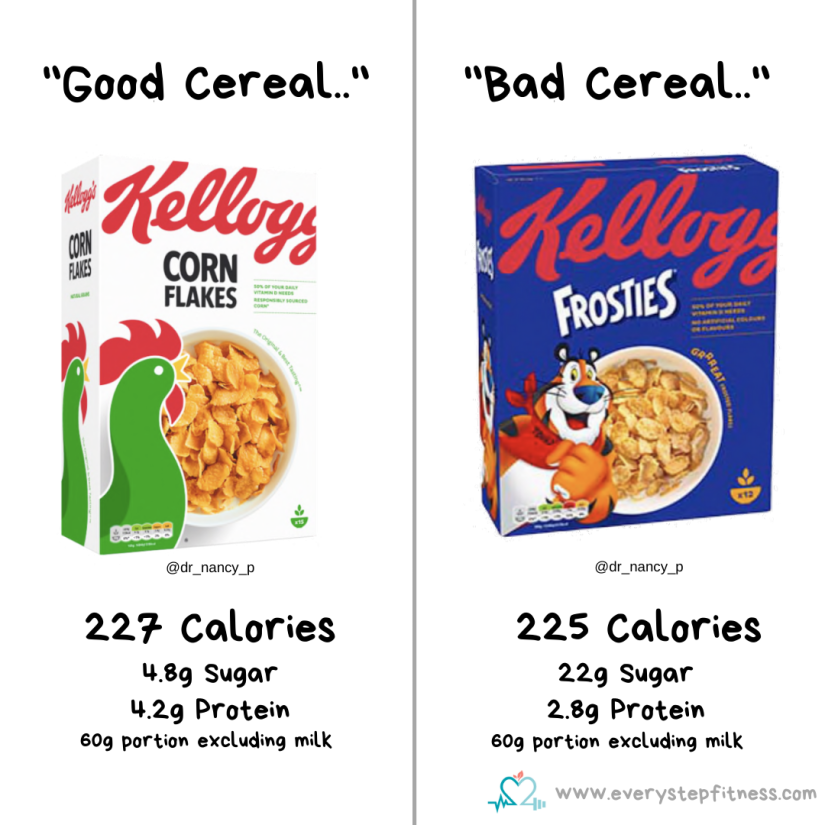
I don’t think many people would think that frosties – sugar coated flakes of corn, are a particularly healthy breakfast. Most people would naturally assume it was higher in calories than other less sugary cereals and I imagine that given the choice, most people would choose the cornflakes as the “healthier” option. But is it really?

A 60g portion of frosties (because who actually has the recommend 30g?!) comes in at 225 calories (excluding the milk). Now as expected it’s high in sugar (22g) – I mean it’s coated in the stuff so that can’t be a surprise.

In contrast 60g of cornflakes are 228 cals, so they’re actually marginally more calorific. Now they obviously contain much less sugar (4.8g) which is one benefit of course but that doesn’t make them automatically better.

When it comes to fat loss it’s the calories that matter – create a calorie deficit and you will lose fat/weight. So in this scenario you’d be no better off with the cornflakes over the frosties. Now there are some additional benefits to the muesli – less sugar and a little extra protein which may help keep you a little fuller, but cornflakes aren’t high protein so it won’t make much difference. Both cereals are fortified with vitamins and minerals anyway so you’re not missing out on as much as you think with the frosties.

Now personally, I am not a fan of frosties at brekkie – but not because I think they’re that much worse than cornflakes – rather I just don’t want super sweet cereal at that time in the morning lol!

However if you love frosties and you enjoy a bowl for brekkie then go for it (they’re also great sprinkled on ice cream …) ! If you love the cornflakes then have it! But if you’re eating cornflakes because you think it’s healthier, or feeling guilty for loving a bowl of frosties to start your day, then stop worrying. As long as you’re having a balanced diet you’ll get plenty of nutrients in throughout the day so if you love frosties enjoy them! 🥣 😋

Whichever you choose – read the labels, check the calories and be mindful of your portion size but most importantly enjoy it!

🤗 xx

Tuesday Tip

Tuesday Tip: isn’t tracking food a bit obsessive?

Tuesday Tip: isn’t tracking food a bit obsessive? 🤯

People often tell me they’ve tried everything but can’t reach their goal. When I ask if they track their food they respond with ‘isn’t that a bit obsessive?’ or ‘no I don’t want to do that’. Not wanting to is fine, that’s your choice, but if you’ve been struggling to reach your goals and you haven’t been tracking then why not try it?

Do you track your finances? Most people do so they have an idea of how much they’re earning, spending and saving. That’s not obsessive, so why would tracking your calories be?

Can tracking food become obsessive? Yes, like anything, of course it can. Does it have to? No! Do you have to do it forever? No! Does it have value? Yes! It’s a tool – and its value is determined by how it’s used and what you learn from it.

We don’t have an innate working knowledge of portion sizes and calorie content. In fact, studies show that people are awful at estimating how much they eat. We underestimate ALL the time, even nutrition experts do! We are surrounded by highly palatable, calorie dense foods and we have evolved to seek them out. So it’s unsurprising, when these sorts of foods are so readily available, that we need to do some tracking to keep an eye on what’s actually going in our mouths.

The main reasons we don’t track are fear, time and being unsure of how many cals to aim for. The fear is of what we’re going to find out and that we really are eating more than we thought. Time is really about priorities. Yes it can take a few days to get the hang of it, but then it takes seconds to log before you eat. Most people have time to check Instagram/Facebook/watch tv. Even the busiest person has 2 mins to log their food, if they want to. In terms of how many cals to aim for; if you’re not sure, ask! I’m happy to help!

You don’t need to track food forever. You’ll learn about portion sizes, calories in the things you eat and drink, and develop that skill. Then you can cease tracking if you want and see how it goes. You can easily go back and check if you feel that skill needs more honing.

You don’t have to count calories forever, but calories will always count!

Happy Tuesday

😁

Xx

Recipes

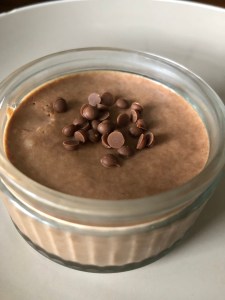
Easy, light high protein chocolate mousse

This is a super easy chocolate mousse which makes a fab dessert or snack. Because it uses Greek yoghurt it’s higher protein than ‘normal’ mousses and that means it is more filling so can help to keep you satisfied.

I’ve also used Cocoa + protein chocolate – mainly because it’s one of my favourite milk chocolates and I was desperate to try their new baking chocolate, but it does have the added bonus of more protein. Any chocolate will work though – milk or dark!

This is so quick to make and so easy. It serves 5-6 at around 200-240 cals snd 15g protein per portion.

You will need:

160ml skimmed milk (or any milk of your choice)

160g 0% Greek Yoghurt (I used ‘total’ – you can use any but it needs to be thick)

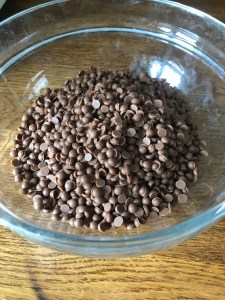
200g Chocolate (I used Cocoa+ milk choc)

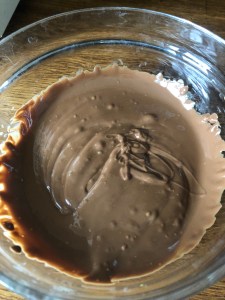
Start by popping the chocolate, in small pieces, in a clean bowl and melt it using short blasts in the microwave (or a bain- marie)

While the chocolate is melting measure out the milk and yoghurt.

Add the milk to the yoghurt and then whip it together until frothy using a hand whisk.

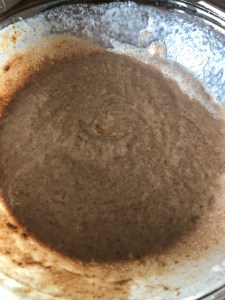
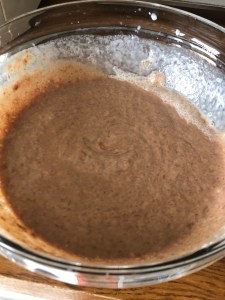
Once the chocolate is melted add it gradually to the yogurt mixture, mixing it quickly and really well.

Once it’s well mixed pour into individual Ramekins and pop in the fridge for at least 3 hrs to set. It will be quite liquid to start with so don’t worry.

Sprinkle a little chocolate on top to serve.

Enjoy 🙂

Xx

Nutrition and Calorie Tips

Half an Avocado….

Half an Avocado…. 🥑

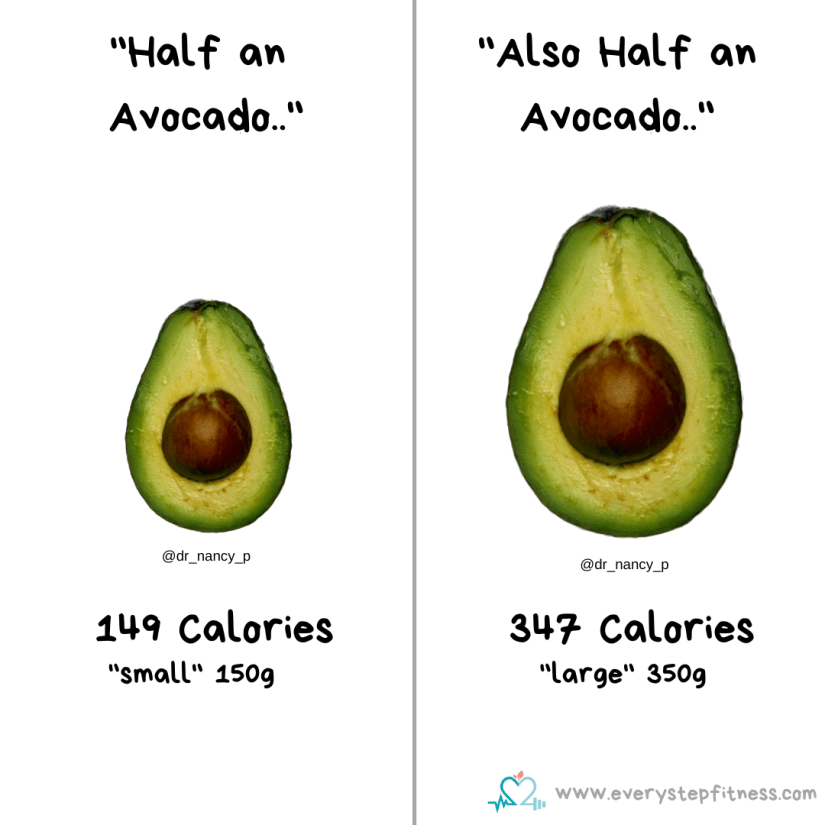
If you’re trying to lose fat and tracking your calories it’s really important to be as accurate as you can and this is why. If you’re using an app like myfitnesspal you might assume that the calorie value for half an avocado is a generic measurement for all avocados. Of course in reality avocados vary quite a lot in size – is that half an avocado a small one? A medium one? Or a large one? Obviously the nutritional value, and calories, will vary significantly with size. In this example one half is a pretty small avocado (150g), which means half will be around 149 cals. However, if you’re lucky enough to get a large avocado (350g) then you’d be looking at 347 cals for half!

So if you were just logging a generic half

an avocado at 149 cals but actually eating a large avocado then you’d be underestimating your calorie intake by 200 cals. If you’re an avocado fan and having some most days that could be an underestimate of 1000 calories or more a week – which is significant enough to prevent or slow fat loss.

If you’re having something low calorie then it won’t matter but with something calorie dense like avocado it really is important to know how much you’re having – assuming your goal is to lose weight/fat.

This is why I encourage my clients to weigh, in grams, rather than using generic, subjective measures like ‘half an avocado’. So if you’re trying to lose fat and tracking your calories have a go at weighing your avocado next time. You may be surprised! 😬

🤗

Xx