Tuesday Tip

Tuesday Tip: How to feel fuller

Tuesday Tip: How to feel fuller 😋

One of the best ways to stay on track is to keep excessive hunger in check and make sure you’re feeling full. Here are some tips to help increase fullness without increasing calories.

# 1 Focus

If you’re chatting, watching tv, even listening to fast music studies have shown you’re likely to feel less full. Focus on the food itself and remove distractions if you can.

#2 Sniff and chew

Sniff your food; smell and taste both switch on our satiety signals and help you feel fuller. Also chew more – it causes hormones that send satiety signals to be released

#3 Go for bulky and moist

The more air or water in a food the quicker it fills you up. Things like vegetable soup are a great option, or popcorn instead of crisps, or grapes instead of raisins etc.

#4 Fats and protein

Higher fat foods keep you fuller but it takes longer for the feeling of satiety to come from high fat meals compared to high protein meals (but the feeling lasts longer). Ideally combine fats and protein to maximise fullness.

#4 Sleep

If you’re sleep deprived your body produces more ghrelin (the hunger hormone) and less leptin (the appetite suppressing hormone). So try to prioritise sleep if you can.

#6 Drink

The brain often confuses thirst signals for hunger so have a glass before your meals. It will also help keep you feeling full.

#7 Small plates

We’re conditioned to fill our plates and to clear them. The empty plate is a signal to feel full and conversely a plate with food on it overrides the satiety signals and keeps us eating. Go for a smaller plate and you’re likely to feel full regardless.

#8 Fiddly foods

Choose foods that take time and effort to eat, this gives the body time to recognise that it’s full e.g. corn on the cob, fish with bones, fruits with pips or skin to peel etc.

#9 An Apple a day

Research has shown eating an apple 20 mins before a meal promotes feelings of fullness and reduces the amount of food consumed.

#10 Load up the veggies

The fibre and water content of veg will fill you up, and also slows you down, increasing feelings of fullness. Aim for half a plate of veg like broccoli, peas, green beans etc.

Happy Tuesday 🤗

Xx

Nutrition and Calorie Tips

‘Just a banana…’

‘Just a banana…’ 🍌

Bananas make a fab snack option or addition to your breakfast or lunch. They’re full of carbs for energy and a reasonable amount of fibre and are a great source of potassium. They’re also easily portable and have their own in build packaging so are handy for when you’re on the go.

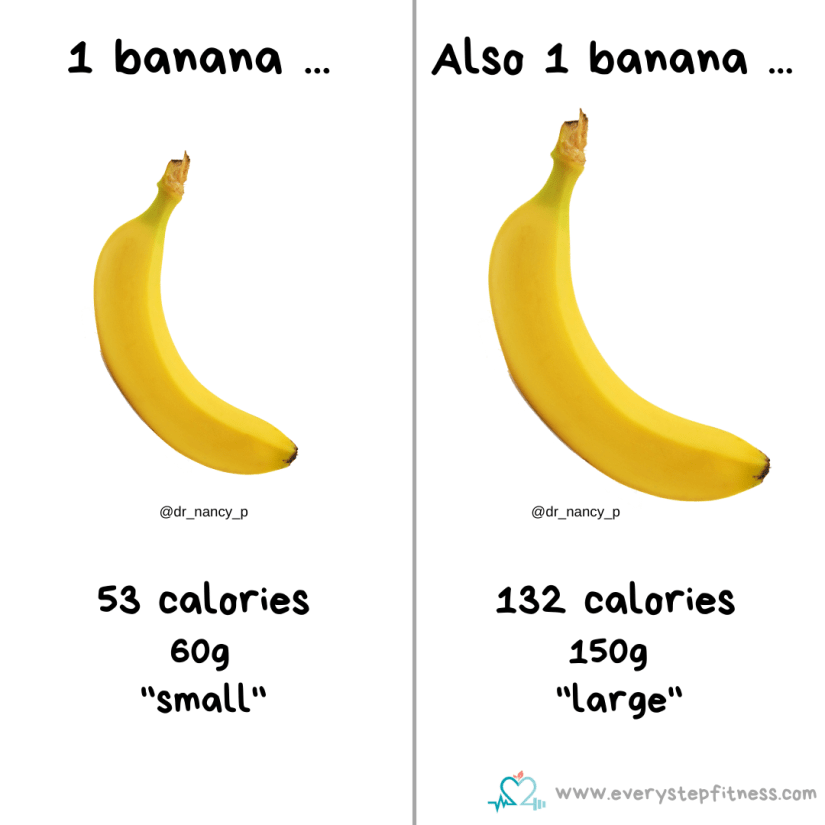
However, if you are trying to lose fat/weight and watching those cals then it’s worth just being aware that bananas can pack a punch when it comes to calories and they also vary wildly. If you’re using a calorie tracking app you’ll often find entries like ‘one small banana’ or ‘one medium banana’ with the associated calories. You’d probably just enter that and assume you were pretty much right. But how small is small? What exactly is ‘medium’? Small to me may be medium to someone else and the calorie differences are pretty large!

The difference between these two bananas is nearly 100g and both are sold as ‘bananas’ – not small or large. So if you were regularly snacking on the larger one you’d be taking in almost 80 extra calories every time. That may not sound like much but over the course of a week or month that will add up. I’m not suggesting you stop having bananas – they’re fab! But just have a go at weighing the next banana you have and see exactly how many calories it does contain.

Knowledge is power right? And if you’re trying to lower that bodyfat then every calorie counts! The more aware you are of what goes in to your mouth the better!

Enjoy 🤗

Xx

Tuesday Tip

Tuesday Tip: Tips for Eating out within your calories

Tuesday Tip: Tips for Eating out within your calories 🍽

If you’re trying to lose fat/weight then frequent restaurant meals can be a challenge. Here are some tips to help reduce those extra cals.

#1 Sauces on the side

Ask for sauces/dressings on the side. Choose tomato-based sauces, and avoid cream based ones. This can save over 300 cals.

#2 Stand your ground

Don’t feel pressured to go for higher cal options just because others are. Its your body, not theirs, so choose what you want. It should be about the company, not what’s on your plate.

#3 Check in advance

Check the menu in advance, choose your meal and log the cals ahead of time. You can then make it fit into your daily target. You’ll also be less likely to be swayed by whoever you’re with.

#4 Avoid the nibbles

It’s an obvious one but just avoid the pre dinner bread, or olives etc You don’t need them, you’re about to have a full meal!

#5 One course

Most restaurant main courses will be 650 – 1500 calories so you really don’t need more. Ideally go for one course, especially if eating out several times a week.

#6 Starter for main

Try going for a starter as a main and then bulk it out with a side salad or veg. This is also a great tactic if the people you’re with are having 2 courses – you can have a starter and a starter!

#7 Food choice

For starters opt for salad or soup (avoid cream-based ones), then fish (white fish is best) or chicken for main, grilled or baked. Vegetarians beware of cheese-based dishes and consider asking for the vegan options. For pud; a sorbet or fruit based dessert is best.

# 8 Limit the booze

Booze is extra cals so try to avoid it, or alternate with tap water and try to choose lower calorie options (e.g. slimline gin and tonic).

#9 Don’t starve yourself

Don’t starve yourself before a meal out as you’re likely to lose self control and overeat. Instead adjust your other meals to save 100-200 calories on the days before and after to help buffer it.

#10 It’s not about the food

When you look back at these events it won’t be the food you remember – it will be the shared stories and laughs, with the people you’re with. Take the focus off the food.

Happy Tuesday 🤗

Xx

Recipes

Courgette, leek and spinach soup

The clocks have gone back and it’s chilly out there today, so it’s definitely soup season!

This is a quick, easy, light soup for these cooler days. It is ridiculously low calorie – at around 100 cals a bowl (less if you leave the goats cheese out)! I made a massive batch as we had an over-grown courgette (basically a marrow) that I wanted to use up so it made over ten servings but the amounts below will make at least 5-6 portions.

You will need:

500g Courgettes

250g Leeks

400g Spinach

75g Soft Goat’s cheese (optional)

500ml strong vegetable stock

Mixed herbs, salt and pepper to taste

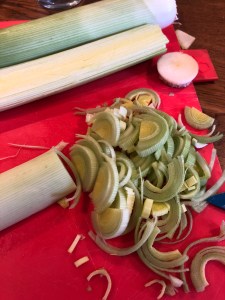
Slice the leeks thinly and pop in a large pan over a low heat and allow to soften.

Chop the courgettes thinly too and then add them to the pan and allow to cook through for around 5 mins with the lid on.

Add the stock and herbs and cook for a further 5-10 mins. If your vegetable stock isn’t very strong it’s worth adding an extra stock cube too.

Add the spinach and stir thoroughly, and then cook through for 3-5 mins.

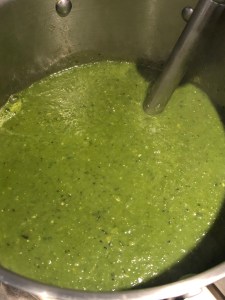
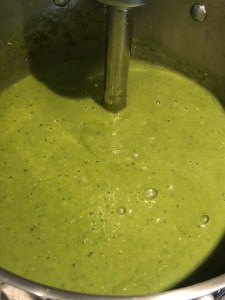
Remove from the heat and allow to cool for 5 mins and then blend thoroughly.

Add salt and pepper to taste and then, if you’re using it, add the goat’s cheese and blend again to combine.

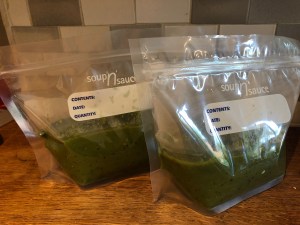
Serve immediately or you can keep it in the fridge or freezer for handy lunches or dinners in the week!

Enjoy 🙂

Xx

Nutrition and Calorie Tips

The ‘health’ halo effect ….

The ‘health’ halo effect 😇….

The “health halo” effect is something we all fall prey to. It’s the perception that certain foods are better for you than others due to their perceived health benefits. Usually terms like “organic”, “plant based”, “high protein”, “contains one of your five a day” are used on the packaging and there’s an assumption that this means they’re the best choice.

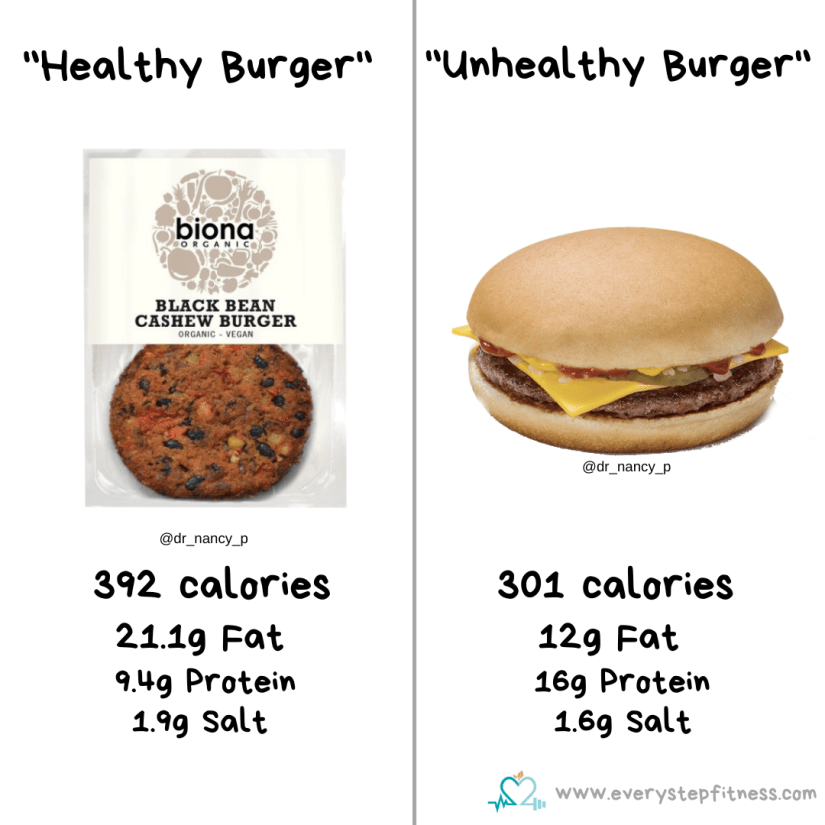
Now before anyone reacts – I’m not suggesting a Mcdonalds cheeseburger is a “healthy” option, nor am I suggesting it’s got more health benefits than the Biona Black bean and cashew burger. They’re both very different nutritionally, and they both taste very different too. But for many people trying to lose fat or weight they might naturally assume that instead of having a cheeseburger for lunch, they’d be better off having the Biona burger. However in actual fact that “healthy” burger has more calories and fat than the cheeseburger, and less protein. The cheeseburger is also lower in salt. The Biona burger doesn’t include the bun and other extras (including cheese) either so you’d be looking at perhaps another 300 or more calories on top (and the associated extra fat and salt).

So if you needed a quick lunch, and really fancied a cheeseburger, you’d be far better off just having one. I’m certainly not suggesting your whole diet be made up of “junk food”, but it’s important to be wary of these marketing ploys which make you perceive things as being “healthy” and therefore lower calorie and helpful for weight loss. At the end of the day, as always, it comes down to calories. If you want to lose fat or weight, then you need to be at a calorie deficit. And it’s important to still have foods you enjoy as part of an overall balanced diet. So have the cheeseburger for lunch if you want it, and then have a dinner with a range of whole foods and vegetables etc.

Be curious about what you’re putting in your body, look at the nutritional labels on food and don’t always assume the branded “health” food is the best choice.

🤗

Xx