Nutrition and Calorie Tips

Cooked vs uncooked weight..

Cooked vs uncooked weight… 🍝

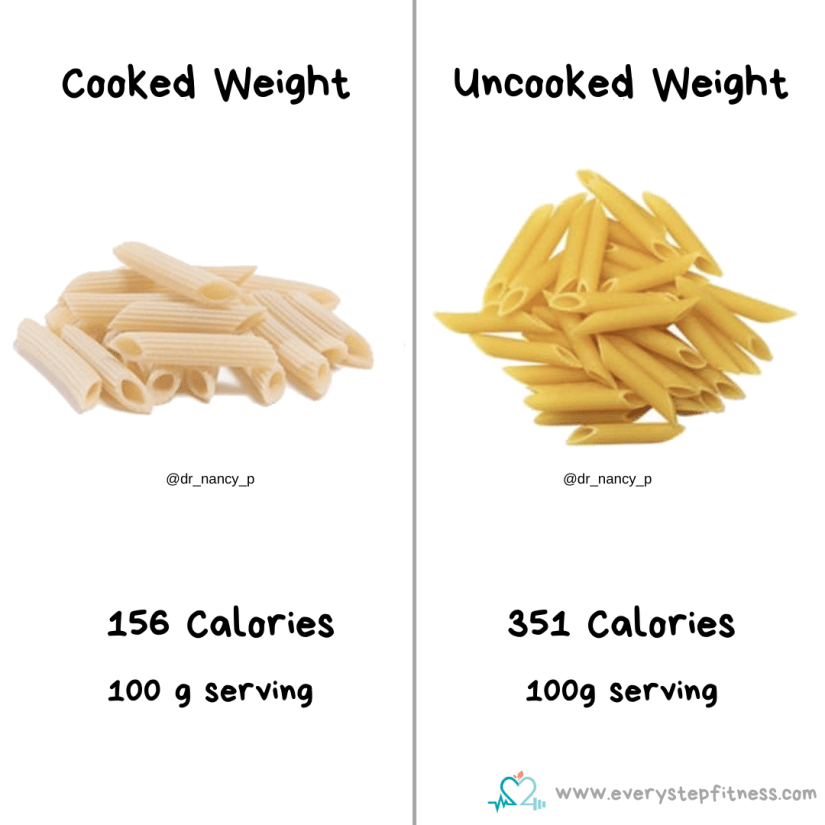
Just a short tip today. This is a simple thing that can make a big difference. If you’re tracking calories then do be careful when tracking things like pasta, rice and other dry grains. Depending on the brand and type you may find the calorie info relates to cooked rather than uncooked weight.

The difference is very significant! If you’re logging the calories as 151 but you’re actually eating 351 cals that could have a significant impact on your progress. So be sure to look carefully at the label – usually they will state uncooked weight or cooked/ ‘as prepared’ weight – so be sure to track accordingly!

🤗

Xx

Tuesday Tip

Tuesday tip: Can You Turn Fat Into Muscle?

Tuesday tip: Can You Turn Fat Into Muscle? 💪🏼

There is a common misconception that fat you can turn fat into muscle. Sadly you can’t! Fat is fat, muscle is muscle; totally different types of tissue. Both can be lost or gained-that’s it. So what’s happening when people say this? Well in reality people are losing some fat, and gaining some muscle, which is why it may seem like fat has “turned into” muscle. Fat is lost when you have a calorie deficit, muscle is gained by having a calorie surplus, working out (a muscle building stimulus) and having the raw materials to do it (protein). In most cases if you’re losing weight you are mostly losing fat, though if you are also upping your exercise then there will be some increase in muscle too, which is one reason why weight loss is not linear. This works best for those with a reasonable amount of fat to lose, on a moderate calorie deficit, who also increase their activity. This is what I design for many of my clients. It means you’ll be losing fat and also gaining a little muscle too. As muscle is denser than fat you’ll also shrink (they weigh the same… muscle just takes up less space than fat).

So what about when you stop working out? Does muscle magically turn in to fat?

Nope! it can’t! What happens though is if it’s short term your muscles are just less “pumped” so you “feel” fatter. Longer term you simply lose some muscle and probably gain some fat. This is because when you remove the stimulus which tells your body to build/maintain muscle (i.e. strenuous physical activity) you will lose the muscle mass. You’ll also end up burning fewer calories both through less activity, but also less muscle mass means a lower bmr (basal metabolic rate – i.e. calories burnt at rest), and so you are more likely to end up in a calorie surplus and put on fat.

The only way to prevent muscle being lost long term is to continue to workout! But you can prevent fat being gained simply by ensuring you don’t eat more than your maintenance level of calories (easier said than done, though not impossible!)

So bottom line – fat can never be turned into muscle, and muscle is never turned into fat!

Happy Tuesday 🤗

xx

Nutrition and Calorie Tips

Healthy alternative….

Healthy alternative…. 🍇 🍬

When trying to lose weight people will often go out of their way to force themselves to choose a “healthy” alternative. So if you’re craving a sweet snack, and really just want some haribo you may instead think you’re better of choosing dried fruit instead.

The key to being in control of your weight management is really understanding that there is no such thing as a “bad” or “good” snack – they’re just different. There are nutritional differences between the two options of course. The dried fruit has increased fibre and micronutrients than the haribo, but we don’t just choose food on the basis of its nutritional breakdown.

Both these snacks contain high levels of sugar and when it comes down to it the source of those sugars makes very little difference to how your body processes it – especially in the context of this example. Both taste good, but if you are really craving sweets and instead force yourself to have the dried fruit you’re still taking in almost identical calories. Now that’s fine if that’s where it ends, but often that craving will still be there. The sweets may also give you an emotional boost as well as an energy one.

Overall the calorie difference between the two is pretty marginal. So if you’re choosing the dried fruit in an effort to lose weight, then think again. If you’re choosing them because you like them then brilliant – keep having them. If you fancy some sweets then have them!

There are no good or bad foods – all foods can be accommodated within a balanced diet. Being aware of the calories in different foods empowers you to make that choice.

🤗

Xx

Nutrition and Calorie Tips

Why diets work…

Why diets work… 🥗

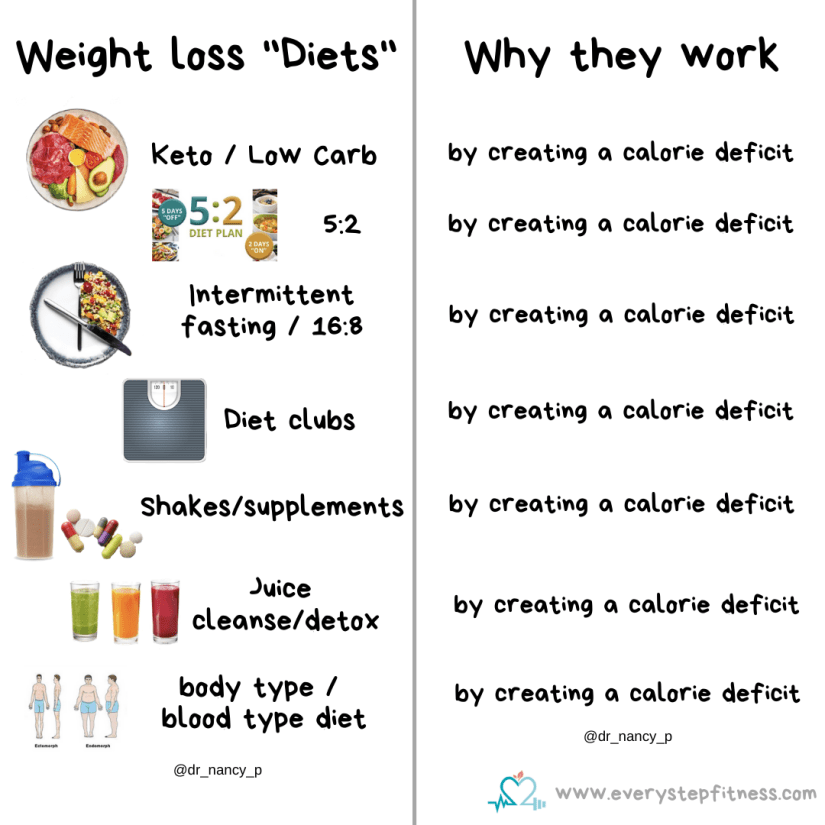
There are lots of diets out there that claim to be better than any other. But what do ALL these diets have in common? And why do they work?

It’s nothing to do with any special properties of specific diets. For ANY diet to work it has to result in a calorie deficit. For some people certain diets will enable them to achieve this more easily and therefore that diet will work for them. But behind these diets are the simple maths of calories in vs out. However the issue with many diets is that they don’t educate you on the mechanism behind them and are therefore short term fixes.

Keto / low carb : omits or reduces carbs, which may reduce calories.

5:2 : limits calorie intake for 2 days a week, which may create a calorie deficit on average.

Intermittent fasting/ 16:8 : restricts the window of time you can eat in, which MAY reduce calories.

Diet clubs : assign points or values to certain foods and restrict food types, so MAY reduce calories

Shakes / Supplements : replaces meals or promotes excessive bowel movements etc which result in water loss, and a possible calorie deficit from meal replacement.

Juice cleanse/ detox : replaces whole foods with juices, resulting in fewer calories and rapid initial water loss.

Body type/blood type diet : restricts foods based on blood or body type, which may result in a calorie deficit

Spot the similarities? Many involve omitting food groups which will result in a calorie deficit. Calories can’t tell the time so methods involving not eating on certain days/times only work if you don’t overeat on others. Diet clubs help with accountability (regular weigh ins and rewards) but hide calories behind points or labels which lock you in to their method.

All of these diets can result in fat loss, but how many of them are sustainable long term, educate you on managing energy intake or build new habits? Some are actually damaging; laxative supplements and fasting can cause bowel damage, kidney damage and development of silent acid reflux etc, as well as promoting disordered eating.

So it doesn’t matter which ‘diet’ you choose, as long as it works for you – but make sure you understand WHY it works 🙂

xx

Tuesday Tip

Tuesday Tip: Collagen – worth the hype?

Tuesday Tip: Collagen – worth the hype? 💊

Collagen supplements are a common topic, in relation to skin, joint health and fitness but does it actually work and do you really need the supplements?

Collagen is the most abundant protein in the body. It provides structure and elasticity in muscles, tendons, ligaments, skin, blood vessels, and connective tissues. As we age, collagen levels drop, resulting in wrinkles, saggy skin, joint pain, stiffer tendons and ligaments, and weaker muscles. A diet high in sugar, excessive sun exposure, and smoking also diminish collagen levels. As a protein source, collagen is an excellent one, with more protein per calorie than other sources and less sodium and sugar.

Social media is full of endorsements from celebrities for collagen products. They’re certainly no miracle product but there is a growing body of evidence suggesting it can improve skin, joint health, promote wound healing, and fend off muscle wasting. Studies show improvements in skin elasticity, blood circulation to the skin and less dryness. Interestingly a small study of men with age related muscle loss showed that collagen combined with weight lifting led to more muscle gain than just lifting weights alone. While research is mixed, a few studies have also shown that collagen can help with arthritis pain and sports-related joint pain.

Although research is limited it is promising and it’s certainly worth considering including more collagen in your diet but you really don’t need to spend money on supplements or fancy drinks etc. As with anything it’s always best to get your nutrients from a healthy, balanced diet.

If you’re a meat eater the easiest option is bone broth, chicken, pork or salmon skin. Egg yolk is also a great source as are any foods with gelatin in (haribo included lol!). For vegans or vegetarians it’s more challenging but foods like soybeans and other legumes, spirulina and agar, both derived from algae can help. In addition eat plenty of leafy green vegetables, citrus, eggs, berries, tomatoes, cabbage, pumpkin seeds, avocados, and garlic, which can provide your body with nutrients to support it’s own collagen growth.

Happy Tuesday 🤗

Xx