Nutrition and Calorie Tips

Wholewheat Fusilli vs. White Pasta: Is the Switch Worth It?

Wholewheat Fusilli vs. White Pasta: Is the Switch Worth It? 🍝

Many people opt for wholewheat pasta over white pasta thinking it’s the healthier choice. But is it really that much better for you?

When it comes down to the basics, white and wholewheat pasta aren’t that different. Both are made from durum wheat, but the key difference lies in the processing. Wholewheat pasta uses the entire grain, including the bran, while white pasta has been refined, removing the bran and germ. But does this processing really make a huge nutritional difference?

In terms of calories, the difference isn’t significant. Wholewheat pasta is very slightly lower in calories (around 5 – 20 fewer per 100g), but not enough to make much impact on your calorie intake . So, if you’re watching your calorie intake closely, the difference is relatively small, and you could still enjoy white pasta without worrying too much about a major increase in calories.

Wholewheat pasta does have more fibre, but the difference is also not huge with only around 1-3 grams more per 100g, depending on the brand. While that’s a slight advantage, if you’re already getting plenty of fibre from other sources like fruits, vegetables, and other whole grains, the extra fibre in wholewheat pasta might not have a huge impact on your diet.

At the end of the day, choosing wholewheat pasta over white pasta might be a great option if you prefer the taste or if you’re aiming to boost your fibre intake. But if you prefer the texture and flavor of white pasta, there’s no need to feel guilty, the nutritional differences are minimal, and both can fit into a balanced diet.

In short, don’t stress too much over the switch, choose the pasta that you enjoy most and fits into your overall diet. You’re likely to get all the nutrition you need from a variety of other foods.

Enjoy! 🤗
Xx

Tuesday Tip

Tuesday Tip: No Single Food is Making You Fat

Tuesday Tip: No Single Food is Making You Fat 🍔

We’ve all heard the myths; fatty foods, sugar, bread, or even chocolate are the culprits behind weight gain. If you just cut them out, you’ll reach your goals. But here’s the truth- none of these foods are directly making you fat. So, what is?

It all comes down to consistently eating more calories than your body burns or a calorie surplus. If your body burns 2,500 calories a day and you consume 3,000 calories of chicken, rice, and veggies, you’ll still gain weight. Similarly, if you consume 2,000 calories of chocolate and nothing else, you’ll lose weight. It’s all about energy balance; calories in vs. calories out.

So why do some foods like chocolate, cake, or fatty snacks get blamed? It’s because they’re calorie-dense and hyper-palatable, making it easy to eat more calories than you realise. 1g of fat has 9 calories, so high-fat foods tend to be ‘more expensive’ in terms of calories. You need fats in your diet, but they are calorie-dense, so they can add up quickly if not eaten in moderation.

Carbohydrates are ‘cheaper’ because 1g of carbs provides only 4 calories. And yes, you do need carbs in your diet as they’re your body’s primary source of energy. However, when foods contain both fat and carbs (chocolate, ice cream, or cake), the calories add up quickly. While these things might not be the healthiest options, they aren’t inherently ‘bad’. They just need to be enjoyed in moderation.

So, what’s the bottom line? Fat or weight gain happens when you consistently consume more calories than you burn. This means you don’t have to give up your social life, favorite foods, or go-to treats when trying to lose weight or get lean. Once you understand the principles of nutrition, energy balance, and fat loss, it becomes much easier to make healthy decisions without feeling deprived.

So go ahead, enjoy your slice of cake or a piece of chocolate, but remember, balance is key. Knowing how to manage your calories will set you up for long-term success. Keep these fundamentals in mind, and getting lean will feel a whole lot less depressing!

Happy Tuesday! 😊

Xx

Tuesday Tip

Tuesday Tip: Lift Weights to Live Longer

Tuesday Tip: Lift Weights to Live Longer 🏋🏻‍♀️

We all know staying active is key to a long, healthy life, but did you know that lifting weights is a a strong predictor for longevity? That’s not to say cardio exercises aren’t important too but resistance training provides unique benefits that shouldn’t be overlooked.

One of the strongest links between resistance training and a longer life is its impact on muscle mass, strength, and particularly grip strength. Research shows that grip strength is not only an indicator of muscle health but also a predictor of longevity. Stronger grip strength is associated with lower risks of serious health issues, including cognitive decline, depression, and even hospitalizations.

Lifting weights doesn’t just improve strength—it also enhances mobility and balance. As we age, maintaining muscle mass and bone density becomes crucial for reducing the risk of falls and fractures. Strength training can slow or even reverse sarcopenia (age-related muscle loss), helping you stay mobile and independent for longer. Additionally, it has a positive effect on metabolic health, potentially lowering the risk of chronic diseases like heart disease and diabetes.

How to apply this info:

#1 Combine Cardio and Strength for Maximum Benefits

Cardio is fantastic for heart health, but adding resistance training strengthens muscles, bones, and joints, making you more resilient as you age. This combination optimizes both your cardiovascular and overall strength.

#2 It’s Never Too Late to Start

Whether you’re in your 20s or 70s, it’s never too late to start lifting weights. For older adults, it’s especially beneficial for preventing muscle loss, improving balance, and enhancing mobility. Strength training can significantly improve quality of life, even in later years.

#3 The Key Is Consistency

Like any form of exercise, consistency is key. You don’t need hours at the gym—just a few sessions a week of focused resistance training can improve your strength and overall health.

So, if you’re looking to live longer and feel better, don’t underestimate the power of weights. Pair it with your cardio routine and start building a stronger, healthier future today!

Happy Tuesday! 🤗

Xx

Nutrition and Calorie Tips

Coco-nuts!….

Coco-nuts!…. 🥥

Coconuts are heralded as a “superfood” So coconut yoghurt must be better for you right?

Coconut yoghurt contains fewer carbs than dairy yoghurt as it is lactose free (the natural sugar in milk). It also contains saturated fat, specifically medium-chain triglycerides, which are easily absorbed by the liver and converted to ketones (an alternative energy source in the brain) and could be beneficial for dementia and related conditions. There is also evidence that coconut may help type-2 diabetes, elevated cholesterol levels and may assist weight loss. Critically though many of these benefits are associated with coconut oil or meat,not yoghurt.

It’s plant-based and suitable for those with dairy/lactose allergies or vegans (but not all coconut yoghurt are actually vegan, many also contain dairy milk or gelatin). Natural yoghurt is dairy based but contains live probiotics and is good for gut health. There are no naturally occurring probiotics in coconut yoghurt (though some brands do add them in). If you are aiming for weight/fat loss however then natural yoghurt has some benefits.

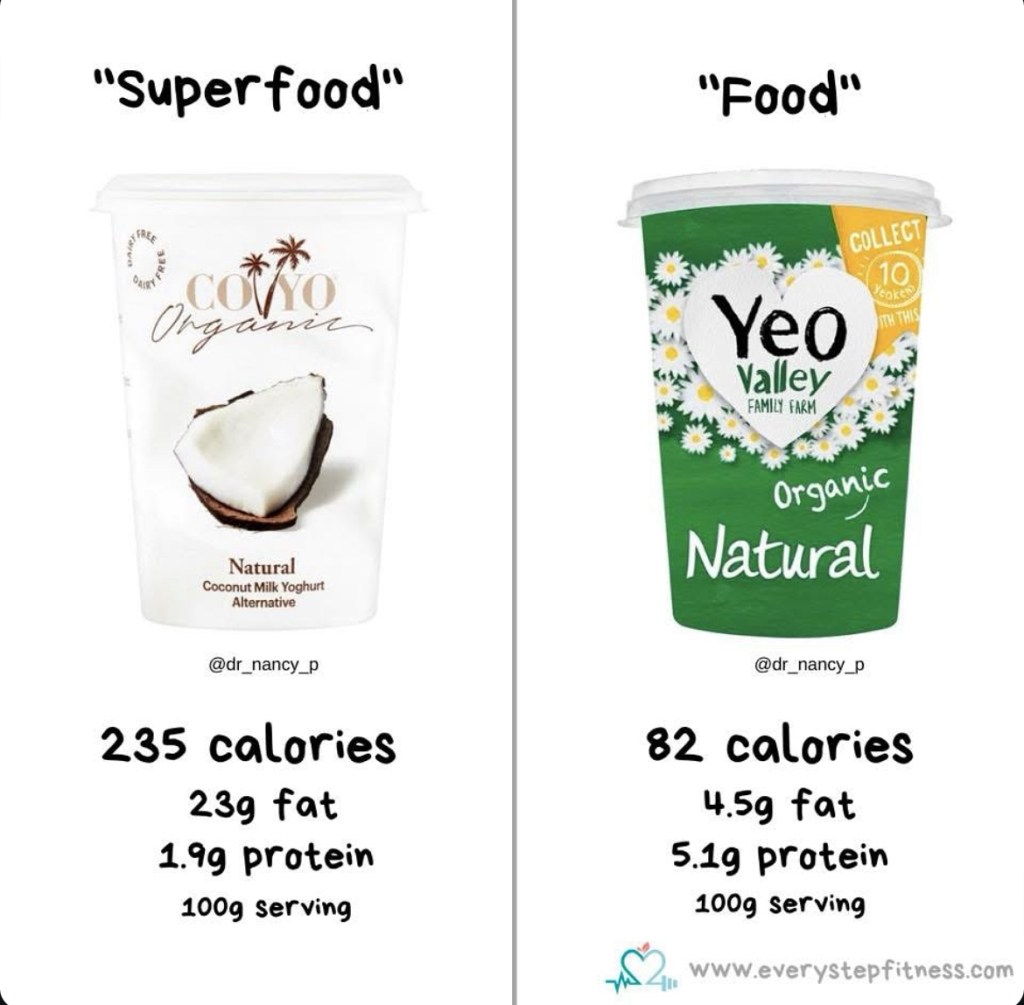
Coconut yoghurt contains significantly more calories than natural yoghurt and approx 5 times as much saturated fat. Whilst the fat in coconut yoghurt is the more beneficial medium-chain triglycerides thats still a large amount of fat and that has it’s own risks. There’s also significantly less protein in coconut yoghurt. Higher protein can help keep you fuller for longer – which from a weight loss perspective is helpful.

So if you were assuming coconut yoghurt is “healthier” and therefore better option for weight loss then think again. The “good” fats in coconut yoghurt don’t offset the extra calories I’m afraid. There are lower calorie coconut yoghurts out there so if you really love coconut yoghurt then check the labels (a lot is watered down reducing the calorie content). If you are unable to eat dairy then consider some of the lactose-free yoghurt which have comparable calories, or go for a soya based option.

As always – calories count guys so check those labels – and have what you want, within your calories. Knowledge is power!

Enjoy 🤗

Xx

Tuesday Tip

Tuesday Tip: Are Superfoods Super?

Tuesday Tip: Are Superfoods Super? 🥗

Are superfoods really super? Not really! The term “superfood” might sound catchy, but it’s not as clear cut as it seems. The term started as a marketing tactic back in the early 20th century when bananas were promoted as “superfoods” after a 1918 study highlighted their health benefits. While bananas are indeed nutritious, the term itself is more about marketing than actual nutrition.

So, what exactly qualifies as a “superfood”? Well, the vague definition often used is “nutrient-rich foods that are considered especially beneficial for health.” But what does that really mean? What makes a food “nutrient-rich” or “especially” healthy? These questions show how the term can be misleading. When it comes to eating for health, it’s not about any one food being “super”; it’s about the whole picture.

#1 Don’t Get Hung Up on Labels

Much like how the term “healthy” is often misused, labeling foods as “super” can create confusion. Whether a food or exercise is beneficial depends on how it fits into your overall lifestyle. A balanced approach is key. Just like no single exercise is the key to fitness, no one food is the magic solution for health.

#2 Balance is the Key

Superfoods may be lower in calories and higher in fiber, vitamins, and nutrients, which can make them a great addition to a healthy diet. But here’s the thing: even if it’s labeled a “superfood,” it’s not going to work miracles without the right context.

#3 Make It Your Own

Since there’s no universal definition for what counts as a superfood, why not create your own list? Choose foods based on your preferences and nutritional goals. Focus on what works best for your body and what makes you feel good.

Ultimately, the term “superfood” might be marketing jargon, but the foods often associated with it can certainly play an important role in your diet. The key is to incorporate them into a well-rounded eating plan that works for you.

Enjoy your healthy choices, without the pressure of labels!

Happy Tuesday 🤗

Xx