Tuesday Tip

Tuesday Tip: Muscle Confusion ≠ Muscle Growth

Tuesday Tip: Muscle Confusion ≠ Muscle Growth 🏋🏻‍♀️

There’s a common belief that constantly switching up your workouts is the “secret” to building muscle and progressing with strength. The idea is that you have to “confuse your muscles” for them to grow and get stronger. But is that really how progress works?

Muscle confusion is just another trendy approach rather than a proven strategy. In reality, your body thrives on repetition, not randomness. Growth and strength come from doing the same key movements consistently over time.

That means:

• Sticking to foundational lifts (think squats, presses, rows)

• Tracking your progress

• Gradually increasing weight, reps, or control

• Staying consistent, not chasing the latest TikTok workout trend

Studies show that people who followed a structured program using familiar movements with progressive overload made better strength progress than those who constantly changed their routines.

So what should you focus on?

• Progressive overload (adding challenge over time)

• Mastery of key movements (like squats, presses etc)

• A well-designed plan that supports your goals

• Consistency, not novelty

Random variety might feel fun, and there’s nothing wrong with enjoying your workouts, but don’t confuse “feeling the burn” with actual progress. The goal isn’t to just sweat. It’s to improve.

You don’t need to shock your muscles to grow. You need to train them with purpose. Keep it simple, stick with what works, and watch your strength build week after week.

Happy lifting! 🤗xx

Nutrition and Calorie Tips

8 Habits to help with fat loss

8 Habits to help with fat loss 😊

Although I’m a big fan of tracking calories I know it’s not for everyone so here are 8 habits that don’t involve calorie tracking that can help with losing fat (they can also be used alongside tracking of course!).

# Make Healthy Food Easier to Grab

• Chop fruits/veggies in advance

• Keep them visible in the fridge or on the side.

• Use canned/frozen produce, they’re just as nutritious as fresh

# Add Colour to Your Plate
Fruits and veggies are packed with vitamins, fibre, and water. More color equals more nutrients and fullness. Aim to include as many colours as possible at every meal.

# Prioritize Protein
Protein helps control hunger and supports muscle. Include it in every meal.

• Pure proteins: chicken breast, egg whites, tuna, white fish, whey

• Protein with fat: salmon, whole eggs, cheese

• Protein with carbs: beans, lentils, milk, edamame

(NB: Peanut butter is mostly fat, not a great protein source!)

# Think About Portions
Use this plate method:

• ½ veggies

• ¼ lean protein

• ¼ carbs

• Healthy fats in moderation

# Eat More Mindfully
Slow down when you eat and notice the taste, texture, and aroma. Put your phone away- the more present you are, the easier it is to stop when full.

# Use the Hunger Scale
Tuning into hunger cues helps avoid emotional or mindless eating. Use the hunger scale 1-10 : 1. Ravenous – 2. uncomfortably hungry – 3. very hungry – 4.‘I could eat’ – 5.Neutral – 6. satisfied – 7. full – 8. very full – 9. uncomfortably full – 10. ‘I feel sick’

Start eating around “I could eat” (4) and stop near “satisfied” (6–7).

# Move More
No fancy workouts required – Walk, stretch, garden, clean, take the stairs. NEAT (non-exercise activity) adds up and burns more than you think.

# Plan Ahead
When you’re starving with no plan, take away win. So instead meal plan once a week, prep in batches and cook extra for leftovers.

Focus on consistency overt perfection and build small habits that last and make fat loss feel daunting.

🤗Xx

Tuesday Tip

Tuesday Tip: Processed ≠ Unhealthy

Tuesday Tip: Processed ≠ Unhealthy 🥦🍗

There’s a common belief that processed food automatically means it’s ‘bad’. But is that really true?

Almost everything we eat is processed in some way. A processed food is simply any food that’s been altered from its original state, which means the majority of what’s in your fridge or cupboard qualifies.

That includes:

• Pre-cut fruit and veggies

• Frozen veggies

• Canned beans or fruit

• Boneless, skinless chicken

• Whole grain bread

These foods are technically processed, but that doesn’t make them ‘bad’ or unhealthy. Processing can actually make food safer, more convenient, and even more nutritious e.g. frozen spinach that retains its nutrients better than ‘fresh’ spinach sitting in your fridge for a week.

But what about ultra-processed foods?

Ultra-processed is more of a buzzword than a clear scientific category. Definitions vary widely across studies, and the term includes everything from chips and pastries to protein bars and shakes.

So, should you avoid them altogether?

Not necessarily. Many so-called ultra-processed foods are can be nutrient dense e.g protein powders, snack bars fortified cereals etc . So what is the real issue? Some ultra-processed foods are engineered to be hyper-palatable meaning they’re super tasty and easy to overeat, which can lead to excess calorie intake over time. That doesn’t make them ‘bad’, it just means we need to be mindful.

Here’s what matters more:

• The overall quality of your diet

• Whether you’re eating enough whole foods (lean protein, fruits, veggies, whole grains)

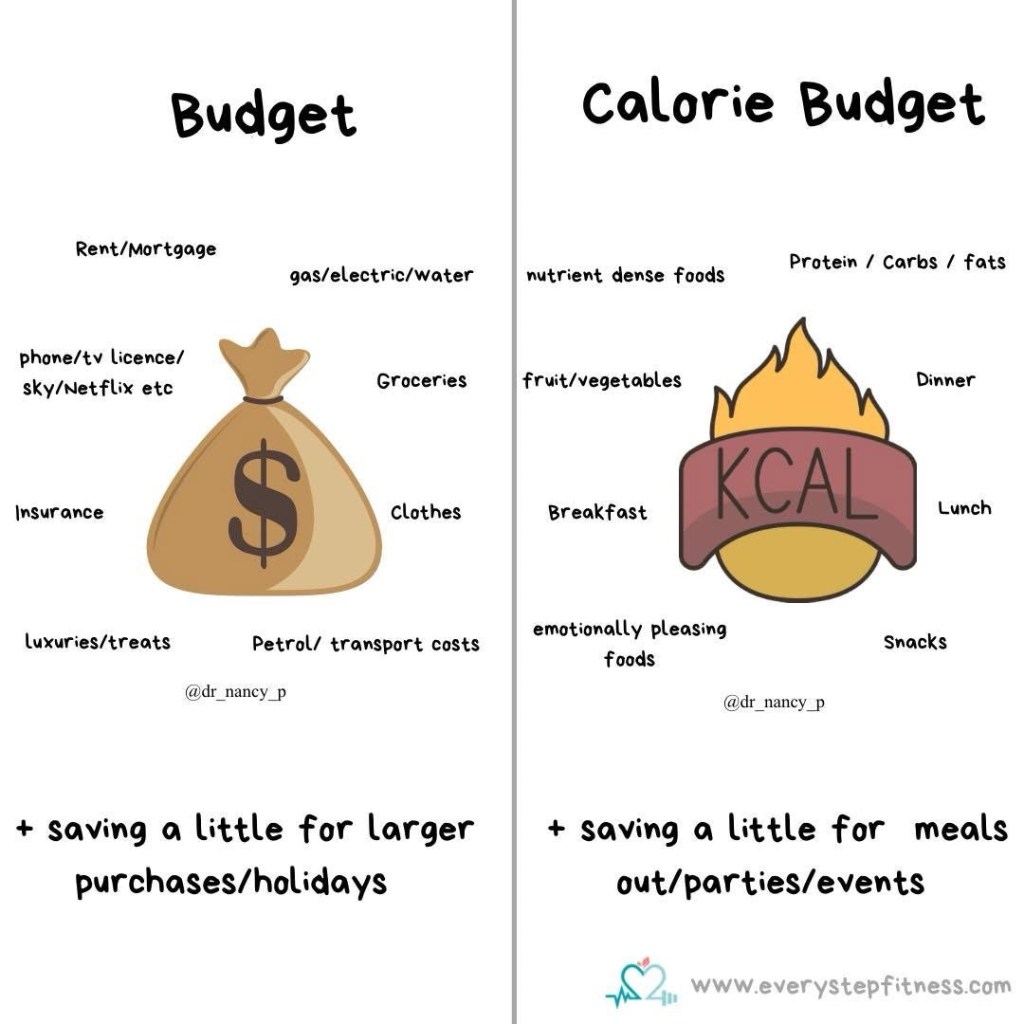
• Managing your portion sizes and total calorie intake

Bottom line? A healthy diet doesn’t have to be 100% ‘clean’ (a meaningless term). It’s okay to enjoy convenient, processed options, especially when they support your goals, save time, and help you stay consistent. So next time you hear the word processed don’t panic. Nutrition isn’t black and white. It’s about the big picture and that includes balance, flexibility, and a bit of common sense.

Happy Tuesday! 🤗xx

Nutrition and Calorie Tips

‘That’s so unhealthy – it’s full of sugar’…

‘That’s so unhealthy – it’s full of sugar’… 🍫🥛

Let’s kill the sugar myth real quick…

There’s a pervasive myth that sugar is bad – particularly sugar in processed foods. However the view is that ‘natural sugar’ is absolutely fine?

A mars bar contains around 30g sugar and a 600ml glass of milk also contains 30g sugar. However people will demonise the chocolate bar on the basis of its sugar content but will say milk is the ‘healthier’ choice, despite the sugar content? Why? Because the sugar in milk is ‘natural’ so it must be better, right?

Not exactly. Sugar is sugar. Whether it’s added to a chocolate bar or naturally found in milk as lactose, your body processes it the same way. What matters more is the context: how much you’re consuming, how filling it is, and whether it fits into your overall diet.

In this example the Mars bar contains around 225 cals and 30g sugar, whilst the milk contains around 300cals and 30g sugar. That’s the same amount of sugar and more calories in the milk. But most people wouldn’t blink at drinking a big glass of milk with breakfast, while feeling guilty over snacking on Mars bar.

Now obviously the milk has other benefits in terms of more protein and other micronutrients but in the context of the argument around sugar it’s no better than a mars bar. It’s not about “natural vs added” sugar, it’s about your whole diet. If you’re having a load of whole foods and protein in other meals then the Mars bar isn’t an issue if you can fit it within your calories. If however you’re eating 4 of them and your meals are also high in calories and low in micronutrients then it probably isn’t a great idea. The milk might be a better ‘snack’ but it still contains a significant number of calories so that needs to be accounted for.


We need to stop demonizing sugar based on its source and start looking at the bigger picture: calories, satiety, and how everything fits into your goals.

Both milk and Mars bars can have a place in a balanced diet, if you manage portions and priorities.

🤗

Xx

Tuesday Tip

Tuesday Tip: You won’t get ‘bulky’

Tuesday Tip: You won’t get ‘bulky’ 💪🏼

There’s a common fear, especially among women, that lifting weights will lead to getting “too bulky.” But is that really a justified concern?

Very few people naturally build extreme amounts of muscle and building visible muscle mass takes serious consistency, effort, and time. You don’t “accidentally” bulk up. It takes hours and hours in the gym every week. Building muscle does a lot for you (and getting bulky isn’t part of that!)

Here’s what the research says:

• Increased muscle mass improves metabolic health, even if you don’t lose fat. That means better blood sugar regulation, insulin sensitivity, and overall energy.

• Muscle slightly increases resting metabolism, but more importantly, it improves your body’s ability to train harder, recover better, and burn more energy overall.

• Resistance training reshapes your body – more definition, better posture, improved strength- regardless of the number on the scale

• While women may gain less absolute muscle than men due to hormonal and structural differences, they can build just as much relative muscle when training is consistent.

• Muscle doesn’t ‘turn into fat’ if you stop training, you just lose the stimulus and may retain water or gain fat if your diet doesn’t change.

Most people aren’t muscular enough to

‘accidentally’ look too big. In fact, building muscle gives you:

⁃ More shape

⁃ Better definition

⁃ Improved body composition

⁃ More freedom with food (because your body burns more!)

⁃ Long-term health benefits, including better aging and resilience

So if you’re still stuck in the mindset of always trying to get smaller, it’s time to think again. Think about building—not just muscle, but confidence, capability, and freedom. Muscle isn’t just about aesthetics. It’s protective. It’s empowering. And it’s one of the most underrated tools for aging well and living fully. And it definitely won’t result in you looking bulky!

Your future self will thank you.

Happy Tuesday! 🤗xx