Recipes

Veggie ‘feta’ roasted veg pasta

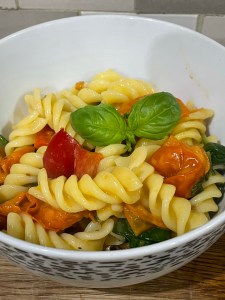
I’m sure many of you have seen the posts on social media of the feta and tomato pasta hack. This is my version of it – using a dairy free (vegan) feta! I wanted to see if it would work and it does! Obviously you can use a normal feta if you prefer. I also pimped it up a bit with mixed peppers, mushrooms, spinach and basil.

This serves 5-6 and comes in at around 380 cals per portion.
You will need:

500g pasta

1 200g block ‘feta’ (I used Violife Greek white cheese)

600g cherry tomatoes (1 punnet)

2 small peppers

5 mushrooms

100g baby spinach

Fresh basil

Salt, pepper, mixed herbs

1 cal oil spray (I used the olive oil version)

Preheat the oven to 200 C.

Chop the peppers and mushrooms into chunks. Spray a roasting dish with oil spray and pop the block of cheese in the centre, and throw the cherry tomatoes and peppers around it. Season and spray with oil.

Pop in the oven for 10-15 mins to start with.

While it’s in the oven cook the pasta to your taste. Drain and pop to one side.

Check the oven after 10-15 minsand if the tomatoes are just starting to split a little then add the mushrooms and pop back in the oven for 10 mins or so. Timing will depend a little on how ripe your tomatoes are so check and see if they are soft and that the juices have run into the dish. The feta will have melted too.
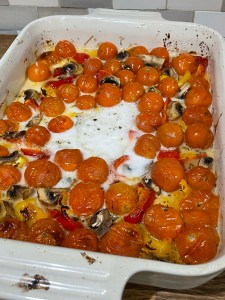
Using a wooden spoon stir the veg and feta together and gentle squish the tomatoes.

Add the spinach a little at a time, stirring in each time. Pop back in the oven for 3-5 mins.

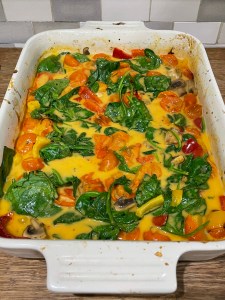
Remove from oven Once the spinach has wilted and stir in a handful of fresh basil leaves.

Stir in the pasta

Then serve with a little sprig of basil!

Enjoy! 🙂

Xx

Nutrition and Calorie Tips

Reasons to lose weight… and why I talk about calories so much…

Reasons to lose weight… and why I talk about calories so much… 🍔

Many of my posts talk about calories, tracking and fat loss , so you could be forgiven for thinking that my main goal for myself and clients is weight or fat loss. It’s true that for a large proportion of my

Clients fat loss is a goal, but it’s not everyone’s goal. I have clients for whom building strength, increasing fitness, improving mental health and well being etc are their goals.

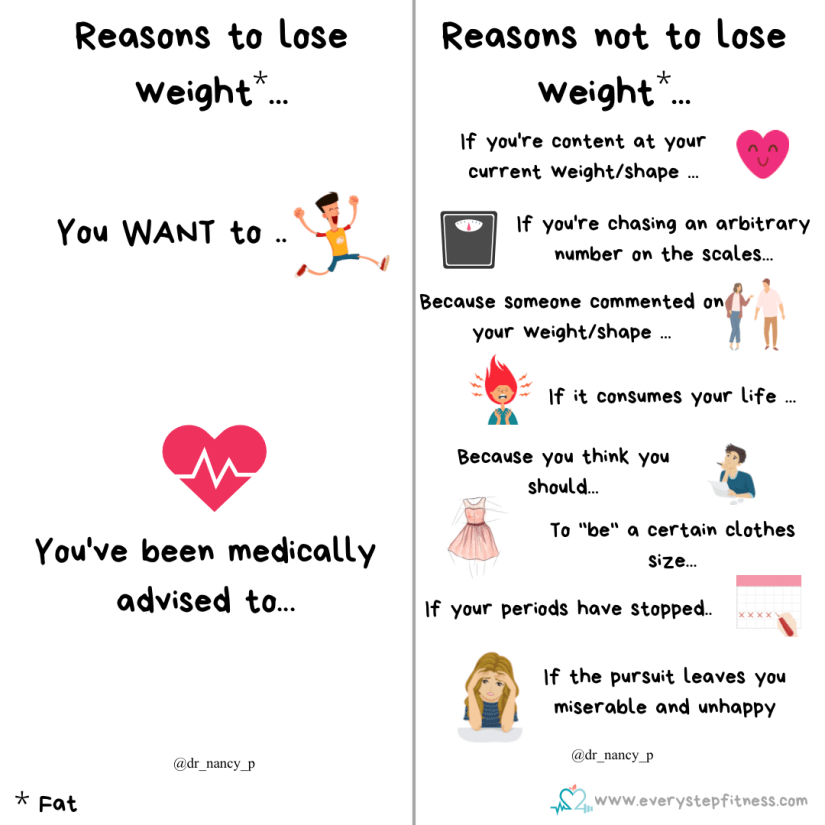
Knowledge is power and whatever your goal is it is important to be aware of the caloric values in various foods. For many that could involve tracking calories , as it’s almost always the most successful method of long term, sustainable fat loss. But the beauty of tracking is that you don’t have to do it forever because by the very act of tracking you become aware of the calories in foods and can then adjust your diet, should you want to. And that’s what it comes down to. Do you WANT to lose weight/fat? If the answer is yes then the knowledge of calorie content will help that.

However, it’s worth considering what your reasons are for wanting to losing fat. If it’s because someone’s told you to, or commented on your body shape, or because you think you need to because ‘everyone’ is a size X then consider whether they’re really important enough reasons? If losing weight becomes so all consuming that you can’t possibly maintain the weight without being super restrictive with your food, or cutting food groups, if you’re irritable and miserable all the time, if you’re skipping social events, if you’re female and your periods have stopped, then maybe, just maybe losing more isn’t such a good idea?

Medical conditions aside, at the end of the day, YOU need to weigh up the pros and cons. Does the pursuit of weight loss outweigh the pleasure you get from food? Does being a size X make you happy enough to overcome the necessary restrictions in calories?

How can you do any of this without knowledge of calories? So please remember that, whilst my posts often focus on calories, knowledge is the main goal of these posts – not a never ending pursuit of fat loss at all costs.

🤗

Xx

Tuesday Tip

Tuesday Tip: Protein isn’t magic

Tuesday Tip: Protein isn’t magic 🔮

I talked about carbs last week – the devil food 😉 so now I thought I’d touch on the supposed super star – protein. Eat more protein and you’ll lose weight – right? That’s the rhetoric out there isn’t it? Well I’m sorry but protein isn’t magic – I wish it was, but it just isn’t!

The idea that eating more protein will magically alter the laws of thermodynamics and make you lose weight regardless of how much you eat is just silly. There is a basic law of physics at play here – to lower fat content of the body (i.e. to lose weight), you have to reduce the calories consumed, or increase the calories burned – where these calories come from makes no actual difference. In fact it’s been clearly disproved in many studies. In one study from Columbia University they fed participants liquid meals of fixed calories, some with vastly more protein, some with more carbs, some with more fat – but all contained the exact calories required for the participants to maintain their weight. Guess what – they all maintained their weight… even those eating more protein…

Now that’s not to say protein isn’t super important and a useful factor to consider though. There’s no denying that higher protein foods tend to keep you fuller and more satisfied for longer (especially when combined with fats), and as I’ve mentioned before there is a small increase in the calories used to digest protein (very small and not enough to really influence overall weight loss), it’s also full of vital amino acids for muscle repair and building. If you’re a body builder and looking to put on large quantities of muscle in a short time then yes def prioritise protein (but you’ll be over eating anyway as your goal is muscle gain… not weight loss). If you struggle to stick to your calories because you’re always hungry then yes definitely consider upping your protein and fats a bit in your meals – but not at the complete sacrifice of carbs (otherwise you will crash and burn).

So there it is – yes protein is great, but no it isn’t magic! So no need to fret over it too much!

Happy Tuesday 🤗xx

Nutrition and Calorie Tips

Carbs are bad… so I can’t have Pizza…. 🍕

There is a common misconception that carbs are inherently ‘bad’ and that in order to lose weight you need to cut them out or avoid them completely. I often hear people complain that they feel really bloated after eating things like pasta/pizza etc “due to all the carbs”.

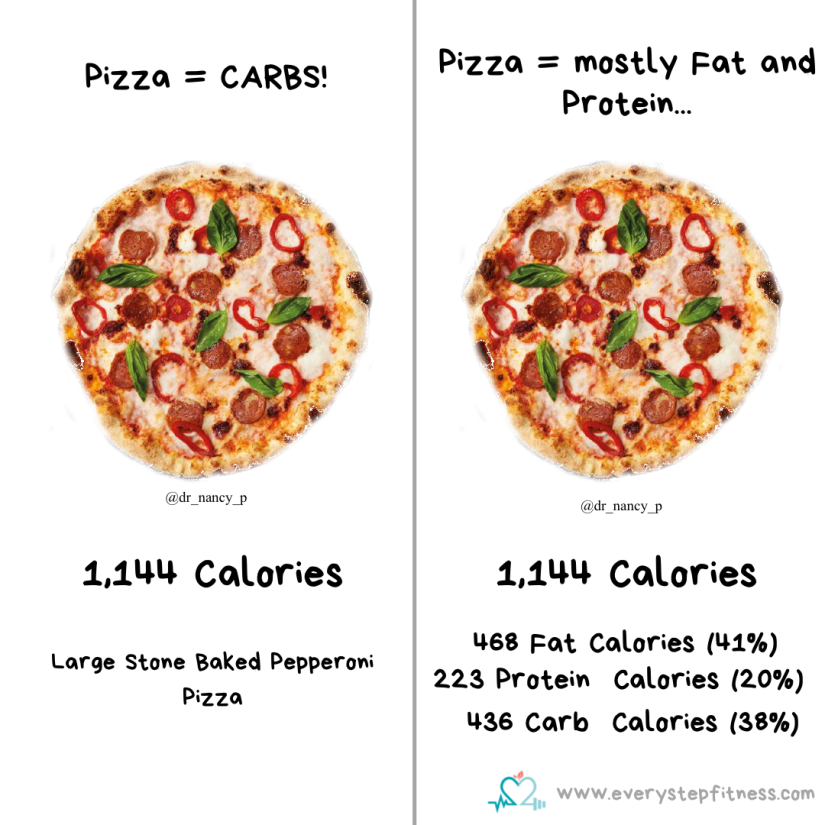
Pizza is definitely placed firmly in the “carb” camp, but In reality that large pizza that you consider to be carbtastic is actually mostly fat and protein (from the toppings). The reason you may feel bloated isn’t necessarily the base, but the combination of rich, fatty cheese, with other toppings and the sheer quantity of food. As you can see 38% percent of the 1,144 calories from this pizza come from carbs, whilst the remaining 61 percent are from fat and protein (with a small % from other nutrients). So actually it’s mostly fat and protein, not carbs, and let’s be honest, you wouldn’t eat that quantity of naked pizza dough without any toppings right? So perhaps it’s time to stop demonising the carbs?

In reality there is no reason at all to cut carbs (or pizza) from your diet. You can lose weight with or without carbs of any sort; it’s all about calories. Now obviously some people have medical reasons to avoid things like gluten in some carb-based foods (coeliacs etc) but for the majority of people these foods are fine. The reason you may see less bloating and more weight loss when cutting these sorts of carbs is simply because you’re reducing your overall calorie intake and reducing consumption of that rich combo of fat and protein. However unless you never want to eat carbs again then you’re not really setting yourself up for sustainable, long term weight management.

Different carbs do have different pros and cons; complex carbs will keep you fuller longer, whilst simple carbs (fruits mostly) will provide a faster hit of energy, you’ll get different nutrients from the different types too. It’s important to have a balanced diet, including a range of carbs – from pizza to fruit! Cutting out whole food groups is never a sensible or sustainable approach though.

Eat the carbs you like and enjoy and just be mindful of the calories! 🤗

Xx

Tuesday Tip

Tuesday Tip: Low carb diets aren’t magic

Tuesday Tip: Low carb diets aren’t magic 🌟

Low carb (or keto) diets are ALL the rage, and for some people they do seem to work, but not because they magically make you burn fat. Here’s what actually happens

#1 A reduced carb intake leads to almost immediate loss of water weight, hence sudden drops in weight at the start. It’s not fat. It will come back once you eat carbs again.

#2 They involve eating more protein, which is important for hunger control. So you’ll feel fuller and eat less overall, and be in calorie deficit. Calories, not carbs, dictate fat loss and gain.

#3 Protein also has the highest thermic effect of any nutrient (i.e. takes the most cals to metabolise). So you’ll be burning very slightly more cals each day, contributing to the deficit.

#4 These diets also mean more fruit and veggies. These are high in fibre and water making you feel fuller, slowing digestion and less likely to eat as much. They’re also high carb but everyone forgets that lol!

#5 More fats are also consumed, another key for staying fuller for longer and slowing digestion. So once again you’re far more likely eat less.

#6 They revolve around reducing the amount of carbs; the biggest portion of people’s diets. AND most calorie dense junk foods are carb-based so you’d be cutting those out. When you remove a food group you’re removing calories too, so you end up in a deficit.

SO how do these diets work? By getting you to do things that lead to consuming fewer calories, whilst telling you it’s nothing to do with calories and all about magic low carbs!

Does this mean you should do it? If it works for you then sure! Do I think it’s sustainable? Nope. Avoidance of food groups creates a poor relationship with food leading to binges or blow outs. It can also lead to fatigue, health risks, regaining water weight when you go back to carbs, etc and of course it will only work if you have a high refined carb-based diet anyway.

My advice is everything in moderation. We need carbs as much as we need protein and fat. If you want a long term sustainable diet then just focus on reducing overall calories by whatever means works for your lifestyle.

Happy Tuesday 🤗

Xx