Tuesday Tip

Tuesday Tip: Weekend Woes

Tuesday Tip: Weekend woes 😬

This is an extremely common pattern I see in my clients, and myself. Weekdays are often “ok” calorie wise or even good, and then weekends it goes a bit off track. A common pattern is as follows:

⁃ Super restrictive eating during the week (1200 cals or below)

⁃ Cutting out everything you ‘enjoy’ to meet those low calories

⁃ Resulting in low energy, fatigue, hunger, cravings and resentment.

⁃ Ineffective workouts as energy levels are low

Then the weekend hits:

⁃ Willpower is low and because you’ve been ‘good’ all week you indulge without restraint

⁃ Brunches, take aways, meals out, drinks, food-centred social events etc tend to occur and you don’t bother calorie counting.

⁃ You also snack on everything you’ve been craving all week.

⁃ End result – massively over your calories over those 1-3 days

⁃ This pushes your weekly calorie average up and halts progress

⁃ You wake up on Monday feeling rubbish, like a failure and end up being more restrictive the following week.

⁃ And it continues….

How do you resolve this?

For starters view your week as a whole and consider the average calories over the whole week. Avoid being too restrictive on weekdays but recognise you’ll want more calories in your budget to spend at the weekend. So save some calories on weekdays (100-150 per day). You’ll head into the weekend feeling less miserable and better able to exercise some control. Plan the weekends – reduce some of the indulgences but factor in some of the things you enjoy. Plan ahead for restaurant meals, drinks etc using those extra calories you’ve saved.

So it’s two pronged – eat a little more during the week, eat a little less at the weekends. Track your weekends rather than viewing them as a free pass. Consistency is key!

Happy Tuesday 🤗

Xx
Nutrition and Calorie Tips

Coffee time!

Coffee time…! ☕️

If you’re a coffee drinker then it might be worth just taking note of the calories in your brew of choice (if you’re trying to lose weight/fat).

A swap to a different style of coffee can help save some cals – especially if you’re a multiple brew a day kinda person.

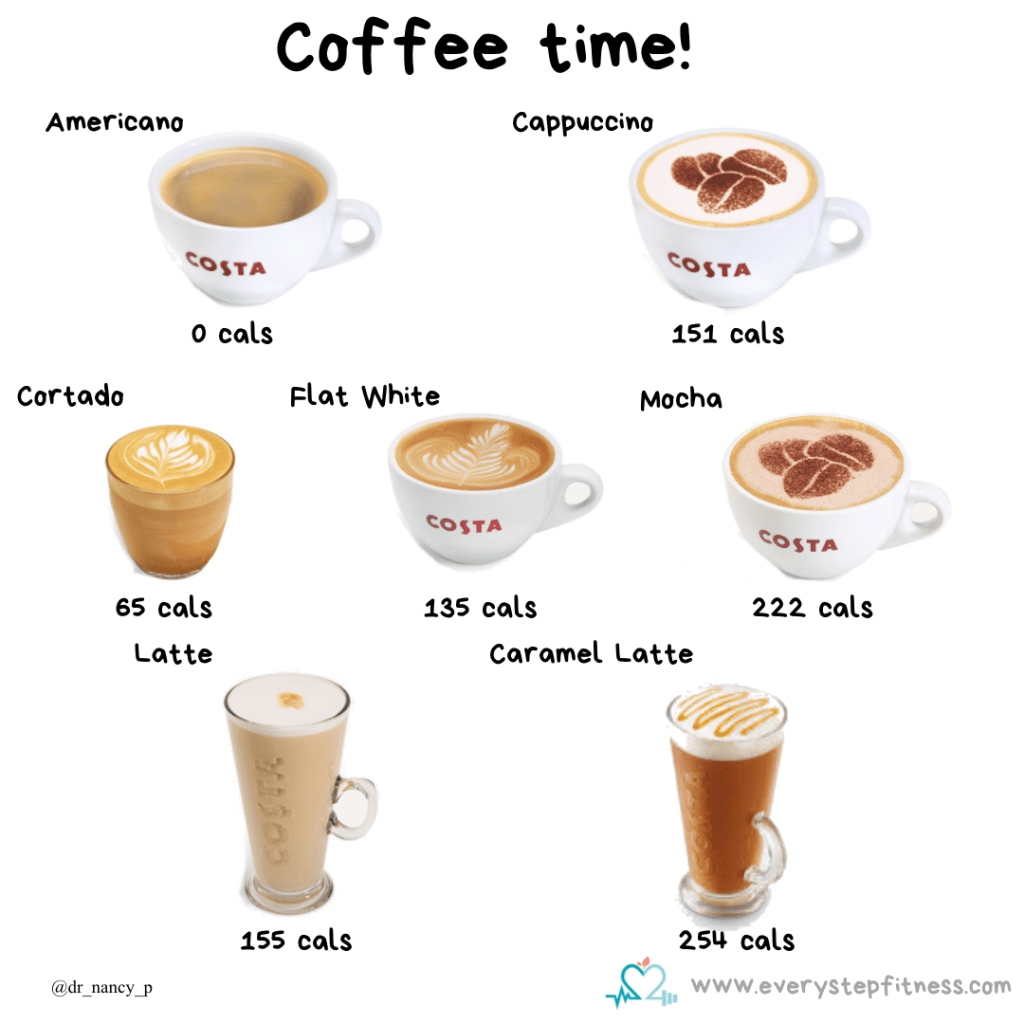
Remember coffee itself is essentially calorie free so it’s the milk and any additional syrups etc that add the calories. This is just an overview of a few of the most commonly ordered coffees. They happen to be Costa coffees but the calories are similar across brands. These calories are based on a medium sized drink , made with semi-skimmed milk. I’ve discussed the calories in other milks before and you can also save calories by going for skimmed milk or unsweetened almond milk which is the lowest calorie option.

Here’s a run down of the most commonly ordered brews:

Americano – if you have it black it’s basically 0 cals.

Cappuccino – 155 cals

Cortado – 65 cals

Flat white (nb this is for the largest size which is a small) – 135 cals

Mocha – 222 cals

Latte – 155 cals

Caramel latte – 254 cals

Enjoy 🤗

Xx

Tuesday Tip

Tuesday Tip: Tips for Eating out within your calories

Tuesday Tip: Tips for Eating out within your calories 🍽

Many of us are back to eating out, if trying to lose fat/weight it can be a challenge to keep things under control. Here are some tips to help reduce those extra cals.

#1 Sauces on the side

Ask for sauces/dressings on the side. Choose tomato-based sauces, and avoid cream based ones. This can save over 300 cals.

#2 Stand your ground

Don’t feel pressured to go for higher cal options just because others are. Its your body, not theirs, so choose what you want. It should be about the company, not what’s on your plate/glass.

#3 Check in advance

Check the menu in advance, choose your meal and log the cals ahead of time. You can then make it fit into your daily/weekly target. You’ll also be less likely to be swayed by whoever you’re with.

#4 Avoid the nibbles

It’s an obvious one but just avoid the pre dinner bread, or olives etc You don’t need them, you’re about to have a full meal!

#5 One course

Most restaurant main courses will be 650 – 1500 calories so you really don’t need more. Ideally go for one course, especially if eating out several times a week.

#6 Starter for main

Try going for a starter as a main and then bulk it out with a side salad or veg. This is also a great tactic if the people you’re with are having 2 courses – you can have a starter and a starter!

#7 Food choice

For starters opt for salad or soup (avoid cream-based ones), then fish (white fish is best) or chicken for main, grilled or baked. Vegetarians beware of cheese-based dishes and consider asking for the vegan options. For pud; a sorbet or fruit based dessert is best.

# 8 Limit the booze

Booze is extra cals so try to avoid it, or alternate with tap water and try to choose lower calorie options (e.g. slimline gin and tonic).

#9 Don’t starve yourself

Don’t starve yourself before a meal out as you’re likely to lose self control and overeat. Instead adjust your other meals to save 100-200 calories on the days before and after to help buffer it.

#10 It’s not about the food

When you look back at these events it won’t be the food you remember – it will be the shared stories and laughs, with the people you’re with. Take the focus off the food.

Happy Tuesday 🤗

Xx

Nutrition and Calorie Tips, Uncategorized

The lower sugar myth…

Sugar is often vilified as the cause of all health issues and as a result many companies have latched on to the idea that people are keen to reduce their sugar consumption. Now whilst sugar in excess amounts is undoubtedly not good (no nutrient in excess is) normal amounts of sugar in the diet are absolutely fine. However if you’re diabetic or trying to reduce your reliance on sugary snacks then it may be sensible to opt for some lower sugar options.

If you’re trying to lose weight (fat) then you may also decide to reduce sugar consumption. Many people equate lower sugar to mean lower calorie and would therefore go for the reduced sugar option in the belief that it would help them lose weight. In this example the actual difference is pretty insignificant.

A bag of normal Colin the Caterpillar sweets contain 499 cals, whilst the reduced sugar version contains 471 cals – a reduction of 28, which is unlikely to result in weight loss. Yes, every little bit counts, but the expectation would probably be that it was much lower and therefore you may eat a larger portion, or expect bigger fat losses from this small change. So at first glance you’d assume it was a lower calorie option. It’s not really! Clever eh?

So if you’re trying to reduce your calories and are going for the reduced sugar versions of things you love just take some time to check the calories and portion sizes and see if there really is a difference. If you enjoy the reduced sugar option and it helps to keep you on track then go for it! But don’t pay more for a marketing ploy when you don’t need to. Enjoy the sweets you like, in moderation, as part of a balanced diet 🤗

Xx

Nutrition and Calorie Tips, Tuesday Tip

Tuesday tip: Strategic Snacking

Tuesday tip: Strategic Snacking 🍪

Often clients tell me they ‘just need to stop snacking’ and they’ll lose weight, but that’s rarely the solution. Snacking has a bad rep, but there’s nothing wrong with a snack in itself. Many of us need smaller intakes of food spread across the day rather than 2 or 3 large ‘meals’, it’s mindless snacking that’s the real issue.

Remember whether you call something a meal or a snack is basically meaningless; some snacks are more cals than meals anyway! It’s just a window of time when you eat. So try to view them all as part of your overall daily food intake, they’re just names! The key is planning them in. If you don’t then you will end up feeling guilty every time you have a snack and that can lead to the f*ck it mentality and then overeating.

Identify first of all when you tend to or want to ‘snack’ and then allocate some calories for it; the same way you might for breakfast or lunch etc and adjust your meals to accommodate. By factoring it in not only are you ensuring you’ll be within your calories, you’re also managing your expectations and giving yourself permission to have that snack. It doesn’t matter what it is, choose snacks that work for you; if it’s biscuits fine, if it’s fruit that’s also fine, within the context of a balanced diet you can have anything you want!

If you find the problem is that once you start you can’t stop then try getting your snack item out at the start of the day and having it on show and somwhere easy to grab. That way hopefully you’ll be more likely to stick to it rather than rummaging through the cupboards or heading to a shop to get it at the time you’re most ‘snacky’ and will power is lower.

Everyone is unique and the desire and need to snack are influenced by age, emotions, activity, main ‘meals’ etc so you have to work out what’s best for you. One good approach is strategic snacking at around 3/4pm to help stave off evening hunger, and there is some scientific evidence to suggest a plan of three balanced meals and one snack (4 windows of time where you eat) works well for weight loss.

Happy snacking! 🤗xx