Nutrition and Calorie Tips

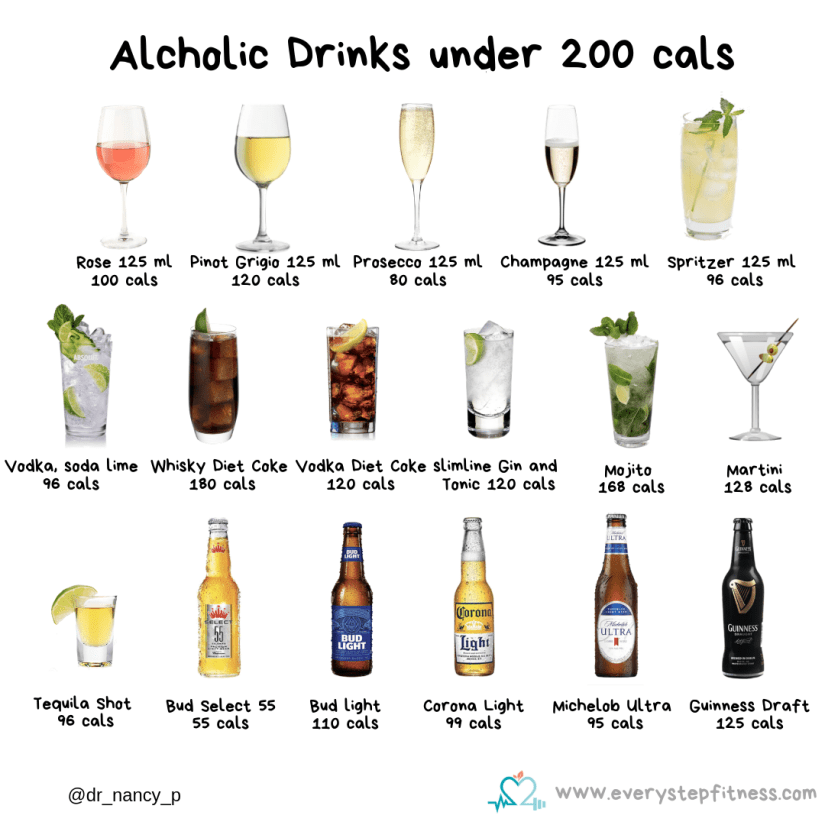
Alcoholic drinks under 200 cals

Alcoholic drinks under 200 cals! 🍸

If you are trying to lose weight/fat then alcohol is often one of the ‘easier’ things to cut down on to save calories. When I say easier I mean it’s an easily identifiable part of your diet which you can choose to either consume or avoid, not that it’s necessary an easy habit to change.

There’s no reason you have to give up alcohol to lose weight as it ultimately comes down to whether you’re in a calorie deficit. However it’s very easy to rack up several hundred calories in alcoholic drinks with little or no nutritional benefit. Meaning you will usually have the booze on top of whatever food you’re eating. In addition alcohol consumption can lead to poorer choices when it comes to food and you’re far more likely to end up eating more calories if you’re drinking or hung over.

So if you do want to still enjoy a drink but stay within your calories then here are a selection of lower calorie options. This list is by no means exhaustive – there are loads of other options out there but it’s a good overview of a range of different types of drink.

So you can still go out and enjoy yourself and have that drink without worrying it’s going to derail your progress!

Cheers! 🥂

Xx

(Nb the gin and tonic is a standard double bar serving – a single is around 60-90 cals)

Tuesday Tip

Tuesday Tip: Why Weight Loss Plateaus

Tuesday Tip: Why weight loss plateaus 📈

Usually a few months into a new diet (or eating regime) we start to see plateaus – this is despite people claiming they are still eating the same amount (at a calorie deficit) and exercising the same. Why?

It could be that you’ve lost so much that your caloric requirements have dropped slightly and therefore you need to adjust your calorie goals, but there’s another more common reason.

A couple of recent studies found that as weight (fat) loss dropped participants subconsciously increased their calorie intake. For every 1kg of fat lost, they were consuming an extra 100 calories per day, without realising they were doing it. This is due to increased hunger in response to weight loss, and as the kgs drop, the extra calories sneak back in. So after losing 3-4kg that’s an extra 300-400 cals a day which puts you back at maintenance calories, stalling weight loss.

Another study also fund that for every 1kg lost participants expended 20 – 30 cals less energy per day. This is a subconscious reduction in NEAT (non-exercise activity thermogenesis) such as standing less, walking less etc and a decrease in bodily functions e.g. blinking less, breathing slower etc

Over the course of several months, with a fat loss of say 4kg you could be unknowingly consuming an extra 400 cals, and burning 120 cals less, that means a extra 520 cals a day which wipes out your deficit, can stall any fat loss and even cause weight regain.

So what can you do?

Usually a few months in, with fat loss going well, people go back to eyeballing portion sizes and that’s where those extra calories will sneak in from slightly larger portions, an extra 5g here and there etc so I encourage my clients to go back to basics and measure portions. Also be mindful of extra mouthfuls of things you’re not tracking (grabbing the odd handful of cereal, crisp, etc).

Focus on more filling foods to help combat the hunger too – foods high in fibre, protein and good fats.

In terms of energy expenditure – try to be as active as possible – add a few more steps to your day for example, be mindful of standing more than sitting etc.

Happy Tuesday 🤗

Xx

Fitness and Exercise, Nutrition

How to Fuel Properly For a Long Cycle or Run

It’s only just over 2 weeks now until the 100 mile Ride London so I’m starting to get prepared. I’ll be riding for Bowel Cancer UK this year and I’m beginning to feel the fear – not least because I’ve not even been on a bicycle since 2017 and I’m still recovering from the multiple stress fractures in my foot – so it’s going to be an interesting one!

But whilst I may not be able to train on the bike I can at least make sure I’m fuelled properly. I have clients and friends who are also riding and have been asking for advice on how to fuel themselves before, during and after the ride. So I thought I’d share a few tips. These are relevant to any endurance event – not just cycling.

So here are my tips!

In the week leading up to the big ride try to eat normally but well, so have three good meals a day, and snacks as needed, avoid all alcohol, and get some good carbs in where possible (brown rice, sweet potato etc).

48hrs before the ride is the time to start ‘Carb loading’. Carbs are the best source of fuel, so you need to make sure your muscles are full of glycogen before the ride. For the 48 hours before the ride, base all your meals around carbs and have carb based snacks throughout the day. So for example breakfast could be cereal, toast with peanut butter and banana, fruit and yogurt.

For lunch, go for wraps, jacket potato, pasta salad etc. And for dinner, try to eat something rice-based, pasta, or lean meat/veggie protein with potatoes. Have something like yogurt and fruit for desert.

For snacks go for energy drinks, dried fruits, and cereal bars.

On the ride day morning have a good carb-based breakfast two hours before the start (or as early as you can if you have a very early start time). Aim for at least two servings of any of these: cereal, toast and jam, porridge with fruit juice, and cereal bars and yogurt.

When you’re actually on the ride the glycogen supplies in the muscles will last about 90 mins so you need to keep topping up. Don’t worry about the first 45 minutes, but from there you need to take in around 60g of carbs every hour (the maximum amount an average body can absorb). energy drinks, gels, bars, or other easy-to-digest carb snacks are good as they’re designed for easy digestion and quick absorption. Or you could go for cereal bars chopped up or dried fruit. My preference is chopped up cereal bars and jelly tots 🙂

Be careful during the ride at feed stations and avoid any foods such as cake, biscuits, pastries, crisps or sandwiches containing cheese or mayonnaise. These are high in fat and will sit heavy in the stomach, taking time to digest. This will make the following 10-15 miles after the stop quite uncomfortable so not ideal!

At the end of the ride you need to replenish the glycogen stores in the muscles and repair the damage to your muscles so you need fast digesting carbs and protein, so things like scrambled eggs on white toast, white rice and chicken and veg, tuna pasta etc

An ideal post ride drink is chocolate milk – perfect combo of carbs and protein etc so try to have that as soon as possible after you finish. You can also get various protein based recovery drinks which work too.

Then get back to normal eating after that!

So there you go – a few tips for you! Note I’m not suggesting specific foods as such – just giving examples and the figures on timing and quantity of carbs etc are based on scientific studies and evidence based research.

This is what I’ve done every other year I’ve taken part and I’ve always been fine and recovered quickly and not ‘crashed’ (energy-wise) during the Ride.

Hope that helps – safe riding everyone! See you there ! 🤗xx

Ps. I’m riding to raise money for Bowel Cancer UK – as a current sufferer and for everyone else affected by it. If you wanted to and could spare a few pennies then I’d be very grateful 🙂

https://www.justgiving.com/fundraising/nancy-priston-2019

Nutrition and Calorie Tips

‘Healthy’ day of snacks vs ‘I’ve blown my diet’

It’s amazing how we categorise our food choices in to good and bad. 😇😈

Having a day where you snack on a fruit smoothie, some dried fruit and a handful of nuts leaves you feeling virtuous, on track and having had a great, healthy day! Whilst if you’d had a doughnut, Mars bar and a couple of chocolate digestives you’d likely be feeling guilty, like you’d ruined your diet and were off the wagon totally right?

Now obviously in terms of nutritional value the dried fruit, smoothie and nuts are arguably a better choice – some good fats, a little protein and lots of vitamins and minerals. But they are also high in sugar – and yes it’s fruit sugars, but frankly that makes very little difference to how your body uses and processes them – sugar is sugar!

In contrast the ‘bad’ snacks are high in fat and sugar and lower in vitamins, minerals and good fats and protein. And I know someone will point out they’re more ‘processed’ but honestly that makes very little difference – everything we is processed and that smoothie is just as processed as the doughnut.

So if your goal is to increase the nutrients in your diet and to eat more ‘healthily’ then yes the fruit and nuts are the way to go. But if you’re goal is weight or fat loss then you really need to stop and consider the calorie differences.

That day of ‘good’ snacks is well over 50 percent of most people’s daily calorie requirement. The ‘bad’ snacks are almost 500 cals less….

So if you were trying to lose weight then maybe the ‘bad’ snacks are actually not so bad…. and you certainly haven’t ‘blown’ your diet. In fact you can probably still have a balanced couple of meals (to get all those other nutrients in) and finish the day within your calories.

No food is inherently good or bad… they’re just food. They have different nutritional profiles and different caloric values and all are fine as part of a balanced diet 🤗

Enjoy! Xx

Tuesday Tip

Tuesday Tip: Calorie Cuts

Tuesday Tip: Calorie Cuts ✂️

When you’re trying to lose weight it’s all about being in a calorie deficit so finding ways to cut calories easily without leaving you hungry is the key. There are a few easy cuts you can make that you’ll barely notice.

# 1 Non-stick Pan

Cooking with oils can add hundreds of calories to a meal without really contributing much to the taste. So invest a a good non-stick pan and some light 1 cal oil sprays and you can cut those cals without even noticing.

# 2 Skip the condiments

Often we don’t even consider the calories in the sauces and dressings we have with our meals. Avoid these sneaky calories but skipping them or going for smaller amounts, or swapping for a lower calorie version. Things like balsamic vinegar, mustard and salsa are great options that are lower calorie but pack a punch.

# 3 Reduce liquid calories

We often forget the calories we drink but they can really add up – all the milk in coffees/teas, soft drinks, smoothies, and booze. Try swapping milky coffees for Americanos, teas for herbal tea, soft drinks for diet versions, and lower calorie alcoholic drinks (e.g. slimline gin and tonic instead of beer)

# 4 Fill up

Opt for more filling foods whenever possible whilst still being mindful of calories. Foods higher in fibre and protein will keep you fuller for longer (but read the labels and check the cals). A recent study found foods such as potatoes, fish, oats, apples and oranges, wholewheat pasta, beef, beans, grapes, popcorn and wholemeal bread kept participants fuller for longer so consider including these in your meals.

# 5 Alternatives

Find alternatives for the foods you like that taste good but have less calories. Swapping your normal ice cream for low calorie ice creams (like halo top) is one way, or swapping your dessert/snack to strawberries and 0% Greek yoghurt is another great way. If you’re a savoury fan opt for things like popchips instead of crisps, and low fat cheese for a savoury snack (e.g. lite mini babybel)

Happy Tuesday 🤗

Xx