Nutrition and Calorie Tips

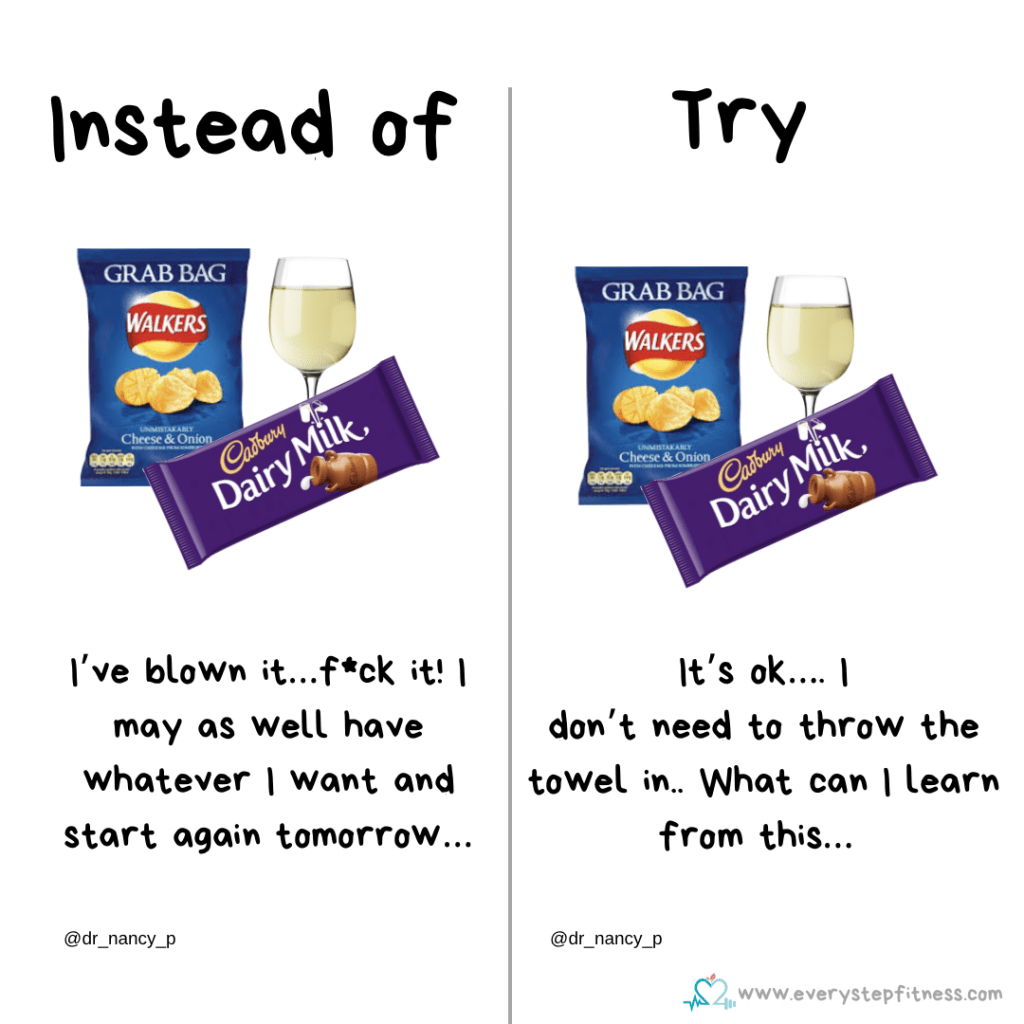
Instead of saying ‘f*ck it’ try this instead…

Instead of saying ‘f*ck it’ try this instead… 🤷

I’m sure we all do this – we over eat and instantly think we’ve blown it, give up for the day, over eat even more and think we’ll just start again tomorrow. Many of us experience feelings of shame, guilt, embarrassment, and stress after over-eating. These emotions typically do nothing but contribute to a continued downward spiral and for most of us they’re not productive emotions or thoughts.

So what can we do instead? We can try to learn from what happened so we can be better prepared when faced with a similar situation in the future. So when you’ve over eaten here are a few things to ask yourself:

⁃ What led to me over-eating or over-indulging? Was there a trigger? A person, location, situation, or emotional state? Did I wait too long to eat? Was I stressed, bored, sad, upset, or lonely

⁃ Was I seeking comfort or a way to escape or disconnect?

⁃ Was there another way that I could’ve coped with the trigger?

⁃ What can I do differently next time the same situation is in front of me? What plan can I develop?

⁃ How can I implement and execute that plan next time?

Say you come home, stressed from work, and you immediately go to the cupboard and dig into a family size bag of crisps and throw down a glass of wine. Before you even notice half the bag is gone and you’re pouring a second glass. First, ask yourself what you were trying to gain from eating the crisps/drinking the wine. Were you hungry? No. So, perhaps you were seeking relief and comfort from a stressful work day. Next, what are other ways you can relieve your stress besides turning to food? Perhaps it’s going on a walk? Doing a home workout? Listening to a podcast? Calling a friend? Playing with a pet? Having a hot shower/bath?

Finally, when you come home the next day and you’re feeling those same emotions, rather than walking immediately to the cupboard , pause & ask yourself:

Why do I want that food?

Do I really need that food right now?

Will I be happy with this decision in an hour?

Tomorrow?

You’ve realized that you’re not hungry and

are seeking relief from stress. The next action will be to walk to a different room and execute your plan – call that friend, do a workout, run the bath etc.

This isn’t easy, and won’t happen immediately – it takes practice and you won’t always manage it but over time you will make progress and changes and remove the guilt. The goal is to acknowledge, adjust and

move forward.

🤗

Xx
Nutrition and Calorie Tips

Set yourself up for success…

Set yourself up for success… 🏆

If you’re trying to lose weight or even if you’re just trying to eat better then maybe try a few of these things to set yourself up for success. It won’t take long!

Spend 5-10 mins at the weekend planning out your meals and snacks (even if only roughly).

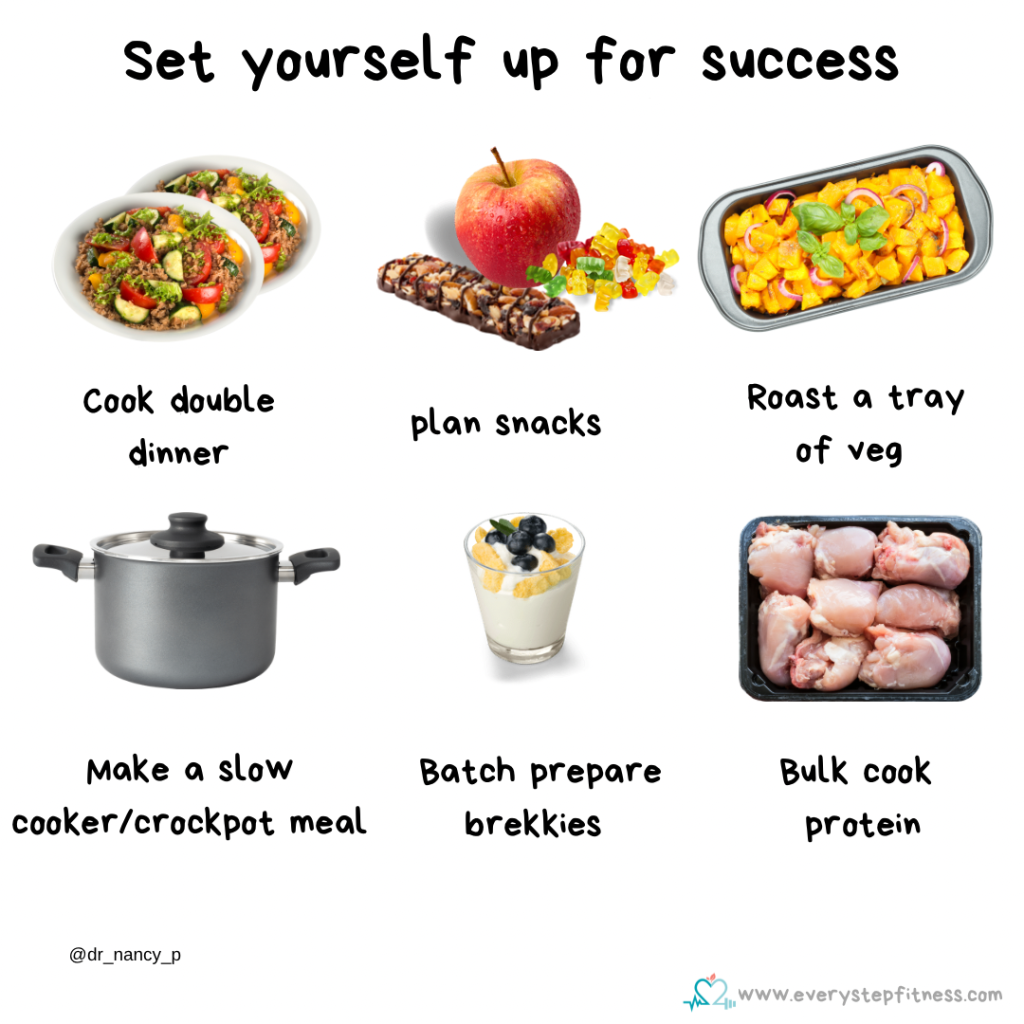
⁃ Make your in dinner double portions whenever you can so you have leftovers for lunch or another dinner.

⁃ plan your snacks. Have a snack box and pop any pre wrapped snacks in there so they’re easy to get/ portion out any other snacks, make sure you have plenty of fruit and veggies to grab too.

⁃ Roast up a tray of vegetables – you can even buy pre cut veg if you’re short on time. Pop it on a tray with a few sprays of 1 cal oil and shove in the oven while you’re cooking dinner so you’re not spending more time. These will last a few days and are great to add to lunches or dinners.

⁃ Invest in a slow cooker and put it on in the morning so you have it ready for dinner when you’re home.

⁃ Batch your breakfasts ahead of time. Prepare multiple containers of overnight oats, or yoghurt/ granola pots, or portion out breakfast smoothie ingredients ahead of time.

⁃ Bulk cook some protein – chicken, fish or veggie options while cooking the veggies so you have it for the rest of the week.

This may sound a lot but in reality you can be cooking the protein and veggies at the same time, whilst prepping the snacks and brekkie – all in under 45 mins max. Once done you’re sorted for the week!

🤗

Xx

Nutrition and Calorie Tips

Why it’s generally harder for women to lose weight than men

Why it’s generally harder for women to lose weight than men 👫

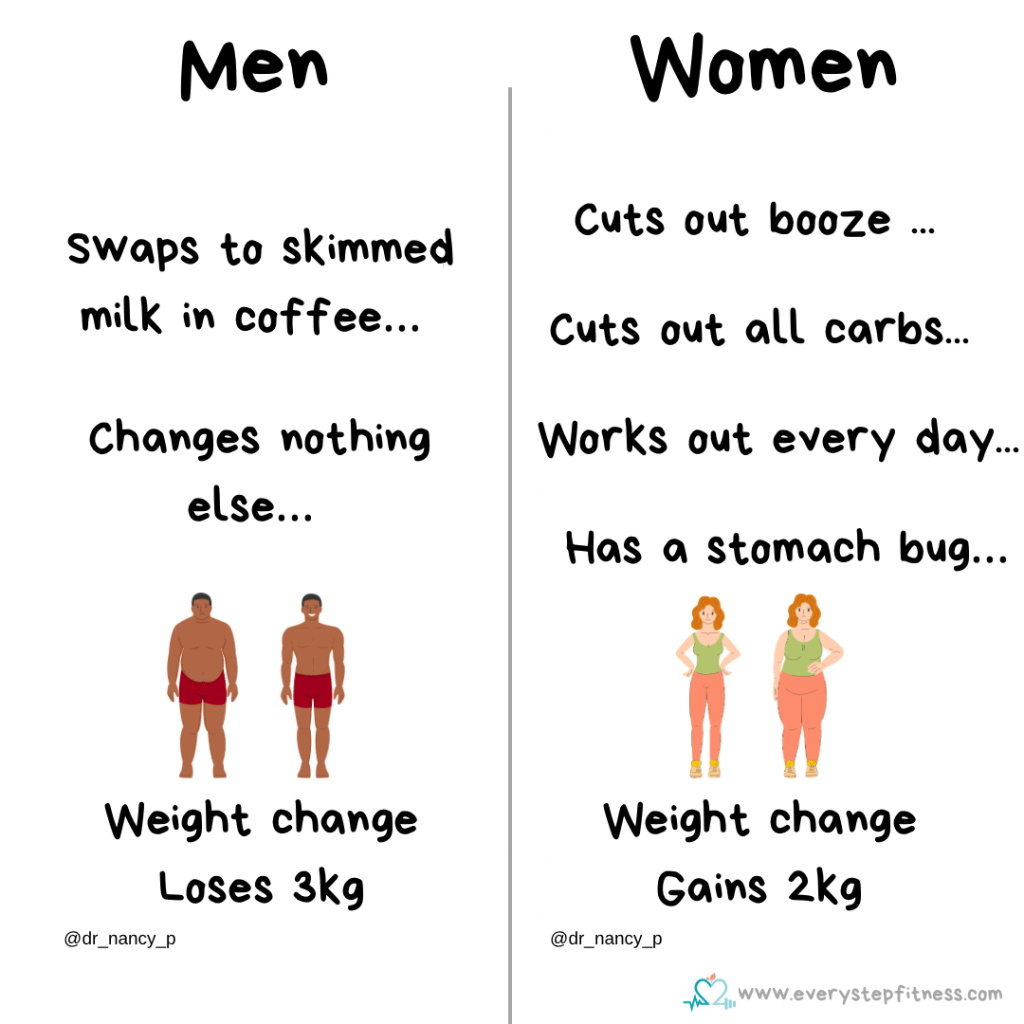
I encounter this a lot with my clients, especially couples. A man appears to change very little in their diet and loses 3kg in a week, whilst a woman cuts carbs, cuts booze, workouts tonnes and gets a stomach bug and puts on 2 kg! Now obvs this is just a humorous example but it’s not actually far from the truth. Men really do tend to respond faster than women when it comes to weight loss, so why is this?

Generally, men will burn more calories at rest than women due to them being taller, heavier and naturally more muscular. This means they will need to consume more calories to maintain their weight. It also means they can consume considerably more calories and still be in a calorie deficit.

For example a 6ft man, weighing 95kg needs around 2,600 cals to maintain so anything below that is a deficit. In contrast a 5ft 6inch woman, weighing 67 kg needs approx 1800 cals to maintain and less to lose weight. That’s almost 1000 cals different and makes a huge difference when trying to accommodate your meals, snacks and then social stuff on top.

This is even harder if you’re a couple as you may be likely to eat similar things/portions so if you’re both eating around 1600 cals then the man will be at an even greater deficit so will lose weight much more

rapidly.

Whilst it’s not possible to out exercise diet obviously there is some impact from the amount of calories burnt and men will naturally burn more calories than women due to their height, weight and muscle mass.

Women may see higher fluctuations in weight too (which makes the process harder) as they can be more susceptible to fluid retention in response to stress and other hormones. In addition there are psychological reasons it’s harder for

women. ‘Diet culture’ is so prevalent and affects women from a very young age. Most of my female clients have been on and off diets since they were teenagers to some

degree. These repeated attempts at trying to find dietary success can completely fracture anyone’s mindset around their bodies and food. Whilst men do also face these struggles it’s not usually to the same extent.

What you can do about it?

Women can increase their chances of weight loss success by increasing muscle mass (which increases your bmr so you burn more calories at rest).

And whilst it is indeed harder for women to lose weight that doesn’t mean the law of thermodynamics don’t apply. If you are in a calorie deficit you will lose body fat and you may still be losing fat even if the scale doesn’t necessarily show it. So make sure you’re tracking accurately so you know you’re eating in a calorie deficit. Work on any habits, thoughts and behaviours that may have held you back due to diet culture (e.g. move away from overly restrictive dieting or cutting out food groups).

Overall don’t give up! Use objective measures to keep track of progress beyond the scales and don’t worry if your other half or men in your life seem to be ‘doing better’ – it’s not better – it’s just different!

🤗

Xx

Nutrition and Calorie Tips

Staying on track when you’re busy …

Staying on track when you’re busy … 🙌🏼

If you’re busy with work and family then staying on track can be really tough. It can be even harder over the holidays too. These tips apply to everyone – whether you’ve got children or not but might be particularly helpful during the holidays if your routine is out the window.

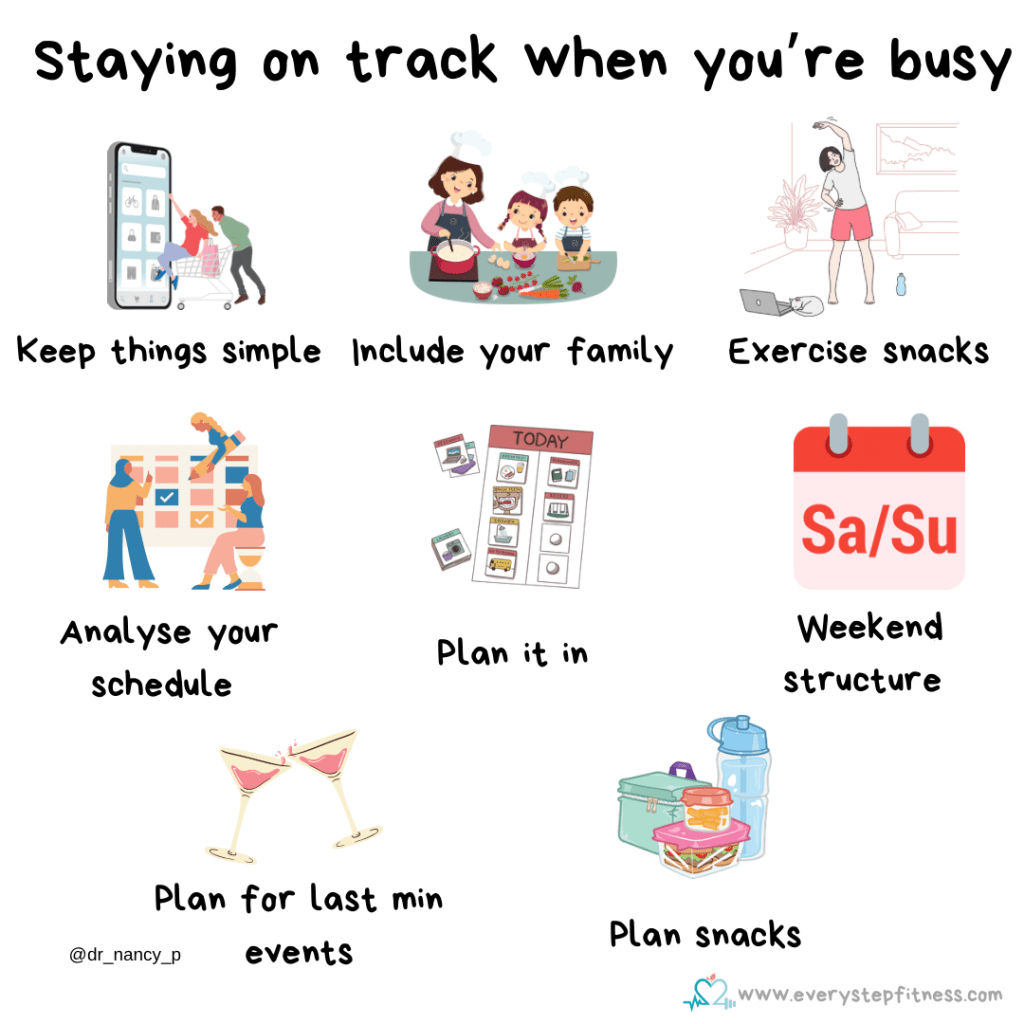
# Keep it simple

Make life as simple as possible. Do online food shops, use simple recipes with just a few ingredients, use pre prepared foods/frozen veg/ pre cooked chicken etc, etc. Use an air fryer or slow cooker if you have one.

Double recipes at dinner so you have leftovers at lunch. Have regular, “themed” dinner nights like pasta Monday, fajita Tuesday etc

# Include your family

Include your family in the food & meal planning process in some capacity. Ask what they want to eat for the week, or to pick between “this or that.” Keep a piece of paper on your fridge where they can contribute to meal ideas.Delegate responsibilities to your partner or children , like grocery shopping or food prep. To stay active do things together – walks, cycle rides, playing football in the garden – they’re all workouts.

# Exercise Snacks

It might be hard to find a 30-60 min window to fit in a workout so instead rely on exercise snacks! 5-10 mins here and there is just as good! A few mins skipping, run up and down the stairs, some body weight exercises etc – whatever you can whenever you can.

# Analyse your schedule

Really look at what you’re spending your time on. Check your screen time on your phone – if you’re spending over an hour on social media do you really need to be? Same for watching TV etc. Could you use that time for something else? Meal prep? A small workout? Could you even combine them – have the TV on while you meal prep etc.

# Plan things in

You won’t manage to fit things in if you don’t plan them in. Schedule in your food shop (even if it’s online), food prep, walks, other activity / workouts etc.

# Structure your weekends

The weekends are often difficult because routines are different – even in the holidays. There’s more unpredictability and it’s easier / more temping to “wing things,” especially if the week has been stressful.

So add structure to keep you on track – just a loose schedule – meals/ activities / downtime etc.

# Plan for last minute events

It’s quite likely you’ll get last minute social events or your plans will change so when that happens take 5 mins to plan. It literally takes minutes to look up the menu and check the cals or plan what you might have.

Or if it’s a social gathering / day out plan some snacks – grab some from the cupboard so you’re not starving or relying on higher cal options when out.

# Plan snacks

Planning in snacks ahead of time is a huge help with consistency. Keep a snack drawer at home or the office with things you like and know can fit into your cals, or keep a snack box on the side and fill it up in the morning for the day. Make sure you have snacking fruit and veggies in the fridge too for easy options for everyone.

🤗

Xx

Nutrition and Calorie Tips

‘I’ve put on weight overnight.. it must be fat ….’

‘I’ve put on weight overnight.. it must be fat ….’ 😱

We’ve all done this – you hop on the scales in the morning and to your horror you’ve put on 1-2 kg seemingly overnight! Like most of us the first reaction is probably to feel demoralised and demotivated, think all your weight loss efforts have been wasted and assume you’ve put however many kg of fat on overnight.

However the scales are not a very accurate measure when it comes to changes in bodyfat levels. Short term, significant, fluctuations in scale weight are normal and natural – especially large ones that seem to happen overnight. These do not mean changes in body composition, so you haven’t suddenly put on X kg of fat. Rather they tend to be related to water levels – intra and extracellular hydration.

Even if you did eat an extra 20000 calories in one day then you STILL couldn’t store that all as fat. Some would be expended in physical activity and metabolic processes, including the cost of digestion itself etc. The extra weight you see on the scales in short term fluctuations is water retention and food volume.

The reasons for it may include – a really big meal the night before, especially one that might be high in fibre, or red meat (which takes longer to digest). It could be due to your workout routine recently which can lead to short term fluid retention in the muscles. General hydration levels and salt levels will also impact it – especially if you had high levels of salt in your diet the day before. Hormones play a massive role – particularly for women and can cause fluctuations of up to 5kg due to water retention. Lack of sleep or high levels of stress will also cause you to retain fluids. Carb heavy meals and alcohol do exactly the same thing too – you retain fluid – short term. Now that is NOT to say you need to avoid any of these things – you should be working out, you should be eating carbs etc but it may help to explain any fluctuations you see.

So if the scale weight is up, then before you let it get you down, just stop and think about all the reasons it is probably fluctuating. Focus on being consistent with your calories over the long term instead, and use things like the way your clothes fit, or longer term trends in weight gauge progress (i.e. if you want to weigh yourself daily then take an average each week and use the trend of that average to gauge if you’re making progress). Remember it’s the average calories consumed over weeks or months that matter – not days!

Enjoy 🤗

Xx