Nutrition and Calorie Tips

Being ‘good’ and having the weight watchers digestive biscuit instead of the ‘bad’ normal version…

Being ‘good’ and having the weight watchers digestive biscuit instead of the ‘bad’ normal version…🍪

Most people would assume that the weight watchers (or other weight loss brand foods) are automatically a more virtuous choice of biscuit. Whilst tucking in to a couple of normal chocolate digestives would be considered ‘bad’. In reality they’re almost the same in terms of overall calories per 100g and have similar sugar levels. The main difference is the price and the actual serving size itself. The weight watcher’s biscuits are much smaller – so you get less calories per biscuit BUT it’s so noticeable that you’re likely to end up having more biscuits to compensate. So it’s just a way to trick you in to thinking they’re better. The other major difference is price – over twice the price for the weight watchers biscuits!

So if you really love a chocolate digestive you’re probably better off getting the real ones, enjoying one or two, within your calories and feeling like you’ve had what you actually want. If you actually like the weight watchers ones then obviously go for it, but don’t automatically assume these weight loss branded foods are always the better option. Sometimes they’re the same or worse than other brands. If you enjoy them then definitely have them, but if you’re only having them because you think they’re ‘good’ then think again.

Read the labels and look at the calories and then make your choice.

No foods are good or bad, enjoy the ones you actually want to eat, and just be aware of the calories! 🤗xx

Tuesday Tip

Tuesday Tip: Walk the Walk

Tuesday Tip: Walk the Walk🚶🏼‍♀️🚶🏻‍♂️

Many of my clients know I’m a big fan of walking and getting those steps up – and this is why! Whether you’re new to working out or just looking for something a little less intense then what’s wrong with a good walk? Absolutely nothing!

Walking is an excellent form of exercise that lets you build fitness and can help you lose weight (as long as you are creating a calorie deficit – just like any other exercise). But beyond that walking is so beneficial that it’s worth doing even if you are already a regular exerciser.

Walking is free which means anyone can do it, and you can do it anywhere. It’s also easy on the joints, requires no equipment or special skills or technique so it’s safe and easy. It’s been shown to boost bone strength, improve the immune system and give better sleep quality. A brisk walk is a great way to get the recommended daily amount of exercise in.

It’s a fab way to increase general activity – even if you regularly exercise there’s a good chance that if the rest of your day is spent sat down at a desk that you won’t be getting enough activity in to your day. A recent study showed that even a regular 90 min daily gym workout wasn’t enough to combat the ill effects of sitting at your office desk all day. And many studies have shown that ‘naturally skinny’ people will tend to have higher general daily activity levels than others, irrespective of whether or not they workout. So consider adding some walks in to your day – walk up the stairs, walk to speak to a colleague rather than calling, walk at lunch, walk to work if you can etc.

Walking is a fab way to improve your health and fitness without having to spend more time at the gym working out. It’s a great activity to do with family or friends too; and if you’re the competitive type then get yourself an activity tracker and measure your steps – most now set goals for you and you can even compete with friends (and strangers) to see who can clock up the most steps!

So what are you waiting for? Go for a walk!

Happy Tuesday 🤗

xx

Nutrition and Calorie Tips

Cereal offenders…

Cereal offenders… 🥣

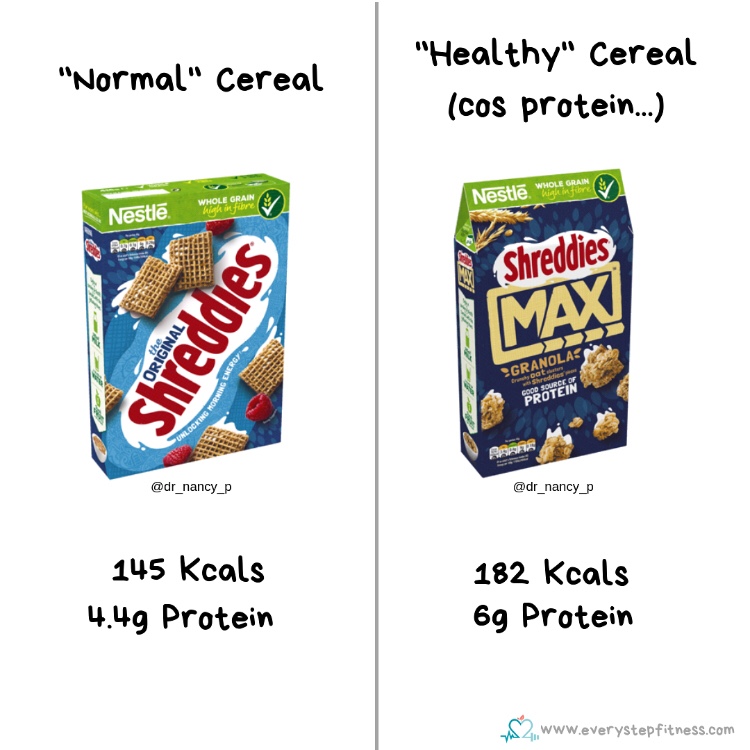
We are often told that higher protein is a better option when it comes to healthy food choice. Recently brands have been capitalising on this by marketing their products and releasing new products as high in protein or as a ‘protein’ version.

There is evidence that higher protein can help with weight management – but only because it helps to make you feel fuller, which therefore makes you less likely to consume more calories later. The end result is hopefully that you stick to your calories and are able to maintain or lose weight. Total calories are however the most important factor.

Cereals are one of the latest foods to fall victim to this. There are several brands out there now producing ‘protein’ cereals – Special K, Weetabix, Shreddies etc. You’d be forgiven for assuming the protein enhanced cereals were better for your health and to help you achieve your fat loss goals.

In reality the ‘normal’ cereal contains only 145 calories and 4.4g of protein. The protein enhanced cereal contains more calories at 182 per portion and 6g protein. So yes you are getting more protein of course, but the marginal gain in protein really isn’t worth the added calories and cost. That 1.4g of protein is not going to make a significant difference. You’d be better off having the cereal you want, and if you’re keen to increase protein levels then either add some Greek yoghurt instead milk, or have a snack of something that’s higher in protein later on (e.g a light mini babybel for 42 cals with 5g protein). The bonus of having the babybel or adding Greek yoghurt is that you’ll also get more fat which helps to keep you fuller for longer when combined with protein.

So if you’re a cereal lover then I wouldn’t waste your money or calories on these protein enhanced cereals (unless you actually enjoy the taste of them more of course). Either way read the labels rather than being swayed by the ‘protein’ label and make an informed choice xx 🤗

Tuesday Tip

Tuesday Tip: Snack Triggers

Tuesday Tip: Snack triggers 🍪

Snacking can be a real issue when trying to lose fat. Being aware of the triggers can help to keep it in check.

# 1. Social Media

A recent study showed that socialising online with friends (via Facebook, Instagram etc) causes more snacking. It temporarily raises your self esteem, which lowers your self control, leading to increased snacking afterwards.

# 2 The News

Another study showed a link between watching/reading ‘bad’ news and high calorie snacking. The survey found that contemplating economic hardship and being subconsciously primed with messages to ‘live for today’ makes us seek out higher calorie foods.

# 3 Environment

The environment can trigger food cravings. A study showed that moviegoers would eat the same quantity of popcorn regardless of whether it was fresh or very stale, simply because they were ‘at the cinema’. In the same way sofa time after dinner can trigger snacking on chocolate or crisps etc.

# 4 3.23pm

3.23pm is the most likely time we are to snack, usually due to boredom, stress, and a dip in energy levels. To combat this have a balanced lunch (with protein and fats), plan in a healthy snack and save more enjoyable tasks for after lunch if you can.

# 5 Stress

Lower levels of serotonin when stressed also lead to carb cravings. Salt inhibits the body’s responses to stress. Craving salty food is the body’s way to cope with stress, so a salty, carby snack can help.

# 6 Lack of Sleep

Lack of sleep reduces your self control and willpower, and stimulates production of the hunger hormone ghrelin and lowers leptin levels (the satiety hormone). Studies found that those who are sleep-deprived eat 300 more calories per day.

# 7 Red 

The colours red, yellow and orange are appetite stimulants, making you snack and eat more. Research shows that eating in a blue room reduced calorie consumption by 33 %. So try going for bluer hued lighting, blue crockery etc.

Being aware of the possible triggers can help you to not only recognise why you’re snacking more than you want to, but make changes to prevent it.

Happy Tuesday 🤗

Xx

Tuesday Tip

Tuesday Tip: How to feel fuller

Tuesday Tip: How to feel fuller 😋

One of the best ways to stay on track is to keep excessive hunger in check and make sure you’re feeling full. Here are some tips to help increase fullness without increasing calories.

# 1 Focus

If you’re chatting, watching tv, even listening to fast music studies have shown you’re likely to feel less full. Focus on the food itself and remove distractions if you can.

#2 Sniff and chew

Sniff your food; smell and taste both switch on our satiety signals and help you feel fuller. Also chew more – it causes hormones that send satiety signals to be released

#3 Go for bulky and moist

The more air or water in a food the quicker it fills you up. Things like vegetable soup are a great option, or popcorn instead of crisps, or grapes instead of raisins etc.

#4 Fats and protein

Higher fat foods keep you fuller but it takes longer for the feeling of satiety to come from high fat meals compared to high protein meals (but the feeling lasts longer). Ideally combine fats and protein to maximise fullness.

#4 Sleep

If you’re sleep deprived your body produces more ghrelin (the hunger hormone) and less leptin (the appetite suppressing hormone). So try to prioritise sleep if you can.

#6 Drink

The brain often confuses thirst signals for hunger so have a glass before your meals. It will also help keep you feeling full.

#7 Small plates

We’re conditioned to fill our plates and to clear them. The empty plate is a signal to feel full and conversely a plate with food on it overrides the satiety signals and keeps us eating. Go for a smaller plate and you’re likely to feel full regardless.

#8 Fiddly foods

Choose foods that take time and effort to eat, this gives the body time to recognise that it’s full e.g. corn on the cob, fish with bones, fruits with pips or skin to peel etc.

#9 An Apple a day

Research has shown eating an apple 20 mins before a meal promotes feelings of fullness and reduces the amount of food consumed.

#10 Load up the veggies

The fibre and water content of veg will fill you up, and also slows you down, increasing feelings of fullness. Aim for half a plate of veg like broccoli, peas, green beans etc.

Happy Tuesday 🤗

Xx