Nutrition and Calorie Tips

Why you shouldn’t eat back your exercise calories….

Why you shouldn’t eat back your exercise calories…. 🏃🏼‍♀️

Many of us use activity trackers / fitness watches; they’re fab tools to monitor activity and motivate us to get fitter, but they can also cause some issues.

The main issue is the figure they provide for calories burned, particularly when linked to food logging apps. Apps like myfitnesspal give you a daily calorie target or budget to spend, based on your current stats, goals and activity levels. If you have a tracker linked then it automatically adds any calories burned to this figure e.g if your goal is 1700 cals and you burn 500 cals in spin it gives you 2200 cals to ‘spend’ (eat).

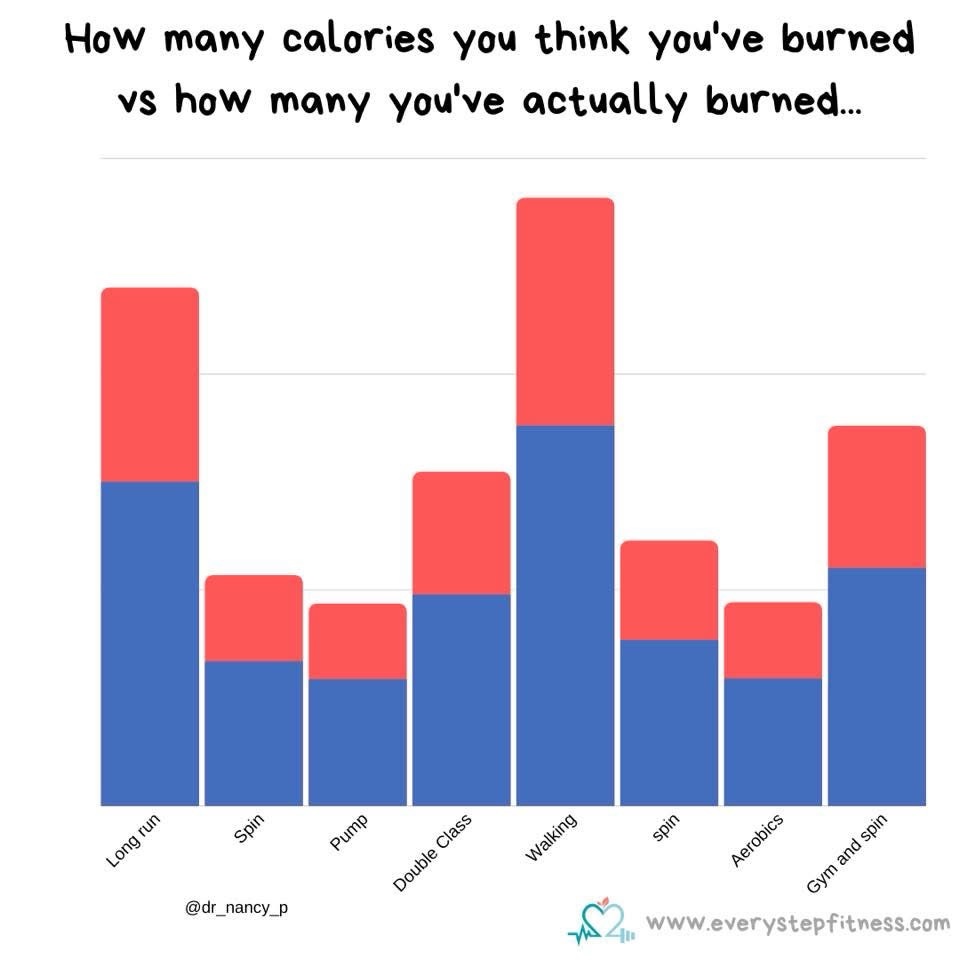
Great! So you can eat more right? Wrong! You shouldn’t be eating back those exercise calories. Aside from the fact that you have already accounted for your activity level in the daily calorie goal, the main issue is that the tracker is overestimating calories burned. Recent studies found that, despite being pretty accurate for heart rate readings, devices overestimated calories burned by 27 – 93% ! If we assume a 40% error rate you can see on the graph how much it overestimates (blue is actual burn, red is the tracker reading) e.g. a long walk burns 1500 cals on the tracker, but if you ate those back you’re actually over eating by 300 and 1450 cals!

This is why if you’re eating back those exercise calories you could easily wipe out the calorie deficit. Best-case, it slows progress, worst-case you overeat and put on weight. Also, as you get leaner and fitter the calories burnt in general activity and exercise decreases, so you’re burning even fewer calories than the device is reporting.

That’s not to say you shouldn’t record workouts and steps; it’s a great way to look at your relative effort and fitness. Use them as a way to encourage more activity but not as a reason to eat more. In the paid version of myfitnesspal you can choose not to add those extra calories, or simply un-link your tracker so it no longer gets that info.

So if you workout as a way to increase your calorie expenditure, that’s fine, just don’t eat back those calories, as it defeats the entire point of increasing activity in the first place.

🤗 xx
Tuesday Tip

Tuesday Tip: Aspartame & Insulin

Tuesday Tip: Aspartame & Insulin 🥤

Aspartame, an artificially sweetener common in diet drinks etc, has been around for nearly 50 years, yet it’s still blamed on social media for everything from diabetes to ‘spiking’ insulin just because it tastes sweet.

The idea is that because it tastes sweet it mimics sugar and results in insulin being released, leading to fat storage, diabetes, metabolic damage etc. However the research doesn’t support this. Studies using human randomized controlled trials find that aspartame does not raise blood glucose or insulin when compared with water, placebo, or other low-calorie sweeteners. There’s no spike and therefore no crash. When aspartame is compared with sugar or other carbs, it shows a much lower glucose and insulin response with aspartame. In other words, replacing sugar with aspartame improves—not worsens—glycemic control.

What about longer-term studies? It’s the same story, even at high intakes aspartame shows no effect on fasting glucose, insulin, insulin sensitivity, or HbA1c, even in people with type 2 diabetes. Appetite hormones barely change, adverse effects are rare, and energy intake is often lower when aspartame replaces sugar.

So where does the fear come from? Mostly from misreporting animal studies using massive doses (we would need to consume hundreds of cans of diet drink per day to replicate it), or observational studies that confuse cause and effect.

Aspartame doesn’t circulate in the blood intact—it’s rapidly broken down into amino acids and tiny amounts of methanol, all at levels far below anything shown to cause harm. If aspartame truly triggered insulin without glucose, we’d see hypoglycemia. We don’t.

Replacing sugar with aspartame consistently lowers glucose and insulin exposure and the best evidence we have says it’s metabolically neutral or beneficial, not harmful. The benefits of losing weight (which swapping sugary drinks to diet drinks can help with) vastly outweigh any negatives – the biggest driver of cardiovascular disease, diabetes and mortality is obesity.

Happy Tuesday 🤗

Xx

Nutrition and Calorie Tips

‘I’m trying to lose weight so I’m avoiding carbs ….’

‘I’m trying to lose weight so I’m avoiding carbs ….’ 🍞

There is a common misconception that carbs are inherently ‘bad’ and that in order to lose weight you need to cut them out or avoid them completely. This usually means people cut out bread, pasta, rice, potatoes etc.

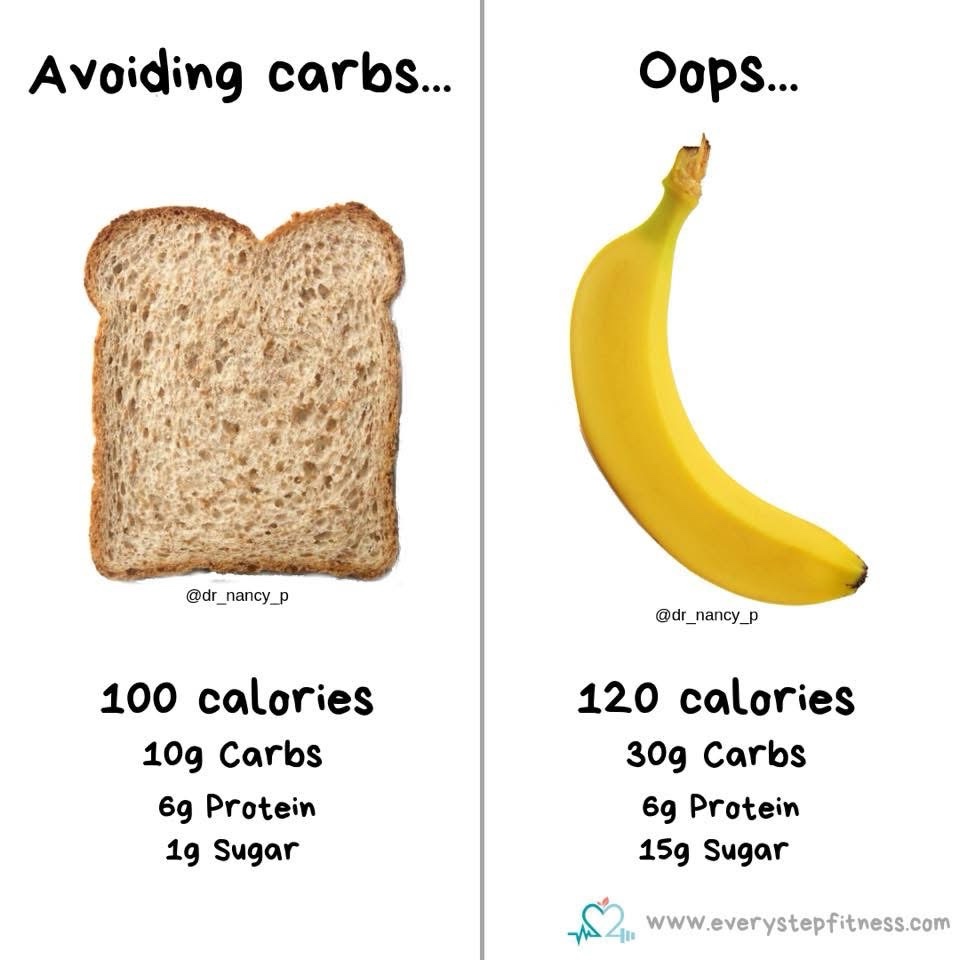
However they continue to eat fruit and veg without thinking twice when many actually contain more carbs. For example compared to a slice of bread a small Banana contains more calories, 3 times as many carbs and 15 times as much sugar! Now that doesn’t make the banana bad either – but why would you avoid the bread if you like it, yet happily eat the banana if you’re trying to avoid carbs?

In reality there is no reason at all to cut carbs from your diet. You can lose weight with or without carbs – it’s all about calories. Now obviously some people have medical reasons to avoid things like bread (coeliacs etc) but for the majority of people these foods are fine. The reason you may see weight loss when cutting these sorts of carbs is simply because you’re reducing your overall calorie intake. However unless you never want to eat carbs again then you’re not really setting yourself up for sustainable, long term weight management.

Obviously different carbs have different pros and cons – complex carbs will keep you fuller longer, whilst simple carbs (fruits mostly) will provide a faster hit of energy, you’ll get different nutrients from the different types too.

It’s important to have a balanced diet – including a range of carbs from bread to fruit. What works for you may not work for someone else and you may prefer to reduce consumption of carbs, but it’s important to be informed about what’s actually in the food you’re eating before you make that choice. Cutting out whole food groups is never a sensible or sustainable approach though.

Personally I enjoy all sorts of carbs – from bread, to fruit, to pasta, to potatoes – to doughnuts! Eat the carbs you like and enjoy and just be mindful of the calories! 🤗
Xx

Tuesday Tip

Tuesday Tip: Fake News

Tuesday Tip: Fake News 📰

We’re all busy, we almost all have smart phones, and there’s so little time in a day that it’s very easy to just scroll through facebook or Instagram for information and it’s all too tempting to take it at face value.

But according to a recent survey social media is the no. 1 source of nutrition and fitness misinformation.

There is zero control over what people put up on social media – design a funky graphic, tap in to a common fear or desire, and you can pretty much say anything and some people will believe you – eggs are bad, eggs are good, eggs cure cancer, eggs cause cancer… eggs contain lysozyme! (long word, sounds scary, must be bad…… it’s not😆) … I could go on!

That’s not to say you can’t trust anything you see on social media but just be a bit critical of what you see. Anything fear-based, food shaming or more about what not to eat than what to eat, or claiming some incredible effect of a specific food is likely to be something to be wary of.

Social media can be a great source of information but check where that info is from – who is posting it? Are they qualified? Do they have a fitness or nutrition qualification?

Are they quoting scientific, peer-reviewed, studies to back up their claims? Are they trying to sell something – if so that’s often a red flag, or at least a reason to investigate a bit more.

In general it’s mostly about balance and moderation – yes we can make grand claims about the awful effects of one food, or the amazing benefits of another – but it usually comes down to quantity. Having a takeaway once a week – not that bad, having it for 2 meals every day – probably not a great idea!

So be critical guys – it’s your body, read the advice, question it, ask for more info if you want – go and do a pubmed search online and find the research…. and yes I’m totally aware of the irony in me posting this on social media, but I’m very happy to chat through the research behind anything I post, and engage in healthy debate about it – any time!

Happy Tuesday 🤗

Xx

Nutrition and Calorie Tips

“I’m being good and choosing the healthy brekkie…”

“I’m being good and choosing the healthy brekkie…” 🥗

Restaurant dining can be a bit of a minefield if you’re trying to watch your calories or lose weight. As I’ve said before, we often have a number of preconceived ideas about which the ‘healthier’ option is and equate that with lower calorie. In reality sometimes things aren’t quite as you’d expect.

Another great example of this are brekkie/brunch options – this particular example is from

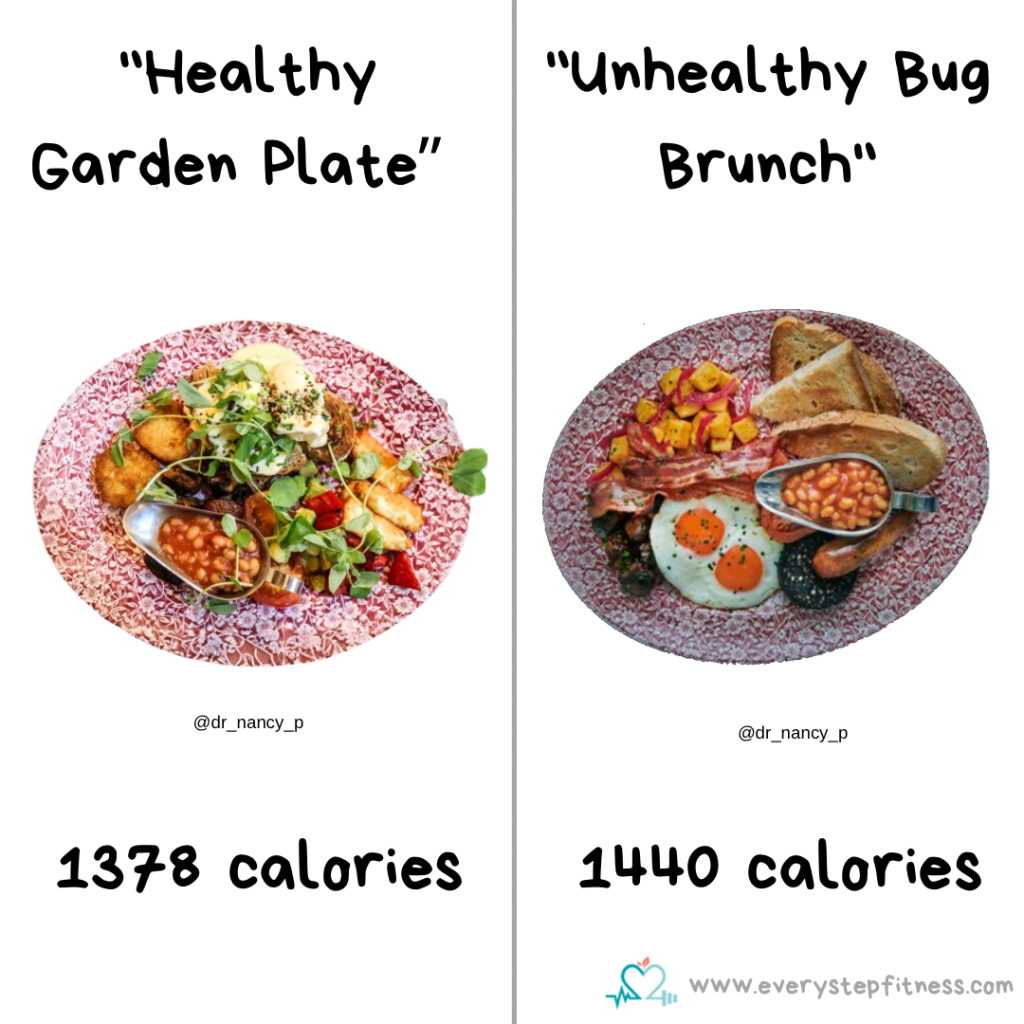
Bills. If you were out for brekkie / brunch you might assume that something like the ‘Garden plate’ is the better choice. It sounds healthy doesn’t it? It’s got poached eggs, halloumi, roasted plum tomatoes, red peppers, smashed avocado, hollandaise, mushrooms, hash browns, baked beans etc. Compare that to the Big Brunch which is fried free-range eggs, bacon, sausages, tomatoes, mushrooms, hash browns, baked beans, black pudding etc and the choice is obvious isn’t it?

However that’s not the case. Garden Plate comes in at approx 1378 calories, while the Big Brunch is approx 1440 cals. That’s only 60 cals different – essentially the same.

This is a great example of how food marketing and naming can shape our assumptions. Dishes that sound fresh, wholesome or plant-based are often automatically labelled as ‘healthy’ and therefore assumed to be lower calorie. Ingredients like avocado, halloumi, oils, sauces and grains all have great nutritional value but they’re also energy dense, and when combined the calories add up quickly.

Now if you want the Garden Plate because you like it then definitely go for it, but if you’re choosing it when you’d prefer the Big Brunch maybe stick to what you like! If you do want to reduce the calories then choose something totally different!

Enjoy 🤗

xxx