Nutrition and Calorie Tips

Reasons you’re hungry…

Reasons you’re hungry… 🍔

A lot of my clients have been telling me how hungry they are feeling now the inevitable post Christmas ‘back on it’ season as started!

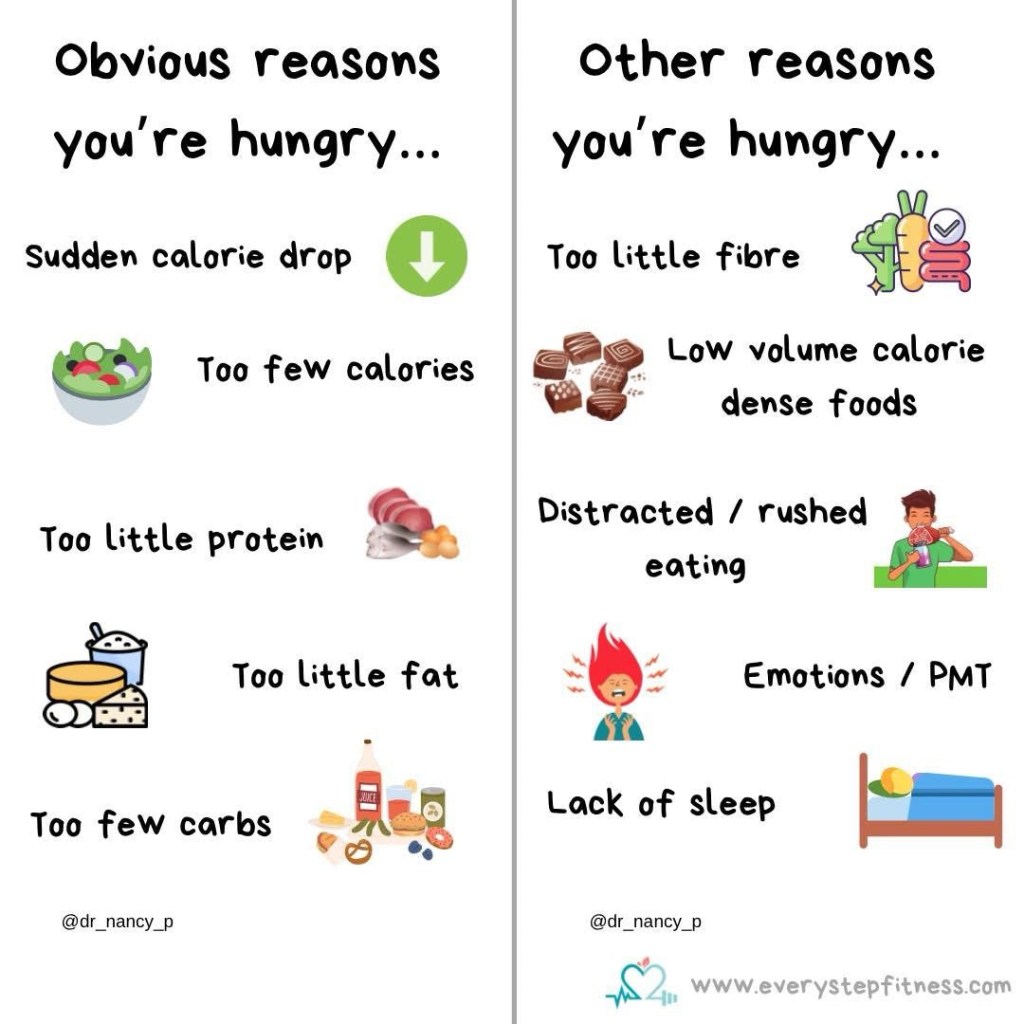
There are some really obvious reasons why you might be hungry. Remember a little hunger is a good thing so don’t be too quick to want to feed it! But if you’re starving hungry then it could be because you’re not eating enough calories – whilst obvious this probably isn’t the main reason tbh. You have probably just gone from eating several thousand extra calories a day over Christmas and new year, to eating normally or cutting calories – so yes you will be hungry! Your body is expecting large amounts of calories that you’re now not eating.

Other obvious reasons include perhaps not eating enough protein or fats – both these help you stay full and it’s common to avoid the fats especially when trying to ‘be good’. You may also not be eating enough carbs. Carbs are often the first thing people cut but really you need to try to ensure you’re still eating a good quantity of them to help you manage your hunger. Each macronutrient triggers a specific hormonal response which signals satiety (fullness) – fats cause the release of GLP-1, carbs cause the release of leptin, protein stimulates release of GLP-1, glucagon, CCK and PYY which tell the brain you’re full.

However there are probably a number of other reasons you’re hungry.
You might be low on fibre – it slows digestion, adds bulk and is fermented in the digestive system to produce short chain fatty acids which once absorbed tell the brain we’re full.
You might be eating low volume calorie dense foods. Whilst calories are king when it comes to fat loss, food volume really helps with staying full. So aim for high volume, lower calorie options to help if you’re hungry.

If you’re eating whilst distracted (watching tv/on the phone) or inhaling your food too fast multiple studies have shown you won’t feel as full as if you take your time and eat more mindfully.

Your emotions will definitely impact on your eating. If you’re bored, lonely, anxious or sad (or suffering from PMT) you may turn to food for comfort. It’s totally natural and fine to do, it’s also important to try to find other ways to make you feel better: calling a friend, speaking to a therapist, exercise, meditating, engaging in a hobby etc

Finally if you’re sleep deprived you will definitely be hungry – your body will be seeking energy to keep going and that’s going to lead to food cravings and less control around food. So work on getting a better nights sleep if you can.

Xx
Tuesday Tip

Tuesday Tip: Maximizing Immunity

Tuesday Tip: Maximizing Immunity 🦠

With the cold, wet weather hitting its definitely cold/flu season so you will hear lots of promotion of products which can ‘boost’ your immune system. While the idea of “boosting” the immune system is popular there are actually no scientifically proven direct links between various lifestyle changes and enhanced immune function. Having said that there are things you can do to support your immune health.

When you experience symptoms of illness, it’s actually your immune system reacting to infections or injuries. So these responses are good as it means the immune system is doing its job. Ways you can help it do this include:

Diet and Lifestyle

  • Aim for a balanced diet, with plenty of fruit and veggies, whole foods and a variety of nutrients.
  • Exercise is important and has been shown to increase immune system activity and enhance immune function and overall health.
  • Sleep is vital to allow your body to recover and function optimally. Also it’s important to stay hydrated.
  • Smoking and alcohol consumption hinder the immune response so are good to avoid or reduce. Obesity and diabetes have the same impact too so it’s important to manage these factors where possible.

Essential Nutrients

  • Vitamin C may reduce the duration and severity of colds. Studies indicate an 8% reduction in symptom duration and a 50% reduction in upper respiratory infections.
  • Vitamin D supports immune function and helps prevent infections. Many people do have low levels so it’s often worth supplementing during winter
  • Some research suggests garlic can lower illness frequency and severity, though the studies do have some limitations but it shows potential. Consuming two cloves daily or an equivalent garlic extract may be beneficial.

Avoid Low Energy Availability (LEA)

Going on fad diets and drastically cutting calories is a great way to reduce immune system function. If you’re trying to lose weight ensure a moderate calorie deficit and don’t be tempted to cut out carbs (the best source of energy for muscles and brain function)

While direct “boosting” of the immune system is not scientifically supported, maintaining a healthy lifestyle and balanced nutrition can significantly enhance your immune response. Focus on a balanced approach , and beware of trendy supplements or extreme diets.

Happy Tuesday 🤗
Xx

Nutrition and Calorie Tips

What you need to do after the New Year and Xmas excess?

What you need to do after the New Year and Xmas excess? 🤔

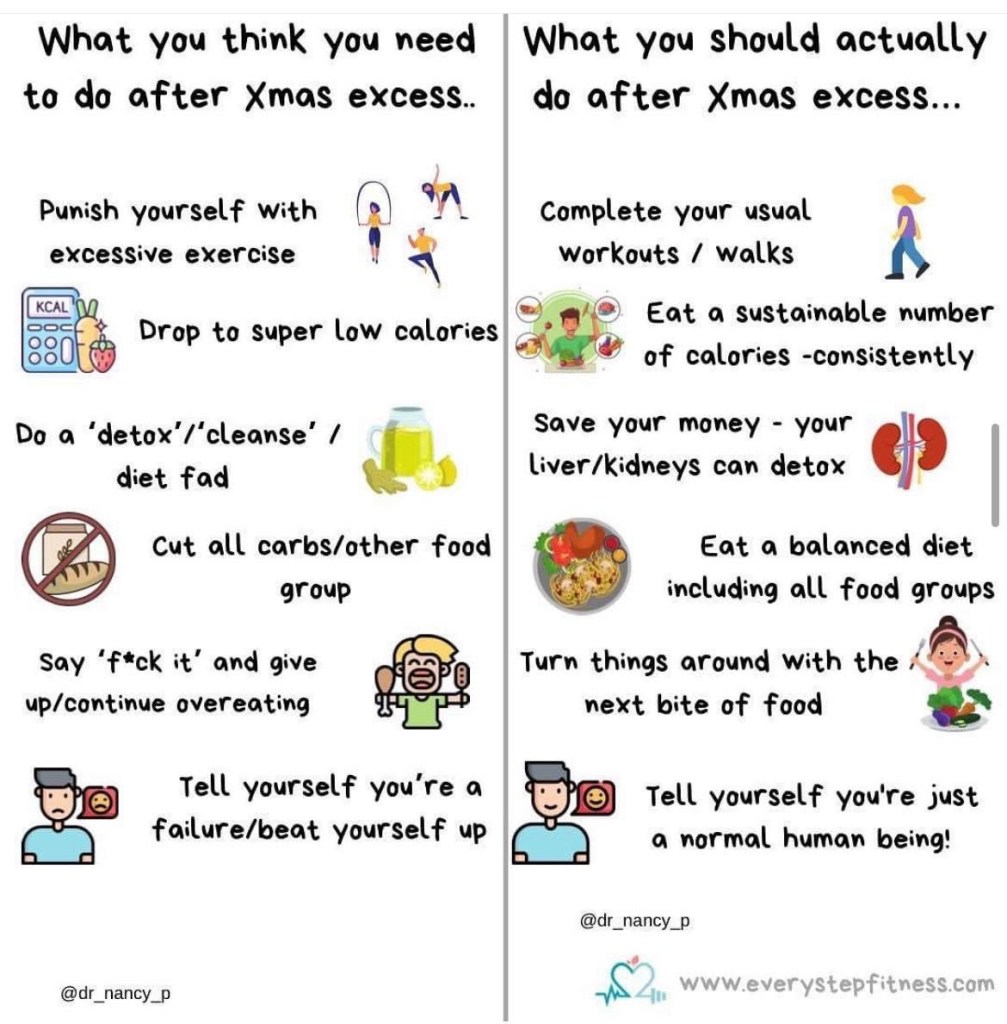
At this time of year, after the Christmas and New Year inevitable excesses it’s natural to want to ‘get back on it’ and you may well think the way to do this is to go into overdrive – exercise excessively, slash your calories down to under 1000 a day, maybe do a ‘detox’/ ‘cleanse’ or throw money at a diet fad, cut carbs or other food groups… You may be beating yourself up and calling yourself a failure for eating so much over the holidays … Or you may just think ‘f*ck it’ and give up completely and continue over eating…

None of this will actually make you feel better or get you where you want to be.
Exercising excessively will only make you tired, prone to injury and likely to eat more. Slashing calories down to unsustainably low levels may work initially but won’t last and you’ll end up rebounding and overeating more – and you’ll be miserable! ‘Detoxes’ or ‘cleanses’ are just an expensive way to cut calories/replace meals – they result in rapid initial weight loss from water loss but aren’t sustainable and definitely don’t ‘remove toxins’ – your liver and kidneys do that for you just fine! Cutting food groups out has a similar effect – yes you’ll reduce your calories but unless you plan on never eating those foods again it’s not sustainable and it’s pretty sad to cut foods you love totally out of your diet for life.

Saying ‘f*ck it’ will be very liberating but if it results in you continuing to overeat then long term it probably won’t feel that good! Whilst you definitely don’t need to lose weight if you aren’t happy with your weight then you’ll certainly want to regain some control right?
Beating yourself up is definitely no good. It’s so hard not to but let’s be honest, you enjoyed a few weeks of good food and drink with family and friends, is that really a bad thing? Does it make you a ‘failure’ or a bad person? No! It makes you human and it’s not something to feel bad or guilty about!

So what should you do?
Go back to your normal exercise routine, eat balanced meals avoid all detoxes/ diet fads and save your money! Oh and remind yourself you’re a brilliant human being!
Xx

Tuesday Tip

Tuesday Tip: Say No to ‘Detoxes’

Tuesday Tip: Say No to ‘Detoxes’ 🥗

It’s January and across social media people are peddling “detoxes” and “cleanses”. We’re told our bodies are full of toxins from overeating at Xmas, and if you follow plan X / buy the pill/tea/shake you’ll get rid of them and lose weight/ feel/look amazing. You don’t need it, your liver and kidneys do a great job of “detoxing” you, and these products can make your health worse. But we still fall for it.. why?

Post holiday detox

Over holidays we eat and drink more, so we crave simple, nutrient dense food like salads. Physically it feels good, and psychologically it feels good too; drawing a line under all the junk. This sort of “detox” isn’t silly, it’s just a word we use to say “lets get back to eating well”

Bloat

Over-indulging, or eating certain foods makes you bloated e.g. rich foods, alcohol, beans, or foods high in salt, certain starches and sugars. If it’s a chronic issue see a Dr. If you’ve been eating lots of salt you will retain water, making you bloated, reduce the salt for a few days and you’ll be fine. Overdo the food and drink? You don’t need to do anything just eat normally for a few days.

Constipation

Most detoxes /cleanses are laxatives, which can permanently damage your intestines. So first of all, increase water and fibre intake, then increase fruits, veg, and whole grains, but do it gradually; a sudden fibre increase can make you feel worse. If that doesn’t help, see a Dr, not a Facebook ‘expert’.

Fat loss

No, just no. A juice/pill/shake won’t do that! Sometimes just buying something is a powerful psychological message that you’re making a change and acts as a kickstart; which is why we fall for it. Sadly it won’t last, and you’re left out of pocket and likely to rebound. The more radical approach to losing weight, the more likely it is to fail. Slow and steady wins the race; make small, sustainable habit changes and you’ll reap the rewards.

It’s normal to want to reset, feel better and make changes, but you don’t need a “detox”. Just try to get some sleep, drink more water, eat veg and get moving. You’ll look and feel far better for it!

Happy Tuesday 🤗xx

Nutrition and Calorie Tips

Practical New Year’s Resolutions…

Practical New Year’s Resolutions… ⭐️

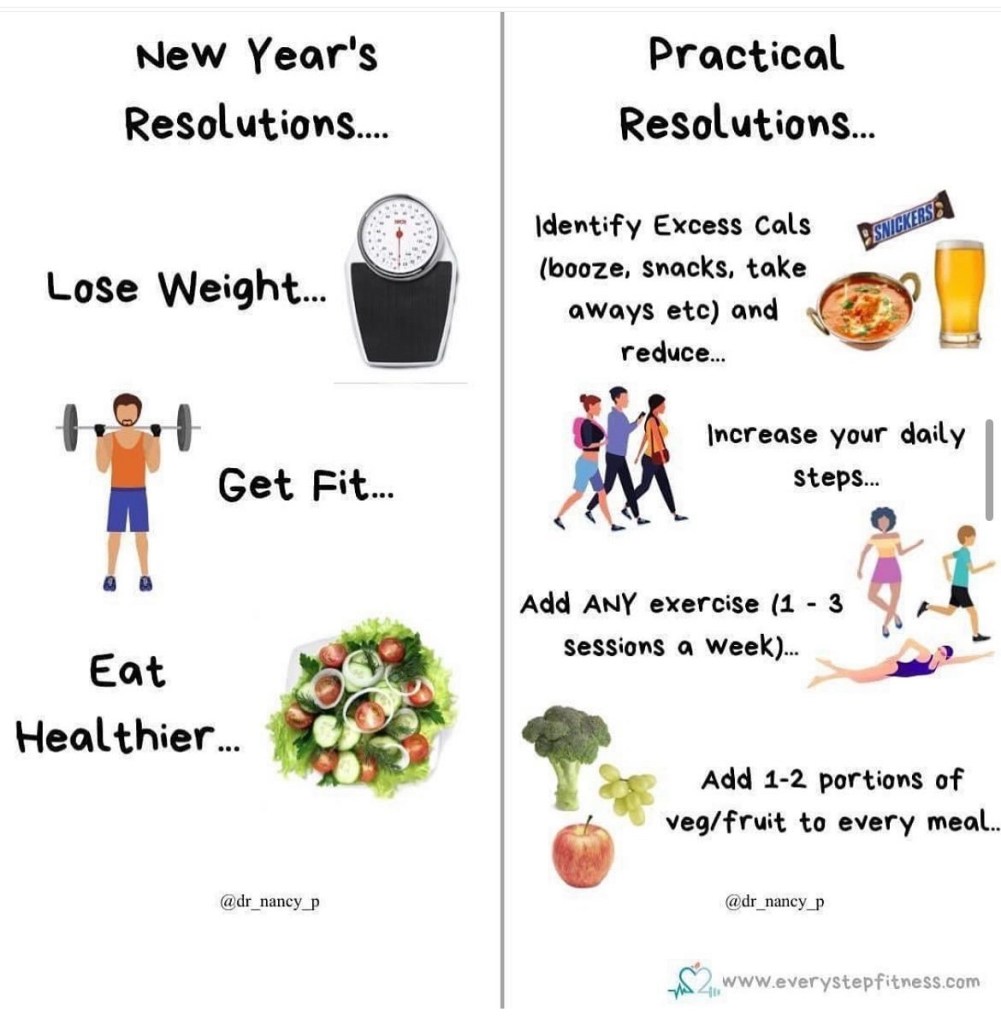
Although I suggested alternative resolutions last week I’m aware that for many their resolutions involve making a fresh start at health and fitness. Often these will include to “lose weight” or to “get fit” or perhaps “eat healthier’. Now whilst these are all great goals they’re quite hard to achieve without some practical steps. They’re outcomes of changes you need to make rather than actual resolutions per se.

If you are making New Year’s resolutions about your health and fitness, then instead of making generalised statements try to focus instead on small actions you can take every day that will lead to those end goals.

So instead of resolving to lose weight, perhaps instead resolve to identify where the excess calories are in your diet. Are they coming from alcohol? Extra snacks? Take aways? Portion sizes? And then you can take steps to reduce them and therefore reduce your calorie intake (leading to fat and weight loss).

Instead of resolving to “get fit”, instead focus on upping your daily steps. Rather than choosing an arbitrary goal of 10,000 steps, instead commit to increasing your steps. If you’re already hitting 12,000 steps a day then aim for 14,000, if you’re getting 4,000 aim for 6,000 etc. Also consider adding some exercise 1-3 times a week. It doesn’t matter what that exercise is really just pick something you actually enjoy; dancing, running, weight lifting, swimming cycling etc.

Rather than resolving to “Eat healthier” commit to adding a portion of fruit or veg to every meal. Aside from the fact that it will increase your overall nutrition, it will increase fibre levels, and will probably help reduce overall calories as by filling some of your plate with fruit and veg you’re going to eat less of other, more calorie dense foods.

This approach is far better than making massive changes, subscribing to fad diets/detoxes/challenges etc which may well cause you to lose weight quickly but will also see you putting that weight back on once you’re back to eating normally again. Take small sustainable steps and you’ll find you’ll hit your goals and be able to maintain it within your lifestyle too! 🙂

Xx