It’s Christmaaaaaaaaaas!
So short and sweet today, no calorie comparisons! And because it’s Christmas, chocolate is definitely a perfectly acceptable breakfast food this morning!
Enjoy! Merry Christmas 🎄🍊🍫xx


With you every step of the way
It’s Christmaaaaaaaaaas!
So short and sweet today, no calorie comparisons! And because it’s Christmas, chocolate is definitely a perfectly acceptable breakfast food this morning!
Enjoy! Merry Christmas 🎄🍊🍫xx
Tuesday tip: Merry Christmas! 🎄
It’s Christmas Eve! So my only tip today – is to enjoy your Christmas tomorrow! However you are spending the day – have a lie in, spend time with friends, family, (or animals) that you love, maybe take a gentle walk, enjoy yummy food, watch Christmas tv etc.
If you’re working then take some time out when you can to do something that you enjoy. Don’t stress about what you’ve eaten, or how little exercise you’ve done, just enjoy the tastes and yummy food, a day or two won’t kill you! Get back to your normal eating and training pattern afterwards and you’ll be back on track in no time.
Hope you have a lovely Christmas 🎅🏼🎄xx

Just a few festive nibbles…’ 🎄
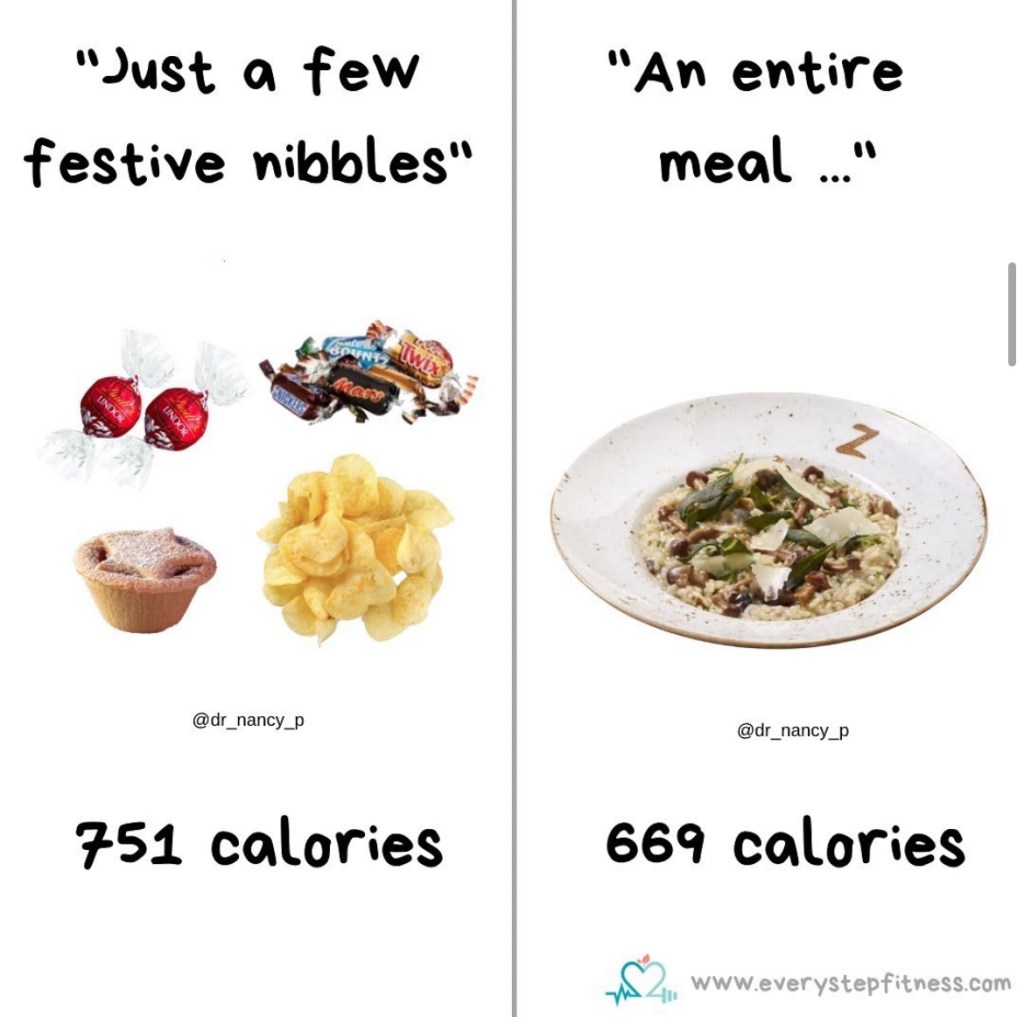
At this time of year there tend to be treats out all over the place – boxes of open chocolates at the office, at home, in shops, mini mince pies out in the tea room, crisps at home etc. It’s certainly a time when we should relax a little enjoy some of these foods we like but so often it becomes mindless snacking just for the sake of it. You grab a lindor ball as you walk through to the kitchen, where you idly shove a few crisps in your mouth, before popping a celebration in as you head back to the living room.. Sound familiar? You probably won’t even remember you’ve had them! And you almost certainly won’t attribute excess calories to these little nibbles here and there.
But as you can see – it’s quite easy to consume more than a substantial meal’s worth of calories in ‘just a few nibbles’ . The meal pictured is a Zizzi dish of roasted mushroom risotto – not a specifically low calorie meal. It comes in at 669 cals. The nibbles – 5 celebrations chocolates (337 cals), 2 lindor balls (146 cals), mini mince pie (114 cals) and some crisps (30g Kettle chips) – are a hefty 751 cals – and you’d probably still go and have dinner as well….
So whilst I definitely wouldn’t suggest you avoid all the festive snacks, it might be worth just being a little bit mindful of them. If you want them – have them and actually enjoy eating them, rather than just popping them in your mouth without a thought. Be aware of the calories so you’re making an educated choice!
Merry Christmas 🎄
Xx
Tuesday Tip: Happy, Healthy Christmas 🎄
The festive season often feels like a minefield for anyone trying to stay healthy. With indulgent meals, endless treats, and busy social schedules, it’s easy to feel like Christmas is something you need to “survive.” But the truth is: Christmas is a time to celebrate, not endure. You can embrace the season joyfully without guilt or obsessing over calories.
Here’s how to enjoy the festivities with balance:
#1 Plan, Don’t Panic
If you have a big event coming up, adjust your intake beforehand. Avoid starving yourself, but saving 100-200 calories a day for a few days before or after can help you buffer the impact. For example, if you plan to overeat 800-1000 calories at a party, reducing your intake slightly from Monday to Thursday can make a difference without feeling deprived.
#2 Sip Smartly
Alcohol can be a hidden contributor to weight gain, especially during long social gatherings. You don’t need low-calorie drinks if you don’t like them—just set a limit, like 4-5 drinks, and stick to it. Begin with a large glass of water, and alternate drinks with water to stay hydrated and avoid overindulgence.
#3 Stay Active, Your Way
We all indulge on Christmas Day, an average of 4000-5000 calories! But instead of stressing about “burning it off,” enjoy movement that feels good. A morning run, family walk, or evening stroll to enjoy the lights will boost your mood and help you feel refreshed.
#4 Let Go of the Guilt
Remember, Christmas isn’t something to “survive.” It’s a time to enjoy. A few indulgent days won’t ruin your progress if they’re not your normal routine. Once the holidays are over, just return to your regular habits, and you’ll be back on track in no time.
So, skip the “damage control” mindset and savor the holiday treats. Christmas is about celebrating, enjoying, and focusing on the moments that matter.
Happy Holidays! 🎄
Xx

The office Christmas party… 🥂
At this time of year there are bound to be lots of festive social events – whether it’s the office/work party, drinks with neighbours, school parent gathering or a family party etc.
Now whilst it’s obviously only one month of the year and it’s perfectly fine to just indulge as much as you want, for many there’s a desire to maintain some sort of control to stay on track with their goals.
If you do want to stay vaguely on track then you’re going to have to make some compromises. So this may mean choosing which events to ‘splurge’ at and which to be a little more careful at. That doesn’t mean you have to shun all the festive treats, or not go to the event, you could just modify what you have or have smaller portions of the same things.
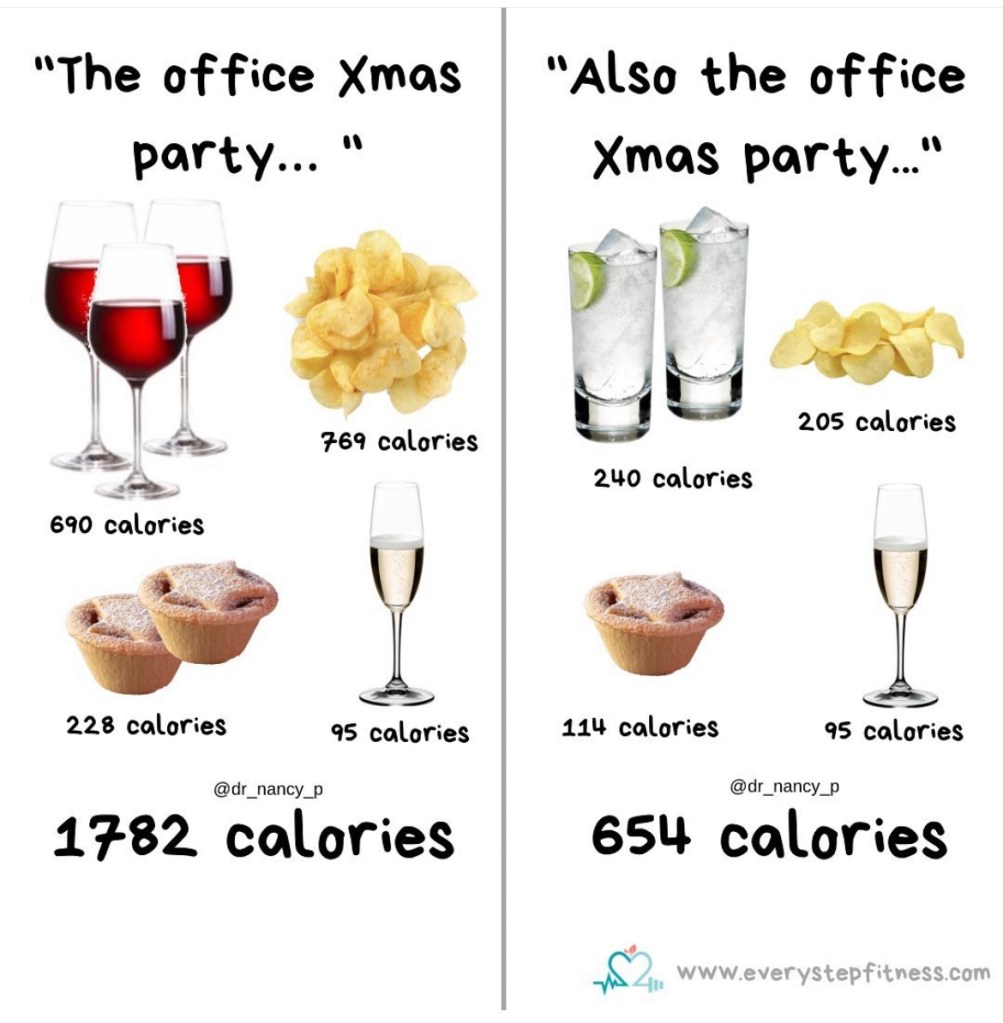
So rather than having say 3 large glasses of red wine and a glass of champagne, you could instead have 2 double gin and slimline tonics and a glass of champagne. Rather than mindlessly shovelling 150g of crisps and a couple of mini mince pies in your mouth, you could just have one decent sized bag (40g) and one mini mince pie. In doing so you’re saving yourself over 1000 cals and still having fun without being a ‘party pooper’.
You can still enjoy the festive period and enjoy festive treats but you can also choose when to indulge and when to moderate things a bit. You’re in control and knowledge is power so just be aware of what you’re consuming if you want to stay on track!
Merry Christmas 🎄
Xx