Nutrition and Calorie Tips

Fasted vs non-fasted Exercise…

Fasted vs non-fasted Exercise… 🏃🏼‍♂️

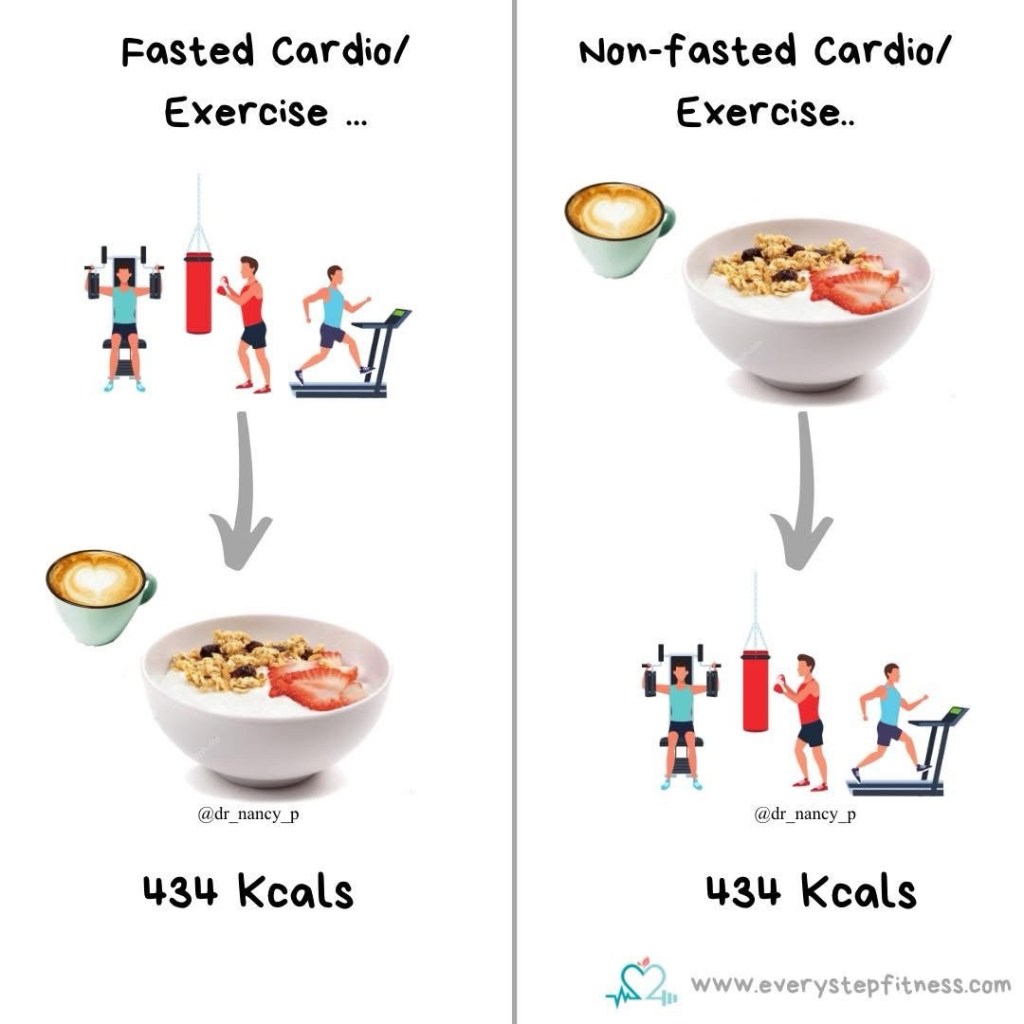
There’s a fair amount of confusion out there about whether you’re better off exercising fasted (on an empty stomach) or after you’ve eaten something (non-fasted) and whether one is better or worse for fat loss.

The confusion arises because people often talk about how exercising on an empty stomach increases fat oxidation. This then gets conflated with fat loss. Fat oxidation is the process of using fat for energy in the body. When you eat something the body secretes insulin to aid in the processing and metabolism of the food for energy and storage. Insulin reduces fat oxidation, so less fat is used for energy. So the argument is that if you haven’t eaten anything yet that day then you won’t have secreted any insulin and therefore fat will be oxidised and used for energy.

Whilst this is true – you will have more fat oxidation, it doesn’t actually mean more fat loss. Fat loss is dependant on overall calories consumed, on average, over the day/week/month etc. Even if you exercise before eating, you still need to have a calorie deficit for that day otherwise any excess calories will still be stored as fat. So It makes NO difference to fat loss whether you choose to eat before or after exercise.

For some people they prefer to exercise on an empty stomach, but for others they need some food in their system to workout. From a workout perspective if you haven’t eaten yet then you may find you fatigue faster and aren’t able to work as hard, so you may end up burning fewer calories. So it’s very much personal preference!

Enjoy 🤗
xxx
Tuesday Tip

Tuesday Tip: No bad foods

Tuesday Tip: No bad foods 🍕

I hear people referring to things like cake, chocolate, cookies, crisps, pizza, chips etc as ‘bad’ foods. As a result people often feel like they’ve failed if they eat them. It’s really vital to shift your perception of these types of foods if you want to have some balance manage long term maintenance and sustainability.

Of course there are foods which have more fat, sugar, or calories and fewer micronutrients. Whilst those types of food aren’t the healthiest they serve other purposes – including improved mental well being so they should absolutely be included in your diet. It just means you have to manage the portion sizes of these types of foods. Having an entire pizza, garlic bread and a tub of ice cream – perhaps not the best idea, having a few slices of pizza and a small bowl of ice cream as part of a balanced diet – absolutely fine!

This is where being aware of the calories in foods is so important. You can then manage your calorie budget to incorporate the foods you enjoy that are higher calorie. Also try pairing them with more nutrient dense foods when you can. You can’t get ‘fat’ from one pizza, or one tub of ice cream, equally you can’t get ‘thin’ from one salad or one bowl of fruit- we need all of them in our diets. Lose the all of nothing mindset and lose the idea that foods are good or bad – you can continue to have any foods you like and enjoy, just manage the quantity!

Happy Tuesday 🤗
xx

Nutrition and Calorie Tips

A summer treat..

A summer treat.. 🍦

What’s better for a summer dessert than some ice cream. I don’t know about you but once I start on a tub it’s gone before I even realise it!

Whilst there’s no problem with including any ice cream you like in your diet, if you are trying to lose weight/fat you may find that fitting a whole tub into your calories quite tricky. So you have two options – either limit the amount you have, or swap from a calorie dense type of ice cream to something that’s similar tasting, but lower calorie. There are the obvious swaps to the low calorie brands like oppo or halo top etc but another option is to switch to something else entirely.

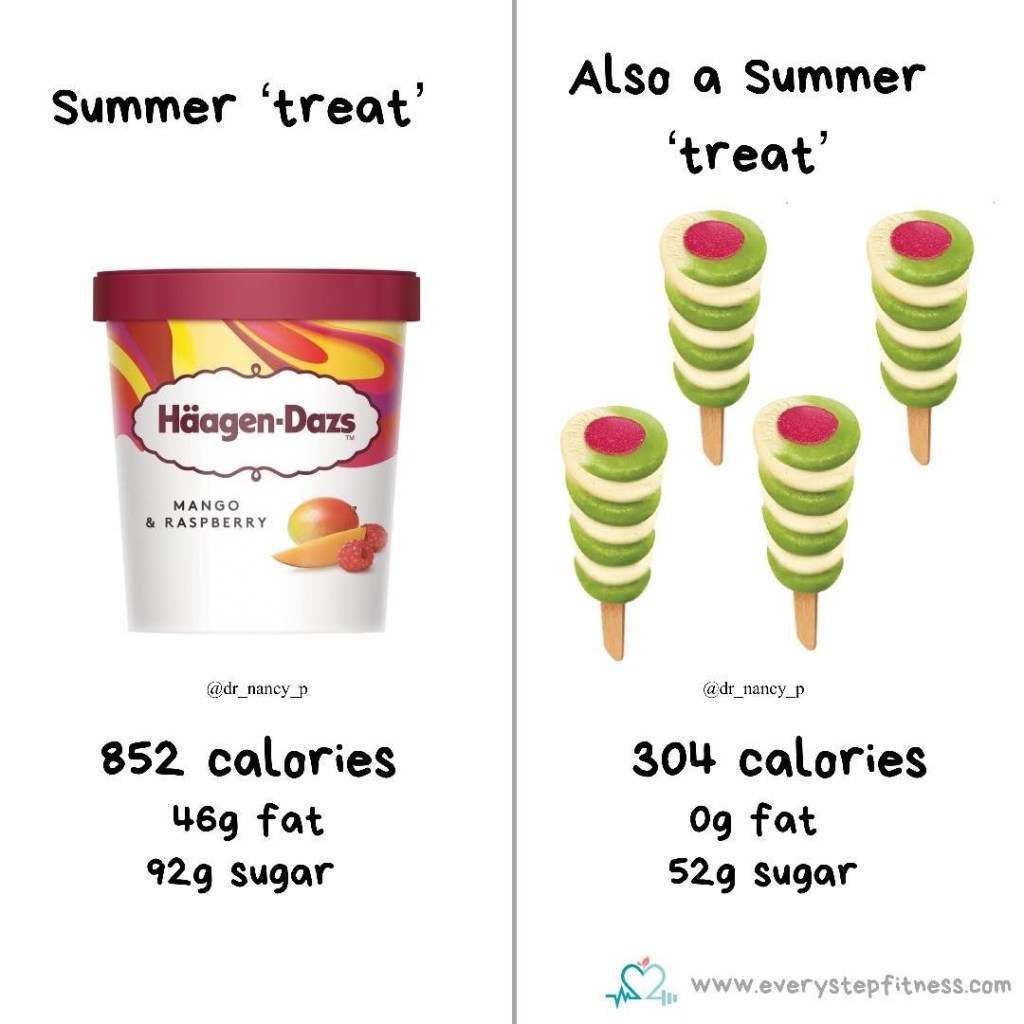
In this example switching from the Häagen-Dazs mango and raspberry ice cream to twisters makes a massive calorie saving. You could have 4 twisters for almost a third of the calories of the Häagen-Dazs. As an added bonus the chances of you eating 4 twisters in a row is considerably less than working your way through a tub anyway. Psychologically it’s much easier to work your way through an open tub than help yourself to 4 lollies in a row.

So if you do want to enjoy some
Ice cream but save some cals try going for the lower cal, higher volume option if you can.

🤗xx

Tuesday Tip

Tuesday Tip: Fat Loss is Simple – Not Easy

Tuesday Tip: Fat Loss is Simple – Not Easy 💪

Fat loss is simple, just eat in a calorie deficit but simple doesn’t mean easy. Hunger, cravings, and energy dips can make even the best plan feel impossible. So if you’re struggling to stay on track, here are five tips that can help you feel fuller, reduce cravings, and stay consistent when it feels tough:

#1 Move Daily
You don’t need to workout for hours every day, but daily movement matters. Walking helps manage hunger hormones, boosts your mood, and burns extra calories. It’s one of the most underrated fat loss tools.

#2 Eat More (Volume)
Load up on high-volume, low-calorie foods like vegetables, fruits, and lean proteins. They fill your stomach without costing you tons of calories so you feel satisfied, not deprived.

#3 Thicker = Fuller
Meals with more “viscosity” (oats, Greek yogurt, chunky stews etc) digest slower and keep you full longer. They’re more satisfying than thinner or liquid-based options.

#4 Chew It
Foods that require more chewing (like apples, raw veggies, or lean meats) naturally slow down your eating. This gives your brain time to register fullness and helps you avoid overeating.

#5 Sweet Swaps
Low calorie treats can help scratch that sweet itch without wrecking your progress just don’t let them take over your diet.

Most importantly remember consistency is more important perfection. You don’t need to be perfect, you just need to be consistent. Progress comes from daily effort, not all-or-nothing thinking. Show up, stick with it, and the results will come.

You’ve got this. Keep going!

Happy Tuesday! 🤗
xx

Nutrition and Calorie Tips

‘I’m pretty good at estimating my calories….. ‘

‘I’m pretty good at estimating my calories….. ‘ 🥑

I’m always telling my clients to try to be as accurate as possible when they’re tracking their food and calories. This means actually weighing things – particularly anything that is calorie dense.

Very often people tell me that they’re “pretty good” at estimating the amounts they’re having, that they have the same thing each day so they know what it looks like now, that they can estimate pretty well etc. I’m sure some can, but I know I can’t. I can at first but then often amounts creep up without you even realising it.

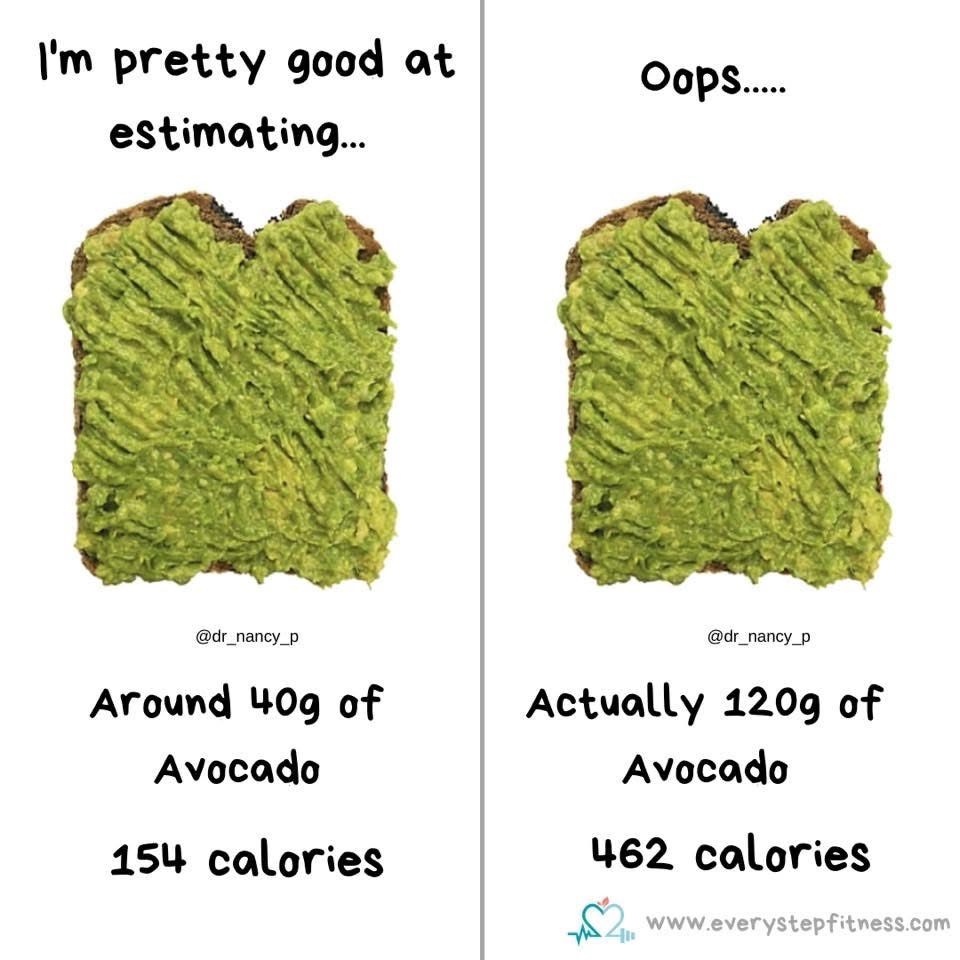
In this example on the left is an amount that was estimated at around 40g avocado by a number of people I asked, (calories excluding the toast), on the right is the actual amount – 120g! Now I don’t know about you but I wouldn’t have thought it was that much but look at what a difference it makes in calories. 40g can look very similar to 120g when layered on toast and you may not even realise how much you’re having. The same goes for nut butters, spreads, cheese etc – anything high calorie. With less calorie dense foods it won’t matter as much but with these calorie dense foods when you get it wrong you’re adding a large number of calories. This is also why measure like “a small avocado” are no good – what’s small? my small may not be your small… etc

So if you are trying to lose fat/watching your calories maybe it’s time to go back and get those scales out and double check those estimates and see if you really are as good as you think you are.
🤗
Xx