Tuesday Tip

Tuesday Tip: ‘falling off the wagon’ at night

Tuesday Tip: ‘falling off the wagon’ at night 🍪

A really common issue lots of us face is being ‘good’ all day but then falling off the wagon in the evenings and over eating. There are a number of reasons for this.

# Skipping meals/ v small meals – it’s tempting to skip brekkie or lunch, or make it v small. During the day you’re busy and it’s easier to get by on less cals as you’re focused elsewhere. The problem then is you’re so hungry by the evening that you lose control and overeat. Aim for balanced meals – including protein, fats and carbs. If brekkie doesn’t work for you that’s fine, but make sure your lunch is sufficient.

# Avoiding carbs – you skip carbs during the day, but then what is it you end up snacking /overeating with in the evenings… carbs or those foods you’ve eliminated during the day. So stop cutting them out – include them in your day.

# Avoiding snacks – maybe you need to eat in between meals. If you’re up from

6am and not going to bed until 10 then the gaps between meals are probably going to be too long. Factor in snacks!

# Not enough protein or fibre. Both these nutrients help to keep you feeling satisfied.

# Erratic eating schedule – if your meal times vary a lot day to day you will find it harder to manage hunger and cravings. ‘Big’ weekends will also set you up for challenging weeks as your stomach is ‘expecting’ more food etc. Aim for as consistent eating schedule as you can.

# Eating fast / distracted – pay attention to the food and to own hunger/satiation signals. Slow it down!

# No plan – if you’re prone to evening snacking (I am!) then plan it in! Plan in a post dinner snack!

# Habit – sometimes it just becomes a habit. Whilst hard to break it’s not impossible. Try to introduce a different evening habit to help – eg a bath, reading, adult colouring books, knitting etc

# Boredom / emotional eating – this is obvs a much bigger topic but the first step is identifying it. Plan in some alternatives so if you recognise the boredom/emotional eating kicking in you have a plan in place – distraction techniques (using your hands for other things – like knitting etc), go for a walk etc

So if evening snacking is something that tends to derail you just have a think if any of these reasons may be contributing towards it and then see if you can address them and ask me if you need any help!

Happy Tuesday 🤗

xx
Nutrition and Calorie Tips

Reverse lent!

Reverse lent! 😇

Today is the first day of Lent! Regardless of your beliefs or faith Lent has traditionally become a time when people give up various things they consider ‘bad’. Now whilst there’s absolutely nothing wrong with that at all sometimes it can become more of a negative rather than positive experience.

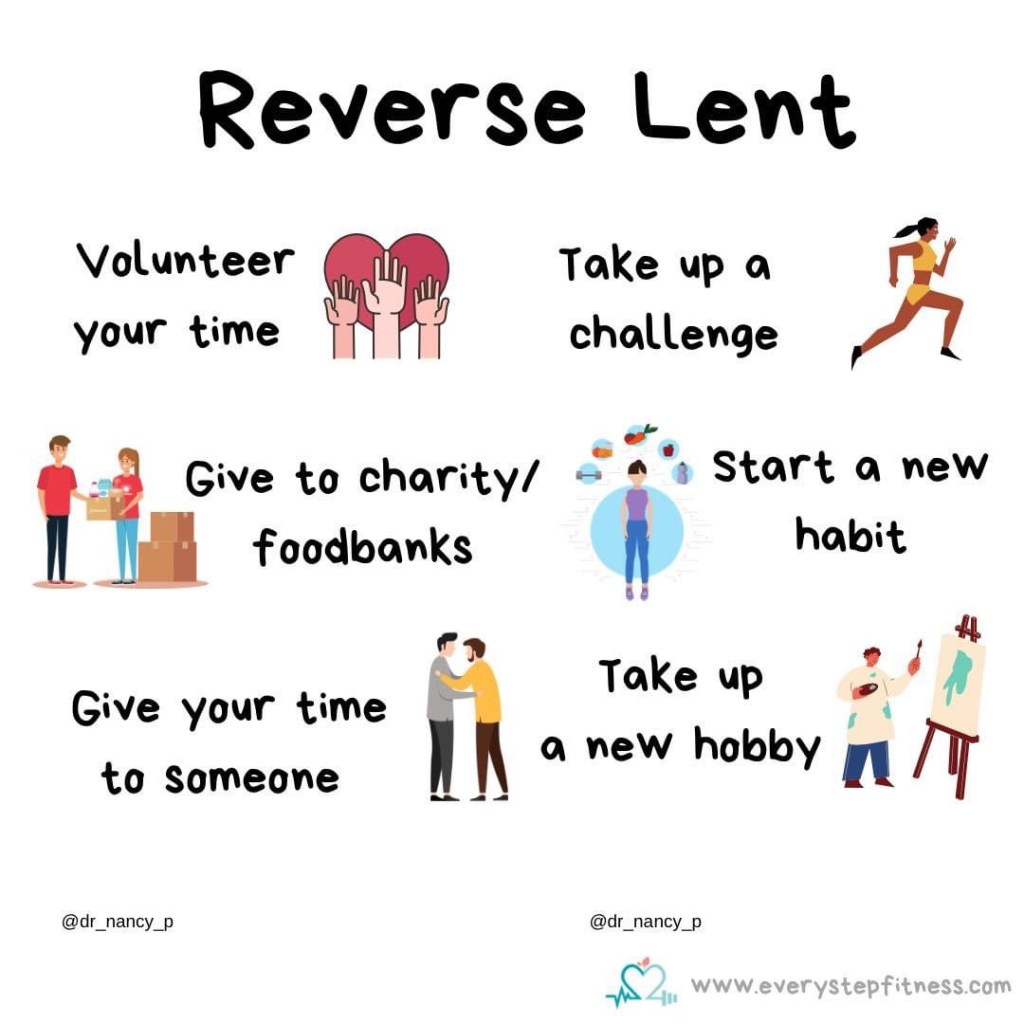
So how about instead of giving up things, you turned it around and tried taking something up or giving something to others?
You could do some voluntary work, or you could give things to charity. For example, try setting up a box and popping one item of clothing or something you don’t want anymore in it every day for each day of lent, then donate to charity at the end!
You could give your time to someone – it could be something simple like helping a friend or neighbour, or calling someone for a chat. Or you could take up a new hobby or challenge during Lent – try something new like gardening, knitting, drawing, or perhaps a fitness based challenge – trying new classes, walking every day, working out 3 times a week etc.

What do you say? 🤗
How about a reverse lent?
Xx

Tuesday Tip

Tuesday Tip: Preventing weight regain

Tuesday Tip: Preventing weight regain ✋🏻

Preventing weight regain starts from the moment you start trying to lose weight in the first place. Believe it or not the most important aspect of weight loss isn’t actually weight loss – rather it’s maintenance. Most people underestimate the importance of both maintenance and learning to live at your new goal weight (maintenance).

Maintenance is harder than losing the fat in the first place and it’s one of the main skills people ignore. The reality is the habits and behaviours that help you lose weight are the ones that will help you maintain it as well. You can’t expect to keep the weight off if nothing has changed. I often tell my clients they need to behave like the ‘slimmer’ / ‘fitter’ / ‘stronger’ (whatever THEIR goal is) version of themselves . What would that person do? That person probably can’t get away with 3 takeaways a week, or boozy lunches at the weekend etc. It’s about finding things you enjoy (both food and exercise) that fit into your goal/maintenance lifestyle. Swapping behaviours and habits for new ones. For example – not restricting foods you enjoy, but learning to include them as part of your eating plan, trying to be as physically active as possible for you generally and doing exercise you enjoy etc

In addition research shows that for each kg of weight lost there’s an increase in appetite and a drive to consume an extra 100 cals per day that a person that hadn’t lost the weight doesn’t experience. This means you are dealing with not only trying to establish new habits to help you maintain a lower weight, but you’re also experiencing more hunger than a similar weight person who hasn’t lost weight. It’s important to be aware of this – recognise that a little hunger isn’t always a bad thing and be prepared for it.

So don’t waste your money on fads and quick fixes. Instead look at how you’re approaching your fitness and diet goals and ask yourself – is this something I can maintain for the long term? Because if it isn’t, you’re going to struggle to make (and later maintain) progress.

Happy Tuesday 🤗

Xx

Nutrition and Calorie Tips

Best Macros for weight loss?

Best Macros for weight loss ? 📊

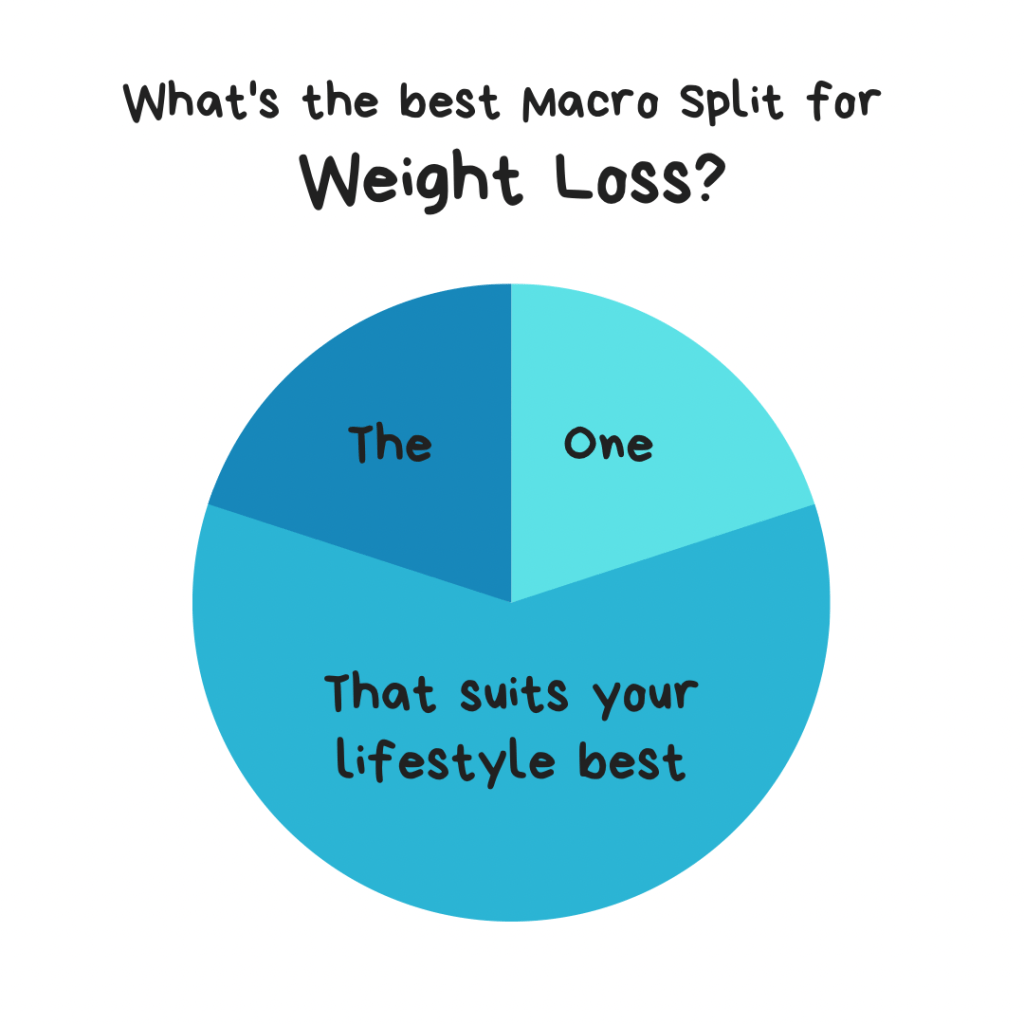
Clients often ask me whether, in addition to how many calories they should aim for, what proportion of macros they need to hit i.e. amounts of protein, carbs and fat. Well like most things concerning nutrition there is no one size fits all but essentially it’s whatever suits your lifestyle.

So first off why might you want to track macros? Well if you are an athlete or are trying to build serious amounts of muscle then yes it may be useful to track your macros as you may need to ensure you’re getting sufficient amounts of carbs to fuel your training or enough protein to ensure muscle building. However for the vast majority of us who are exercising for health and enjoyment or just trying to lose weight then there is no need to hit certain amounts or track them.

If you enjoy data and find that keeping track of macros helps you stay on track generally then of course go for it! If you have an interest in seeing how your body responds to different macro ratios then absolutely go ahead and track them and play around with the percentages of each one. If however you’re trying to lose weight then you don’t actually need such a high degree of control over the details. Tracking calories and hitting a specific calorie deficit itself can be enough of a challenge, and I’ve found if you then ask people to try to hit certain protein or carb ratios on top of that it can become too much. The amount of focus, concentration and planning required can mean it becomes unsustainable and ultimately leads to failure. It can also lead to burn out, disordered eating behaviour and severely limits social life and enjoyment. In addition the database in these tracking apps is often not accurate enough anyway to allow such a high degree of macro manipulation.

For most people, a balanced diet will be providing plenty of protein, carbs and fat and getting hung up on whether you’re hitting 50 percent or 45 percent protein or carbs etc is really meaningless. A focus on more protein based foods/snacks can help with feelings of fullness and therefore help prevent overeating but you can do that by simply choosing higher protein foods if you so wish.

So in short, don’t stress about the macros. Focus on hitting a calorie deficit and just ensure you’re eating a balanced diet including protein, fats and carbs, nutritious whole foods, fruits and veggies, and foods you also enjoy (even so called ‘junk’ foods).

Enjoy 🤗

Xx

Tuesday Tip

Tuesday Tip: Are all calories created equal?

Tuesday Tip: Are all calories created equal? 🤔

You may hear that calories from certain foods are ‘better’ for weight loss than others. But is this really the case?

Food is made up of macronutrients – protein, carbohydrates and fats and the energy is contained in the chemical bonds of their molecules. When the bonds are broken, energy is released – measured in calories. We commonly call them calories but they’re actually kilogram calories (kcals- the amount of energy required to heat 1kg water up by 1 degree).

So are all calories equal? Well yes, in theory they are. In absolute terms a calorie is a calorie; it’s a unit of measurement, just like a kg of soil is the same as a kg of feathers.

In reality it’s more complex. All foods contain calories but those foods may be metabolised (digested and absorbed) in different ways e.g. the metabolic pathway for protein is less efficient than carbs and fat. Protein contains 4 calories (kcal) per gram but a large portion of the protein calories are lost as heat when it is metabolized (up to 30%).

Different foods also have different effects on the gut-brain axis meaning differing results on appetite and satiety. The desire to eat (appetite) can change depending on the composition of a meal/food. Protein-rich foods reduce appetite more effectively which may reduce overall intake of food.

Some foods affect satiety (feelings of fullness) more than others. This in turn has an impact on how many calories are consumed. Foods high in protein and fat make you feel fuller for example.

Large amounts of refined carbohydrates can lead to greater spikes in blood sugar which can lead to cravings and increased food intake and reduced feelings of fullness. So you’re likely to overeat.

So whilst all calories are the same, the foods containing calories are very different and this can have an impact when trying to lose weight. This doesn’t mean certain foods are ‘good’ or ‘bad’ for weight loss – they just may affect your ability to stick to a calorie deficit in different ways so it’s worth being aware of how they impact you.

Happy Tuesday 🤗xx