Tuesday Tip

Tuesday tip: Processed food fear

Tuesday tip: Processed food fear 🍟

There’s a lot of fear-mongering about processed foods going on at the moment and I’ve noticed it causing undue health anxiety with lots of people trying to cut them out etc.

There is no standardized definition of “processed” or “ultra-processed” food, so public perception is heavily influenced by media attention. You may have read about a recent study that linked ultra-processed food consumption to negative health outcomes. What it didn’t say was that there was no causal relationship and it missed some critical details.

Everything we eat is processed, even fresh produce has been processed – cleaned, prepared, preserved etc. And no single food is inherently “bad” or dangerous, especially when consumed in moderation. I’m not saying you should only eat crisps, pizza and ice cream etc. Many processed foods are nutritious (e.g. frozen fruits, cereals, porridge oats etc ) and often are more accessible options for many people.

In most studies that associate processed foods with negative health outcomes most studies fail to account for all the other variables – ‘processed food is bad’ is a much snappier headline isn’t it? It’s not the processed food itself but rather the fact that the majority of food calories are coming from foods with lower nutrient density or lower in fibre. These studies also fail to note the amount of the diet that is composed of lower nutrient dense foods, other lifestyle habits such as exercise levels, and socioeconomic factors.

Ultra-processed foods are not causing these health outcomes. They may contribute to them but it’s a very complex, multifactorial issue. If you have a healthy lifestyle and a broadly diverse diet, indulging in ultra-processed foods in moderation isn’t going to be harmful. Avoiding them also isn’t going to “prevent” disease, and we need to stop demonizing people and individual foods. That sort of message is causing more far more harm than the occasional pizza or cookie.

Happy Tuesday 🤗xx
Nutrition and Calorie Tips

Why you think you’re struggling with weight loss ….

Why you think you’re struggling with weight loss …. 🤔

If you’re struggling to lose weight you may look to things like your age, metabolism, stress levels, hormones, lack of sleep, amount of water you’re drinking etc as the reasons why you can’t achieve your goals.

It’s true that all these areas can and do have an effect and some will certainly impact on things like your appetite and ability to ‘stick’ to a calorie deficit. However it’s actually rare that these are the main reasons behind stalled progress. They do however get a lot of attention – why? Because they are much easier to accept than ‘You’re eating too much’. It’s a lot easier to focus on the idea that your metabolism, hormones or stress levels are preventing your weight loss rather than a heavy social life being the issue.

Of course things like snacking, increased portion sizes and booze can be a response to lack of sleep or stress, or hormones, but it’s far better to focus on these habits instead. Why? because they’re the direct cause, they’re tangible and easily identifiable and they’re the thing that need to change. Rather than trying for some vague notion of ‘increasing sleep’ or ‘reducing stress’.

Obviously nutrition and weight loss can be complicated but if you try focusing on things like reduced portion sizes, fewer or lower calorie snacks, less booze you will see progress. Managing meals out or reducing them (it’s extremely hard to eat out multiple times a week and maintain a calorie deficit without some proper planning), and increasing general activity (note this isn’t just exercise sessions but general activity – walking, fidgeting, moving more!) are also things which are tangible ways to help make progress. You will probably find that despite any issues with sleep, stress, hormones etc you will be able to make progress. Certainly my clients can and have done! So if they can, so can you!

🤗
Xx

Tuesday Tip

Tuesday Tip: Common barriers to sustainable fat loss

Tuesday Tip: Common barriers to sustainable fat loss ⛔️

This may be hard to hear but here are a few of the common barriers to fat loss.

#1 Expectations

Most of us assume that not only will we lose weight quickly and easily, but that it will then stay off without a thought. This is a dangerous mindset to cultivate. Be realistic with your rate of loss – a realistic weight loss per week would be 0.5% of your bodyweight (rising to 1% for a really aggressive calorie restriction) and that’s an average – so you won’t see that every week. To put that in perspective – if you weigh 65kg that’s 650g a week. Trying to go faster than this will get you nowhere – all that will happen is you’ll lose muscle as well as fat, and encourage disordered eating and binge:restriction behaviours. You should be developing new habits and a new lifestyle – you can’t do that when you’re just trying to shift weight asap.

# Short term

This isn’t short term – the things you do in order to create the change are things you will have to keep doing – forever. Can you go for the rest of your life without ‘carbs’? If not then cutting carbs/ keto is not for you. If you tend to overeat in the evenings after starving all day then fasting isn’t for you etc. Be realistic – make small changes to create a calorie deficit, that you can sustain – forever.

# Refusing to adapt

You have to be prepared to adapt and you have to accept that life won’t always be the same and it won’t always be easy. There will be periods of time when you’re busy with work, having a personal crisis, or some family disaster etc. That doesn’t mean your diet/ fitness/health should automatically get thrown off track! In fact during these times sticking to some healthy habits may help keep you going but that doesn’t mean the methods you use need to stay the same. You may not manage to track calories when you’re busy, or you may not make it to the gym 5 days a week so make adjustments – use some go to meals you know are lower calorie, decide to aim for 1-3 workouts instead etc.

# Starting Monday

I can’t tell you how many times I’ve heard, “It’s Monday, I’m back on it.” A lot of people go full out during the week – smashing those calories, working out etc but then come the weekend social events/ family life etc takes over and it all goes out the window. Instead look at your entire week – all 7 days and adopt a balanced approach. Set realistic goals for all days, and DON’T just give yourself a pass because it’s the weekend.

# Be honest

If you can’t be honest with yourself, without berating yourself, then you’re probably not

looking at long term sustainability. You have to be able to see where you are falling short and make honest adjustments. You have to know yourself, know your weaknesses, and be willing to make changes.

Happy Tuesday 🤗xx

Nutrition and Calorie Tips

What ‘should’ you eat on a ‘diet’?

What ‘should’ you eat on a ‘diet’? 🥗

People often say to me ‘I know what I ‘should’ eat, but I just don’t’ . There’s a whole load of guilt and shame in that statement. And it’s often this guilt and shame that leads to feelings of resentment and deprivation and ultimately leads to unsuccessful weight loss attempts.

I do talk about this a lot but it’s so important. What if there are no good or bad foods? Just foods that serve a purpose in that moment. When you remove the stigma around certain foods you enjoy, you can also remove the fixation on them which may naturally lead to a more balanced approach to our diets.The more you (or social media) tells you that a food is bad and you can’t have it or that you’re ‘bad’ for indulging in it – the more you are likely to focus on it. Those thoughts circulate in your head until you can’t hold out any longer, binge on those foods and then feel embarrassed or ashamed or angry with yourself. This can lead to you just saying ‘f*ck it’ and throwing in the towel , then just indulging continuously until you decide to ‘be good’ again. The classic yo-yo dieting approach we are all so familiar with.

Instead just allow all foods to be a regular part of your life. Instead of demonising and banning foods just give yourself some guidelines – staying within a calorie target, ensuring you’re getting your 5 a day in, making sure you’re including some protein in your main meals etc Then fill the rest of your diet with the foods you’d traditionally attempt restrict and avoid.

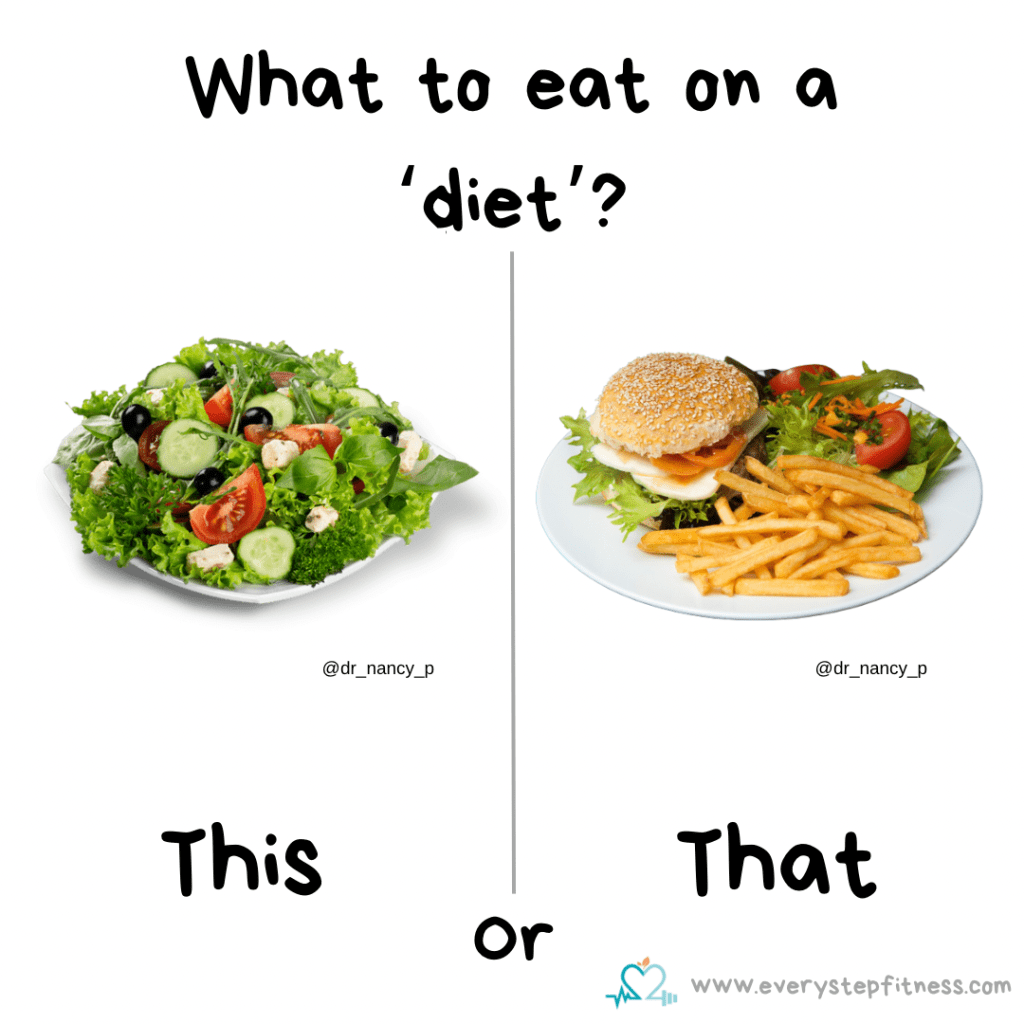
It doesn’t need to be this salad or that burger… it should be this AND that.

🤗xx

Tuesday Tip

Tuesday Tip : Calorie Counting Doesn’t Work…

Tuesday Tip : Calorie Counting Doesn’t Work… 🤔

I hear this a lot – people tell me that calorie counting didn’t work for them and that despite only eating 1000 cals (or whatever value it is) they just didn’t lose weight.

If the goal is to lose weight/fat then the only way to do this is to be in a energy (calorie) deficit. This is a fact and hundreds of studies support this. The means by which you achieve that deficit can obviously vary. It doesn’t mean you HAVE to count calories. But if calorie counting didn’t work for you that means you weren’t in a calorie deficit.

If you thought you were only eating 1000 calories then something is definitely going awry as anyone on that level of calories WILL lose weight.

So if calorie counting doesn’t work for you then these are probably the reasons why.

# 1 Measuring inaccurately

This is the most common issue – not weighing food accurately. If you’re just using MyFitnessPal and finding a rough estimate that you ‘think’ is right then it’s not going to cut it. If you’re guessing weights then you’ll almost certainly be under estimating – again hundreds of studies show this to be the case – even in experienced ‘trackers’. Eyeballing amounts accurately is incredibly hard and unreliable. So get the kitchen scales out – measure in grams and millilitres (not cups and tbsp) and then you’ll have a better level of accuracy.

# 2 Lack of consistency

You feel like you’ve been on track consistently for weeks but in reality those weekends, nights out, or those days when you’ve emotionally eaten have taken you over etc. We’re very good at ‘forgetting’ (unintentionally) all the times we actually don’t stick to the plan. So if you haven’t lost then perhaps it’s because you haven’t been consistent enough?

# 3 Not enough time

Maybe you’ve been trying for a couple of weeks but aren’t seeing the results you want yet. Well that’s probably because you need to do it for longer! It takes weeks and months – not days to see sustainable losses. Remember you didn’t put the weight on in a few days, it’s not going to come off in a few days either. You need consistency over 7 days a week, for weeks and months.

Happy Tuesday 🤗xx