Tuesday Tip

Tuesday Tip: Maximizing Immunity

Tuesday Tip: Maximizing Immunity 🦠

With the cold, wet weather hitting its definitely cold/flu season so you will hear lots of promotion of products which can ‘boost’ your immune system. While the idea of “boosting” the immune system is popular there are actually no scientifically proven direct links between various lifestyle changes and enhanced immune function. Having said that there are things you can do to support your immune health.

When you experience symptoms of illness, it’s actually your immune system reacting to infections or injuries. So these responses are good as it means the immune system is doing its job. Ways you can help it do this include:

# Diet and Lifestyle

⁃ Aim for a balanced diet, with plenty of fruit and veggies, whole foods and a variety of nutrients.

⁃ Exercise is important and has been shown to increase immune system activity and enhance immune function and overall health.

⁃ Sleep is vital to allow your body to recover and function optimally. Also it’s important to stay hydrated.

⁃ Smoking and alcohol consumption hinder the immune response so are good to avoid or reduce. Obesity and diabetes have the same impact too so it’s important to manage these factors where possible.

# Essential Nutrients

⁃ Vitamin C may reduce the duration and severity of colds. Studies indicate an 8% reduction in symptom duration and a 50% reduction in upper respiratory infections.

⁃ Vitamin D supports immune function and helps prevent infections. Many people do have low levels so it’s often worth supplementing during winter (I’ve written more detail about this in a previous post).

⁃ Some research suggests garlic can lower illness frequency and severity, though the studies do have some limitations but it shows potential. Consuming two cloves daily or an equivalent garlic extract may be beneficial.

# Avoid Low Energy Availability (LEA)

Going on fad diets and drastically cutting calories is a great way to reduce immune system function. If you’re trying to lose weight ensure a moderate calorie deficit and don’t be tempted to cut out carbs (the best source of energy for muscles and brain function)

While direct “boosting” of the immune system is not scientifically supported, maintaining a healthy lifestyle and balanced nutrition can significantly enhance your immune response. Focus on a balanced approach , and beware of trendy supplements or extreme diets.

Happy Tuesday 🤗

Xx
Nutrition and Calorie Tips

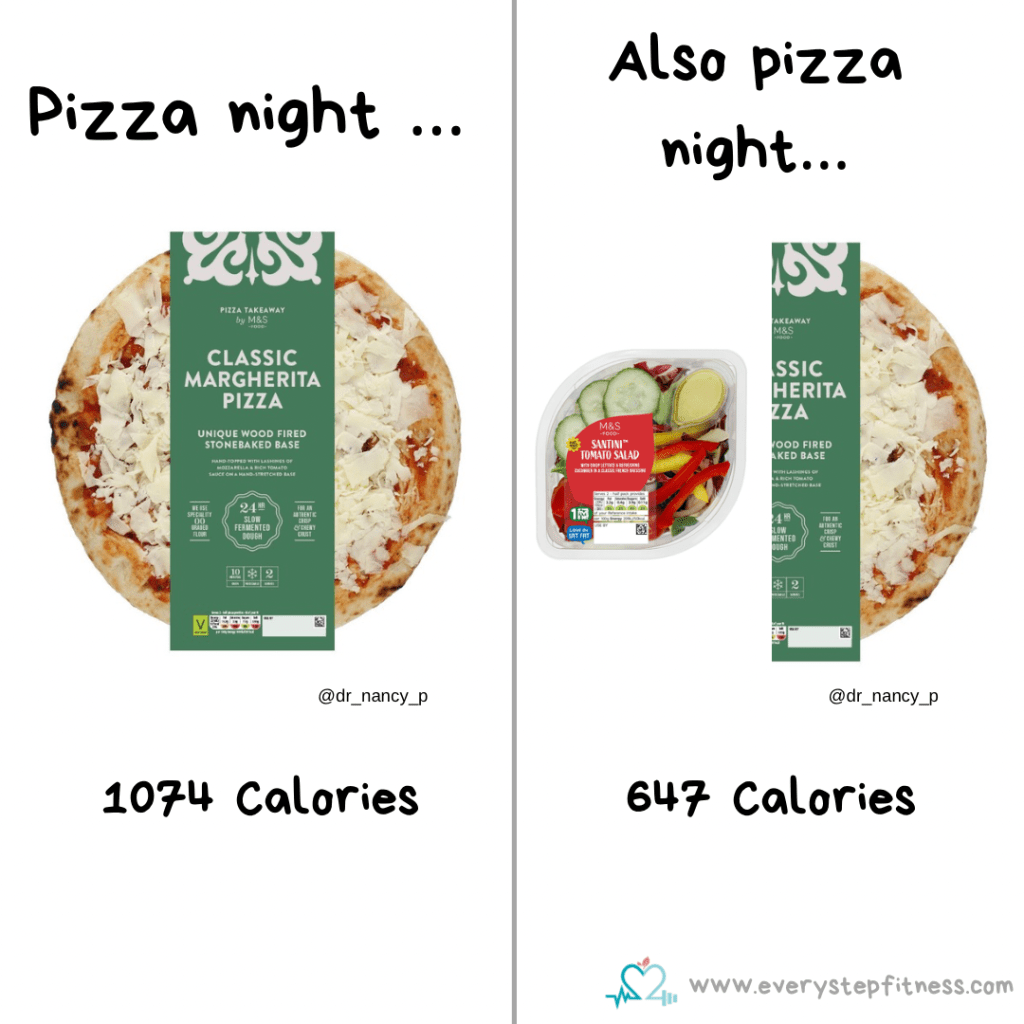
Pizza night ….

Pizza night …. 🍕

If you’re trying to lose fat/weight or just improve your nutrition then it’s really important to find ways to incorporate lall the foods you enjoy but to find ways to do this that still fit within your lifestyle and goals.

Nutrition and fat loss is always a game of trade offs. Rather than being all or nothing about it try to go for a trade off instead. Pizza nights are something many people enjoy and a pizza can be a really handy, quick and tasty meal. Pizzas are tasty but also calorie dense and low in fibre. That means it’s easy to eat a lot, and in doing so, a consume a lot of calories.

No pizza is going to be low calorie per se – they’re usually fairly large, they’re bread based, with cheese, veg and often meat on top so you’re always going to be looking at a fair few hundred cals. However many are well over 1000 cals. If you’re trying to lose weight and tracking calories then it’s hard to accommodate that many calories for one meal. So instead of going for a pizza to yourself have half (save half to cook another evening or share with someone) and add a side salad. You’re still going to be looking at over 600 cals for most standard pizzas – but that’s still a calorie saving, without massively impacting taste or enjoyment! And as a bonus it won’t leave you feeling over stuffed and you get the extra nutrients and fibre from the salad.

By making small swaps and compromises you can easily fit everything you enjoy into your lifestyle long term. I guarantee you’ll feel just as satisfied and you’ll probably feel a lot less guilty the day after (not that I’m suggesting you should ever subject yourself to guilt for what you eat but the reality is most of us do feel that way).

Enjoy!

🤗

Xx

Tuesday Tip

Tuesday Tip: Omega supplements

Tuesday Tip: Omega supplements 🐟

I’m often asked whether certain supplements etc are necessary. One that frequently comes up is fish oil / omega-3 fatty acids.

Omega’s are essential for heart and brain health. They lower blood pressure, reduce triglycerides in the blood, and reduce the risk of heart disease and ischemic stroke. They’re known to help reduce joint inflammation in rheumatoid disease. They also aid brain and eye function. There is evidence they help to prevent and alleviate dementia, depression, asthma, migraine, and diabetes. So they’re pretty important.

There are three main types of omega-3s: Eicosapentaenoic acid (EPA) – found in fish, Docosahexaenoic acid (DHA) – also in fish and Alpha-linolenic acid (ALA) – in plants.

Obviously ideally you want to try to get your omega-3 fatty acids from foods rather than supplements. Aim to eat 8-12 oz non fried, oily fish high in DHA and EPA a week e.g. Mackerel, Salmon, Sardines, anchovies etc. Also try incorporating at least two tablespoons of omega-3-rich nuts and seeds (for ALA) into your diet (flaxseeds, chia seeds, walnuts, soybeans etc). If you don’t eat fish then you’ll need to increase the amount of plant based sources.

It’s always better to get them from food but if you can’t hit those levels then it is one of the supplements that is worth taking. Ideally you want a supplement with a combined total of 500mg EPA and DHA). Always go for reputable brands to ensure that what’s on the label is actually in the product, keeping you safe and healthy! I take one myself and if you want a specific recommendation let me know.

Happy Tuesday 🤗

Xx

Nutrition and Calorie Tips

What we think makes up calorie expenditure ..

What we think makes up calorie expenditure .. 🏃🏼‍♀️

When people think about energy expenditure (calories burnt) most people focus on exercise as being the most significant factor. Exercise obviously contributes to our calorie expenditure but for the majority of people, it is not a large percentage of total expenditure.

In reality exercise actually forms a small percentage of our total calorie burn. The majority of your calorie expenditure is from your basal or resting metabolic rate (BMR)- calories burned at rest for the body’s basic functions. A small portion comes from the thermic effect of food (TEF) – calories burned through the process of eating and digestion (this is 10% max). Exercise forms the smallest contribution – it’s dependant on how many workouts you do but usually less than 15%. The most significant contribution, aside from resting metabolic rate, comes from non-exercise activity thermogenesis – calories burned through movement that isn’t formal exercise. This includes fidgeting, standing, walking, house work, gardening etc) and accounts for 15 – 50% depending on how sedentary you are.

These percentages vary between individuals of course. For somebody who is mostly sedentary, then calorie expenditure from exercise and NEAT are much lower. Someone very active or with an active job will burn a large amount from NEAT.

For most people whilst your calorie expenditure might vary a bit day to day depending on whether you workout it’s not going to make a significant difference overall and is far less than a lot of people think.

What does this mean?
Well for a start it means it’s not the end of the world for your weight loss journey if you miss a workout. It’s also a reminder that exercise isn’t a great way to try to lose fat as it would take a huge amount of exercise to produce a significant calorie deficit (which is why what you eat is more important).
It’s also a good reminder that you don’t need to eat a lot less on days you don’t workout or a lot more on days that you do. You just need to have a sustainable calorie deficit on average. Separate the two – focus on food for weight loss, and exercise for health and well being.

Enjoy 🤗
Xx

Tuesday Tip

Tuesday Tip: Things that don’t matter

Tuesday Tip: Things that don’t matter 👀

Worrying about the things that don’t matter can make a big difference to your progress when trying to lose weight. Here are a few of those things.

# Scale weight

Worry less about your weight on the scales. Focus more on your energy levels, Strength, muscle mass, sleep quality, nutritional quality, exercise performance.

# Social media

Worry less about the complex and extreme nutrition messaging you see on social media. Instead focus more on the basics. The boring nutrition messages are often the most useful – calories are king, don’t complicate things.

# The end goal

Worry less about the gap between now and the end goal. Instead focus on the next best thing you can do right now to get there. Just focus on one step at a time.

# Daily weight fluctuations

Worry less about daily weight fluctuations. If you do use weight as a measure then focus on longer term trends in weight over weeks. Use an average weight change over days and weeks.

# Failing

Worry less about the little slip ups, bad days, ‘failures’ and instead focus on what you do for the majority of the time. That’s what counts. You don’t need to be 100 percent on it all the time to succeed.

# Other people

Worry less about what other people are doing. Focus on your own journey because everyone is different and will progress at different rates.

Happy Tuesday 🤗

Xx