Nutrition and Calorie Tips

Why diets work..

Why diets work.. 🥗

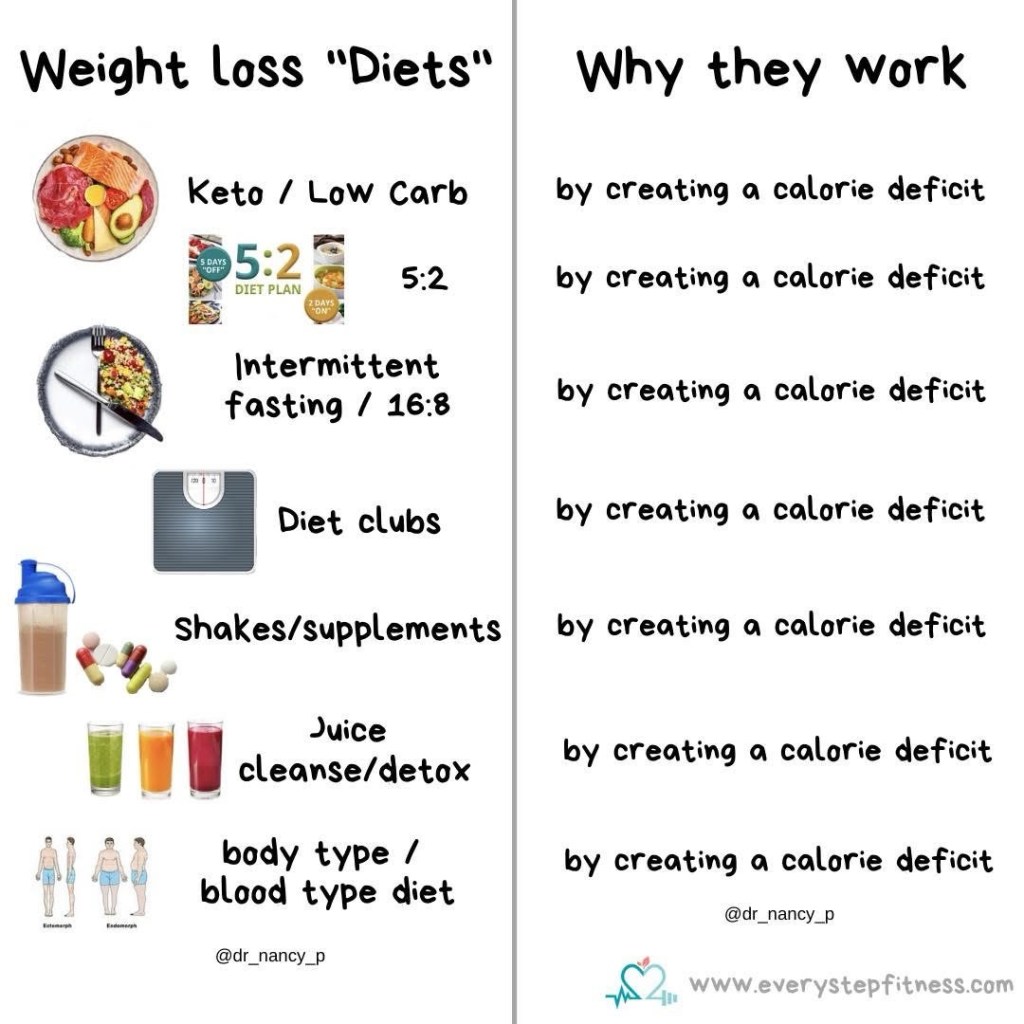
There are lots of diets out there that claim to be better than any other. But what do ALL these diets have in common? And why do they work?

It’s nothing to do with any special properties of specific diets. For ANY diet to work it has to result in a calorie deficit. For some people certain diets will enable them to achieve this more easily and therefore that diet will work for them. But behind these diets are the simple maths of calories in vs out. However the issue with many diets is that they don’t educate you on the mechanism behind them and are therefore short term fixes.

Keto / low carb : omits or reduces carbs, which may reduce calories.

5:2 : limits calorie intake for 2 days a week, which may create a calorie deficit on average.

Intermittent fasting/ 16:8 : restricts the window of time you can eat in, which MAY reduce calories.

Diet clubs : assign points or values to certain foods and restrict food types, so MAY reduce calories

Shakes / Supplements : replaces meals or promotes excessive bowel movements etc which result in water loss, and a possible calorie deficit from meal replacement.

Juice cleanse/ detox : replaces whole foods with juices, resulting in fewer calories and rapid initial water loss.

Body type/blood type diet : restricts foods based on blood or body type, which may result in a calorie deficit

Spot the similarities? Many involve omitting food groups which will result in a calorie deficit. Calories can’t tell the time so methods involving not eating on certain days/times only work if you don’t overeat on others. Diet clubs help with accountability (regular weigh ins and rewards) but hide calories behind points or labels which lock you in to their method.

All of these diets can result in fat loss, but how many of them are sustainable long term, educate you on managing energy intake or build new habits? Some are actually damaging; laxative supplements and fasting can cause bowel damage, kidney damage and development of silent acid reflux etc, as well as promoting disordered eating.

So it doesn’t matter which ‘diet’ you choose, as long as it works for you – but make sure you understand WHY it works 🙂

xx
Tuesday Tip

Tuesday Tip: Insulin Isn’t the Enemy!

Tuesday Tip: Insulin Isn’t the Enemy! 🙌🏼

Recently, there’s been a lot of talk about insulin being the “bad guy” and the need to avoid foods that spike blood sugar, even suggesting the use of continuous glucose monitors. But do we really need to worry?

Insulin is essential for life, and the fear surrounding insulin spikes leading to insulin resistance (which can raise blood sugar and increase diabetes risk) is based on oversimplified ideas about physiology and nutrition.

Oversimplification of Food Health

Judging food only by its effect on blood sugar is short sighted. For instance, by that logic a bowl of fresh fruit, packed with fibre, vitamins, and minerals, would be viewed as less healthy than fried chicken simply because it spikes blood sugar more. Food is more than just its blood sugar impact – micronutrients, fibre content etc matter more. As does the overall balance of your diet – not just one food.

Blood Sugar Response Isn’t Simple

Your body’s reaction to food isn’t just about what you eat. It’s influenced by over 30 factors, including stress, sleep, and activity levels. Eating the same apple on different days can lead to varying blood sugar responses.

Insulin Resistance Has Bigger Culprits

The main risk factors for insulin resistance are obesity and lack of physical activity—not carbs (resulting in insulin spikes). Studies show that replacing carbs with fats to avoid blood sugar spikes can actually lead to increased prevalence of insulin resistance. If you’re not diabetic or prediabetic, obsessing over blood sugar spikes may distract you from what truly matters for your health.

Instead of fearing insulin, focus on the bigger picture. Prioritize nutrient-dense foods, physical activity, and sustainable habits. Avoid expensive glucose monitors or diet fads, and remember that balance is key. Steady, realistic changes always trump fear-based, restrictive approaches.

Happy Tuesday 🤗xx

Nutrition and Calorie Tips

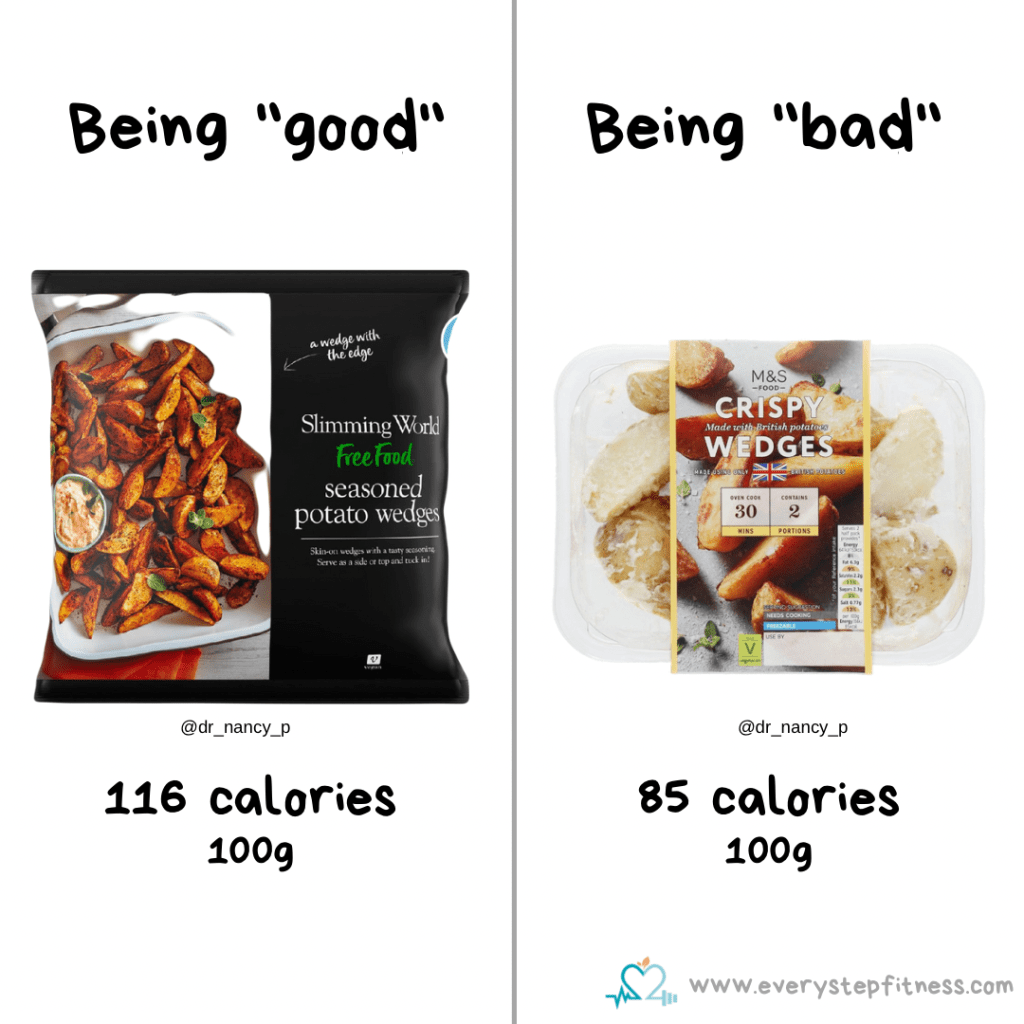
‘I’m being good and choosing Slimming world potato wedges….’

‘I’m being good and choosing Slimming world potato wedges….’ 🥔

Most people would assume that the slimming world(or other weight loss brand foods) are automatically a more virtuous choice of potato wedge . Whilst the M&S fresh ones would be considered ‘bad’.

In reality the Slimming world ones are actually considerably higher in calories at 116 cals for 100g vs 85g for 100g. That’s quite a large difference!

So don’t automatically assume these weight loss branded foods are always the better option. Sometimes they’re the same or worse than other brands. And often pricier! If you enjoy them then definitely have them, but if you’re only having them because you think they’re ‘good’ then think again.

Read the labels and look at the calories and then make your choice. If you’re trying to lose weight then go for the lowest calorie option, that you actually want to eat!

🤗xx

Tuesday Tip

Tuesday Tip: Lose weight and keep it off

Tuesday Tip: Lose weight and keep it off 🙌🏼

This year, if your goal is to lose weight or reduce body fat for good, prioritize sustainability over speed. Quick-fix diets or extreme workout routines might promise rapid results, but they often lead to burnout and frustration. Instead of going all-out and risking mental and physical exhaustion, focus on making small, manageable changes that promote steady, consistent progress.

Think back to any restrictive approaches you’ve tried before – cutting out entire food groups (usually carbs), drastically slashing calories, or ridiculous workout routines. If those methods worked long-term, you wouldn’t still be searching for answers. Sustainable success isn’t about how quickly you can lose weight; it’s about creating habits that you can maintain for life. This journey isn’t just about reaching your goal; it’s about staying there without constant struggle or setbacks.

Life will inevitably throw challenges your way, whether it’s work stress, family commitments, or unexpected events. When you’re already stretched too thin mentally and emotionally, it becomes harder to stay consistent. That’s why overcommitting or aiming for perfection is counterproductive. Stop punishing yourself for slip-ups. Stop making decisions from a place of self-disgust or frustration, and start approaching your goals with self-compassion.

The answer isn’t to push harder or do more, it’s to stay patient and stick to what works. Focus on the ‘minimum effective dose’ – the smallest, most sustainable changes that still move you closer to your goals. Whether it’s walking for 20 minutes a day, swapping higher calorie drinks for water, or incorporating more vegetables into your meals, these small habits build momentum.

Ultimately, consistency beats intensity every time when it comes to long-term success. Practice patience, celebrate progress, and remember that steady, sustainable changes will always win over short-lived extremes..

Happy Tuesday 🤗xx

Nutrition and Calorie Tips

What you need to do after the New Year and Xmas excess?

What you need to do after the New Year and Xmas excess? 🤔

At this time of year, after the Christmas and New Year inevitable excesses it’s natural to want to ‘get back on it’ and you may well think the way to do this is to go into overdrive – exercise excessively, slash your calories down to under 1000 a day, maybe do a ‘detox’/ ‘cleanse’ or throw money at a diet fad, cut carbs or other food groups… You may be beating yourself up and calling yourself a failure for eating so much over the holidays … Or you may just think ‘f*ck it’ and give up completely and continue over eating…

None of this will actually make you feel better or get you where you want to be.

Exercising excessively will only make you tired, prone to injury and probably likely to eat more in the long run. Slashing calories down to unsustainably low levels may work initially but it won’t last and you’ll end up rebounding and probably overeating even more – and you’ll be miserable! ‘Detoxes’ or ‘cleanses’ are just an expensive way to cut calories/replace meals – they result in rapid initial weight loss from water loss but aren’t sustainable… and they definitely do not ‘remove toxins’ – your liver and kidneys do that for you just fine! Cutting food groups out has a similar effect – yes you’ll reduce your calories but unless you plan on never eating those food groups again it’s not sustainable and it’s frankly pretty sad to cut foods you love totally out of your diet for life.

Saying ‘f*ck it’ will definitely be very liberating but if it results in you continuing to over eat then long term it probably won’t feel that good! Whilst you definitely do not need to lose weight (no one does unless medically advised) if you aren’t happy with your weight then longer term then you’ll certainly want to regain some control right?

Beating yourself up is definitely no good. It’s so hard not to – we are often our harshest critics – but let’s be honest here – you enjoyed a few weeks of good food and drink with family and friends, is that really a bad thing? Does it make you a ‘failure’ or a bad person? No! It makes you a human being – and it’s not something to feel bad or guilty about!

So what should you do?

Go back to your normal exercise /walking routine, eat balanced meals at a sensible number of calories, Avoid all detoxes/cleanses/ diet fads and save your money! Enjoy all the things you enjoy eating, but in moderation – skip the expensive fads and focus on these fundamentals! Oh and remind yourself you’re a brilliant human being!

🤗 Xx