It’s Christmas Eve Eve! So my only tip today – is to enjoy your Christmas! However you are spending the day – have a lie in, spend time with friends, family, (or animals) that you love, maybe take a gentle walk, enjoy yummy food, watch Christmas tv etc.
If you’re working then take some time out when you can to do something that you enjoy. Don’t stress about what you’ve eaten, or how little exercise you’ve done, just enjoy the tastes and yummy food, a day or two won’t kill you! Get back to your normal eating and training pattern afterwards and you’ll be back on track in no time.
At this time of year there tend to be treats out all over the place – boxes of open chocolates at the office, at home, in shops, mini mince pies out in the tea room, crisps at home etc. It’s certainly a time when we should relax a little enjoy some of these foods we like but so often it becomes mindless snacking just for the sake of it. You grab a lindor ball as you walk through to the kitchen, where you idly shove a few crisps in your mouth, before popping a celebration in as you head back to the living room.. Sound familiar? You probably won’t even remember you’ve had them! And you almost certainly won’t attribute excess calories to these little nibbles here and there.
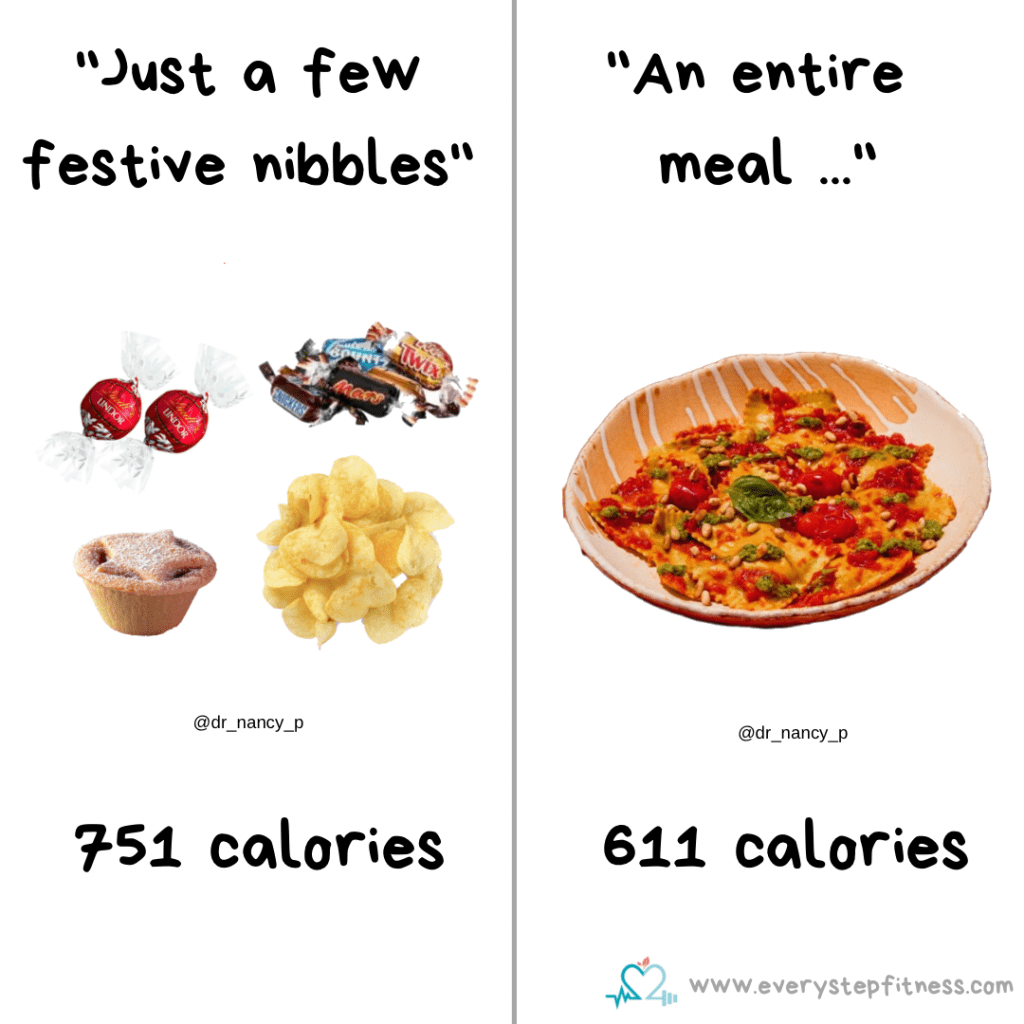
But as you can see – it’s quite easy to consume more than a substantial meal’s worth of calories in ‘just a few nibbles’ . The meal pictured is a Zizzi dish of Ravioli Di Capra – not a specifically low calorie meal. It comes in at 611 cals. The nibbles – 5 celebrations chocolates (337 cals), 2 lindor balls (146 cals), mini mince pie (114 cals) and some crisps (30g Kettle chips) – are a hefty 751 cals – and you’d probably still go and have dinner as well….
So whilst I definitely wouldn’t suggest you avoid all the festive snacks, it might be worth just being a little bit mindful of them. If you want them – have them and actually enjoy eating them, rather than just popping them in your mouth without a thought. Be aware of the calories so you’re making an educated choice!
The festive season often feels like a minefield for anyone trying to stay healthy. With indulgent meals, endless treats, and busy social schedules, it’s easy to feel like Christmas is something you need to “survive.” But the truth is: Christmas is a time to celebrate, not endure. You can embrace the season joyfully without guilt or obsessing over calories.
Here’s how to enjoy the festivities with balance:
#1 Plan, Don’t Panic
If you have a big event coming up, adjust your intake beforehand. Avoid starving yourself, but saving 100-200 calories a day for a few days before or after can help you buffer the impact. For example, if you plan to overeat 800-1000 calories at a party, reducing your intake slightly from Monday to Thursday can make a difference without feeling deprived.
#2 Sip Smartly
Alcohol can be a hidden contributor to weight gain, especially during long social gatherings. You don’t need low-calorie drinks if you don’t like them—just set a limit, like 4-5 drinks, and stick to it. Begin with a large glass of water, and alternate drinks with water to stay hydrated and avoid overindulgence.
#3 Stay Active, Your Way
We all indulge on Christmas Day, an average of 4000-5000 calories! But instead of stressing about “burning it off,” enjoy movement that feels good. A morning run, family walk, or evening stroll to enjoy the lights will boost your mood and help you feel refreshed.
#4 Let Go of the Guilt
Remember, Christmas isn’t something to “survive.” It’s a time to enjoy. A few indulgent days won’t ruin your progress if they’re not your normal routine. Once the holidays are over, just return to your regular habits, and you’ll be back on track in no time.
So, skip the “damage control” mindset and savor the holiday treats. Christmas is about celebrating, enjoying, and focusing on the moments that matter.
At this time of year all the coffee shops bring out their range of festive coffees and hot chocolates. You’re out Christmas shopping, or meeting up with friends and family, so you just grab a quick festive drink and a snack to enjoy and get you in the festive spirit and help fuel that shopping. You’ll drink it in minutes, and the snack will disappear without really thinking or noticing. But that’s ok, because it’s just a festive hot choc, and it’s Christmas….
These drinks do vary but are all pretty high calorie. This particular example is a Gingerbread latte (medium, semi-skimmed milk and a marshmallow – cos it’s Christmas!) and comes in at 242 cals, 20.5g sugar and 11g fat. The festive spice muffin is around 399 cals (42g sugar and 17g fat). That’s a grand total of 641 cals (62.5g sugar and 28g fat).
On the other hand that selection box contains 5 chocolate bars, with only 386 calories and 44g sugar and 15g fat. Now whilst I’m sure you could eat a selection box in one sitting (I certainly could) most people probably wouldn’t . You’d probably spread it over a few hours or possibly days, rather than eating it all in one go and certainly wouldn’t have any extra snacks with it (unlike the latte).
Christmas is definitely a time to relax a bit on calories and certainly a time to focus more on sharing memories and happy times with people you care about. But that doesn’t mean you shouldn’t be aware of the calories in some of the treats you are having.
Knowledge is power so being aware of the calorie content of things, and also of our own perceptions of the things we consume is always a good thing.
If you want the festive drink – have it and enjoy it. If you want to eat your way through a selection box in one go then go for it. Just be aware of the calories so you’re making an educated choice!
This festive season there’s bound to be lots of socialising and If you’re trying to lose fat/weight it can be a challenge to keep things under control. Here are some tips to help reduce those extra cals.
#1 Be realistic
Saying “I’m not going to have any alcohol / desserts at all” isn’t realistic, but perhaps “I’m not going to drink at every Christmas party” might be more doable?
Decide which events are worth relaxing a bit for. One event a week is a good target, so choose the special events and then don’t worry about them, just relax and enjoy having whatever you want to have that day/night.
# Make a plan
If you’ve decided which events to relax at that means there are some events where you will want to be more careful. So you need a plan. First thing to remember is the reason you’re there is to share time with people in your life. Focus on the people and the activities rather than the food and drinks. Ensuring you’ve had something to eat before going to drinks events, or have dinner plans in place for afterwards. If it’s a dinner then just try to make the best possible choices, fill up with veggies and get some protein in, and drink lots of water. Stick to lighter beers, prosecco, white wines, clear spirits with low cal mixers etc and avoid sugar-laden cocktails.
# Plan for problems
Try to think about the possible obstacles in advance. Are buffets your weakness? Are canapes / nibbles your weak point? Have some alternative plans in place; for buffets commit yourself to one plate of satisfying food only. Make a decision before you go not to dip in to the nibbles and ensure you’re not too hungry when you arrive so you’re not starving when they come round. Making an active decision before you even get there will help you to resist them more easily.
You have to be realistic about the situations you’re facing. There’s no point planning on just eating carrot sticks all evening, you will fail, no question. So be smart about your strategy and honest about what you can manage. If you have a friend going with you share your plan with them, they might be keen to help you and give you some moral support – it’s a lot easier to say no to those canapes when you’re both refusing them.



 Every Step Fitness