Tuesday Tip

Tuesday Tip: Magnesium and sleep

Tuesday Tip: Magnesium and sleep

There’s been lots of talk about the benefits of magnesium for improving sleep quality so what’s the evidence actually like?

Magnesium increases our gamma-aminobutyric acid (GABA) levels by binding to GABA receptors in the brain. GABA is the neurotransmitter responsible for quieting down nerve activity. When GABA levels are low, the brain feels like it is constantly switched on, which makes it very difficult to relax and can lead to increased stress and anxiety which can lead to poor sleep. Magnesium, in theory, helps you “wind down” and prepare for sleep.

Studies have shown a possible association between low magnesium and poor sleep but there are few studies actually testing the impact of increasing magnesium. Studies on insomnia found that on average people got to sleep 17.36 minutes quicker and had an increase in total sleep time of 16.06 minutes with increased magnesium intake. In terms of general sleep the results are less clear but they did find an association between higher magnesium intake and better sleep for those with very poor sleep but there wasn’t anything suggest that magnesium supplements help sleep in the average person. There is a lot of anecdotal evidence from people measuring their sleep who have found some level of improvement with magnetism supplements but these aren’t proper studies so need to be taken with a pinch of salt.

The standard recommendation is 300-400mg ~1hr before bed. You can get magnesium from dark leafy greens, nut, seeds, fish, bananas, oats and tofu etc. I’m a fan of a food-first approach but there may be a case for taking a supplement too. Most people don’t get enough magnesium from their diet and it may not be realistic to get it from food, in addition there is evidence that the acute dose of magnesium matters i.e. getting 300-400mg in one hit – hard to do from food alone. There are plenty of options of supplements but magnesium glycinate is recommended.

So in summary, whilst the evidence isn’t conclusive it could be worth increasing magnesium intake if you struggle with sleep as it’s relatively cheap and safe when used in appropriate amounts.

Happy Tuesday 🤗xx
Nutrition and Calorie Tips

Grocery shopping tips…

Grocery shopping tips… 🛒

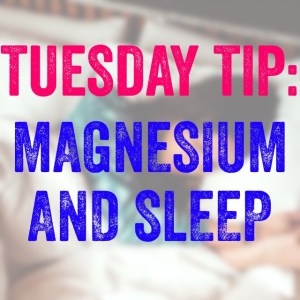
It may sound simple but getting the grocery shopping right is a good way to set yourself up for success if you’re trying to lose weight.

Here are a few tips:

# Make a list

Very basic, but so so important! How many times have you walked aimlessly through the supermarket, ended up buying things on impulse and forgetting things you needed.

# Keep it consistent

You don’t need to buy different things each week. There’s nothing wrong with consistency week to week. In fact having a fairly consistent diet (as long as it’s a balanced one) is a great way to help reduce decision fatigue and stick to your plan.

# Use a trolley for main shops only

If you’re doing a larger shopping trip then use a trolley. For other shops either use a basket or nothing – to avoid loading up on things you don’t need.

# Check calories

If you’re trying to maintain a calorie deficit then it’s worth checking calories as you shop, rather than getting home and discovering you’ve bought things you can’t accommodate easily within your calorie budget.

# Shop the rainbow

This tip relates to the variety of fruit and veggies. Different colours relate to different nutrient profiles, so try your best to incorporate as much color when you’re in the produce section

# Chill out

If you are a busy person then ready meals, frozen veggies and fruit are a great thing to stock up on. There’s nothing wrong with convenience foods – especially nowadays – there are loads of great ones and frozen fruits and veg are often higher in nutrients than some fresh ones anyway.

# Be realistic

How many times have you done a ‘new diet’ grocery shop where you buy no ‘treats’ or indulgences? This results in unnecessary dietary restraint, often daily stops at convenience stores and then overeating when you do get the treats you wanted. Add some treats to you trolley!

# Spend 30-60 mins

Try to limit shopping trips to 30-60 mins if you can – so you’re not rushing but equally so it’s not taking forever. The longer you spend the more likely you are to add unnecessary extras into the cart.

# Avoid the hype

Try to look past marketing and sales pitches. Just because something has ‘healthy’ or ‘skinny’ or ‘high protein’ emblazoned across it doesn’t mean it’s automatically lower calorie or actually healthy. Look at the labels. Equally avoid being swayed by sales deals that might make you buy products you don’t actually want!

🤗Xx

Tuesday Tip

Tuesday Tip: Aspartame and Cancer

Tuesday Tip: Aspartame and Cancer 🥤

You may have seen some headlines recently about the World Health Organisation cancer agency reclassifying aspartame, a key sweetener in diet drinks, as possibly carcinogenic. So is this a sign to panic and stop drinking diet drinks/eating foods with sweeteners? Well let’s just look at this a little closer.

The WHO cancer agency reclassified aspartame as a class 2B carcinogen, which means it’s “possibly carcinogenic to humans,” based on limited evidence, including animal studies. They’ve specifically said that it needs more research. For reference other substances in this category include pickled vegetables and aloe vera (coffee was, too, before being reduced to 3 in 2016.). Now this only considers whether something could cause cancer, but importantly not at what dose it’s dangerous.

Another WHO group, the JECFA, is an international scientific committee that evaluates the safety of, and the risks associated with, food additives, contaminants, and naturally occurring toxins in food. They concluded that the data evaluated indicated no sufficient reason to change the acceptable daily intake of 0-40 mg/kg body weight for aspartame. A 355 ml can of Diet Coke contains ~ 200 mg of aspartame. If you weigh 70 kg, you would need to drink ~15 cans of Diet Coke per day for it to even begin to have any negative effects.

Most notably if this info is concerning you and you’re worried about consuming aspartame as a result then you also need to consider the other foods in that category – pickled veg etc. More importantly the first thing you should do is stop drinking alcohol; an actual toxin the WHO has classified as a Group 1 carcinogen (“there is sufficient evidence the agent causes cancer in humans”). In fact, the WHO even states there is NO safe amount of alcohol consumption that doesn’t affect health : “We cannot talk about a so-called safe level of alcohol use. It doesn’t matter how much you drink – the risk to the drinker’s health starts from the first drop of any alcoholic beverage.”

So if we’re talking about relative risk, you’re more likely to get cancer drinking even the smallest amount of alcohol than you are drinking a few cans of Diet coke or any other artificially sweetened drink/food a few times per week. So I’m summary – don’t panic and if you enjoy a diet beverage continue to do so!

Happy Tuesday 🤗xx

Nutrition and Calorie Tips

Ice creams / Lollies for 100 cals or less …

Ice creams / Lollies for 100 cals or less … 🍦

Technically it’s summer… despite what the weather thinks.. but nevertheless it’s definitely ice cream and lolly season for me and my clients.
There’s a perception that ice creams / lollies are ‘bad’ and something that is a bit ‘naughty’ so if you’re trying to lose weight you might deny yourself these cooling treats believing them to be ‘bad’ (aka high calorie). However, there’s no reason you have to give up ice creams and ice lollies to lose weight as it ultimately comes down to whether you’re in a calorie deficit.

Obviously there are many frozen desserts out there which are high calorie and some can be 300 cals or more. So if they’re on top of your main meals then you might end up racking up unwanted calories. However in this weather everyone needs a cold snack or dessert right? So if you do fancy an ice cream or lolly, but want to stay within your calories then here are a selection of lower calorie options at 100 cals or less. This list is by no means exhaustive – but it’s just a range of the options out there.

Oppo Salted Caramel balls 20 cals each
Mini milk 32 cals
Rocket lolly 39 cals
Mini twister lolly 39 cals
Fruit pastille lolly 57 cals
Little moons mochi balls 70 cals each
Fab lolly 75 cals
Regular twister lolly 76 cals
Jude mini ice cream tubes 70
Jude mini ice creams 94 cals
Exotic Solero lolly 98 cals
Calipo Lolly 100 cals

So you can fill up on ice lollies to stay cool this summer without worrying it’s going to derail your progress!
Enjoy 🤗
Xx

Tuesday Tip

Tuesday Tip: Caffeine and sleep

Improving sleep improves pretty much everything when it comes to nutrition, health and performance. It’s easier to eat well and train hard when vou sleep well. Many of us use caffeine not only to give us general energy through the day but also as a pre-workout boost. In fact specific caffeine based ‘pre-workout’ powders/drinks are sold to improve performance etc. How might this intake, be it from ‘normal’ beverages like tea/coffee or specific pre-workout drinks impact sleep?

We know caffeine can prevent or disrupt sleep. A recent study found that for caffeine to have minimal impact on sleep it requires a cut off time of approx 13 hours prior to sleep for pre workout, 9 hours prior to

sleep for coffee and no cut off time for a cup of black tea. If we based this on an example bedtime of 10pm a coffee would need to be consumed before 1 pm or pre-workout would need to be consumed prior to 9am. Higher doses of caffeine require longer time frames. This is why the review didn’t find much issue with black tea, but the duration for pre-workout was so long.

As a general guide the caffeine levels in common drinks are as follows:

Tea – 40mg (10-50mg),

375ml coke – 40-50mg,

Brewed Coffee – 80mg (40-110mg)

500ml Energy Drink – 160mg

1x serve pre-workout – 150-300mg

On average this study found that caffeine consumption reduced total sleep time by 45 min and sleep efficiency by 7%. These numbers listed here are averages and the half-life of caffeine does differ between people but for most people stopping caffeine a bit earlier in the day than you otherwise would can improve sleep quality and quantity

It’s also worth noting that these numbers are based on coffee or pre-workout in isolation. It is very common to have more than one source of caffeine in a day, which will add to the total amount of caffeine.

So if you’re struggling with sleep then consider this and perhaps make a small change which could have a huge positive impact.

Happy Tuesday 🤗xx