Tuesday Tip

Tuesday Tip: Should You Skip Breakfast?

Tuesday Tip: Should You Skip Breakfast? 🍳

Lately, there’s been a lot of talk about skipping breakfast for longevity. Some social media and celebrity ‘experts’ claim you should eating around 12-2 PM every day if you want to live longer. Sounds simple, right? But does the science agree?

Well… not quite.

A recent large-scale study followed 62,746 people over and found that those who skipped breakfast, or only ate breakfast 1-2 times per week, had a higher risk of developing gastrointestinal cancers (including esophageal, gastric, colorectal, liver, and gallbladder cancer) compared to those who ate breakfast daily.

And no, this wasn’t just about weight, lifestyle, or socioeconomic factors. The link between skipping breakfast and cancer risk remained even when adjusting for other variables. In fact, multiple previous studies have supported these findings.

Why might this be happening? There are a few possible explanations:

– Inflammation: Skipping breakfast is linked to higher levels of C-reactive protein, a marker of inflammation. Chronic low-grade inflammation plays a role in tumor growth by promoting oxidation, mutation, and DNA changes.

– Circadian Rhythm Disruption:Eating late may mess with your body’s internal clock, affecting metabolism and cellular function.

So, should you be eating breakfast?

The evidence suggests yes, not just for energy and satiety, but for long-term health. This doesn’t mean breakfast is magical, but skipping it could have unintended consequences beyond just hunger. It also raises general concerns about fasting for periods of time and the impact that can have on gastrointestinal health.

Moral of the story? Don’t believe every health trend you see on social media. Always question the claims and check what the science actually says.

Happy Tuesday! 🤗

Xx
Nutrition and Calorie Tips

A snack or loads of snacks…

A snack or loads of snacks… 🍫

There are lots of strategies you can use when trying to stick to your calorie deficit to lose weight/fat. Being aware of the calories in the foods you choose to consume and swapping to lower calorie foods which you also enjoy is an obvious option. As well as the calories though it’s worth considering the quantity and volume of the food you’re choosing.

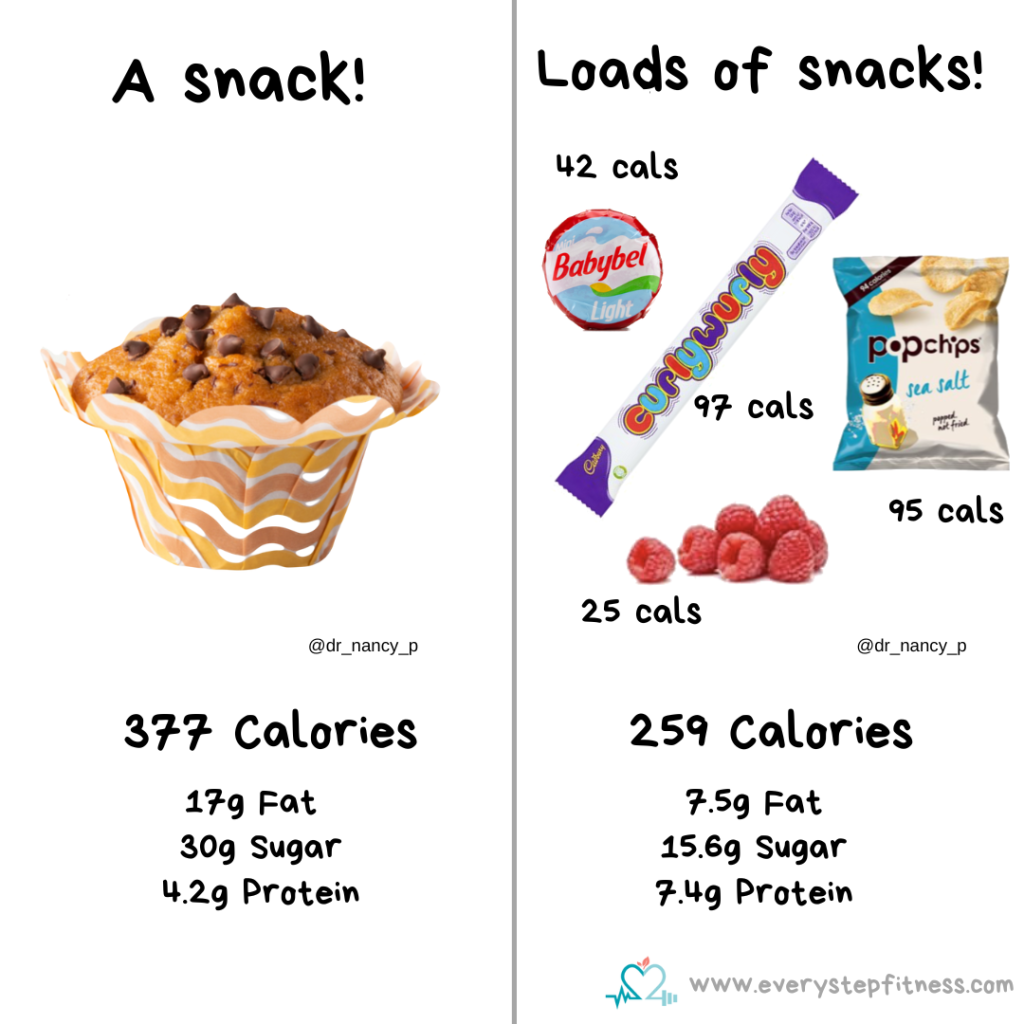
Snacking is a common problem and an easy way to extra calories to sneak in. If you were to snack on a banana and chocolate muffin you’re looking at a substantial 377 calories of food. That’s quite a lot for a snack, and it will be gone in a few bites. However for only 259 calories you could have a curly wurly, a light babybel, some raspberries and a packet of popchips. This combination not only has the advantage of fewer calories overall, but also higher protein overall which will help to keep you fuller for longer, and they contain more fibre (mainly from the raspberries) and other micronutrients which will also help. But an often overlooked aspect is that there is also a greater volume of food in the lower calorie option. It will take you longer to eat the 4 snacks than the muffin, which will also increase feelings of satisfaction. You may also even find you don’t even need to eat all 4 snacks.

Obviously if you fancy the muffin and can fit it into your calories then go for it but this is just another strategy to add to your toolkit to help you stick to those calories.

Enjoy 🤗

Xx

Tuesday Tip

Tuesday Tip: Is a calorie just a calorie?

Tuesday Tip: Is a calorie just a calorie?🍫

This is a common debate when discussing calorie deficits and food choices. People often say, “A calorie isn’t just a calorie—some are better than others.” For example, they argue that 100 calories of nuts aren’t the same as 100 calories of chocolate.

So, is that true? Well, technically—no. A calorie is simply a unit of measurement for energy. In that sense, 100 calories of nuts provide the same energy as 100 calories of chocolate.

However, the type of food matters. Different foods have different metabolic effects. Some require more energy to digest (this is the thermic effect of food), but the difference is small and unlikely to impact overall calorie burn significantly.

Foods with low-calorie density (like fruits, vegetables, and lean proteins) allow you to eat a larger volume for the same calories. For example, you’d need to eat 10 punnets of raspberries (250 calories) to match the calories in one Snickers bar.

Satiety also varies. High-fibre, protein, and fat-rich foods keep you fuller for longer. Solid and thicker foods provide more satiety than liquids. Some foods are hyperpalatable (aka delicious!), making them easier to overeat, while others naturally regulate appetite.

Food also has emotional and psychological effects. While nuts may be more filling, sometimes no amount of nuts will satisfy a chocolate craving, and that’s okay! In those moments, you’re better off having the chocolate and moving on, rather than overeating other foods while still wanting the chocolate.

Ultimately it’s about balancing all of these things in a way that lets you stick to your calorie goals. So sometimes that will mean going for the more filling option of nuts and sometimes it will mean going for the chocolate you actually want, but being aware that you may feel more hungry later and being prepared for that.

So yes, a calorie is just a calorie—but food is more than just food!

Happy Tuesday!🤗

Xx

Nutrition and Calorie Tips

‘One Medium Avocado…’

‘One Medium Avocado…’ 🥑

If you like them then avocados make a great addition to your meals. They’re full of unsaturated fats, high in fibre and vitamins C, E and K. They’re also high in magnesium and folate.

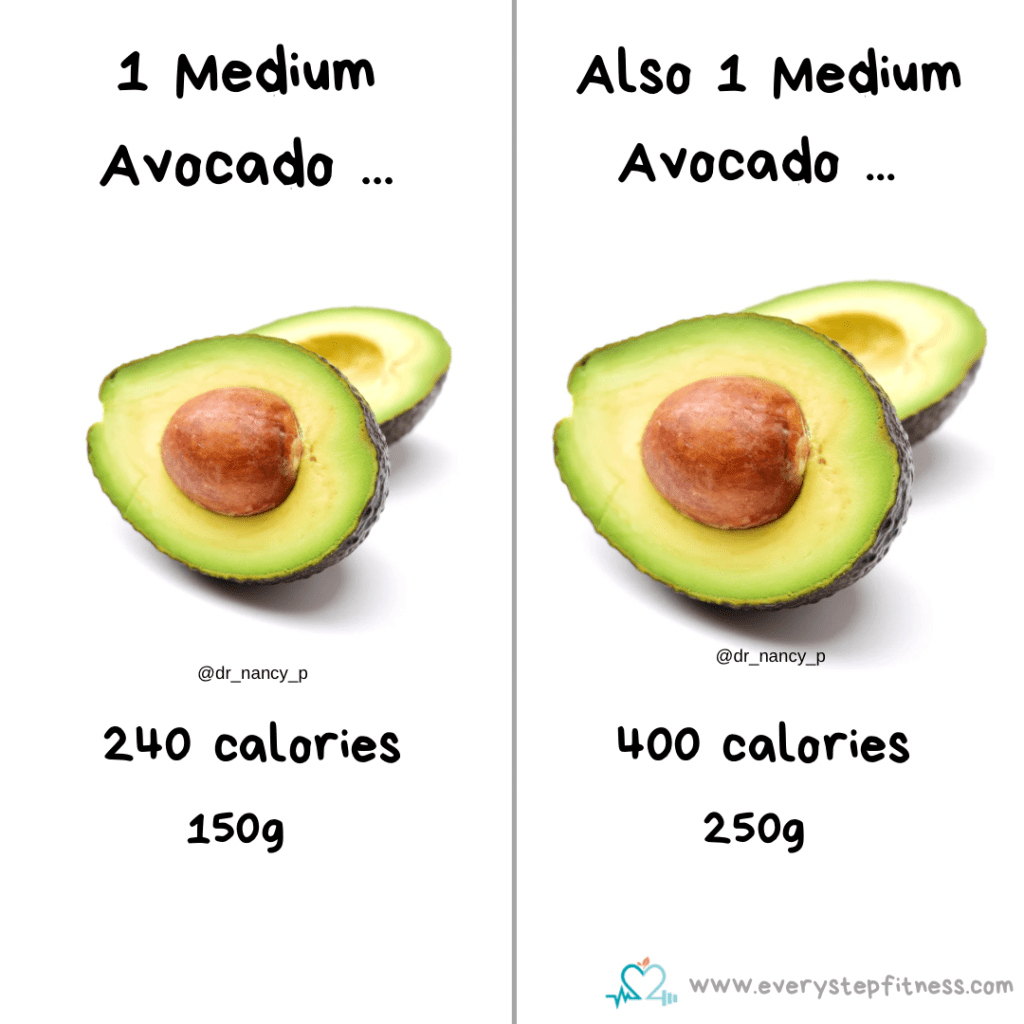
However, if you are trying to lose fat/weight and watching those cals then it’s worth just being aware that avocados can pack a punch when it comes to calories and they also vary significantly. If you’re using a calorie tracking app you’ll often find entries like ‘one medium avocado’ or ‘half a medium avocado ’ with the associated calories. You’d probably just enter that and assume you were pretty much right. But what exactly is ‘medium’? Medium to me may be small to someone else and the calorie differences are pretty significant!

The difference between these two avocados is nearly 100g and both are sold as ‘medium avocados’ – not small or large. So if you were regularly eating the larger one you’d be taking in almost 160 extra calories every time. That may not sound like much but over the course of a week or month that will add up. I’m not suggesting you stop having avocados if you like them – they’re fab! But just have a go at weighing your portion the next time you have some

avocado you have and see exactly how many calories it does contain.

Knowledge is power right? And if you’re trying to lower that bodyfat then every calorie counts! The more aware you are of what goes in to your mouth the better!

Enjoy 🤗

Xx

Tuesday Tip

Tuesday Tip: The scales have gone up!

Tuesday Tip: The scales have gone up! 😱

Stepped on the scales this morning and seen the number go up? First, take a deep breath. Now, let’s break down what’s actually happening.

# More Food = More Weight (temporarily!)

If you ate more than usual this past weekend, especially carb-heavy or salty foods, your body is likely holding on to extra water. That number on the scale is not fat gain; it’s just temporary water retention and food still being digested.

# Carbs Hold Water

For every gram of carbohydrate you eat, your body stores water. Enjoyed pizza, pasta, or dessert? The scales might reflect that extra water weight, not fat! This isn’t bad and doesn’t mean you should avoid carbs – we need them!

# Digestion Takes Time

The food in your digestive system has weight, too. Had a late-night meal or richer foods? It can take longer to process, which might show up on the scales.

#What NOT to Do

⁃ Don’t panic – A single weigh-in doesn’t define your progress.

⁃ Don’t restrict yourself today to “make up for it.” Drastic measures aren’t the answer.

⁃ Don’t think you’ve ruined everything, because you haven’t.

# What TO Do

⁃ Get back to normal eating. No need for extremes, just return to your usual balanced meals and routines.

⁃ Remember the bigger picture. A single meal, or even a whole weekend, is just a tiny part of your journey. Progress isn’t erased by a couple of indulgences.

⁃ Embrace balance. All foods have a place in a healthy diet, even when fat loss is the goal. Enjoying meals out is part of life because let’s be real, skipping dessert forever? No thanks!

⁃ Use other measures like clothing and it fits, or body measurements to measure progress.

This is your reminder that the scales don’t tell the full story. What matters most is consistency over time, not a temporary fluctuation.

Keep going—you’ve got this! 💪

Happy Tuesday 🤗xx