Nutrition and Calorie Tips

Why the scale fluctuates …

Why the scale fluctuates … 📉

Most people measure their fat loss progress by stepping on the scales. This can create an all-or-nothing mentality and impact not only your happiness but your behaviour. If the scales don’t go down when you’ve been ‘good’ then what’s the point? You may as well throw in the towel and enjoy that cake!

Weight loss is rarely linear. It’s normal for your weight to fluctuate day-to-day. There will be days where your scale weight goes up, days where it drops, and days (maybe even weeks) where it stays exactly the same.

Your weight can fluctuate up to 6kg during the day depending on what you eat and drink, your digestion and how you exercise. If you drink 2–3 litres of water a day that’s up to 3kg straight away. Then how much do you pee, sweat and breathe out over the day? It’s impossible to measure. Our bodies are mainly water so changes in hydration cause significant weight fluctuations.

Food choices also play a role. A bowel full of food, a big meal the night before, increased carbs, high fibre or salty foods (sodium) can all increase water retention and temporarily push the scale up. Bowel movements and normal digestion patterns can also shift your weight from one day to the next.

Exercise can affect the scale both ways. If after a workout you’ve refuelled properly your muscles store glycogen along with water, which can increase weight. Muscle soreness (DOMS) from training can also cause temporary inflammation and fluid retention. On the other hand, if you’ve sweated a lot your weight may drop due to dehydration.

Other lifestyle factors matter too. Poor sleep, stress and higher cortisol levels, illness, medications, menstrual cycle hormone changes and alcohol can all influence fluid balance and appetite, leading to short-term scale fluctuations.

For many of us, seeing the scale go up despite ‘being good’ can make us give up. It’s vital to trust the process and think long term. We’re conditioned to focus on weight, but try using other measures such as how clothes fit, progress photos or cm measurements. If you do step on the scales, look at averages over time rather than daily changes and focus on the long-term trend.

🤗 xx

Tuesday Tip

Tuesday tip: Strategic Snacking

Tuesday tip: Strategic Snacking 🍪

Often clients tell me they ‘just need to stop snacking’ and they’ll lose weight, but that’s rarely the solution. Snacking has a bad rep, but there’s nothing wrong with a snack in itself. Many of us need smaller intakes of food spread across the day rather than 2 or 3 large ‘meals’, it’s mindless snacking that’s the real issue.

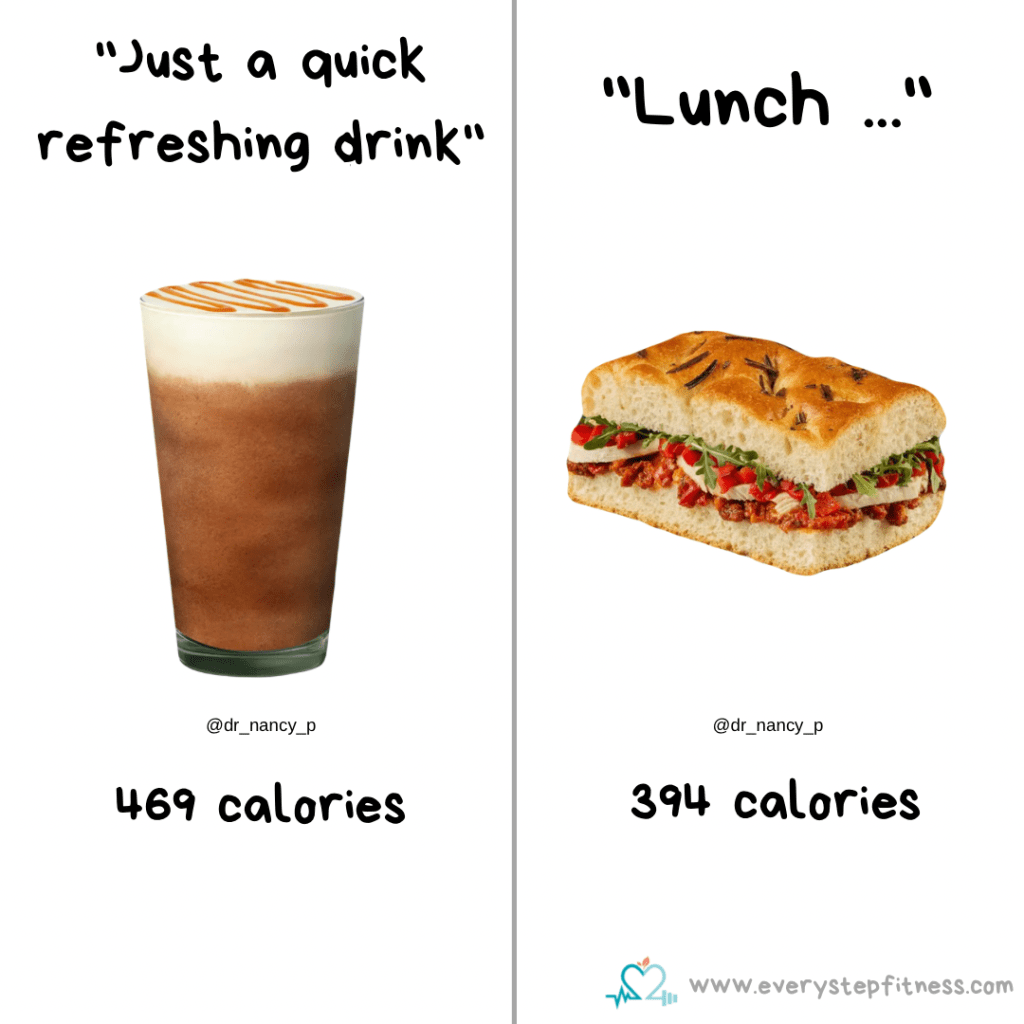
Remember whether you call something a meal or a snack is basically meaningless; some snacks are more cals than meals anyway! It’s just a window of time when you eat. So try to view them all as part of your overall daily food intake, they’re just names! The key is planning them in. If you don’t then you will end up feeling guilty every time you have a snack and that can lead to the f*ck it mentality and then overeating.

Identify first of all when you tend to or want to ‘snack’ and then allocate some calories for it; the same way you might for breakfast or lunch etc and adjust your meals to accommodate. By factoring it in not only are you ensuring you’ll be within your calories, you’re also managing your expectations and giving yourself permission to have that snack. It doesn’t matter what it is, choose snacks that work for you; if it’s biscuits fine, if it’s fruit that’s also fine, within the context of a balanced diet you can have anything you want!

If you find the problem is that once you start you can’t stop then try getting your snack item out at the start of the day and having it on show and somwhere easy to grab. That way hopefully you’ll be more likely to stick to it rather than rummaging through the cupboards or heading to a shop to get it at the time you’re most ‘snacky’ and will power is lower.

Everyone is unique and the desire and need to snack are influenced by age, emotions, activity, main ‘meals’ etc so you have to work out what’s best for you. One good approach is strategic snacking at around 3/4pm to help stave off evening hunger, and there is some scientific evidence to suggest a plan of three balanced meals and one snack (4 windows of time where you eat) works well for weight loss.

Happy snacking! 🤗xx

Nutrition and Calorie Tips

Why you shouldn’t eat back your exercise calories….

Why you shouldn’t eat back your exercise calories…. 🏃🏼‍♀️

Many of us use activity trackers / fitness watches; they’re fab tools to monitor activity and motivate us to get fitter, but they can also cause some issues.

The main issue is the figure they provide for calories burned, particularly when linked to food logging apps. Apps like myfitnesspal give you a daily calorie target or budget to spend, based on your current stats, goals and activity levels. If you have a tracker linked then it automatically adds any calories burned to this figure e.g if your goal is 1700 cals and you burn 500 cals in spin it gives you 2200 cals to ‘spend’ (eat).

Great! So you can eat more right? Wrong! You shouldn’t be eating back those exercise calories. Aside from the fact that you have already accounted for your activity level in the daily calorie goal, the main issue is that the tracker is overestimating calories burned. Recent studies found that, despite being pretty accurate for heart rate readings, devices overestimated calories burned by 27 – 93% ! If we assume a 40% error rate you can see on the graph how much it overestimates (blue is actual burn, red is the tracker reading) e.g. a long walk burns 1500 cals on the tracker, but if you ate those back you’re actually over eating by 300 and 1450 cals!

This is why if you’re eating back those exercise calories you could easily wipe out the calorie deficit. Best-case, it slows progress, worst-case you overeat and put on weight. Also, as you get leaner and fitter the calories burnt in general activity and exercise decreases, so you’re burning even fewer calories than the device is reporting.

That’s not to say you shouldn’t record workouts and steps; it’s a great way to look at your relative effort and fitness. Use them as a way to encourage more activity but not as a reason to eat more. In the paid version of myfitnesspal you can choose not to add those extra calories, or simply un-link your tracker so it no longer gets that info.

So if you workout as a way to increase your calorie expenditure, that’s fine, just don’t eat back those calories, as it defeats the entire point of increasing activity in the first place.

🤗 xx

Tuesday Tip

Tuesday Tip: Aspartame & Insulin

Tuesday Tip: Aspartame & Insulin 🥤

Aspartame, an artificially sweetener common in diet drinks etc, has been around for nearly 50 years, yet it’s still blamed on social media for everything from diabetes to ‘spiking’ insulin just because it tastes sweet.

The idea is that because it tastes sweet it mimics sugar and results in insulin being released, leading to fat storage, diabetes, metabolic damage etc. However the research doesn’t support this. Studies using human randomized controlled trials find that aspartame does not raise blood glucose or insulin when compared with water, placebo, or other low-calorie sweeteners. There’s no spike and therefore no crash. When aspartame is compared with sugar or other carbs, it shows a much lower glucose and insulin response with aspartame. In other words, replacing sugar with aspartame improves—not worsens—glycemic control.

What about longer-term studies? It’s the same story, even at high intakes aspartame shows no effect on fasting glucose, insulin, insulin sensitivity, or HbA1c, even in people with type 2 diabetes. Appetite hormones barely change, adverse effects are rare, and energy intake is often lower when aspartame replaces sugar.

So where does the fear come from? Mostly from misreporting animal studies using massive doses (we would need to consume hundreds of cans of diet drink per day to replicate it), or observational studies that confuse cause and effect.

Aspartame doesn’t circulate in the blood intact—it’s rapidly broken down into amino acids and tiny amounts of methanol, all at levels far below anything shown to cause harm. If aspartame truly triggered insulin without glucose, we’d see hypoglycemia. We don’t.

Replacing sugar with aspartame consistently lowers glucose and insulin exposure and the best evidence we have says it’s metabolically neutral or beneficial, not harmful. The benefits of losing weight (which swapping sugary drinks to diet drinks can help with) vastly outweigh any negatives – the biggest driver of cardiovascular disease, diabetes and mortality is obesity.

Happy Tuesday 🤗

Xx

Nutrition and Calorie Tips

‘I’m trying to lose weight so I’m avoiding carbs ….’

‘I’m trying to lose weight so I’m avoiding carbs ….’ 🍞

There is a common misconception that carbs are inherently ‘bad’ and that in order to lose weight you need to cut them out or avoid them completely. This usually means people cut out bread, pasta, rice, potatoes etc.

However they continue to eat fruit and veg without thinking twice when many actually contain more carbs. For example compared to a slice of bread a small Banana contains more calories, 3 times as many carbs and 15 times as much sugar! Now that doesn’t make the banana bad either – but why would you avoid the bread if you like it, yet happily eat the banana if you’re trying to avoid carbs?

In reality there is no reason at all to cut carbs from your diet. You can lose weight with or without carbs – it’s all about calories. Now obviously some people have medical reasons to avoid things like bread (coeliacs etc) but for the majority of people these foods are fine. The reason you may see weight loss when cutting these sorts of carbs is simply because you’re reducing your overall calorie intake. However unless you never want to eat carbs again then you’re not really setting yourself up for sustainable, long term weight management.

Obviously different carbs have different pros and cons – complex carbs will keep you fuller longer, whilst simple carbs (fruits mostly) will provide a faster hit of energy, you’ll get different nutrients from the different types too.

It’s important to have a balanced diet – including a range of carbs from bread to fruit. What works for you may not work for someone else and you may prefer to reduce consumption of carbs, but it’s important to be informed about what’s actually in the food you’re eating before you make that choice. Cutting out whole food groups is never a sensible or sustainable approach though.

Personally I enjoy all sorts of carbs – from bread, to fruit, to pasta, to potatoes – to doughnuts! Eat the carbs you like and enjoy and just be mindful of the calories! 🤗
Xx