Nutrition and Calorie Tips

Coco-nuts!….

Coco-nuts!…. 🥥

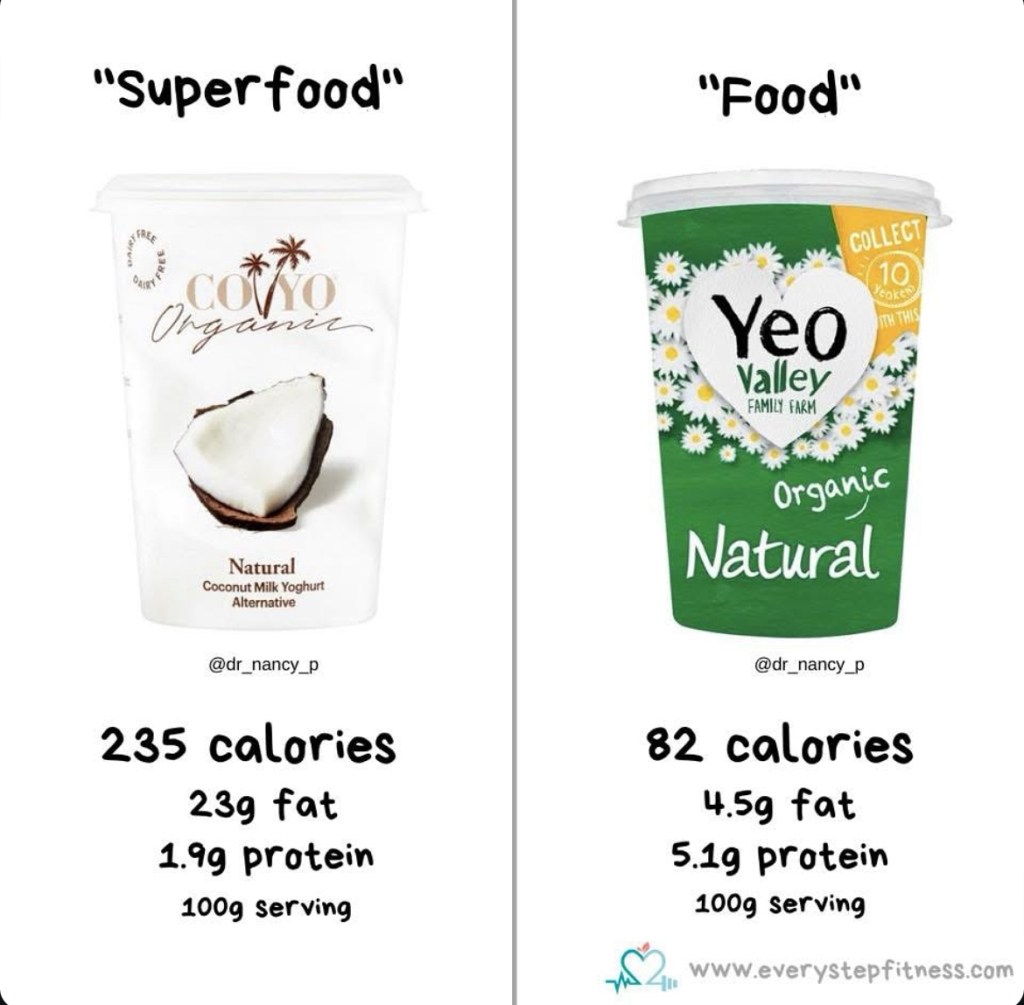
Coconuts are heralded as a “superfood” So coconut yoghurt must be better for you right?

Coconut yoghurt contains fewer carbs than dairy yoghurt as it is lactose free (the natural sugar in milk). It also contains saturated fat, specifically medium-chain triglycerides, which are easily absorbed by the liver and converted to ketones (an alternative energy source in the brain) and could be beneficial for dementia and related conditions. There is also evidence that coconut may help type-2 diabetes, elevated cholesterol levels and may assist weight loss. Critically though many of these benefits are associated with coconut oil or meat,not yoghurt.

It’s plant-based and suitable for those with dairy/lactose allergies or vegans (but not all coconut yoghurt are actually vegan, many also contain dairy milk or gelatin). Natural yoghurt is dairy based but contains live probiotics and is good for gut health. There are no naturally occurring probiotics in coconut yoghurt (though some brands do add them in). If you are aiming for weight/fat loss however then natural yoghurt has some benefits.

Coconut yoghurt contains significantly more calories than natural yoghurt and approx 5 times as much saturated fat. Whilst the fat in coconut yoghurt is the more beneficial medium-chain triglycerides thats still a large amount of fat and that has it’s own risks. There’s also significantly less protein in coconut yoghurt. Higher protein can help keep you fuller for longer – which from a weight loss perspective is helpful.

So if you were assuming coconut yoghurt is “healthier” and therefore better option for weight loss then think again. The “good” fats in coconut yoghurt don’t offset the extra calories I’m afraid. There are lower calorie coconut yoghurts out there so if you really love coconut yoghurt then check the labels (a lot is watered down reducing the calorie content). If you are unable to eat dairy then consider some of the lactose-free yoghurt which have comparable calories, or go for a soya based option.

As always – calories count guys so check those labels – and have what you want, within your calories. Knowledge is power!

Enjoy 🤗

Xx
Tuesday Tip

Tuesday Tip: Are Superfoods Super?

Tuesday Tip: Are Superfoods Super? 🥗

Are superfoods really super? Not really! The term “superfood” might sound catchy, but it’s not as clear cut as it seems. The term started as a marketing tactic back in the early 20th century when bananas were promoted as “superfoods” after a 1918 study highlighted their health benefits. While bananas are indeed nutritious, the term itself is more about marketing than actual nutrition.

So, what exactly qualifies as a “superfood”? Well, the vague definition often used is “nutrient-rich foods that are considered especially beneficial for health.” But what does that really mean? What makes a food “nutrient-rich” or “especially” healthy? These questions show how the term can be misleading. When it comes to eating for health, it’s not about any one food being “super”; it’s about the whole picture.

#1 Don’t Get Hung Up on Labels

Much like how the term “healthy” is often misused, labeling foods as “super” can create confusion. Whether a food or exercise is beneficial depends on how it fits into your overall lifestyle. A balanced approach is key. Just like no single exercise is the key to fitness, no one food is the magic solution for health.

#2 Balance is the Key

Superfoods may be lower in calories and higher in fiber, vitamins, and nutrients, which can make them a great addition to a healthy diet. But here’s the thing: even if it’s labeled a “superfood,” it’s not going to work miracles without the right context.

#3 Make It Your Own

Since there’s no universal definition for what counts as a superfood, why not create your own list? Choose foods based on your preferences and nutritional goals. Focus on what works best for your body and what makes you feel good.

Ultimately, the term “superfood” might be marketing jargon, but the foods often associated with it can certainly play an important role in your diet. The key is to incorporate them into a well-rounded eating plan that works for you.

Enjoy your healthy choices, without the pressure of labels!

Happy Tuesday 🤗

Xx

Nutrition and Calorie Tips

Just a milkshake with my meal….

Just a milkshake with my meal…. 🥤

If you’re grabbing a take away/food delivery or eating out at a fast food place you might fancy a milkshake with your meal. You may decide that you will skip dessert to save some calories and have the milkshake instead. You would probably assume they’re roughly similar calories too so it’s going to work out roughly equal.

The reality is they often aren’t. For example a dessert of two scoops of ice cream at GBK will cost about 250 calories depending on flavour. In contrast their lotus biscoff milkshake costs over 1000 calories! That’s more than some of the actual main dishes!

Now that’s not to say you shouldn’t have a milkshake of course – if you want to spend your calories on that then obviously do! But if you’re assuming the calories are similar to an ice cream dessert then you’d be grossly underestimating them.

This is why it’s so important to be aware of the calories in the foods you eat – that way you can make informed choices. So no matter how ‘good’ you think you are at eyeballing calories always double check and pay attention to your assumptions, because they’re not always correct.

Enjoy 🤗

Xx

Tuesday Tip

Tuesday Tip: Mindset and hormones

Tuesday Tip: Mindset and hormones 🤯

Does the way you think about food impact your body’s physiological response to it? Yes it does! A recent study found that your perception of food can influence the hormones responsible for feelings of hunger and fullness.

Participants were given two identical milkshakes – one labelled ‘indulgent’ and the other ‘sensible’. The shakes had identical calories and macros, but the hormonal reactions were very different.

Those who drank the “indulgent” shake experienced a significant drop in ghrelin (the hunger hormone), signaling greater satisfaction. On the other hand, those who consumed the “sensible” shake didn’t feel as full, even though the shakes were nutritionally identical. It turns out, thinking a food is “indulgent” can make your body feel more satisfied.

So what does this mean?

#1 Ditch the Labels

Stop labeling foods as ‘good’ or ‘bad’. When you label foods as indulgent or sensible, good or bad, you influence how satisfied you feel afterwards. Instead, focus on enjoying all foods and viewing them all as good and indulgent. Then enjoy everything, in moderation.

#2 Enjoy Without Judgment

When you take the pressure off food choices and allow yourself to enjoy variety, you might notice less stress around meals. Moderation is key for maintaining both physical and mental satisfaction.

#3 The Power of Perception

How you view food shapes your body’s response. Choose to see all food as part of a balanced lifestyle rather than something to feel guilty about. And on the flip side stop viewing ‘healthy’ or ‘low calorie’ options as less indulgent as that will mean you feel less satisfied.

By simply shifting how you think about food, you can improve not just your satisfaction, but your overall relationship with eating. A balanced mindset leads to a balanced body.

Happy Tuesday! 😊

Xx

Nutrition and Calorie Tips

Some days vs most days..

Some days vs most days.. 🍟🍗

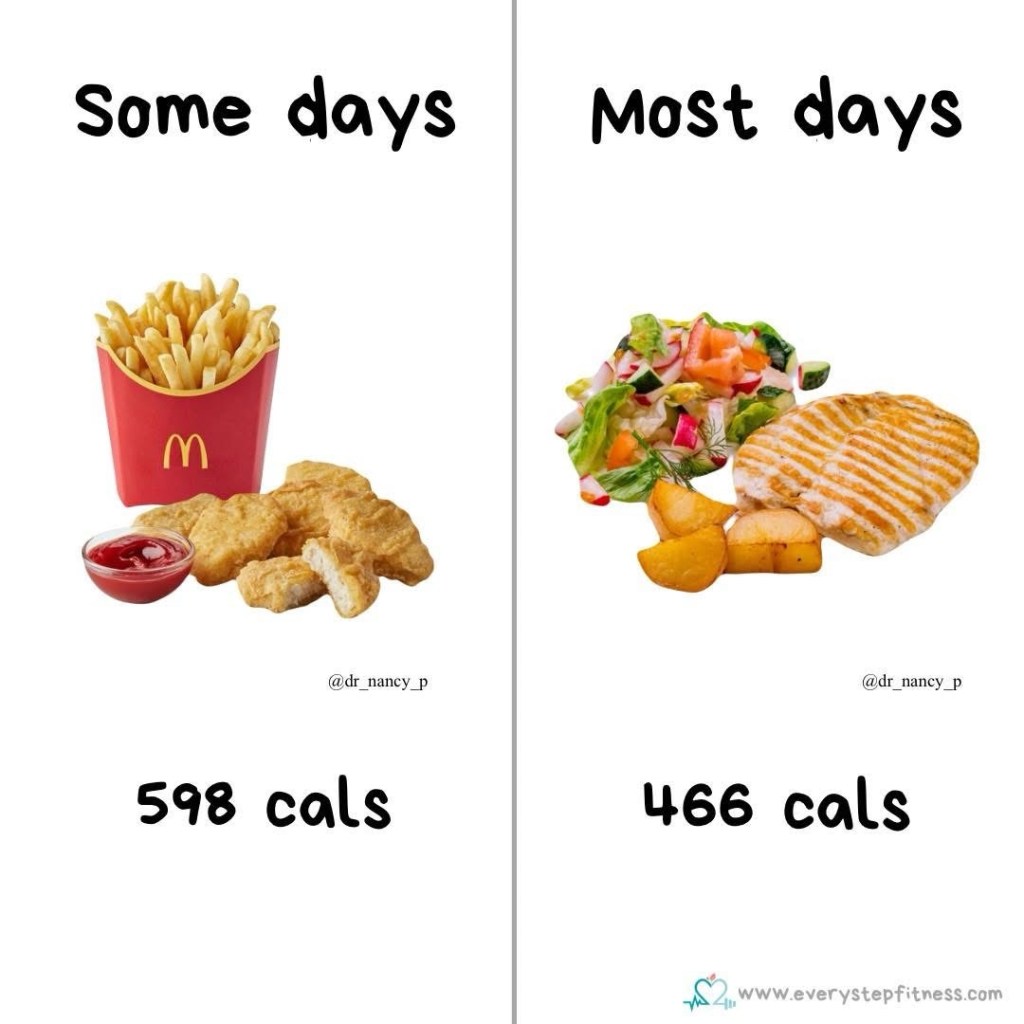
I talk about this a lot but losing weight really is all about balance. You don’t need to demonise or shun your favourite foods to hit your goals. If you use a flexible approach then any food is fine in moderation. Yes even a take away McDonalds. Obviously that’s not healthy food in terms of nutritient content but it doesn’t exist in isolation. You’re not ONLY eating that McDonald’s. You can fulfil your emotional needs with the take away and fulfil your nutritional needs in the rest of your diet. Calorie wise it’s not even that bad!

So you can have that take away – just be aware of the calories and account for it. Then make sure you’re getting a range of nutrients in your other meals and that you’re still within your calories on average over the week.

So balance occasional indulgences with more nutritious daily decisions: enjoy McDonald’s every once in a while, but make your mainstay chicken breast and oven roasted potatoes.

Enjoy 🤗
Xx