Tuesday Tip

Tuesday Tip: Beat the bloat

Tuesday Tip: Beat the bloat 🎈

Bloating is generally characterised by the stomach feeling expanded such as from excess gas, air, food, fluid or other gastrointestinal mechanisms. It’s normal for bloating to increase waist size by 5-8cm.

Some level of bloating is normal – and we often perceive it to be bigger than it is due to a feeling of fullness. However it shouldn’t

be painful and if it is or it’s severe to frequent and you’ve ruled out the factors mentioned below then speak to your GP.

Here are some common non-medical explanations for bloating.

# Eating too quickly / not chewing enough

The first part of the digestion process occurs in the mouth. The less chewing you do, the more ‘work’ other parts of the digestive system needs to do. This can lead to bloating.

# Sugar alcohols / sweeteners

Sugar alcohols like sorbitol, xylitol, erythritol and mannitol can be associated with bloating. This is because they pass through the small intestine undigested and undergo fermentation in the large intestine. This produces extra gases and can lead to symptoms of bloating. Some people are more sensitive than others so if you consume a lot of sugar-free products it’s worth cutting back a little to see if that helps.

# Increasing fibre too quickly

If you have just started eating more vegetables, whole grains, beans or legumes than usual then it can take time for the gut to adjust. Instead slowly increase fibre, alongside a lot an increased water intake.

# High stress levels

The brain and gut are connected via the vagus nerve, known as the gut-brain axis. External stress activates the sympathetic nervous system directing blood flow away from your gut, which can reduce movement of food through the digestive tract and leading to bloating.

# Chewing gum or carbonated drinks

Chewing gum generally results in swallowing air and it also contains sugar alcohols. Carbonated drinks can also increase gases in your stomach, leading to bloating. If you have these often and bloating is a concern of yours, try reducing them to see if it helps.

# Large volume meals

Eating a large amount of food in one sitting means a lot of food volume in the stomach, potentially leading to a feeling of bloating or distention. Try to avoid a pattern of not eating or eating little and then having very large meals and instead aim to even out portion sizes across the day.

# Food allergies

There are food allergies (lactose intolerance, coeliac disease, etc) which can cause bloating but if you believe this to be the case then speak to your GP.

# Hydration

Dehydration leads to constipation, which leads to bloating. And while it may seem counterintuitive to drink more water when you feel bloated it can actually help – especially in warm weather.

Happy Tuesday 🤗xx

Nutrition and Calorie Tips

Set yourself up for success…

Set yourself up for success… 🏆

If you’re trying to lose weight or even if you’re just trying to eat better then maybe try a few of these things to set yourself up for success. It won’t take long!

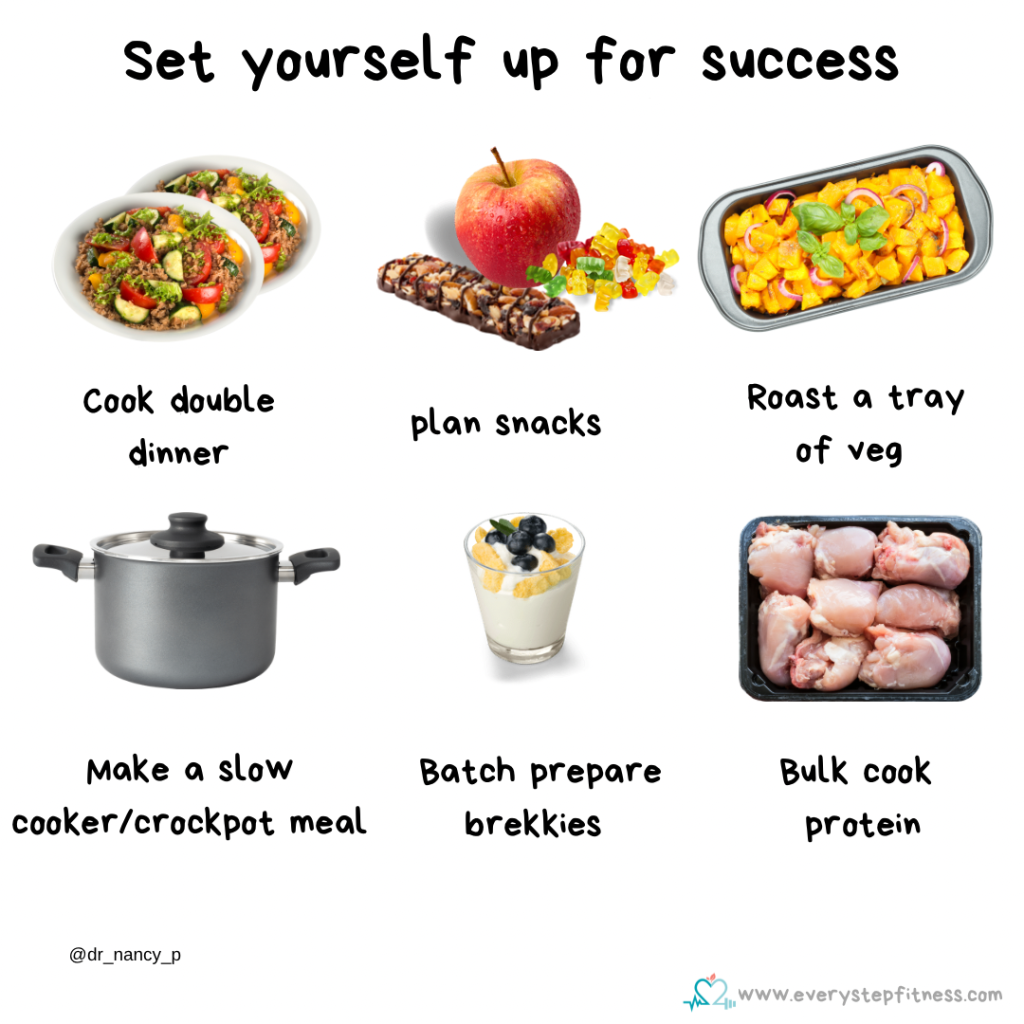
Spend 5-10 mins at the weekend planning out your meals and snacks (even if only roughly).

⁃ Make your in dinner double portions whenever you can so you have leftovers for lunch or another dinner.

⁃ plan your snacks. Have a snack box and pop any pre wrapped snacks in there so they’re easy to get/ portion out any other snacks, make sure you have plenty of fruit and veggies to grab too.

⁃ Roast up a tray of vegetables – you can even buy pre cut veg if you’re short on time. Pop it on a tray with a few sprays of 1 cal oil and shove in the oven while you’re cooking dinner so you’re not spending more time. These will last a few days and are great to add to lunches or dinners.

⁃ Invest in a slow cooker and put it on in the morning so you have it ready for dinner when you’re home.

⁃ Batch your breakfasts ahead of time. Prepare multiple containers of overnight oats, or yoghurt/ granola pots, or portion out breakfast smoothie ingredients ahead of time.

⁃ Bulk cook some protein – chicken, fish or veggie options while cooking the veggies so you have it for the rest of the week.

This may sound a lot but in reality you can be cooking the protein and veggies at the same time, whilst prepping the snacks and brekkie – all in under 45 mins max. Once done you’re sorted for the week!

🤗

Xx

Tuesday Tip

Tuesday Tip: Food Intolerance tests

Tuesday Tip: Food Intolerance tests 🚫

People often tell me that they have an intolerance to certain foods. Quite often this is based on commonly sold finger prick blood food intolerance tests you can take. Aside from the fact they’re taking your money, it’s actually impacting people’s health. I’m seeing more and more people who are afraid to eat certain foods because of these so called intolerances.

So let’s try to separate the facts from this pseudoscience. First off it’s important to be clear that a food intolerance is not the same as a food allergy. Unlike food intolerances, there are VALID food allergy tests and some allergies can be be life threatening so definitely see your GP if you suspect you may be allergic to any foods. Intolerances tend to be based on a test which looks for specific IgG antibodies to foodstuff in the blood, claiming that a positive result indicates diagnosis of a food intolerance. They typically involve long lists of foods which almost always include wheat and dairy. So what are they actually testing – well the reality is most of us will develop IgG antibodies to food. They are an indicator of repeated exposure to that food, not clinical symptoms. This is because it is actually a marker for food tolerance; an indication that our immune system recognises the food to be harmless and does not respond to it. IgG antibodies to a food may therefore be protective in preventing inappropriate immune responses. So if you have a diet high in wheat for example then you will have high levels of IgG, it doesn’t mean you’re intolerant to it!

There is zero scientific evidence for these tests – both in the literature and in clinical settings. Often people feel ‘better’ after eliminating all those foods simply by chance. There are currently NO valid tests for food intolerance (aside from the breath test for lactose intolerance). The only way to diagnose any intolerance/sensitivity to a foods is by an elimination diet where you systematically remove each food individually and then reintroduce it. Often pinpointing the foods is not straightforward so this should be done under the guidance of a specialist qualified dietician. Not as a result of an online blood test.

So don’t waste your money. If you really fee you have a significant issue with certain foods then it’s a medical issue and you need to see your Gp/a qualified and registered dietician. If not then continue to include a range of foods in your diet.

Happy Tuesday 🤗xx

Nutrition and Calorie Tips

Why it’s generally harder for women to lose weight than men

Why it’s generally harder for women to lose weight than men 👫

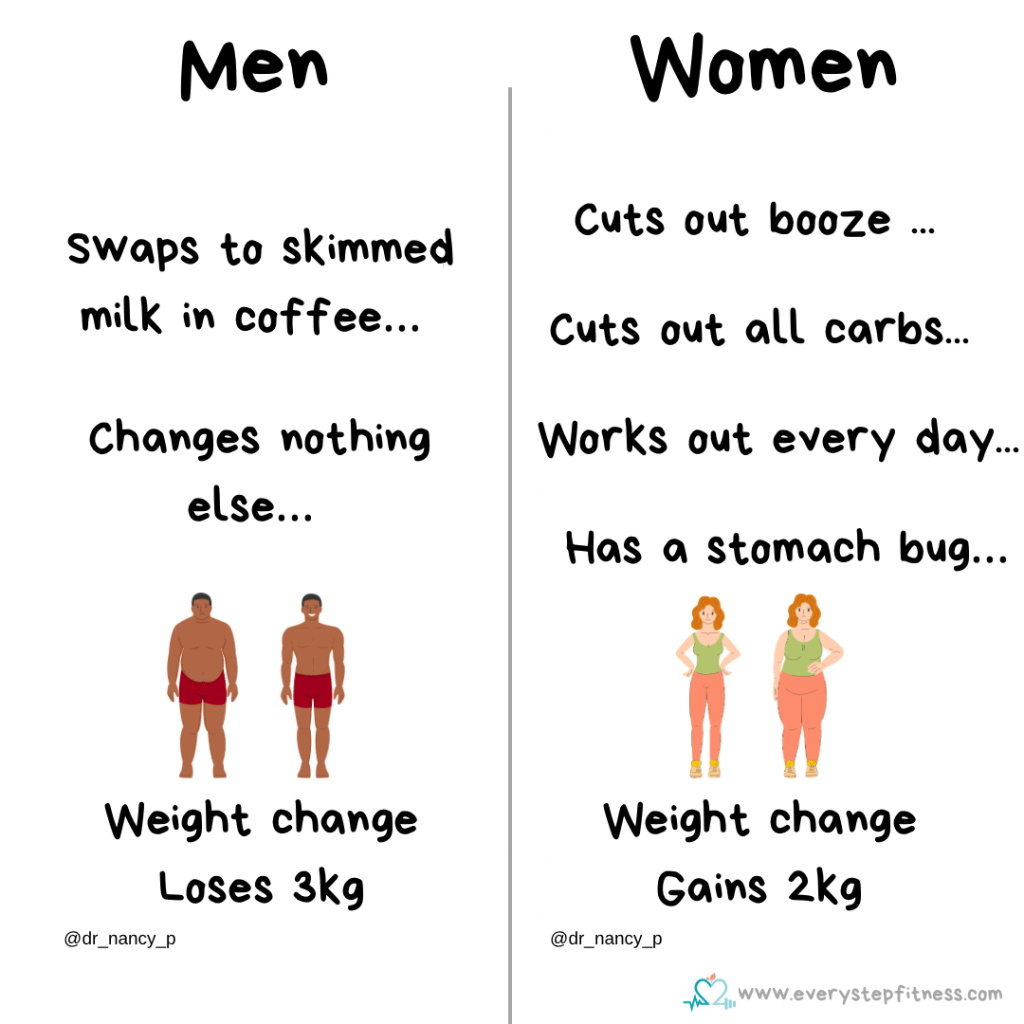
I encounter this a lot with my clients, especially couples. A man appears to change very little in their diet and loses 3kg in a week, whilst a woman cuts carbs, cuts booze, workouts tonnes and gets a stomach bug and puts on 2 kg! Now obvs this is just a humorous example but it’s not actually far from the truth. Men really do tend to respond faster than women when it comes to weight loss, so why is this?

Generally, men will burn more calories at rest than women due to them being taller, heavier and naturally more muscular. This means they will need to consume more calories to maintain their weight. It also means they can consume considerably more calories and still be in a calorie deficit.

For example a 6ft man, weighing 95kg needs around 2,600 cals to maintain so anything below that is a deficit. In contrast a 5ft 6inch woman, weighing 67 kg needs approx 1800 cals to maintain and less to lose weight. That’s almost 1000 cals different and makes a huge difference when trying to accommodate your meals, snacks and then social stuff on top.

This is even harder if you’re a couple as you may be likely to eat similar things/portions so if you’re both eating around 1600 cals then the man will be at an even greater deficit so will lose weight much more

rapidly.

Whilst it’s not possible to out exercise diet obviously there is some impact from the amount of calories burnt and men will naturally burn more calories than women due to their height, weight and muscle mass.

Women may see higher fluctuations in weight too (which makes the process harder) as they can be more susceptible to fluid retention in response to stress and other hormones. In addition there are psychological reasons it’s harder for

women. ‘Diet culture’ is so prevalent and affects women from a very young age. Most of my female clients have been on and off diets since they were teenagers to some

degree. These repeated attempts at trying to find dietary success can completely fracture anyone’s mindset around their bodies and food. Whilst men do also face these struggles it’s not usually to the same extent.

What you can do about it?

Women can increase their chances of weight loss success by increasing muscle mass (which increases your bmr so you burn more calories at rest).

And whilst it is indeed harder for women to lose weight that doesn’t mean the law of thermodynamics don’t apply. If you are in a calorie deficit you will lose body fat and you may still be losing fat even if the scale doesn’t necessarily show it. So make sure you’re tracking accurately so you know you’re eating in a calorie deficit. Work on any habits, thoughts and behaviours that may have held you back due to diet culture (e.g. move away from overly restrictive dieting or cutting out food groups).

Overall don’t give up! Use objective measures to keep track of progress beyond the scales and don’t worry if your other half or men in your life seem to be ‘doing better’ – it’s not better – it’s just different!

🤗

Xx

Tuesday Tip

Tuesday Tip: Obsessed with cutting carbs?

Tuesday Tip: Obsessed with cutting carbs? 🥖

The idea of cutting carbs to lose weight is so pervasive and it’s something that many people cling on to. Even clients who I’ve worked with for years still find themselves wanting to cut carbs when trying to speed up progress. Why is this? Aside from the fact that the media often promote it as a weight loss ‘hack’ there are also other reasons we are obsessed with it.

This fascination with cutting carbs may come from the idea of rapid weight loss, which often feels almost magical. The initial shedding of pounds encourages you with the belief that cutting carbs is the key to achieving quick and effective results. This quick “success” reinforces the idea that carbs are inherently bad and detrimental to weight loss.

However, this stems from a misunderstanding of what’s actually happening. The initial weight loss observed when cutting carbs is primarily due to the depletion of glycogen stores in the muscles and liver, along with the loss of fluids. This is not a true representation of fat loss. Glycogen, which stores carbohydrates, holds onto water molecules. As glycogen diminishes, so does the water it’s bound to, leading to a noticeable drop in weight.

In addition, when you then go back to a typical meal containing carbs it replenishes glycogen stores and rehydrates the body, resulting in regained weight. This reinforces the idea that carbs are bad and make you gain weight/fat. The cycle of losing and regaining weight due to fluctuations in glycogen and fluid levels can create a sense of frustration and confusion.

In reality, the key to sustainable and effective weight loss involves a balanced approach to nutrition and physical activity and the creation of a consistent calorie deficit. Overly restricting carbohydrates can lead you to nutrient deficiencies and an unsustainable eating pattern. It also leads to low energy levels, poorer exercise performance, irritability and tiredness. Focusing on a variety of nutrient-rich foods, portion control, and regular exercise can help you achieve long-term, meaningful fat loss results without the rollercoaster effect caused by drastic carb cutting.

Remember knowledge is power and whilst fluctuations on the scale can be demoralising understanding the science behind weight loss, including the role of glycogen and fluid fluctuations, can help you make informed decisions about your dietary choices and avoid falling into the trap of chasing quick fixes that may not yield lasting benefits.

If you want to lose weight and keep it off long term, you have to learn to do it right!

Happy Tuesday 🤗xx