Nutrition and Calorie Tips

Mindless Munching…

Mindless Munching… 🍪

Do you often find yourself saying, ‘it was just a bite’, or ‘it was just a biscuit’ or even perhaps not even registering that you ate something? If so, those seemingly innocent snacks could be the reason you’re struggling to shed that body fat.

In one day you may for example grab a cappuccino on the train (150 cals), have a couple of biscuits as you pass the kitchen at work (97 cals), pop a few mini sweets in the car (110 cals), finish off the 1 and a half fishfingers from your child’s leftovers (90 cals), maybe grab a crisp or two from your partner’s packet (158 cals), and have a squeeze or sauceor dressings on your meals (200 cals).

That’s 790 calories—calories you likely didn’t track or even remember. While the individual snacks / sauces etc may seem small, they add up quickly and can be the difference between losing fat and maintaining or even gaining weight. Mindless munching throughout the day can easily push you over your calorie target without you even realizing it.

Pay attention to these “hidden” calories and track them carefully. It might just be the key to finally shifting those stubborn pounds.

Remember – calories count! 🤗xx

Tuesday Tip

Tuesday Tip: Understanding Ageing Changes

Tuesday Tip: Understanding Ageing Changes 👵🏻

Scientists have known for some time that ageing isn’t linear. As we age, our bodies undergo various changes that can spike at certain milestones. A recent study has identified two distinct phases – around ages 44 and 60.

The study assessed ageing at the molecular level (RNA, proteins, metabolites) and microbes (gut and skin bacteria). It found significant changes in metabolism at two ages – around 44 and 60.

For instance, at around 44 the ability to metabolize substances like caffeine and alcohol shows a marked downward shift. By age 60, there is also a shift in immune function, kidney health, and skin and muscle decline. These changes are accompanied by an increased risk of age-related diseases, including cardiovascular issues and diabetes.

The mid-40s spike in changes was initially thought to be driven by perimenopausal shifts in women, but the data revealed similar changes in men around the same age. This suggests that menopause may contribute, but other factors likely influence these changes for both genders.

Does this mean we’re doomed to accept these declines? Well yes and no. You can’t reverse the process but you can do some things to help mitigate the impact. The study revealed the importance of physical activity and exercise to help mitigate some of these changes in muscle function and metabolism. Also with the decline in the ability to process caffeine and alcohol it might be wise to reduce consumption as we age. Managing stress is also beneficial and as always focusing on a balanced diet rich in nutrients is vital.

It’s also important to recognise these changes impact men and women and whilst many may also experience symptoms of peri menopause/menopause some of these changes are merely a result of the ageing process for everyone.

Understanding the ageing process empowers you to maintain your well-being as you navigate these significant life stages. Rather than worrying about these changes, embrace proactive health measures.

Happy Tuesday 🤗

Xx

Nutrition and Calorie Tips

I need to give up sugar… or maybe sugar isn’t the problem?

I need to give up sugar… or maybe sugar isn’t the problem? 🥣

One of the many diet myths I hear a lot is that sugar is bad, and clients will often say they need to give up sugar. Now in reality this usually means they intend to give up things like biscuits, chocolate, cakes, ice cream, doughnuts etc. Very few people are mainling pure sugar! These foods aren’t just “sugar” – they all contain significant amounts of fat too.

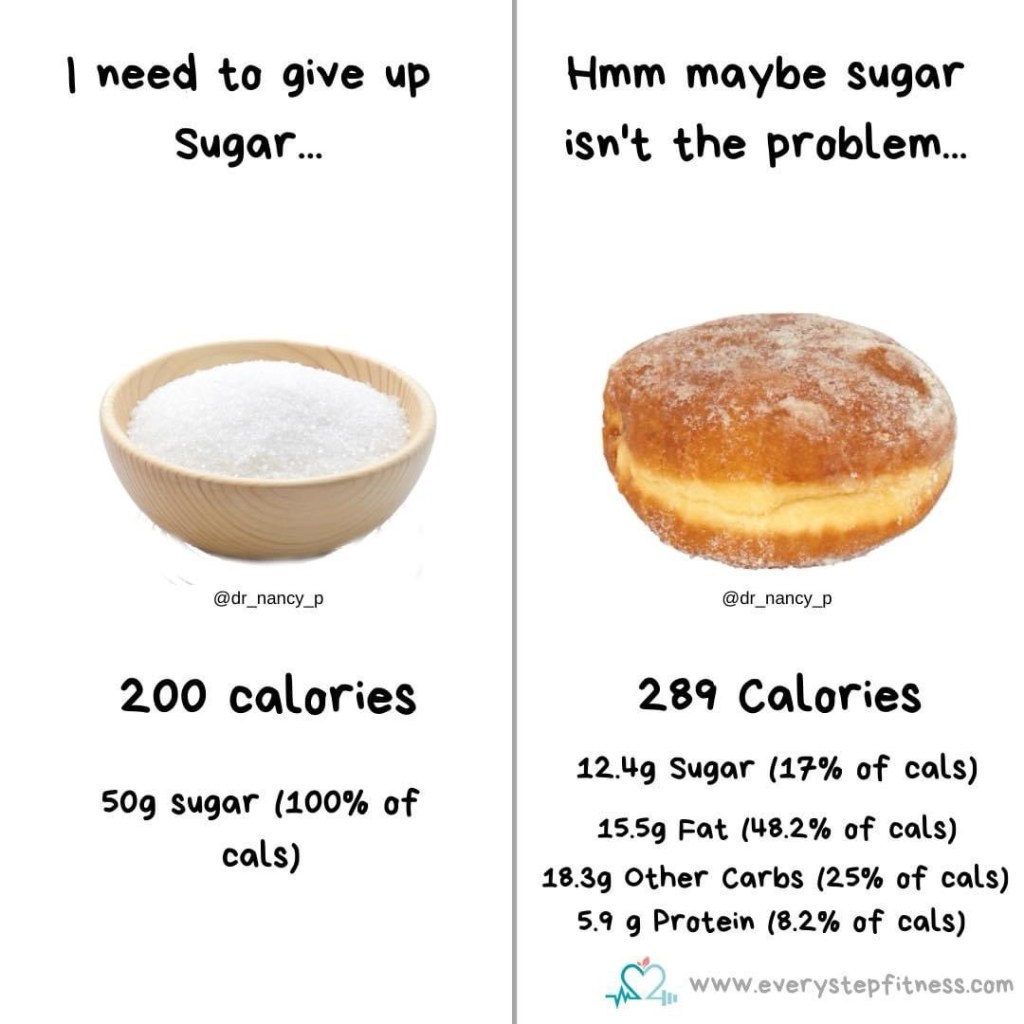
As you can see from this comparison – 50g of sugar contains nothing but sugar. It’s 50g of carbs – no fat, no protein etc. All of those carbs are sugar and 100% of the calories it contains are from sugar. The jam doughnut on the other hand contains around 12.4g sugar which accounts for only 17% of the total calories. The majority of the calories come from fat, other carbs and a little protein. The foods that people commonly associate with sugar are a mixture of sugar, fat and salt which make them hyper-palatable. That means they’re designed to taste really good – which encourages you to eat more. Eating 50g of pure sugar in one sitting is actually not a pleasant experience (try it – I dare you lol!) and it isn’t something most people would do. Eating a jam doughnut or 2 though – well thats super easy. To consume the same amount of actual sugar as pure sugar you’d need to eat 4 doughnuts in one go.

So this combo of sugar, fat and salt is what makes doughnuts and other snacks so easy to over eat. That’s not to say doughnuts are bad but they have the potential to derail you from your goals because they’re calorie dense (i.e. more cals in a smaller package) and as I said they taste great so you’re likely to eat more. So it’s not the sugar thats causing this – its the combination of ingredients in these products. So vilifying sugar is pointless and a misunderstanding of where the real issue lies. In fact sugar is actually an important nutrient and the brain’s main fuel source.

In sum, sugar isn’t “bad”, it isn’t causing you to gain fat in itself and you don’t need to give it up. If you have a balanced diet then having the odd “sugary” snack like doughnuts etc is fine – just account for it in your calories.

Enjoy 🤗

xxx

Tuesday Tip

Tuesday Tip: Weekend woes

Tuesday Tip: Weekend woes 😬

This is an extremely common pattern I see in my clients, and myself. Weekdays are often “ok” calorie wise or even good, and then weekends it goes a bit off track. A common pattern is as follows:

  • Super restrictive eating during the week (1200 cals or below)
  • Cutting out everything you ‘enjoy’ to meet those low calories
  • Resulting in low energy, fatigue, hunger, cravings and resentment.
  • Ineffective workouts as energy levels are low
    Then the weekend hits:
  • Willpower is low and because you’ve been ‘good’ all week you indulge without restraint
  • Brunches, take aways, meals out, drinks, food-centred social events etc tend to occur and you don’t bother calorie counting.
  • You also snack on everything you’ve been craving all week.
  • End result – massively over your calories over those 1-3 days
  • This pushes your weekly calorie average up and halts progress
  • You wake up on Monday feeling rubbish, like a failure and end up being more restrictive the following week.
  • And it continues….

How do you resolve this?
For starters view your week as a whole and consider the average calories over the whole week. Avoid being too restrictive on weekdays but recognise you’ll want more calories in your budget to spend at the weekend. So save some calories on weekdays (100-150 per day). You’ll head into the weekend feeling less miserable and better able to exercise some control. Plan the weekends – reduce some of the indulgences but factor in some of the things you enjoy. Plan ahead for restaurant meals, drinks etc using those extra calories you’ve saved.

So it’s two pronged – eat a little more during the week, eat a little less at the weekends. Track your weekends rather than viewing them as a free pass. Consistency is key!

Happy Tuesday 🤗
Xx

Nutrition and Calorie Tips

Trick or treat? ..

Trick or treat? ..🎃🍫

It’s pumpkin season and there’s a multitude of pumpkin spice snacks out there. Pumpkin is often promoted as a health food (pumpkin itself does indeed have many health benefits) and there are lots of snack bars out there that are marketed to imply that they are a “healthy” choice. This is a perfect example – this bar definitely looks like it’s a healthy choice. It’s got nuts and pumpkin seeds in it – great for good fats, vitamin A, and a host of other benefits.

So you might decide to reach for this rather than reaching for a pumpkin spice caramel chocolate square thinking it was a better choice. Well that may not always be the case.

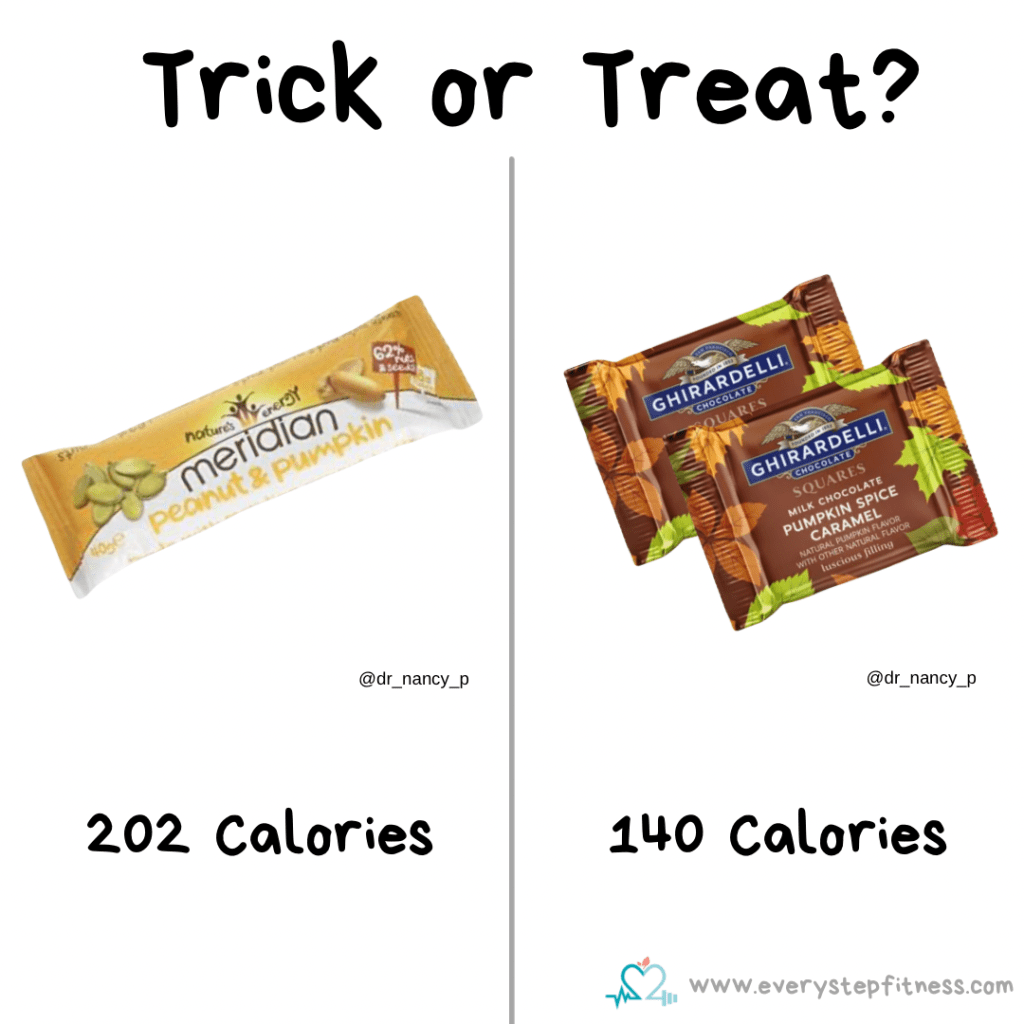
It does contain a good range of nutrients (and fat and sugar) and is definitely a good snack to give you energy and keep you full and will cost you 202 cals. But you could actually have 2 of these chocolate caramel squares for fewer calories. So if you were trying to lose fat/weight and looking for a snack, then rather than reaching for a “healthy” snack bar when you don’t fancy it, you’d be better off just going for a snack you actually want – like the chocolates if that’s what you fancy. And if you do want the ‘healthy’ bars then be sure to read the labels carefully as some are extremely high in calories.

Ultimately, if you’re trying to lose fat or weight, it comes down to calories. So enjoy a balanced diet overall and just be mindful of the calories in what you’re having.

Happy Hallowe’en 🤗

xxx