Nutrition and Calorie Tips

A snack or loads of snacks…

A snack or loads of snacks… 🍫

There are lots of strategies you can use when trying to stick to your calorie deficit to lose weight/fat. Being aware of the calories in the foods you choose to consume and swapping to lower calorie foods which you also enjoy is an obvious option. As well as the calories though it’s worth considering the quantity and volume of the food you’re choosing.

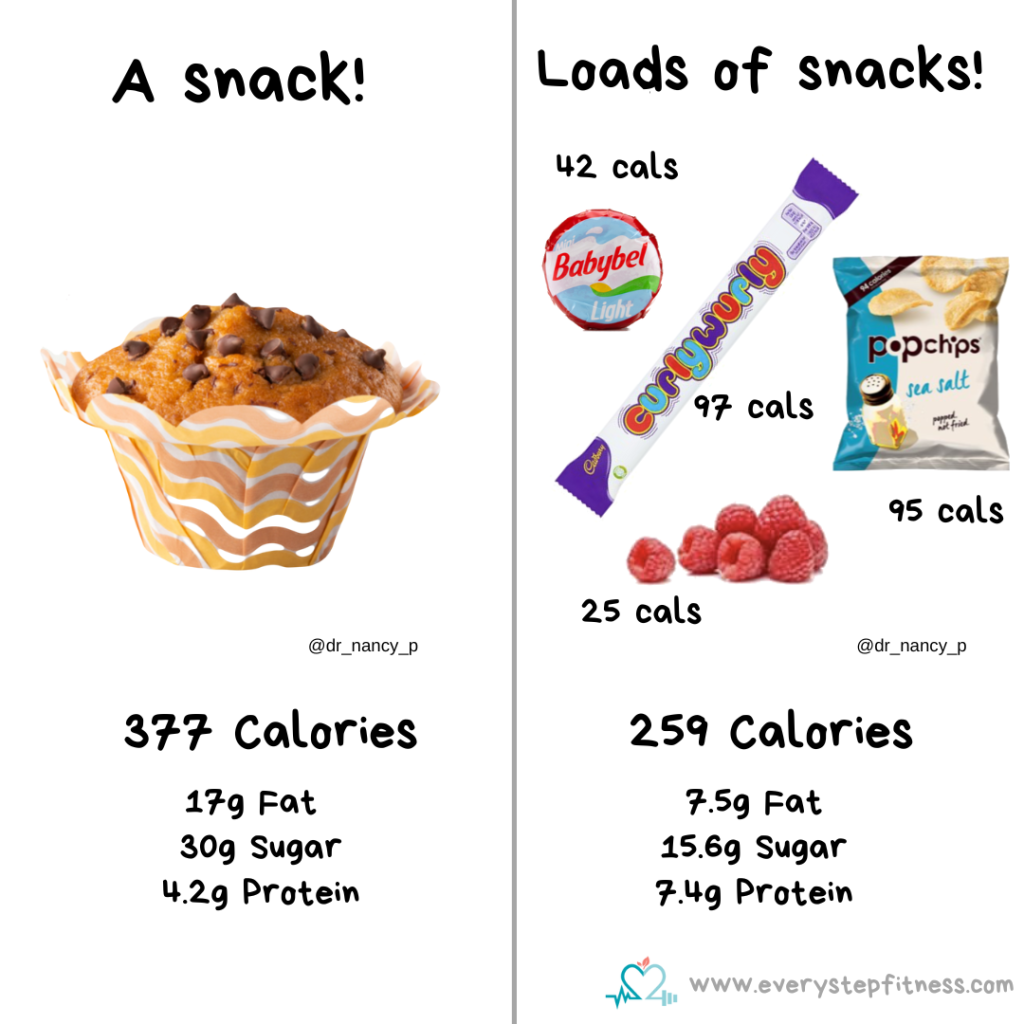
Snacking is a common problem and an easy way to extra calories to sneak in. If you were to snack on a banana and chocolate muffin you’re looking at a substantial 377 calories of food. That’s quite a lot for a snack, and it will be gone in a few bites. However for only 259 calories you could have a curly wurly, a light babybel, some raspberries and a packet of popchips. This combination not only has the advantage of fewer calories overall, but also higher protein overall which will help to keep you fuller for longer, and they contain more fibre (mainly from the raspberries) and other micronutrients which will also help. But an often overlooked aspect is that there is also a greater volume of food in the lower calorie option. It will take you longer to eat the 4 snacks than the muffin, which will also increase feelings of satisfaction. You may also even find you don’t even need to eat all 4 snacks.

Obviously if you fancy the muffin and can fit it into your calories then go for it but this is just another strategy to add to your toolkit to help you stick to those calories.

Enjoy 🤗

Xx
Tuesday Tip

Tuesday Tip: Is a calorie just a calorie?

Tuesday Tip: Is a calorie just a calorie?🍫

This is a common debate when discussing calorie deficits and food choices. People often say, “A calorie isn’t just a calorie—some are better than others.” For example, they argue that 100 calories of nuts aren’t the same as 100 calories of chocolate.

So, is that true? Well, technically—no. A calorie is simply a unit of measurement for energy. In that sense, 100 calories of nuts provide the same energy as 100 calories of chocolate.

However, the type of food matters. Different foods have different metabolic effects. Some require more energy to digest (this is the thermic effect of food), but the difference is small and unlikely to impact overall calorie burn significantly.

Foods with low-calorie density (like fruits, vegetables, and lean proteins) allow you to eat a larger volume for the same calories. For example, you’d need to eat 10 punnets of raspberries (250 calories) to match the calories in one Snickers bar.

Satiety also varies. High-fibre, protein, and fat-rich foods keep you fuller for longer. Solid and thicker foods provide more satiety than liquids. Some foods are hyperpalatable (aka delicious!), making them easier to overeat, while others naturally regulate appetite.

Food also has emotional and psychological effects. While nuts may be more filling, sometimes no amount of nuts will satisfy a chocolate craving, and that’s okay! In those moments, you’re better off having the chocolate and moving on, rather than overeating other foods while still wanting the chocolate.

Ultimately it’s about balancing all of these things in a way that lets you stick to your calorie goals. So sometimes that will mean going for the more filling option of nuts and sometimes it will mean going for the chocolate you actually want, but being aware that you may feel more hungry later and being prepared for that.

So yes, a calorie is just a calorie—but food is more than just food!

Happy Tuesday!🤗

Xx

Tuesday Tip

Tuesday Tip: The scales have gone up!

Tuesday Tip: The scales have gone up! 😱

Stepped on the scales this morning and seen the number go up? First, take a deep breath. Now, let’s break down what’s actually happening.

# More Food = More Weight (temporarily!)

If you ate more than usual this past weekend, especially carb-heavy or salty foods, your body is likely holding on to extra water. That number on the scale is not fat gain; it’s just temporary water retention and food still being digested.

# Carbs Hold Water

For every gram of carbohydrate you eat, your body stores water. Enjoyed pizza, pasta, or dessert? The scales might reflect that extra water weight, not fat! This isn’t bad and doesn’t mean you should avoid carbs – we need them!

# Digestion Takes Time

The food in your digestive system has weight, too. Had a late-night meal or richer foods? It can take longer to process, which might show up on the scales.

#What NOT to Do

⁃ Don’t panic – A single weigh-in doesn’t define your progress.

⁃ Don’t restrict yourself today to “make up for it.” Drastic measures aren’t the answer.

⁃ Don’t think you’ve ruined everything, because you haven’t.

# What TO Do

⁃ Get back to normal eating. No need for extremes, just return to your usual balanced meals and routines.

⁃ Remember the bigger picture. A single meal, or even a whole weekend, is just a tiny part of your journey. Progress isn’t erased by a couple of indulgences.

⁃ Embrace balance. All foods have a place in a healthy diet, even when fat loss is the goal. Enjoying meals out is part of life because let’s be real, skipping dessert forever? No thanks!

⁃ Use other measures like clothing and it fits, or body measurements to measure progress.

This is your reminder that the scales don’t tell the full story. What matters most is consistency over time, not a temporary fluctuation.

Keep going—you’ve got this! 💪

Happy Tuesday 🤗xx

Nutrition and Calorie Tips

Why diets work..

Why diets work.. 🥗

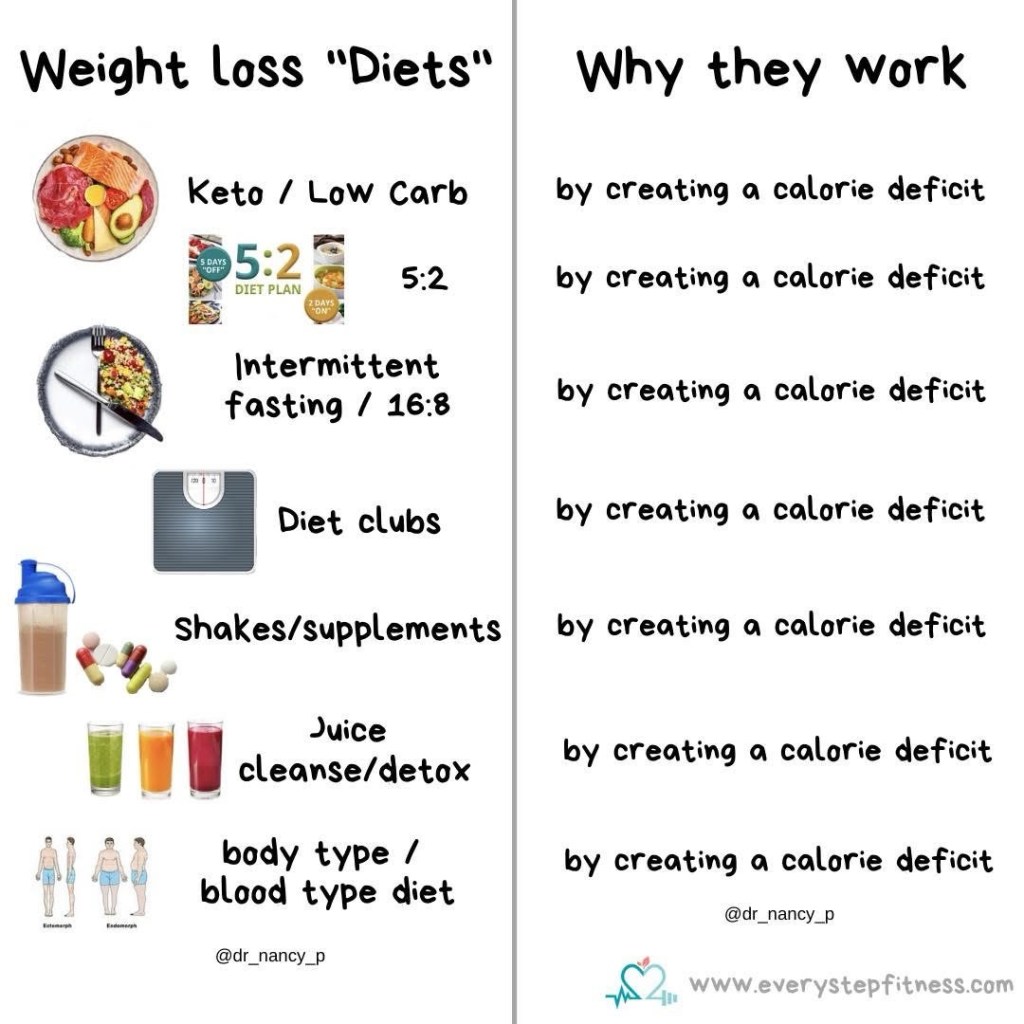
There are lots of diets out there that claim to be better than any other. But what do ALL these diets have in common? And why do they work?

It’s nothing to do with any special properties of specific diets. For ANY diet to work it has to result in a calorie deficit. For some people certain diets will enable them to achieve this more easily and therefore that diet will work for them. But behind these diets are the simple maths of calories in vs out. However the issue with many diets is that they don’t educate you on the mechanism behind them and are therefore short term fixes.

Keto / low carb : omits or reduces carbs, which may reduce calories.

5:2 : limits calorie intake for 2 days a week, which may create a calorie deficit on average.

Intermittent fasting/ 16:8 : restricts the window of time you can eat in, which MAY reduce calories.

Diet clubs : assign points or values to certain foods and restrict food types, so MAY reduce calories

Shakes / Supplements : replaces meals or promotes excessive bowel movements etc which result in water loss, and a possible calorie deficit from meal replacement.

Juice cleanse/ detox : replaces whole foods with juices, resulting in fewer calories and rapid initial water loss.

Body type/blood type diet : restricts foods based on blood or body type, which may result in a calorie deficit

Spot the similarities? Many involve omitting food groups which will result in a calorie deficit. Calories can’t tell the time so methods involving not eating on certain days/times only work if you don’t overeat on others. Diet clubs help with accountability (regular weigh ins and rewards) but hide calories behind points or labels which lock you in to their method.

All of these diets can result in fat loss, but how many of them are sustainable long term, educate you on managing energy intake or build new habits? Some are actually damaging; laxative supplements and fasting can cause bowel damage, kidney damage and development of silent acid reflux etc, as well as promoting disordered eating.

So it doesn’t matter which ‘diet’ you choose, as long as it works for you – but make sure you understand WHY it works 🙂

xx

Tuesday Tip

Tuesday Tip: Insulin Isn’t the Enemy!

Tuesday Tip: Insulin Isn’t the Enemy! 🙌🏼

Recently, there’s been a lot of talk about insulin being the “bad guy” and the need to avoid foods that spike blood sugar, even suggesting the use of continuous glucose monitors. But do we really need to worry?

Insulin is essential for life, and the fear surrounding insulin spikes leading to insulin resistance (which can raise blood sugar and increase diabetes risk) is based on oversimplified ideas about physiology and nutrition.

Oversimplification of Food Health

Judging food only by its effect on blood sugar is short sighted. For instance, by that logic a bowl of fresh fruit, packed with fibre, vitamins, and minerals, would be viewed as less healthy than fried chicken simply because it spikes blood sugar more. Food is more than just its blood sugar impact – micronutrients, fibre content etc matter more. As does the overall balance of your diet – not just one food.

Blood Sugar Response Isn’t Simple

Your body’s reaction to food isn’t just about what you eat. It’s influenced by over 30 factors, including stress, sleep, and activity levels. Eating the same apple on different days can lead to varying blood sugar responses.

Insulin Resistance Has Bigger Culprits

The main risk factors for insulin resistance are obesity and lack of physical activity—not carbs (resulting in insulin spikes). Studies show that replacing carbs with fats to avoid blood sugar spikes can actually lead to increased prevalence of insulin resistance. If you’re not diabetic or prediabetic, obsessing over blood sugar spikes may distract you from what truly matters for your health.

Instead of fearing insulin, focus on the bigger picture. Prioritize nutrient-dense foods, physical activity, and sustainable habits. Avoid expensive glucose monitors or diet fads, and remember that balance is key. Steady, realistic changes always trump fear-based, restrictive approaches.

Happy Tuesday 🤗xx