Nutrition and Calorie Tips

Menopause misinformation…

Menopause misinformation… 💁🏼‍♀️

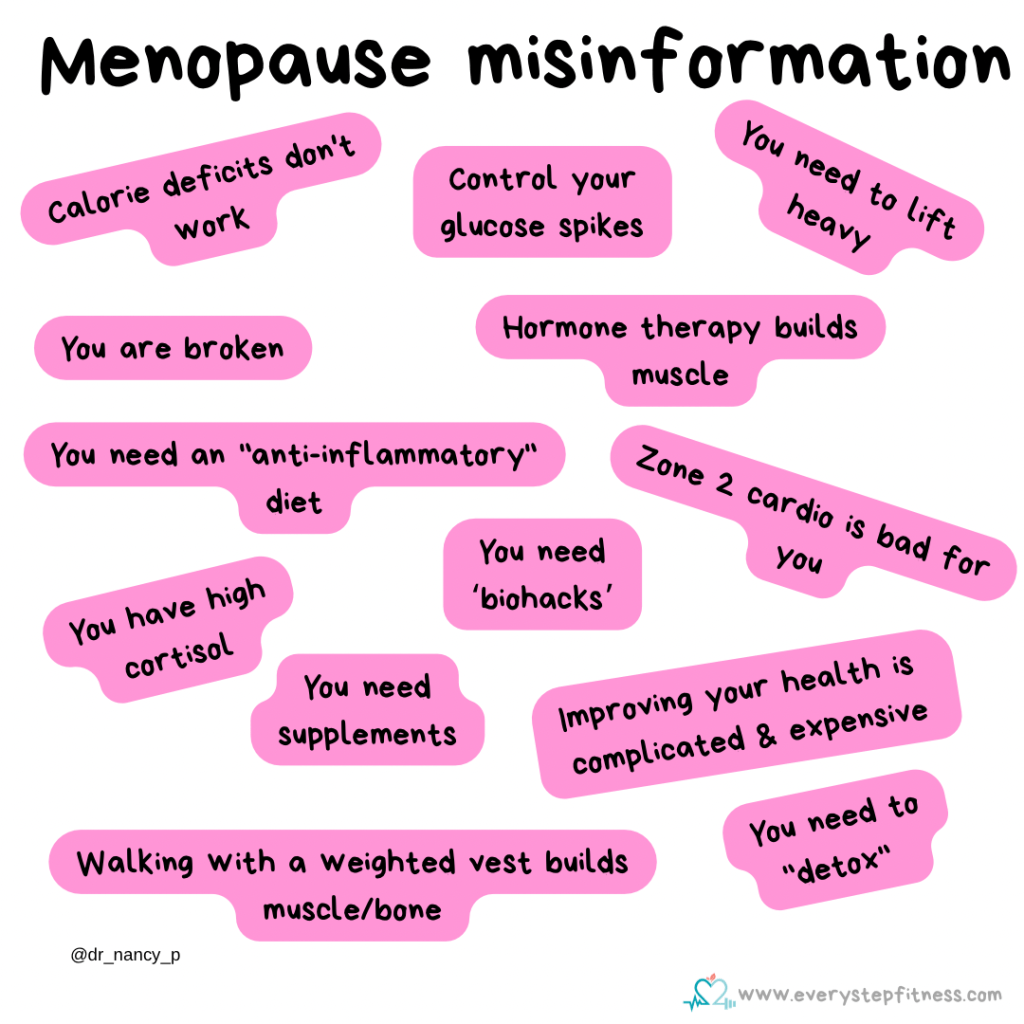
Menopause Misinformation Is Out of Control. It’s the latest trend – everyone is suddenly a menopause specialist. Social media fitness ‘experts’ are overcomplicating menopause, health, and fitness, and using women’s vulnerability to sell unnecessary products.

What does the science actually say?

⁃ Hormone therapy may help with symptoms, but it won’t build muscle. Lift weights, but not necessarily heavy ones. Resistance training to failure works, whether that’s heavy with low reps or light with high reps.

⁃ All exercise is good for health. Cardio remains important during and after menopause. Don’t skip it in favor of just lifting

⁃ Weighted vests? Not needed unless you like them. There’s no solid evidence they help build muscle just by wearing them while walking which is the current trend.

⁃ Calorie deficits still work. Menopause doesn’t break biology. Your calorie requirement may change, but fat loss still comes down to a calories deficit consistently, over time, and patience.

⁃ Glucose and cortisol spikes are normal and necessary if you’re healthy. You don’t need to monitor or control them.

⁃ Your liver and kidneys detox your body. No magic food, drink, or cleanse is needed. Eat nutritious meals with enough protein and fiber.

⁃ Menopause supplements? They’re unregulated and untested and most don’t do much. Many have too little of anything useful to matter.

⁃ Biohacks like cold plunges and red light therapy sound exciting, but there’s no strong scientific backing. Save your money

You’re not broken. Your body still responds to exercise before, during, and after menopause. Pick a routine you’ll stick with. Fat loss and muscle gain take time so stay patient.

There’s no magic diet, workout, or supplement. If a message sounds overly complicated or too good to be true, that’s a red flag. And usually the person giving that message is selling something.

The boring basics work. Consistency is key. Patience is paramount.

🤗

Xx
Nutrition and Calorie Tips

I’ve blown my diet.…

I’ve blown my diet.… 🫣

When you’re trying to lose weight we often conflate ‘healthy’ foods as automatically
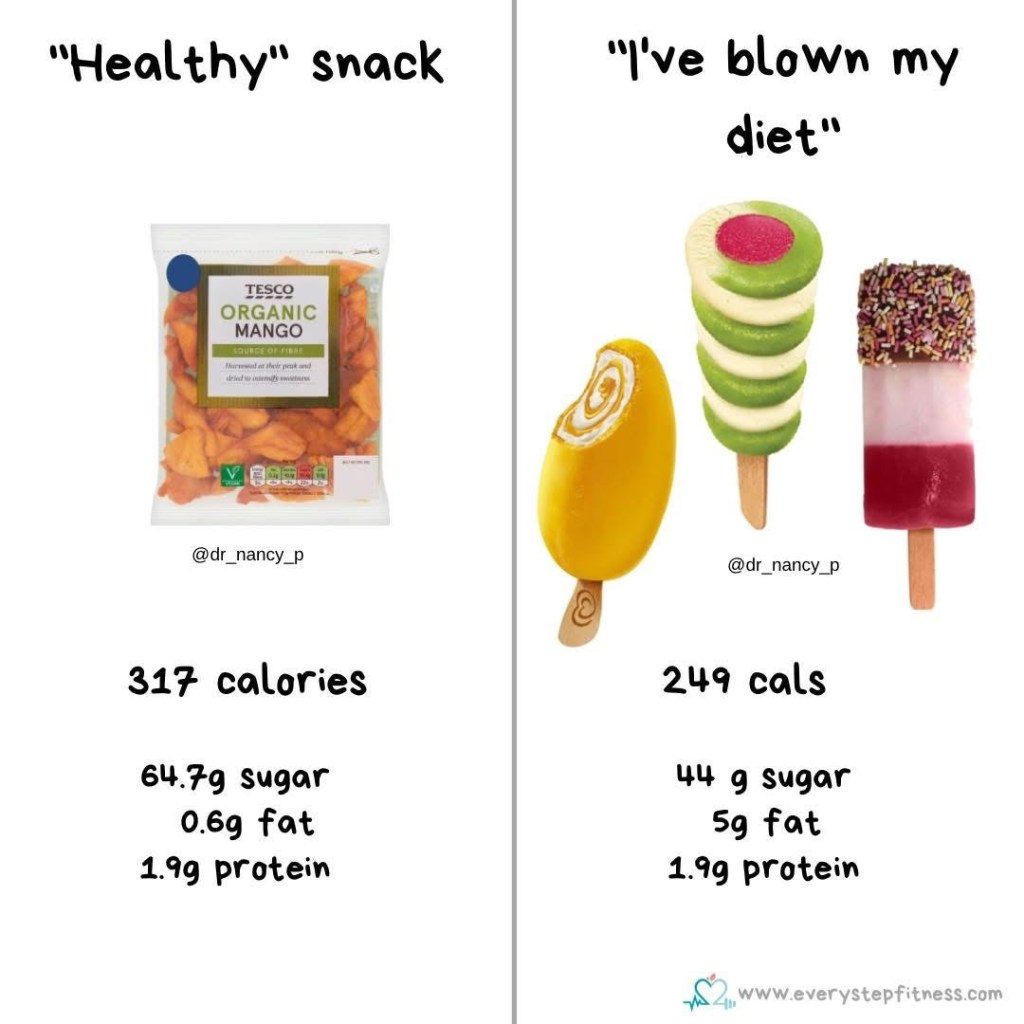
helpful for weight loss. With the weather a little warm (at times) at the moment you may be craving an ice lolly or two. You may even have two or three and then find yourself feeling guilty for having succumbed to the craving and berate yourself for being really ‘bad’ and blowing your diet. Or you may think you’re being very virtuous and avoid the ice cream and have what is perceived to be a ‘healthy’ snack of dried fruit (mango).

In reality in terms of calories the ‘healthy’ snack in this example is actually worse ! Yes the mango does have more micronutrients, but that doesn’t mean the ice cream lollies are a bad option. Of course the ice cream lollies are high in sugar but sugar isn’t inherently bad either (and the mango is even higher) and they have the same
amount of protein. In reality you’re unlikely to eat 3 ice lollies in one go anyway so you’d in fact be consuming even fewer calories!

Overall calories are what count if you’re trying to lose weight. You need to be in a calorie deficit to lose weight so in that scenario the ice lollies are the better option. Especially if you’re eating a balanced diet and getting the other micronutrients in your other meals.

Emotional well being is also important and depriving yourself of foods you enjoy and instead choosing the dried fruit under the misguided impression that it’s a healthier option or because it’s marketed as ‘a healthy snack’ isn’t good for long term sustainability or a healthy approach to food.

Personally I’d choose both on different days – and I’d include them in my calories. The dried fruit is brilliant and does make a great snack option (as long as you’re aware of the calories) but on warm days an ice cream lolly or two is definitely required! 🍦 🤗

Xx

Nutrition and Calorie Tips

Low calorie snack packs…

Low calorie snack packs… 🍍🧀

With the warmer weather it’s great to see some nice low calorie, picnic style snack packs appearing in the supermarkets. Lots of places do similar things but I’ve chosen Tescos for this example. There are other options too but this gives a nice overview. These packs would be great to grab on the go for a snack, or combine for a picnic lunch or dinner etc.

They’re all pretty low calorie but do be aware that the larger packs display the calories for only half a packet (below are the cals for the entire pack).

This list is by no means exhaustive – but it’s just a range of the options out there.

Apple, grape and cheese – 130 cals

Red Pepper and spicy cheese dip – 140 cals

Pineapple and cheese – 150 cals

Cucumber and soured cream and chive dip – 81 cals

Veggies with soured cream and chive dip – 258 cals

Pineapple and Greek yoghurt dip – 85 cals

Carrots and houmous – 117 cals

Protein gracing pack with garlic and herb yoghurt dip – 252 cals

So you can grab a snack or a picnic on the go without worrying that it’s going to derail your progress!

Enjoy 🤗

Xx

Nutrition and Calorie Tips

Fasted vs non-fasted Exercise…

Fasted vs non-fasted Exercise… 🏃🏼‍♂️

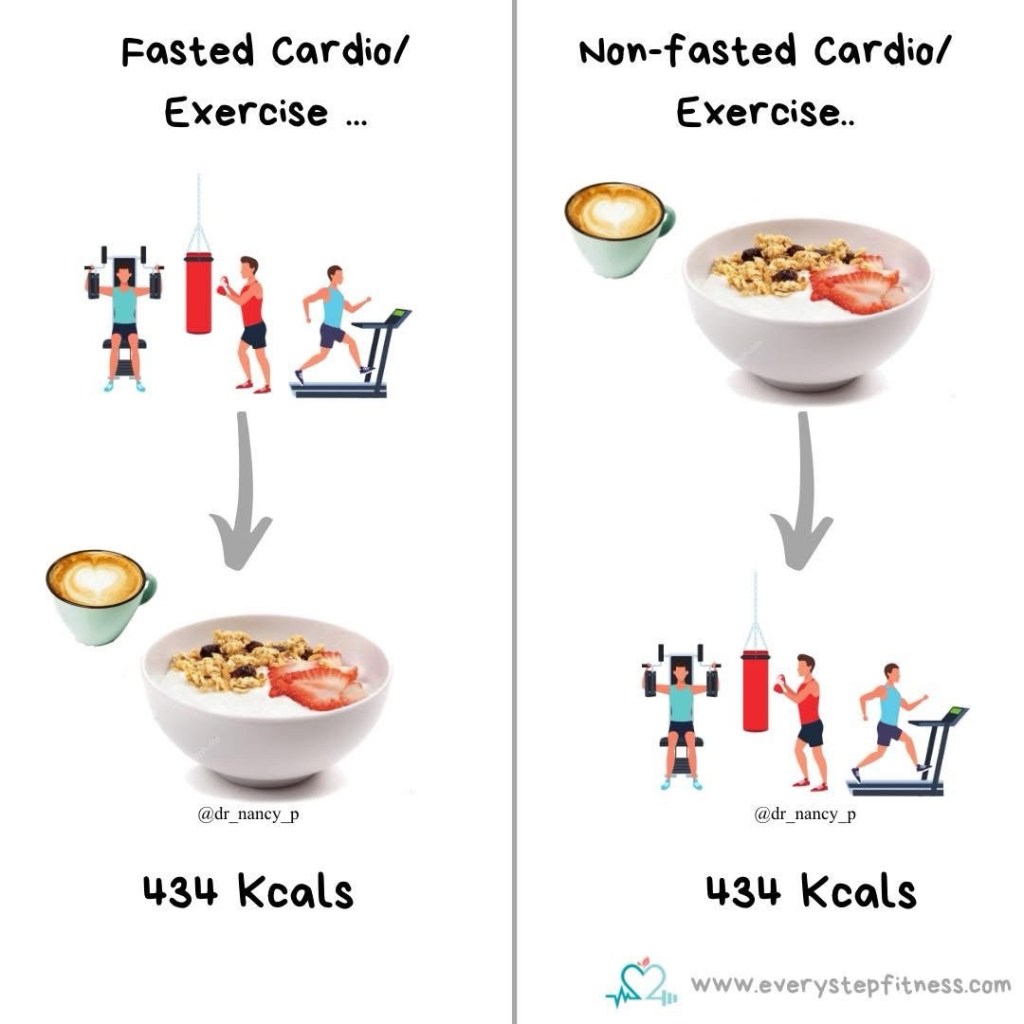
There’s a fair amount of confusion out there about whether you’re better off exercising fasted (on an empty stomach) or after you’ve eaten something (non-fasted) and whether one is better or worse for fat loss.

The confusion arises because people often talk about how exercising on an empty stomach increases fat oxidation. This then gets conflated with fat loss. Fat oxidation is the process of using fat for energy in the body. When you eat something the body secretes insulin to aid in the processing and metabolism of the food for energy and storage. Insulin reduces fat oxidation, so less fat is used for energy. So the argument is that if you haven’t eaten anything yet that day then you won’t have secreted any insulin and therefore fat will be oxidised and used for energy.

Whilst this is true – you will have more fat oxidation, it doesn’t actually mean more fat loss. Fat loss is dependant on overall calories consumed, on average, over the day/week/month etc. Even if you exercise before eating, you still need to have a calorie deficit for that day otherwise any excess calories will still be stored as fat. So It makes NO difference to fat loss whether you choose to eat before or after exercise.

For some people they prefer to exercise on an empty stomach, but for others they need some food in their system to workout. From a workout perspective if you haven’t eaten yet then you may find you fatigue faster and aren’t able to work as hard, so you may end up burning fewer calories. So it’s very much personal preference!

Enjoy 🤗
xxx

Nutrition and Calorie Tips

A summer treat..

A summer treat.. 🍦

What’s better for a summer dessert than some ice cream. I don’t know about you but once I start on a tub it’s gone before I even realise it!

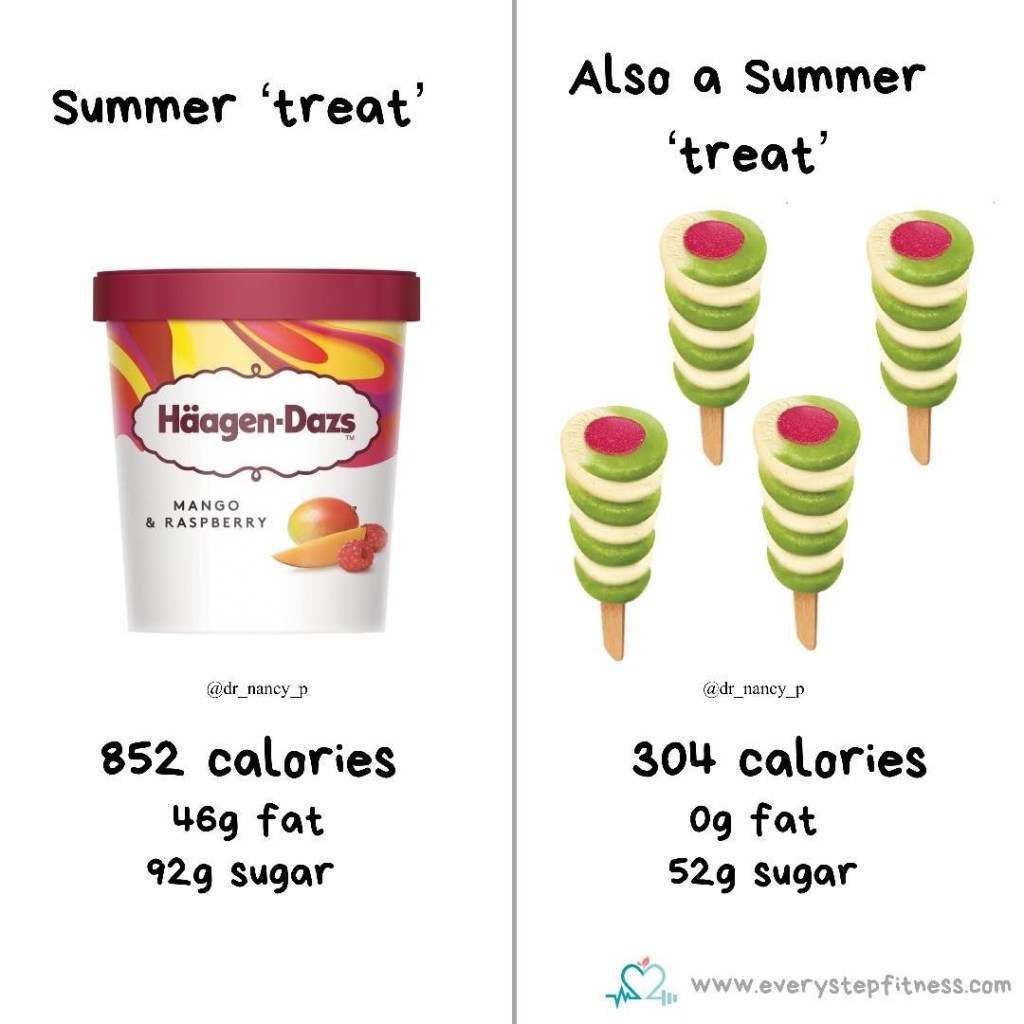
Whilst there’s no problem with including any ice cream you like in your diet, if you are trying to lose weight/fat you may find that fitting a whole tub into your calories quite tricky. So you have two options – either limit the amount you have, or swap from a calorie dense type of ice cream to something that’s similar tasting, but lower calorie. There are the obvious swaps to the low calorie brands like oppo or halo top etc but another option is to switch to something else entirely.

In this example switching from the Häagen-Dazs mango and raspberry ice cream to twisters makes a massive calorie saving. You could have 4 twisters for almost a third of the calories of the Häagen-Dazs. As an added bonus the chances of you eating 4 twisters in a row is considerably less than working your way through a tub anyway. Psychologically it’s much easier to work your way through an open tub than help yourself to 4 lollies in a row.

So if you do want to enjoy some
Ice cream but save some cals try going for the lower cal, higher volume option if you can.

🤗xx