If the weekend, a holiday or yesterday or whenever didn’t go as planned you don’t need to beat yourself up. You do not need to punish yourself by starving yourself or over exercising. You still need to eat and your body still needs nourishment regardless.
The feelings of guilt, shame, disappointment, anger, frustration etc aren’t going to help. In fact if you do overly restrict your food you’ll probably find that you’ll end up overeating again when the next weekend hits.
Even if you over ate by thousands of calories it’s ok! You haven’t ‘ruined’ everything. The only way to truly ruin it is if you give up or quit. Otherwise, it’s ok – as long as you get back to things, you’re going to keep making progress.
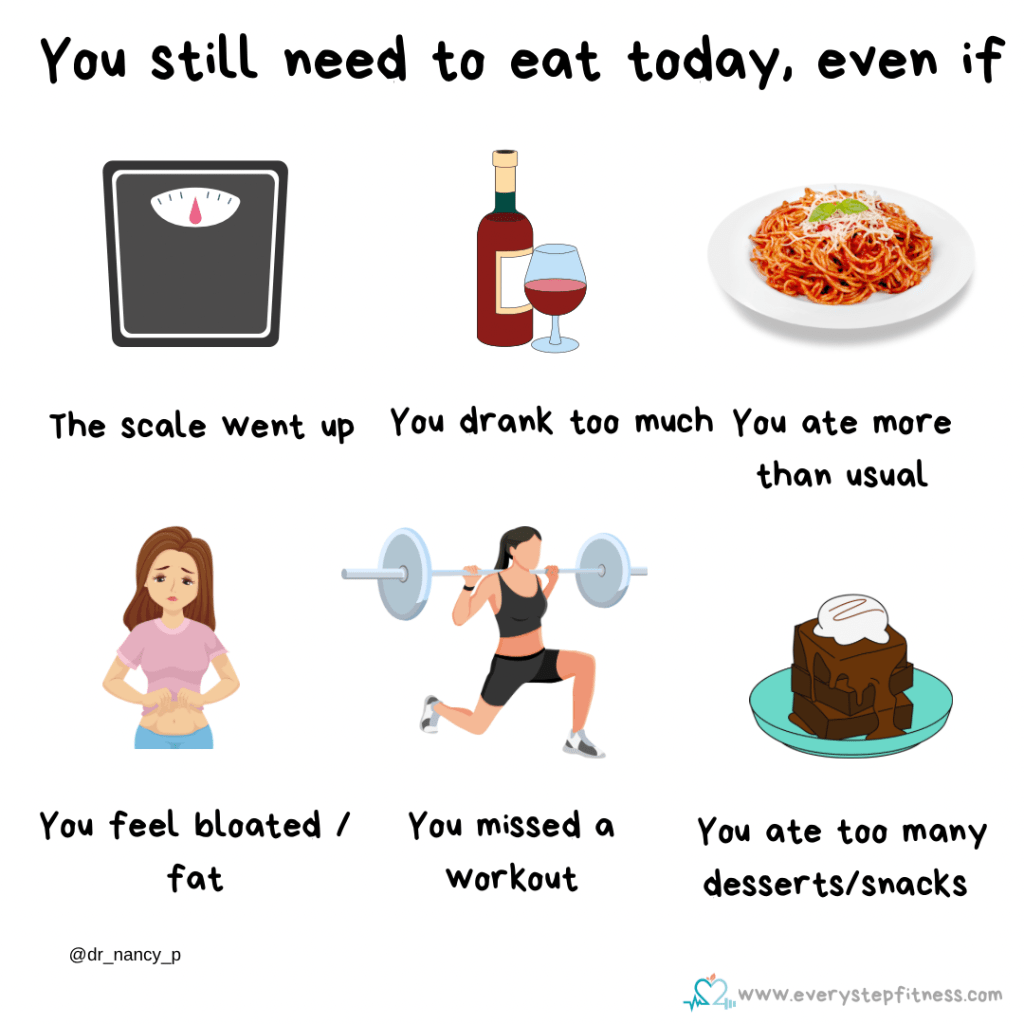
So even if the scale is up, you missed a workout, ate or drank more than you expected to, ate too many desserts or snacks or if you’re feeling fat/bloated – just go back to normal, non restrictive eating.
Remember: no matter what, you are not a failure. It’s a journey and there will be times
It doesn’t go to plan but when does life ever? The key is to keep going and keep things sustainable and manageable and you will succeed!
Weekends are often the time when people feel like they ‘fall off the wagon’.
It’s natural – it’s often a time when you’re not at work, your routine is different, you’re relaxing and de-stressing from the week. Often there are lots of social events to navigate and it can become one big ‘cheat’ weekend.
It doesn’t have to be like that though and if you want to make long term, sustainable progress then you need to find a way to make weekends less of a blow out.
It’s common for people to undereat during the day, to starve themselves and save calories for the evening. Whilst it’s definitely a good idea to save a few calories for an evening out you do have to be careful how you do it. If you don’t eat all day you will arrive at the event starving hungry. This leads to overeating and binge type behaviour as you will struggle to maintain control. Instead have smaller, well balanced meals during the day and save some calories over the course of 3-4 days for a night out. Have a small snack before you go so you’re not starving hungry too.
Whilst it’s obviously fine to have a few drinks at the weekend the calories can really add up. Instead of having 4 or more drinks every evening over the weekend (which often stretches to Thursday night too right?) just limit yourself to 2-3 drinks … in total. You will save hundreds of calories and reduce the likelihood of alcohol induced munchies too!
Just because it’s the weekend and you’re relaxing doesn’t mean it has to be an entire ‘cheat’ day or weekend. I hate that term anyway – if you have a sustainable diet you don’t need to ‘cheat’. It just creates a bad relationship with food. Instead – incorporate all the things you enjoy in your diet ALL week in portions you can accommodate in your calories.
Instead of making all your social events focused on food try to find other ways to socialise with friends. Or consider meeting for drinks or dessert rather than whole meals? Try to stick to one meal out or takeaway a weekend rather than one every night.
Most importantly if you do overeat then try not to beat yourself up, feel guilty and then think ‘f*ck it’ and sabotage the rest of your weekend. You don’t need to wait until Monday to start. Just move on, make the next meal/snack a sensible one and get back on track. Take the time to plan for the week too so you have a sensible week ahead, rather than punishing yourself with an overly restrictively Monday just because you overate at the weekend.
There are lots of brands out that that are using the marketing power of “protein” to sell their products. The unspoken idea is that protein = better or healthier etc. The reasoning behind this is the fact that increased protein can help with improved satiety (feelings of fullness) so CAN help to prevent overeating. Also those working out may want to focus on protein to help with muscle building. For most people a balanced diet will contain enough protein so you don’t need to go out of your way to take in extra protein unless you’re a bodybuilder or professional athlete. However you may still wish to focus on higher protein foods and snacks to help keep you feeling full.
So you may well see this protein snack and think it’s a good option. However, it isn’t actually particularly high in protein, with only 7.8g. In contrast two slices of bread/toast might be perceived as a ‘bad’ snack because it’s all ‘carbs’… Yet the bread contains more protein (9g ) for fewer calories. In addition the bread is far cheaper!
Neither would actually be classed as high protein. In terms of weight loss both will probably do the same basic job – they are a good snack if you fancy it. So don’t be swayed by the “protein” label – actually check the nutritional info and then choose the snack you want!
We have a wonderful tendency to attribute moral values to the food we eat. This isn’t helped by the barrage of messages we get from social media etc. If we want to find a sustainable way to maintain or lose weight then we really need to try to get away from this sort of thinking. All it does is create an unhealthy relationship with food, causes unnecessary stress and unhappiness. Often these food labels are arbitrary anyway.
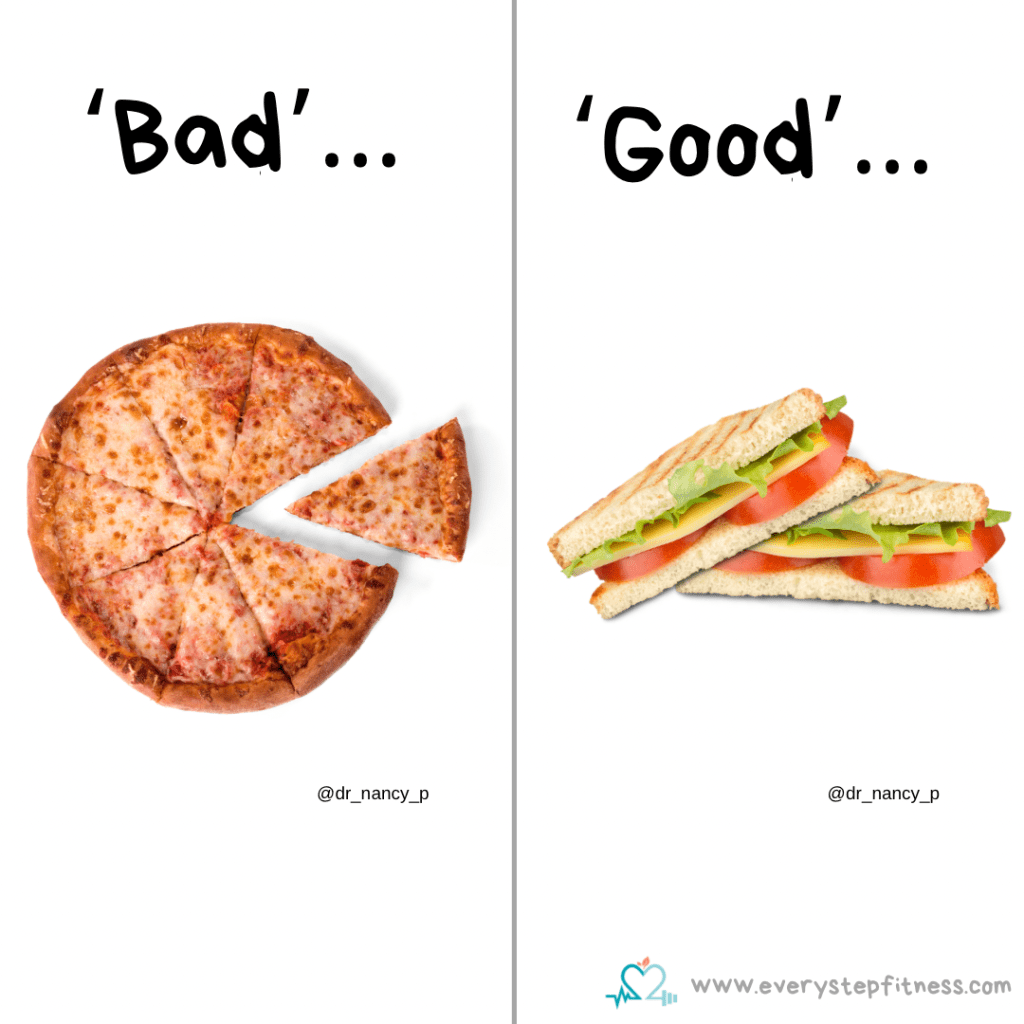
Here’s a classic example of that. If you grabbed a couple of slices of Margherita Pizza for lunch you might well think you’d been ‘bad’ and perhaps feel guilty. This may in turn influence how you approach the rest of the day – you might think f*ck it and just overeat for the rest of the day. But why? Pizza is essentially just bread, tomato and cheese. If you had instead had all of those items in the form of a sandwich you wouldn’t feel guilty would you? There is nothing wrong with a couple of slices of pizza or a cheese and tomato sandwich for lunch. Both have carbs, fat, some protein and a variety of micronutrients. Neither is inherently good or bad – they’re just foods. Now perhaps if you ate an entire pizza that may not be ideal if you were trying to stick to a certain calorie target and if you only ate Pizza and not much else then that wouldn’t be ideal in terms of a balanced diet, but that doesn’t make the Pizza itself bad! All foods are ‘good’ – it’s just about how much you have.
It can be hard to accept that all foods can fit into a healthy diet, especially in this heavily influenced diet-culture world full of social media ‘experts’. Every week you’ll see very convincing social media / news posts cherry picking bits of research to suggest certain foods or types of food should be avoided. In fact if you listened to all of them you probably wouldn’t eat anything at all! Usually they’re linked to someone selling a product or book of some sort so there’s often an ulterior motive too. You really don’t need and shouldn’t be avoiding any foods. It is possible to find a balance between nourishing and fuelling our bodies and enjoying and celebrating all foods.
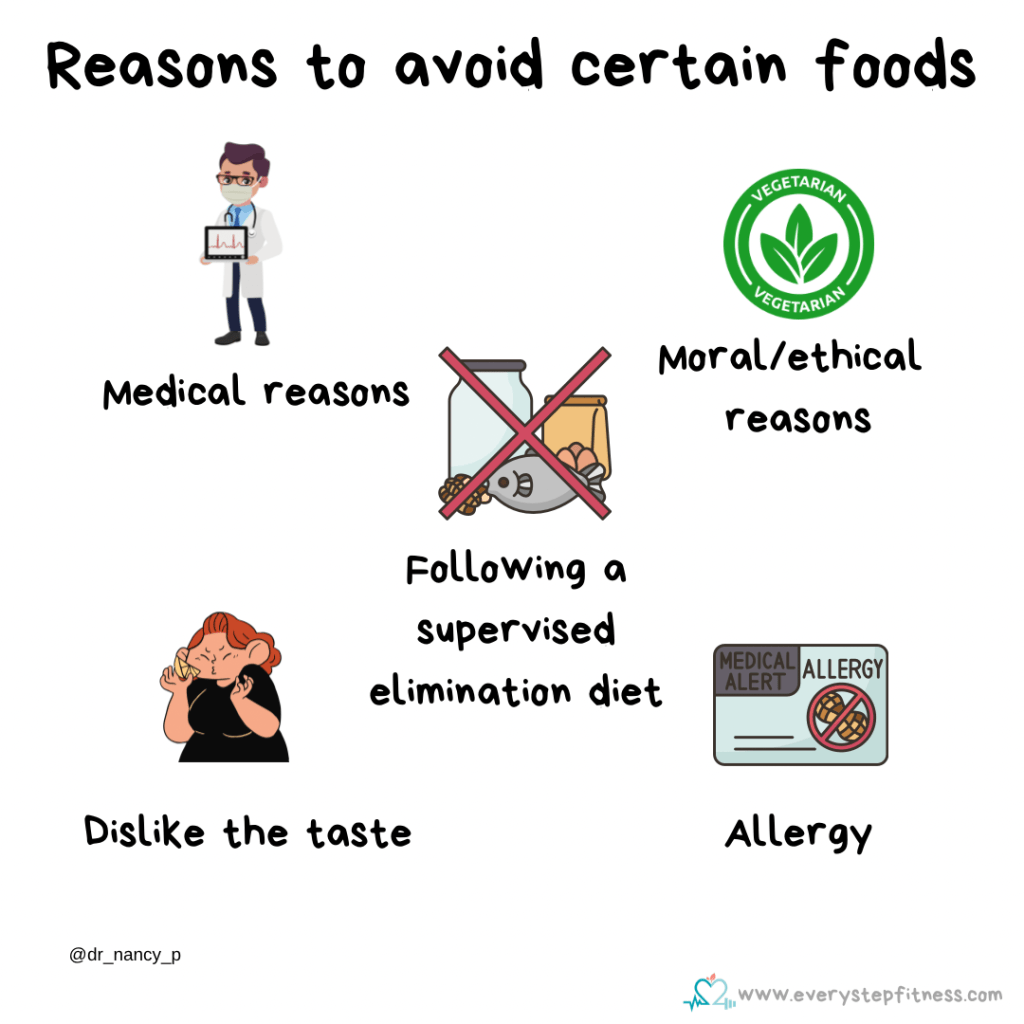
The only reasons to avoid certain foods are as follows:
medical reasons – if a Dr (an actual medical Dr who has examined you, not someone who’s book you’re reading/instagram page you’re following has told you to e.g. reducing saturated fats for heart issues, or reducing added sugar for diabetes etc.
Moral/ethical/religious reasons – if you’re vegetarian/ vegan or have ethical reasons for not eating certain foods ,or if you’re religion has food related rules you follow.
Allergies – if you have a genuine medical allergy (not an ‘intolerance’ – as discussed recently).
Dislike the taste – if you honestly don’t like the taste of a food.
Following a supervised elimination diet – if you’re under the care of a registered dietician and following a strict elimination diet.
Otherwise, there is absolutely no need to deprive yourself of your favourite foods just because someone told you to avoid it. Stop fearing foods and placing bad labels on tasty foods that can fit into a healthy, balanced diet.