Following on from yesterday’s post and with summer holidays here or on the horizon here’s my top tips for getting a bikini body! You probably assume you need to lose weight, cut out food groups and foods you enjoy, live on salads, do loads of workouts etc…
Nope – it’s a very simple 2 step process to getting your bikini body. Step 1 – have a body ✅ Step 2 – put a bikini on it !
Ta da!
Now I realise it’s actually not that simple – and that wanting to look a certain way in your swimwear is totally valid. If you want to lose weight to feel more comfortable when you’re on the beach then that’s great – go for it! However whether you prefer a bikini, a swimsuit, a swim dress , a tankini, a sarong, T-shirt and shorts… whatever.. you’re entitled to wear whatever you like however you like. You deserve to enjoy the sunshine regardless of your shape or size. You don’t have to lose weight to do that! Find a style you like and rock it!
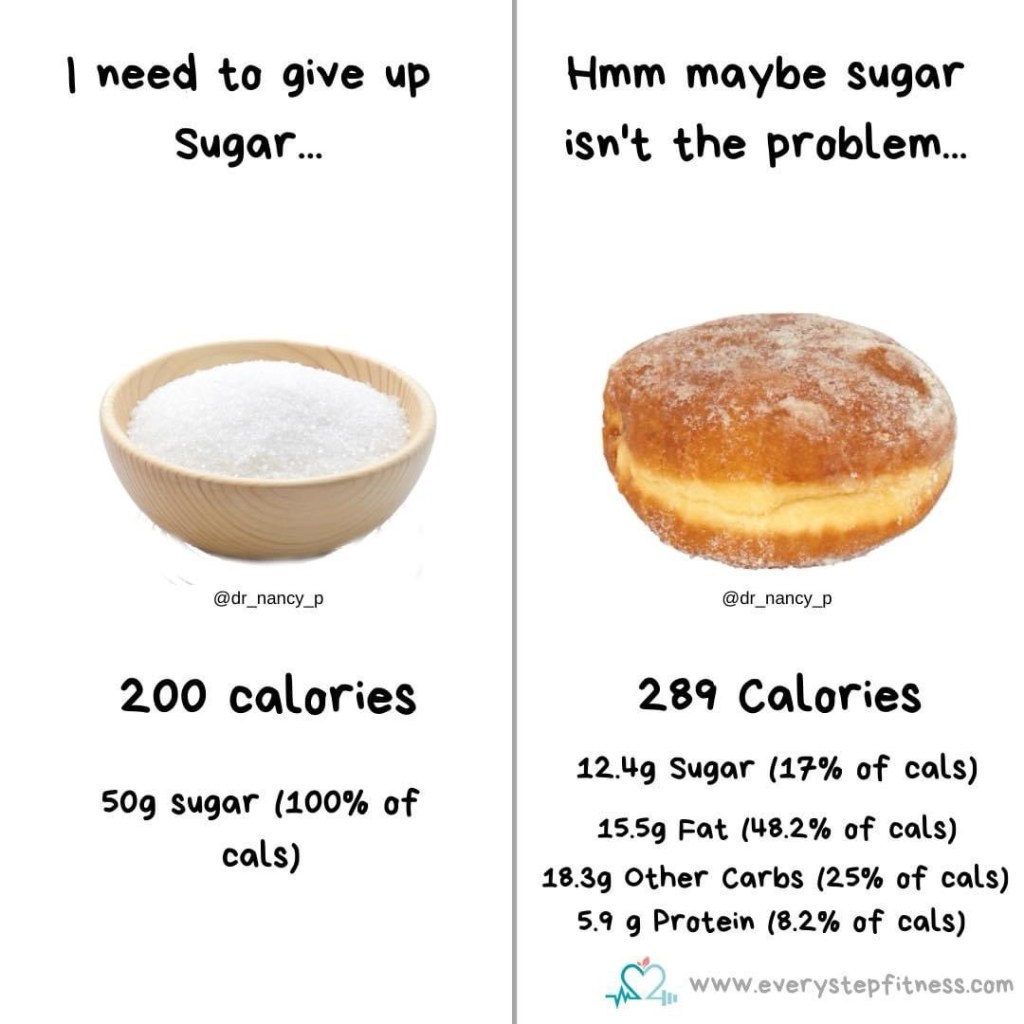
I talk about this a lot but losing weight really is all about balance. You don’t need to demonise or shun your favourite foods to hit your goals. If you use a flexible approach then any food is fine in moderation. Yes even a take away McDonalds. Obviously that’s not healthy food in terms of nutritient content but it doesn’t exist in isolation. You’re not ONLY eating that McDonald’s. You can fulfil your emotional needs with the take away and fulfil your nutritional needs in the rest of your diet. Calorie wise it’s not even that bad!
So you can have that take away – just be aware of the calories and account for it. Then make sure you’re getting a range of nutrients in your other meals and that you’re still within your calories on average over the week.
So balance occasional indulgences with more nutritious daily decisions: enjoy McDonald’s every once in a while, but make your mainstay chicken breast and oven roasted potatoes.
The nutrition and fitness industry has excelled at categorizing foods as either ‘good’ or ‘bad!’ and we buy into it so easily. But what does it even mean? In what context is a food ‘bad’ or ‘good’?
If your goal is eating fewer calories then maybe a higher calorie food might be perceived as bad? But if your goal was gaining weighing then that same food is ‘good’. Yes some foods may contain more nutrients than others but that doesn’t mean they’re inherently good or bad – just different. Food not only provides energy and nutrients, it also has an emotional component and we choose foods for a myriad of reasons – none of which are bad.
It’s time to shift your mindset when it comes to food. You can reach your goals, whilst still enjoying all the foods you love, you just need to account for them. Rather than labelling foods and good or bad, instead just focus on a more flexible approach that encourages a positive relationship with food. This will help to create sustainable long-term results and leave you feeling considerably happier than demonising and avoiding delicious foods you love forever!
A question I’m often asked is whether you should track your calories as raw or cooked weights? To be honest it doesn’t matter as long as you’re consistent and know which you’re tracking so you can record the correct calories, but it can be a little confusing!
Unless otherwise stated nutrition labels are usually raw weights. However, you’ll find sometimes some grains, pasta and pulses might be listed as cooked or ‘as prepared’ weights – which is when you need to be careful, as you will underestimate cals if you weigh them raw.
Different foods absorb different amounts of water as they’re cooked. This makes them swell and weigh more. So for things like rice, pasta, cereals etc it’s probably best to track them as raw weights. As you can see there are small differences between white and brown varieties but only after cooking really, which is down to the differing amounts of water they absorb. You’ll also find different shapes and types of pasta will vary too for the same reason. Oats are the same and in fact over 80 percent of the weight in cooked oats is actually water.
Protein sources, like chicken, tend to lose weight when cooked. This is because the water and liquids in the meat evaporate during cooking. They loose 20-25 percent of their weight during cooking. Again it’s best to track raw weights. It’s also worth noting that the cooking method has an impact on meat too. The calories for 100g cooked chicken are based on a grilled skinless chicken breast, the same amount of roast chicken (skinless) is 220 cals – due to the fats in the meat thanks to the roasting. So that’s also worth remembering if you’re a roast fan or are oven baking chicken with the skin on.
Whichever you chose to track is up to you but be sure to choose the right option in your tracking app.
Tuesday Tip: Blood glucose/ Gut microbiome diets 📉
There are a lot of companies at the moment that track your blood glucose, blood fat and gut micro biome – are they really the answer to all our health and weight loss goals?
Healthy individuals without diabetes shouldn’t be worried about their glucose levels since glucose spikes are a totally normal physiological response. But even if you decide to ignore that statement and use a glucose monitor anyway a recent study found glucose monitors can vary quite wildly in their response to the same meal eaten at different times. So much so that the individual variability in post-meal blood sugar response to eating the same meal had as much variability as eating an entirely different meal. I don’t think people should overhaul their entire diet based on potentially faulty readings.
Even if they were accurate does it translate to more weight loss or better health (which they equate to a ‘better’ glucose response) when following the advice? A 2022 study found no difference in weight loss over 6 months between a control group on a low-fat diet or a personalised diet based on glucose response to foods. A 2023 study found that the personalised diet didn’t lead to greater reductions in blood sugar variability or HbA1c levels compared to a standardised diet.
But what about gut microbiome? In truth we still know very little about what impact the gut microbiome has on overall health, despite how confidently some people on the internet talk about it. A recent study suggested most diseases are not in fact linked to an altered gut microbiome. Also, the claims that an imbalance in the Firmicutes/Bacteroidetes ratio of the gut microbiota in humans is a hallmark of obesity hasn’t actually been reproduced in human studies. So it’s difficult to associate the gut microbiome with health status and obesity.
In addition a recent study found an increased risk of disordered eating from the use of these glucose monitors in healthy, non diabetic people.
A personal observation – of the clients I know who’ve tried these products – their supposedly personalised diets were all identical which is an interesting coincidence. Remember these companies want your money and are cherry picking studies to support them. If you’re worried about your insulin sensitivity, your first priority should be losing body fat and doing regular physical activity as these will have a far bigger impact on improving your overall health than anything else. As for the gut microbiome, just do what most people already know they should be doing–eat a varied diet of with plenty of whole foods, fruit and veg.