Nutrition and Calorie Tips

Enjoying a seasonal treat …

Enjoying a seasonal treat …. 🥚 🍫

I never tell clients to cut out any foods/drinks totally from their diet and as a big fan of Easter chocolate I certainly wouldn’t ever be ‘banning’ chocolate eggs, but if you are trying to lose weight/fat then you may just want to be aware of the calories involved.

There’s no reason you can’t have any Easter eggs you want as it ultimately comes down to whether you’re in a calorie deficit. However, with the size of some of the eggs out there now it’s very easy to rack up over a thousand calories or more, without even noticing!

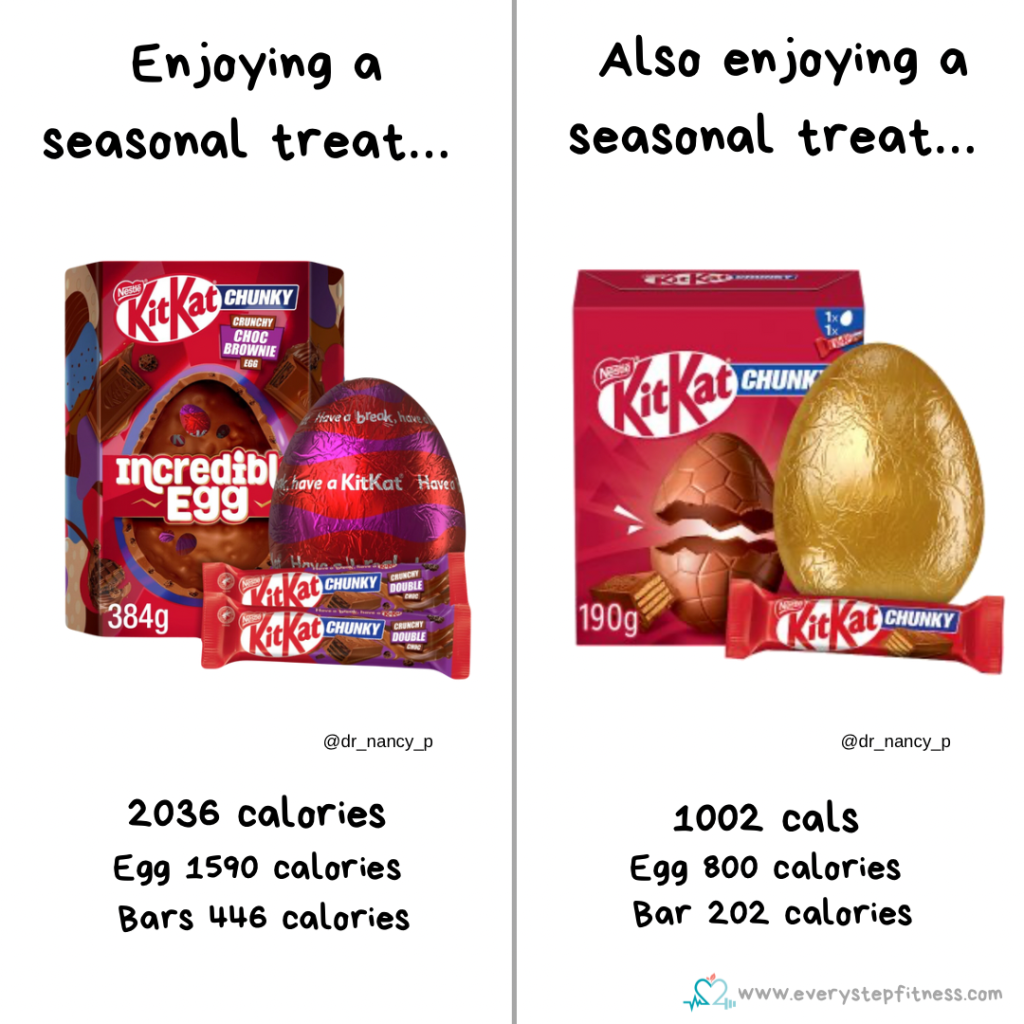
For example – if you’re a kitkat fan and lucky enough to receive the Giant egg you’d be looking at over 2000 cals for the entire egg and accompanying bar (the egg alone is over 1500 cals!). That’s more than most people’s daily calorie goal 😬

In contrast you could enjoy a large Kitkat egg and the bar for around 1000 cals. Now ok, the egg is just a milk choc egg (not full of bits like the giant one) but it’s still delicious and that’s still almost a whole day’s calories for many people.

So if Easter eggs are your thing (they are definitely mine!) then maybe just be aware of the cals in them if you’re trying to stick to your goals.

Enjoy! 🐣

Xx
Nutrition and Calorie Tips

Seasonal snacks….

Seasonal snacks…. 🐣

It’s nearly Easter – probably my favourite celebration – because I do love a chocolate egg! It’s also a symbol of new beginnings and spring. There’s loads of lovely seasonal foods around now, many of which make great snacks. A delicious seasonal snack could be some lovely fresh baby carrots (or other spring veg) with 70g humous. It’s full of nutrients – vitamin A and fibre from the carrots, good fats and protein from the humous etc and a reasonable number of cals for a snack. But you could also have an equally seasonal snack – of a creme egg (or your egg of choice!). Obviously this has a different nutritional profile – with more sugar, but fewer calories and less fat.

Both are perfectly good snacks. It doesn’t always have to be about the nutritional value of the food you’re eating. Food serves a purpose beyond pure fuel – it’s also an emotional activity. We enjoy eating and we enjoy food, and we enjoy the associations we make with food. So you could choose to snack on veg and humous. It will undoubtedly taste delicious and keep you satisfied until your next meal. Or, you may decide you’d rather enjoy a creme egg to snack on instead! Both are fine, within the context of a balanced diet overall. And as you can see from the comparison – if calories are what’s important to you – the creme egg is marginally lower anyway! lol!

So if you fancy the odd chocolate egg over the Easter period then go for it!

Happy Easter! 🐣

Xx

Nutrition and Calorie Tips

Bread is bad!

Bread is bad! 🍞

I’ve lost count of the number of times people tell me they need to stop eating bread, or that they’ve had a bad week with too much bread, or their main weight loss issue is their love of bread…..

There seems to be a common misconception that bread is inherently bad and that having it means you can’t lose weight. Bread in itself (white or brown) is not that high in calories – a typical slice of hovis is 88 cals, and even a small sourdough is only 120 cals or so. Bread in itself is not a problem, what you put on it is the problem. The scraping of butter that you barely notice almost doubles the calories that slice of bread/toast will give you. Butter and 30g jam nearly triples the calories, as does a serving of Nutella (without butter underneath)! If you’re a peanut butter fan then that 40g serving (without any butter underneath) brings that piece of toast up to 349 cals. A snack of a little cheese on toast (no butter) is around 255 cals whilst a brunch of toast, 75g avocado, egg and a little ketchup comes in at 324 cals ….

Technically it is of course possible for bread to derail you if you’re eating a huge amount, like any food, but it’s far more likely to be what you’re putting on the bread that’s doing the damage. Bread isn’t the devil; in fact it’s a great source of carbs, which we all need. It tastes good and it’s also a really convenient food for a snack or lunch (as a sandwich) etc and there’s no need to cut it out of your diet to lose weight, but it may pay to be aware of what you’re putting on it and consider some lower cal toppings if you are trying to watch the calories.

Enjoy bread responsibly 🤣

🤗 xx

Nutrition and Calorie Tips

Wholewheat Fusilli vs. White Pasta: Is the Switch Worth It?

Wholewheat Fusilli vs. White Pasta: Is the Switch Worth It? 🍝

Many people opt for wholewheat pasta over white pasta thinking it’s the healthier choice. But is it really that much better for you?

When it comes down to the basics, white and wholewheat pasta aren’t that different. Both are made from durum wheat, but the key difference lies in the processing. Wholewheat pasta uses the entire grain, including the bran, while white pasta has been refined, removing the bran and germ. But does this processing really make a huge nutritional difference?

In terms of calories, the difference isn’t significant. Wholewheat pasta is very slightly lower in calories (around 5 – 20 fewer per 100g), but not enough to make much impact on your calorie intake . So, if you’re watching your calorie intake closely, the difference is relatively small, and you could still enjoy white pasta without worrying too much about a major increase in calories.

Wholewheat pasta does have more fibre, but the difference is also not huge with only around 1-3 grams more per 100g, depending on the brand. While that’s a slight advantage, if you’re already getting plenty of fibre from other sources like fruits, vegetables, and other whole grains, the extra fibre in wholewheat pasta might not have a huge impact on your diet.

At the end of the day, choosing wholewheat pasta over white pasta might be a great option if you prefer the taste or if you’re aiming to boost your fibre intake. But if you prefer the texture and flavor of white pasta, there’s no need to feel guilty, the nutritional differences are minimal, and both can fit into a balanced diet.

In short, don’t stress too much over the switch, choose the pasta that you enjoy most and fits into your overall diet. You’re likely to get all the nutrition you need from a variety of other foods.

Enjoy! 🤗
Xx

Nutrition and Calorie Tips

Coco-nuts!….

Coco-nuts!…. 🥥

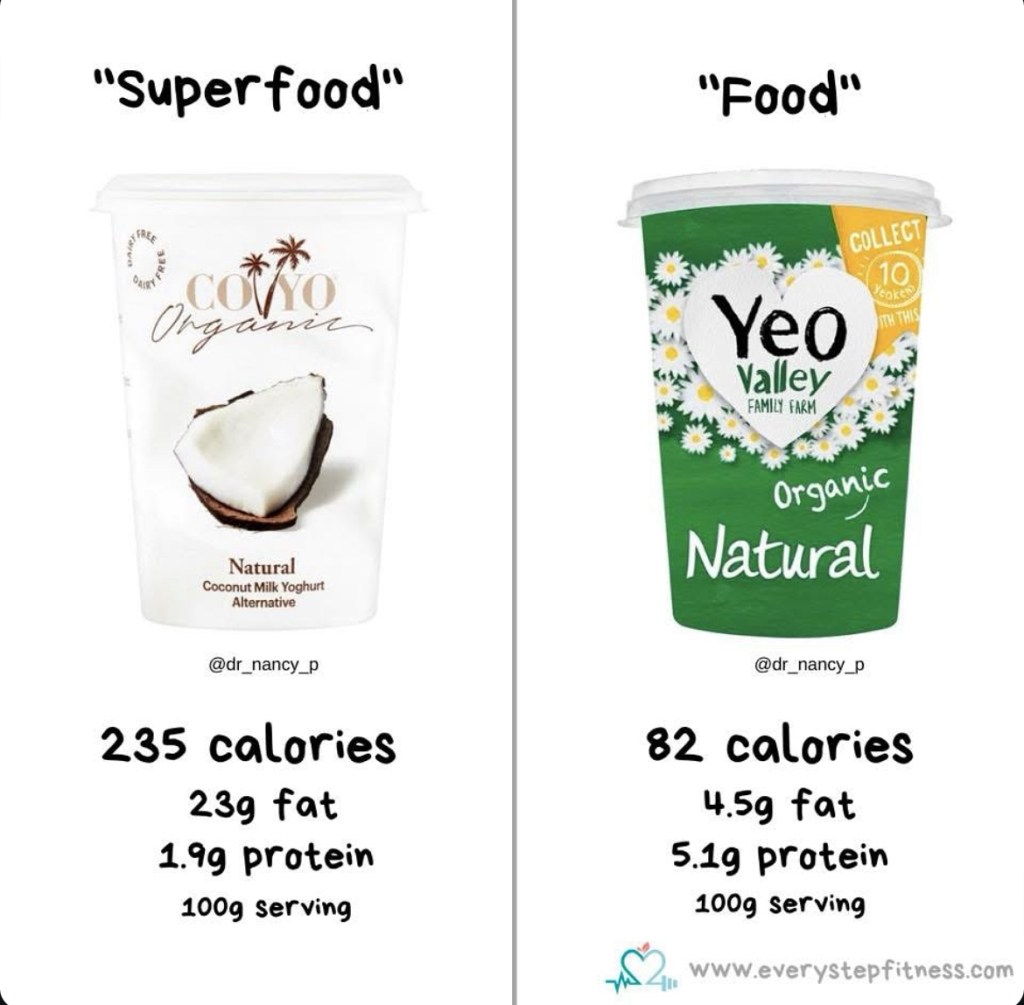
Coconuts are heralded as a “superfood” So coconut yoghurt must be better for you right?

Coconut yoghurt contains fewer carbs than dairy yoghurt as it is lactose free (the natural sugar in milk). It also contains saturated fat, specifically medium-chain triglycerides, which are easily absorbed by the liver and converted to ketones (an alternative energy source in the brain) and could be beneficial for dementia and related conditions. There is also evidence that coconut may help type-2 diabetes, elevated cholesterol levels and may assist weight loss. Critically though many of these benefits are associated with coconut oil or meat,not yoghurt.

It’s plant-based and suitable for those with dairy/lactose allergies or vegans (but not all coconut yoghurt are actually vegan, many also contain dairy milk or gelatin). Natural yoghurt is dairy based but contains live probiotics and is good for gut health. There are no naturally occurring probiotics in coconut yoghurt (though some brands do add them in). If you are aiming for weight/fat loss however then natural yoghurt has some benefits.

Coconut yoghurt contains significantly more calories than natural yoghurt and approx 5 times as much saturated fat. Whilst the fat in coconut yoghurt is the more beneficial medium-chain triglycerides thats still a large amount of fat and that has it’s own risks. There’s also significantly less protein in coconut yoghurt. Higher protein can help keep you fuller for longer – which from a weight loss perspective is helpful.

So if you were assuming coconut yoghurt is “healthier” and therefore better option for weight loss then think again. The “good” fats in coconut yoghurt don’t offset the extra calories I’m afraid. There are lower calorie coconut yoghurts out there so if you really love coconut yoghurt then check the labels (a lot is watered down reducing the calorie content). If you are unable to eat dairy then consider some of the lactose-free yoghurt which have comparable calories, or go for a soya based option.

As always – calories count guys so check those labels – and have what you want, within your calories. Knowledge is power!

Enjoy 🤗

Xx