Blog

Nutrition and Calorie Tips

Protein snack…

Protein snack… 🤔

I often talk about the marketing power of “protein” and how snacks (and other products) are often promoted or perceived as “healthy” or better because they contain X amount of protein. The reasoning behind this is the fact that increased protein can help with improved satiety (feelings of fullness) so CAN help to prevent overeating. Also those working out may want to focus on protein to help with muscle building. Unless you’re a bodybuilder or athlete you probably don’t need to go out of your way to take in extra protein as most balanced diets contain far more protein than the average person needs. However you may still wish to focus on higher protein foods and snacks to help keep you feeling full.

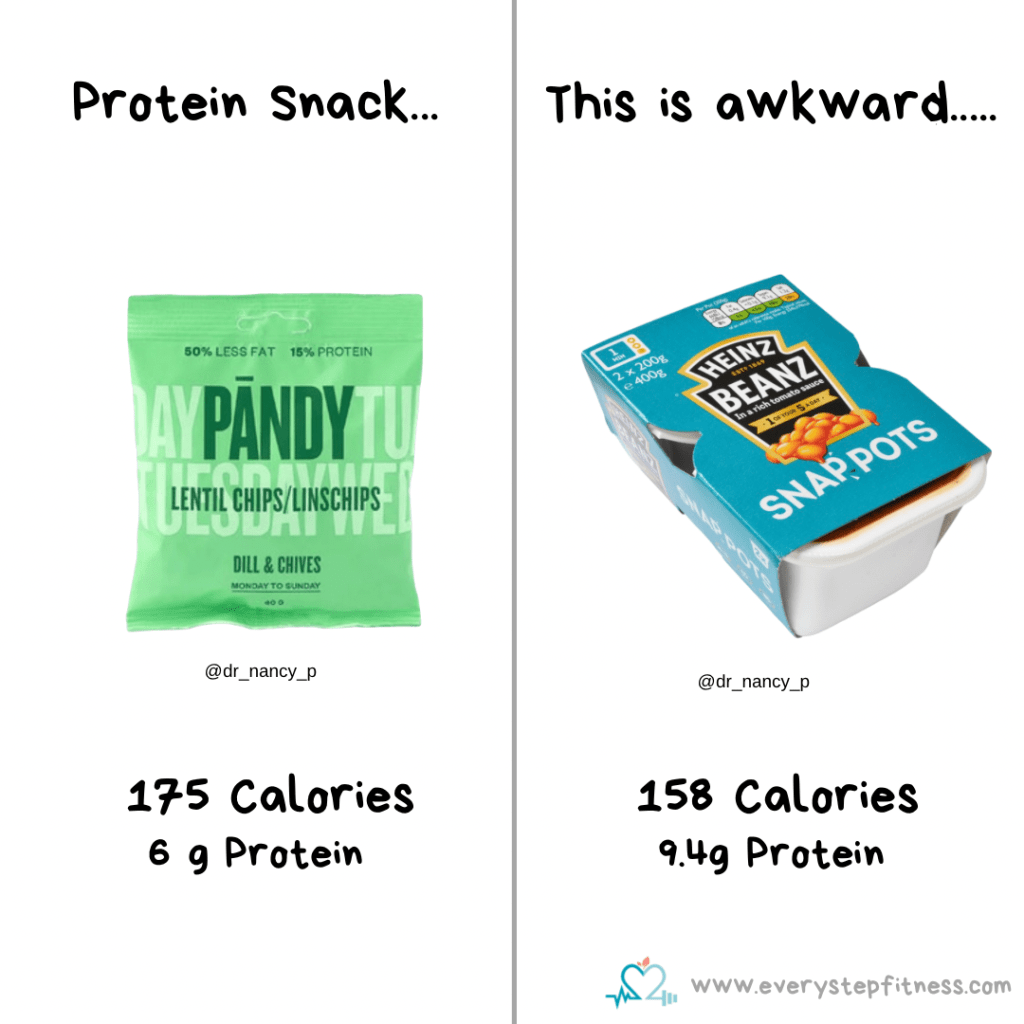
So you may well see these lentil chips/crisps and think it would be a good snack option – it’s something that feels like a treat (crisps) and it’s says it’s 15% protein – win win! It’s 175 cals which is actually not bad for a snack at all and contains 6g protein – also not bad.

Oh but this is awkward… the humble baked bean snack pot is a mere 158 cals and it will actually provide you with even more protein – 9.4g in fact! Aside from the fact it’s lower calorie, and has more protein, it’s also far greater volume – which also helps to keep you full. It will take longer to eat, and has a higher amount of fibre too which will aid with the feelings of fullness. You also get the bonus of added micronutrients. It is also considerably cheaper!

Enjoy!

🤗

Xx
Nutrition and Calorie Tips

‘Just a seasonal coffee and snack…’

‘Just a seasonal coffee and snack…’ ☕️ 🎃

At this time of year all the coffee shops bring out their range of seasonal coffees and snacks. The pumpkin spice latte even has somewhat of a cult following. So if you’re out and about you may well decide to grab a quick seasonal drink and a snack to go with it.

This particular example is a large Pumpkin spice latte (with semi skimmed milk) and a pumpkin loaf. You’d probably think this was a reasonable thing to have as a snack and you might realise it’s a few hundred calories but it can’t be that bad. It’s just a coffee right? And the pumpkin loaf is basically a healthy snack right?

On the other hand if you grabbed a large KFC fries you may be berating yourself for ‘being bad’.

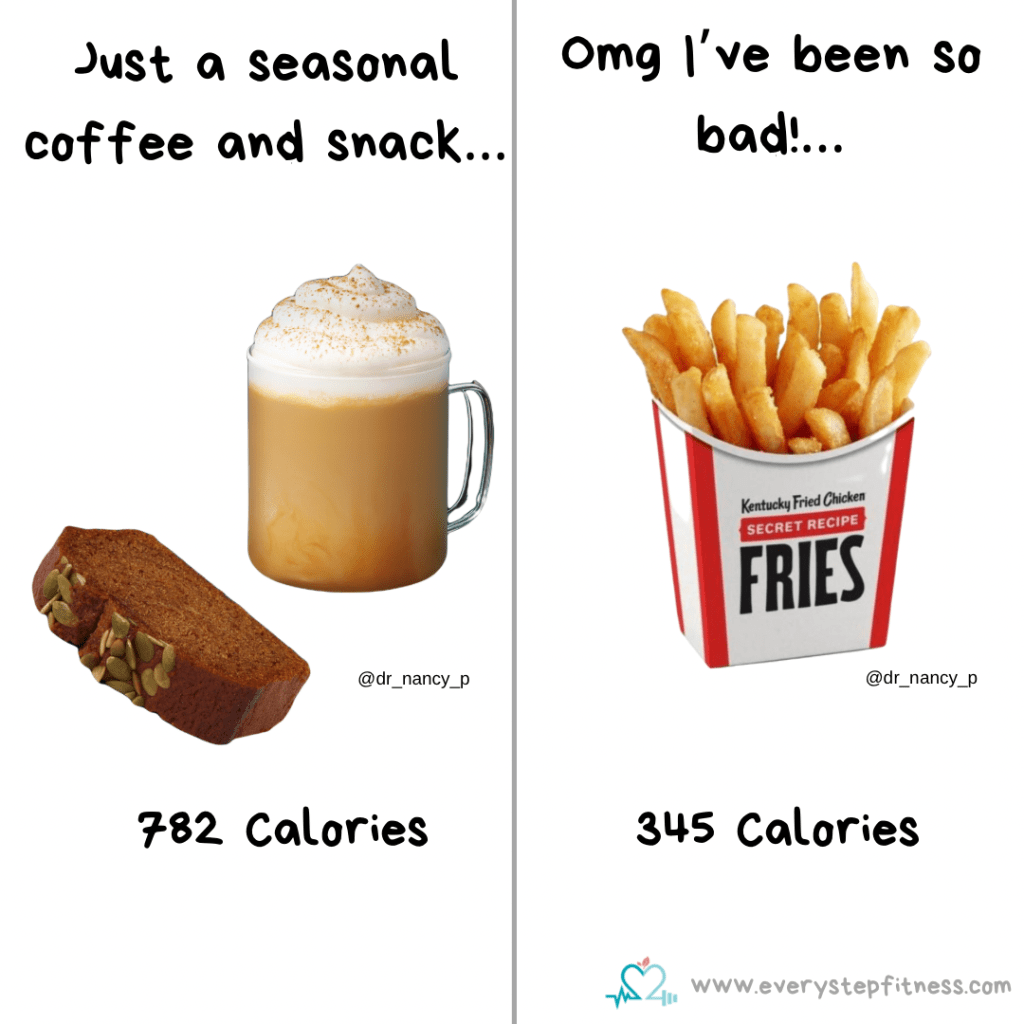
In reality that season coffee comes in at around 422 cals, and the pumpkin loaf is 360 cals per slice. That’s a total of 782 cals. In comparison a large KFC portion of fries is a mere 345 cals! Whilst there’s absolutely nothing wrong with spending nearly 800 cals on coffee and a snack you may find that if you’re trying to watch your calories that you can’t accommodate that many cals for a snack. In addition if you don’t realise how many cals they are you are likely to go over calorie budget that day.

Knowledge is power so being aware of the calorie content of things, and also of our own perceptions of the things we consume is always a good thing. If you want the seasonal drink and snack – have it and enjoy it. If you want to some large fries then go for it. Just be aware of the calories so you’re making an educated choice!

🤗 Xx

Tuesday Tip

Tuesday Tip: Fat burning ≠ Fat loss

Tuesday Tip: Fat burning ≠ Fat loss 🚫

It’s quite common to see things described as fat burning. Sometimes it’s in reference to specific diets, modes of eating or certain types of exercise. Low carb diets are often promoted as fat burning on the premise that because there are fewer carbs to burn for energy, fat burning will increase. The same rationale is used by those promoting working out before eating (rather than after) or fasting for periods of time.

You’ll find certain types of workout described as fat burning or you may find your activity monitor describes your workout in terms of the percentage of time in the ‘fat burning’ zone. The argument is that the body burns a greater percentage of fat with lower-intensity exercises than higher intensities because the body doesn’t require ‘fast energy’ from glycogen. As such, this theory promotes longer and lower-intensity workouts that maintain your heart rate within the ‘fat burning zone’. However, while the body does burn fat during low-intensity workouts, the rate remains low and you have to exercise longer to burn the same amount of calories you would at higher intensities.

The main issue is that burning fat is often confused with losing body fat. Fat burning or oxidation refers to the use of fat as a fuel source by the body. This doesn’t equal body fat loss. Eating low carb (and therefore high fat) does mean you’ll burn more fat as fuel because there is more of that available to use. But if you need 1800 cals a day and are eating 2000 cals then you have an additional 200 cals of fat. This won’t increase your fat burning. In a calorie surplus more fat is available in the bloodstream due to a higher intake, so the rate of fat storage is also greater. Research shows that whilst low-carb diets increase fat oxidation, they don’t actually result in

superior fat loss in comparison to higher-carb diets when calories are matched.

This same concept applies to ‘fat burning workouts’ or fasted cardio vs fed cardio. Yes fasted cardio BURNS more fat in the session (because fewer carbs/glycogen are available) but if total calorie intake for the day is in surplus to your needs then you won’t lose body fat.

“Fat burning’ and “fat loss” are not

interchangeable concepts.The biggest priority for fat loss is a calorie deficit. If eating fewer carbs, or eating after your workout etc help you to maintain a calorie deficit and therefore make weight loss easier then fab! But going low carb / fasted workouts / fat burning workouts will not inherently be better for fat loss when calories are matched. The overall goal is to find a sustainable way for you to consistently achieve a calorie deficit.

Happy Tuesday 🤗

Xx

Nutrition and Calorie Tips

What you think measures progress…?

What you think measures progress…? 📉

If you’re trying to lose weight (by which we really mean body fat as that is what actually results in body shape change) then it’s important to find ways to measure progress. We are all conditioned to use body weight scales to do this. They can be a great tool to assess whether you’re making progress. However, the number the scale shows is JUST a number. It’s merely your relationship to gravity at that particular moment in time. It’s not actually the best way to measure progress.

If you decide to use the scale, you need to overlook the day to day changes you will inevitably experience. Scale weight is affected by lots of factors – amount of food in your system, hydration levels, glycogen levels, hormones, salt content of your diet, recent exercise, type of food you ate yesterday (diff foods can result in more or less temporary water retention) etc. None of which are a reflection of how much fat you’ve lost/gained or how your shape has changed. Think about it – if you had the body you wanted and felt confident to wear anything you liked, would it matter what that scale number was? No!

For many of us, seeing that weight go up, despite ‘being good’, can make us give up. It’s vital to trust the process and think long term. The reality is your body shape can change without the scale going down – in fact a recent client actually put on weight (muscle and fluid probably) yet has lost body fat and cm’s.

So instead of focusing on weight try to use other measures e.g. items of clothing and how they fit, or cm measurements etc. If you must step on the scales then look at averages over time rather than daily variations and focus on long term trends.

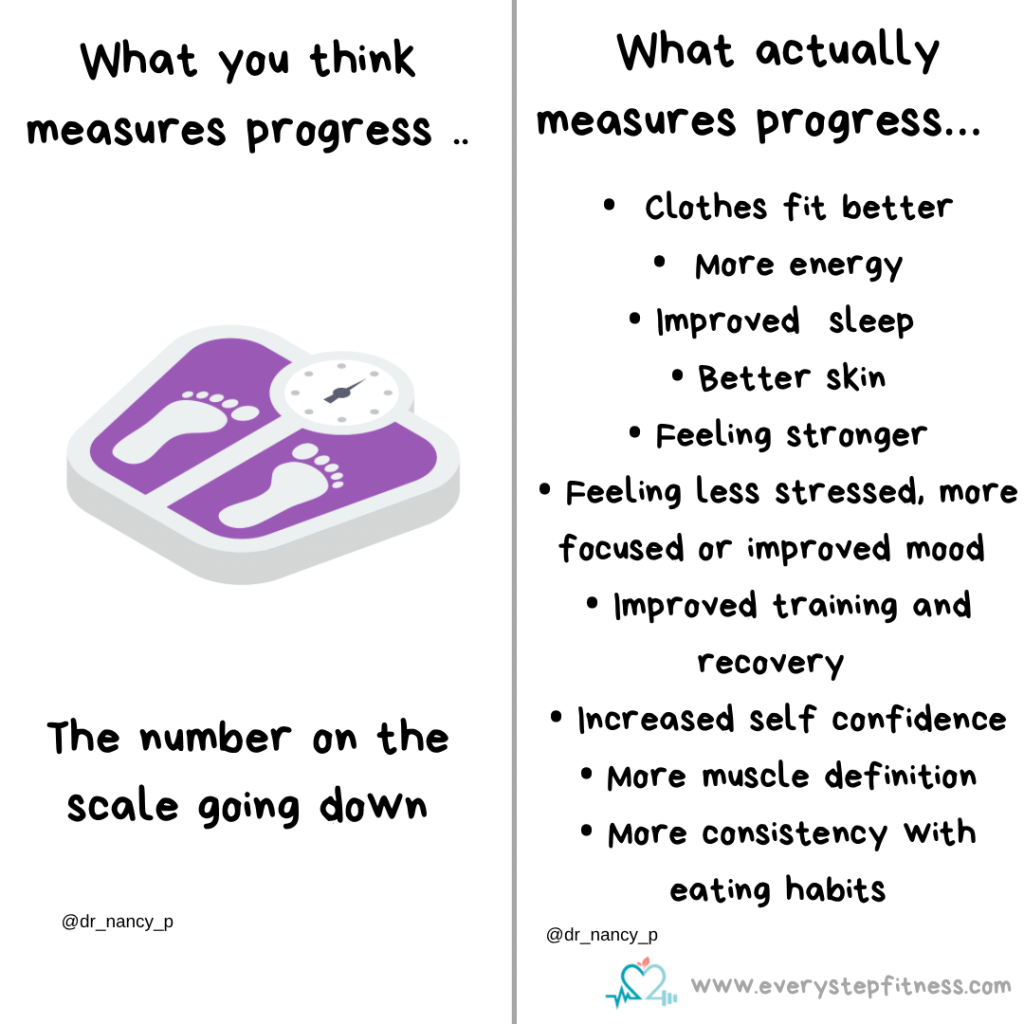
And what about all the other measures of progress? Are you you’re getting stronger, is your recovery is faster, has your mood has improved , has your relationship with food improved, is your eating more consistent, are you less stressed and feeling more confident, do you have more muscle definition, more energy, better skin etc…. Try to focus on some of these other, arguably more important, measures of progress.

🤗

Xx

Tuesday Tip

Tuesday Tip: More Exercise ≠ more calories

Tuesday Tip: More Exercise ≠ more calories 🏃🏼‍♂️

Most people view exercise as ‘more is always better’ when it comes to burning calories. However, more exercise doesn’t always equal more calories burnt. Studies show that whilst energy expenditure does increase with increased activity it’s only up to a point E.g if you go from being sedentary to active, you’ll see an increase in energy expenditure. But if you’re already active and increase physical activity levels further, you aren’t likely to see energy expenditure increase linearly because the body adjusts other processes to maintain total energy expenditure within a narrow range. A recent study found weight loss was only half of what might be expected when burning an extra 2500 cals per week, because of behavioural adaptations that reduced 24-hour energy expenditure.

This explains why people don’t always lose the expected amount of weight despite doing more physical activity. It is also why I ALWAYS tell clients not to view exercise as a way to burn calories and why you can’t ‘eat back’ the calories you think you’ve burnt.

Studies have found that as energy expenditure is increased the body compensates by approx 30 percent. E.g if you increased physical activity by 500 kcals, rather than total energy expenditure increasing by 500 kcals it only increases 350 cals.

Also those with more body fat actually compensate more than lean individuals, compensating by up to 50 %. This means that those predisposed to increased body fat may be that way because they’re ‘energy compensators’ which is another reason why using exercise as a weight loss strategy isn’t always successful.

So essentially this reinforces the fact that you can’t out-exercise diet – not only is it unsustainable but also the number of calories you think you’ve burnt is far less due to energy compensation (and the added inaccuracy of activity monitors!).This isn’t to say you shouldn’t exercise or be active; of course you should for a whole host of health benefits. And of course it will increase your energy expenditure, just not as much as you’d want it to and the extent to which it does will decrease, and eventually plateau, as you reach high activity levels. Focus on the diet for weight loss and exercise for health and enjoyment! Any increase in energy expenditure should be seen as a bonus, not the sole reason for exercising

Happy Tuesday 🤗

Xx