Nutrition and Calorie Tips

‘I’m going to be so good…..

‘I’m going to be so good…..’ 😇

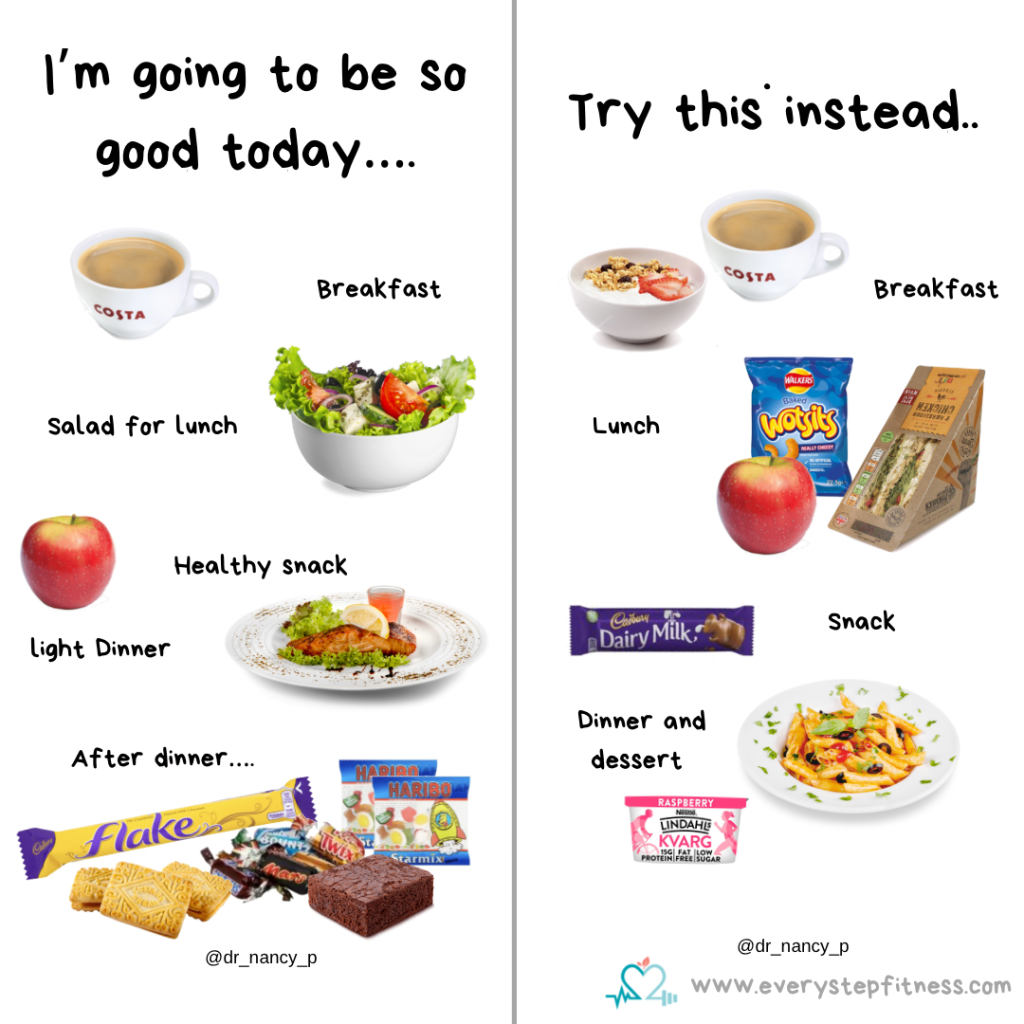
How many of us do this? You start a new ‘diet’ or decide today’s the day you’re going to be so ‘good’ so maybe you skip breakfast and just have an americano, have a light salad for lunch, an apple for a snack and then a dinner of a piece of protein and some veg…. And then…. after dinner the flood gates open and you scoff biscuits, a brownie, sweets, chocolate etc.

For some reason we often equate losing weight/being on a ‘diet’ to restricting foods and eating like a rabbit! By skipping meals, cutting carbs and basically all foods you actually enjoy all you do is set yourself up for failure. Not only will you be starving but you’ll be feeling deprived which means once you get to the evening you’re likely to binge on all the things you think you shouldn’t have. Then you’ll feel guilty and ashamed no doubt and start it all over again tomorrow…

Instead give yourself permission to enjoy ALL foods when you’re trying to lose weight – just adjust the quantities. Have a proper breakfast, a lunch with some carbs in it (you need them for energy and brain function), a snack you enjoy and can fit into your calories and a proper dinner. You may find you then don’t feel the need to eat the world afterwards! You’ll probably also be eating fewer calories than the restrict:binge approach and it’s a far healthier and sustainable way to approach diet and weight loss.

🤗

Xx
Tuesday Tip

Tuesday Tip: Under-reporting food

Tuesday Tip: Under-reporting food 📝

The sad truth is that people are terrible at accurately reporting how many calories they’re eating and multiple studies demonstrate this time and time again. For example in a couple of recent studies participants were convinced they were eating 1200 cals or less a day but on average they were eating over 2200 cals! In other studies it’s been shown people under-report by an average of 1500 cals.

It’s not that surprising – if you’ve never tracked your food intake, why would you have any idea how much you’re actually eating? This is even harder when we are surrounded by calorie dense, easily accessible foods which are easy to over eat.

It’s quite fashionable at the moment to disparage calorie tracking (ironically often by those social media ‘experts’ who’ve spent years tracking their own food) but it’s still something that’s actually really important.

Aside from providing a reality check on how much you’re eating it also helps as it gives you a better idea of not only calorie content but also other nutrients. You learn what actual portion sizes look like and how many calories some of those restaurant meals actually contain but equally you may find other things you’ve avoided through ‘fear’ are actually fewer cals than you thought. It also dispels the marketing myths around foods and the assumption that ‘heathy’ foods are naturally low calorie etc.

Tracking isn’t so much about tracking but more about increasing knowledge and awareness about your diet and habits and then how you can make positive changes. Not everybody has to track, but most people could benefit from tracking for a short period of time.

Happy Tuesday 🤗xx

Nutrition and Calorie Tips

Instead of saying ‘f*ck it’ try this instead…

Instead of saying ‘f*ck it’ try this instead… 🤷

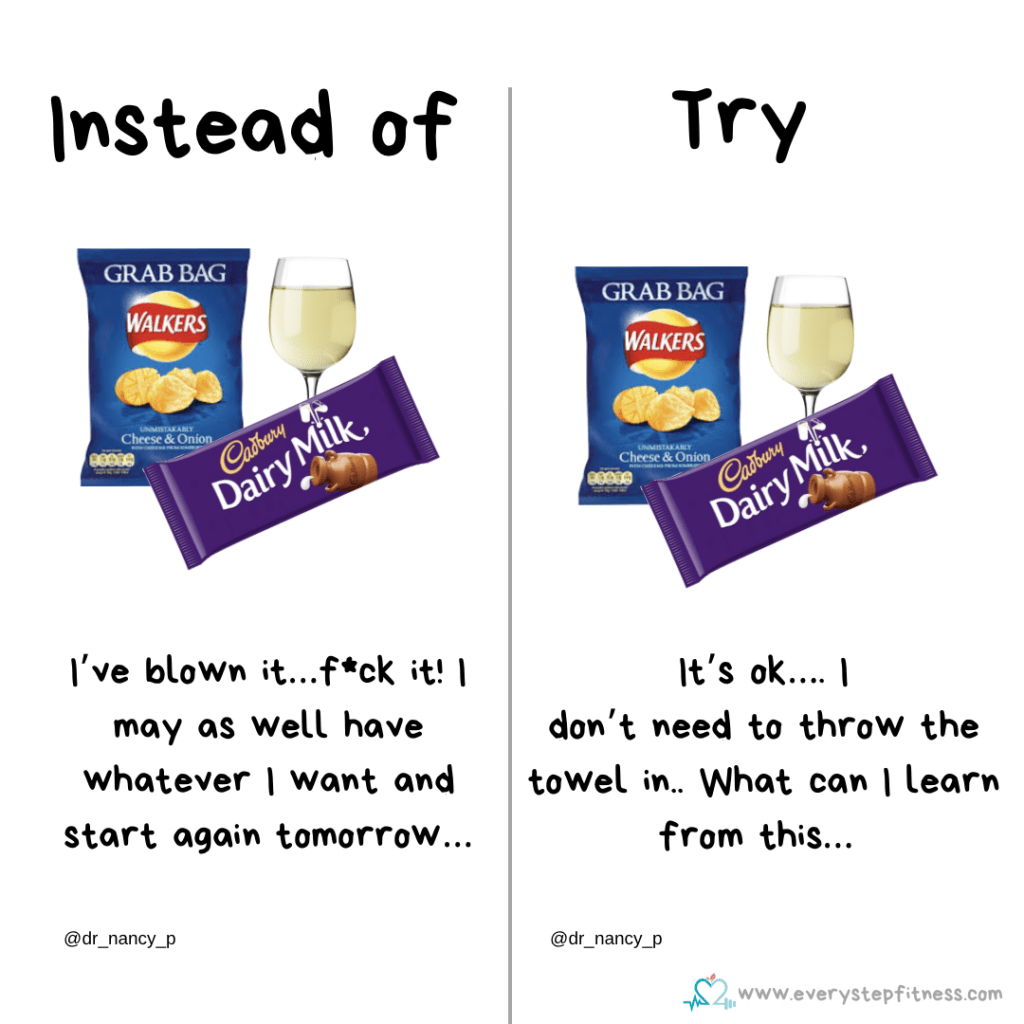
I’m sure we all do this – we over eat and instantly think we’ve blown it, give up for the day, over eat even more and think we’ll just start again tomorrow. Many of us experience feelings of shame, guilt, embarrassment, and stress after over-eating. These emotions typically do nothing but contribute to a continued downward spiral and for most of us they’re not productive emotions or thoughts.

So what can we do instead? We can try to learn from what happened so we can be better prepared when faced with a similar situation in the future. So when you’ve over eaten here are a few things to ask yourself:

⁃ What led to me over-eating or over-indulging? Was there a trigger? A person, location, situation, or emotional state? Did I wait too long to eat? Was I stressed, bored, sad, upset, or lonely

⁃ Was I seeking comfort or a way to escape or disconnect?

⁃ Was there another way that I could’ve coped with the trigger?

⁃ What can I do differently next time the same situation is in front of me? What plan can I develop?

⁃ How can I implement and execute that plan next time?

Say you come home, stressed from work, and you immediately go to the cupboard and dig into a family size bag of crisps and throw down a glass of wine. Before you even notice half the bag is gone and you’re pouring a second glass. First, ask yourself what you were trying to gain from eating the crisps/drinking the wine. Were you hungry? No. So, perhaps you were seeking relief and comfort from a stressful work day. Next, what are other ways you can relieve your stress besides turning to food? Perhaps it’s going on a walk? Doing a home workout? Listening to a podcast? Calling a friend? Playing with a pet? Having a hot shower/bath?

Finally, when you come home the next day and you’re feeling those same emotions, rather than walking immediately to the cupboard , pause & ask yourself:

Why do I want that food?

Do I really need that food right now?

Will I be happy with this decision in an hour?

Tomorrow?

You’ve realized that you’re not hungry and

are seeking relief from stress. The next action will be to walk to a different room and execute your plan – call that friend, do a workout, run the bath etc.

This isn’t easy, and won’t happen immediately – it takes practice and you won’t always manage it but over time you will make progress and changes and remove the guilt. The goal is to acknowledge, adjust and

move forward.

🤗

Xx

Tuesday Tip

Tuesday Tip: Beat the bloat

Tuesday Tip: Beat the bloat 🎈

Bloating is generally characterised by the stomach feeling expanded such as from excess gas, air, food, fluid or other gastrointestinal mechanisms. It’s normal for bloating to increase waist size by 5-8cm.

Some level of bloating is normal – and we often perceive it to be bigger than it is due to a feeling of fullness. However it shouldn’t

be painful and if it is or it’s severe to frequent and you’ve ruled out the factors mentioned below then speak to your GP.

Here are some common non-medical explanations for bloating.

# Eating too quickly / not chewing enough

The first part of the digestion process occurs in the mouth. The less chewing you do, the more ‘work’ other parts of the digestive system needs to do. This can lead to bloating.

# Sugar alcohols / sweeteners

Sugar alcohols like sorbitol, xylitol, erythritol and mannitol can be associated with bloating. This is because they pass through the small intestine undigested and undergo fermentation in the large intestine. This produces extra gases and can lead to symptoms of bloating. Some people are more sensitive than others so if you consume a lot of sugar-free products it’s worth cutting back a little to see if that helps.

# Increasing fibre too quickly

If you have just started eating more vegetables, whole grains, beans or legumes than usual then it can take time for the gut to adjust. Instead slowly increase fibre, alongside a lot an increased water intake.

# High stress levels

The brain and gut are connected via the vagus nerve, known as the gut-brain axis. External stress activates the sympathetic nervous system directing blood flow away from your gut, which can reduce movement of food through the digestive tract and leading to bloating.

# Chewing gum or carbonated drinks

Chewing gum generally results in swallowing air and it also contains sugar alcohols. Carbonated drinks can also increase gases in your stomach, leading to bloating. If you have these often and bloating is a concern of yours, try reducing them to see if it helps.

# Large volume meals

Eating a large amount of food in one sitting means a lot of food volume in the stomach, potentially leading to a feeling of bloating or distention. Try to avoid a pattern of not eating or eating little and then having very large meals and instead aim to even out portion sizes across the day.

# Food allergies

There are food allergies (lactose intolerance, coeliac disease, etc) which can cause bloating but if you believe this to be the case then speak to your GP.

# Hydration

Dehydration leads to constipation, which leads to bloating. And while it may seem counterintuitive to drink more water when you feel bloated it can actually help – especially in warm weather.

Happy Tuesday 🤗xx

Nutrition and Calorie Tips

Set yourself up for success…

Set yourself up for success… 🏆

If you’re trying to lose weight or even if you’re just trying to eat better then maybe try a few of these things to set yourself up for success. It won’t take long!

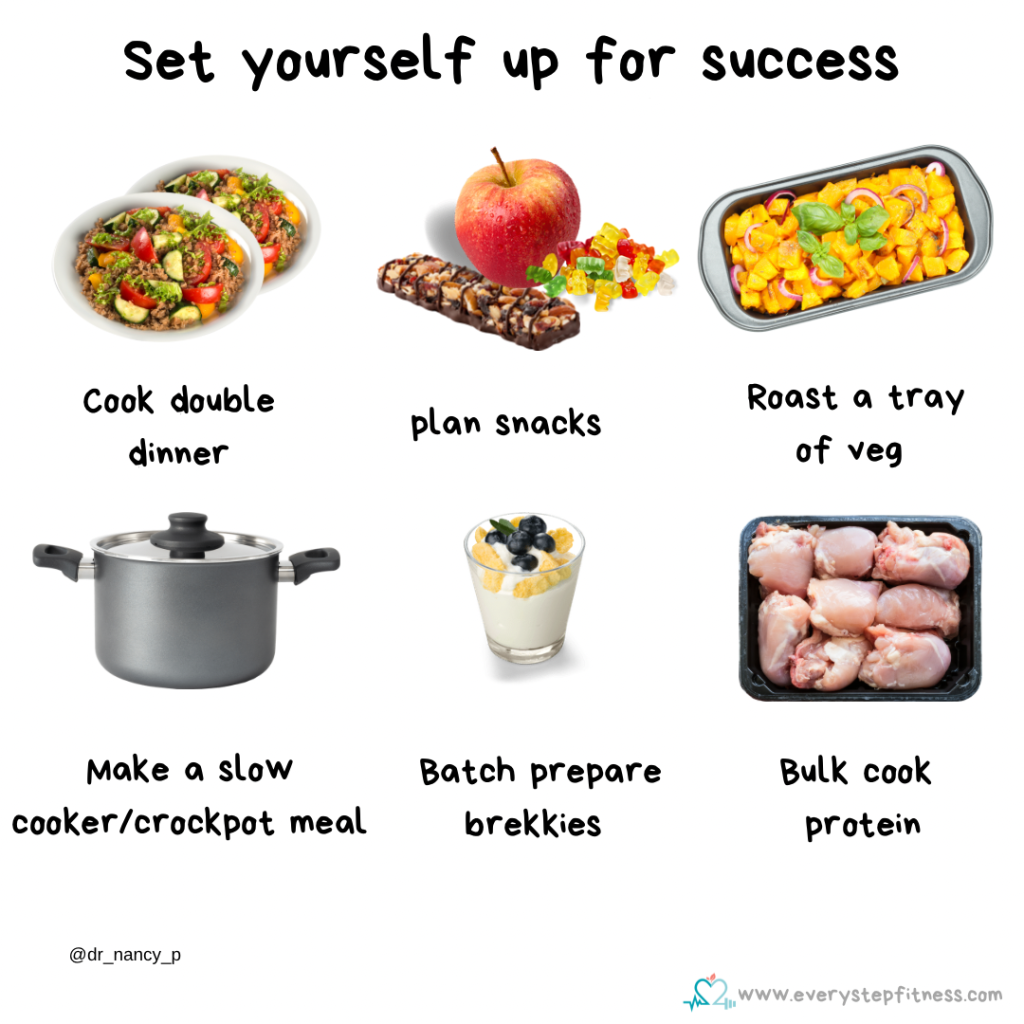
Spend 5-10 mins at the weekend planning out your meals and snacks (even if only roughly).

⁃ Make your in dinner double portions whenever you can so you have leftovers for lunch or another dinner.

⁃ plan your snacks. Have a snack box and pop any pre wrapped snacks in there so they’re easy to get/ portion out any other snacks, make sure you have plenty of fruit and veggies to grab too.

⁃ Roast up a tray of vegetables – you can even buy pre cut veg if you’re short on time. Pop it on a tray with a few sprays of 1 cal oil and shove in the oven while you’re cooking dinner so you’re not spending more time. These will last a few days and are great to add to lunches or dinners.

⁃ Invest in a slow cooker and put it on in the morning so you have it ready for dinner when you’re home.

⁃ Batch your breakfasts ahead of time. Prepare multiple containers of overnight oats, or yoghurt/ granola pots, or portion out breakfast smoothie ingredients ahead of time.

⁃ Bulk cook some protein – chicken, fish or veggie options while cooking the veggies so you have it for the rest of the week.

This may sound a lot but in reality you can be cooking the protein and veggies at the same time, whilst prepping the snacks and brekkie – all in under 45 mins max. Once done you’re sorted for the week!

🤗

Xx