
Why the scale fluctuates … 📉
Most people measure their fat loss progress by stepping on the scales. This can create an all-or-nothing mentality and impact not only your happiness but your behaviour. If the scales don’t go down when you’ve been ‘good’ then what’s the point? You may as well throw in the towel and enjoy that cake!
Weight loss is rarely linear. It’s normal for your weight to fluctuate day-to-day. There will be days where your scale weight goes up, days where it drops, and days (maybe even weeks) where it stays exactly the same.
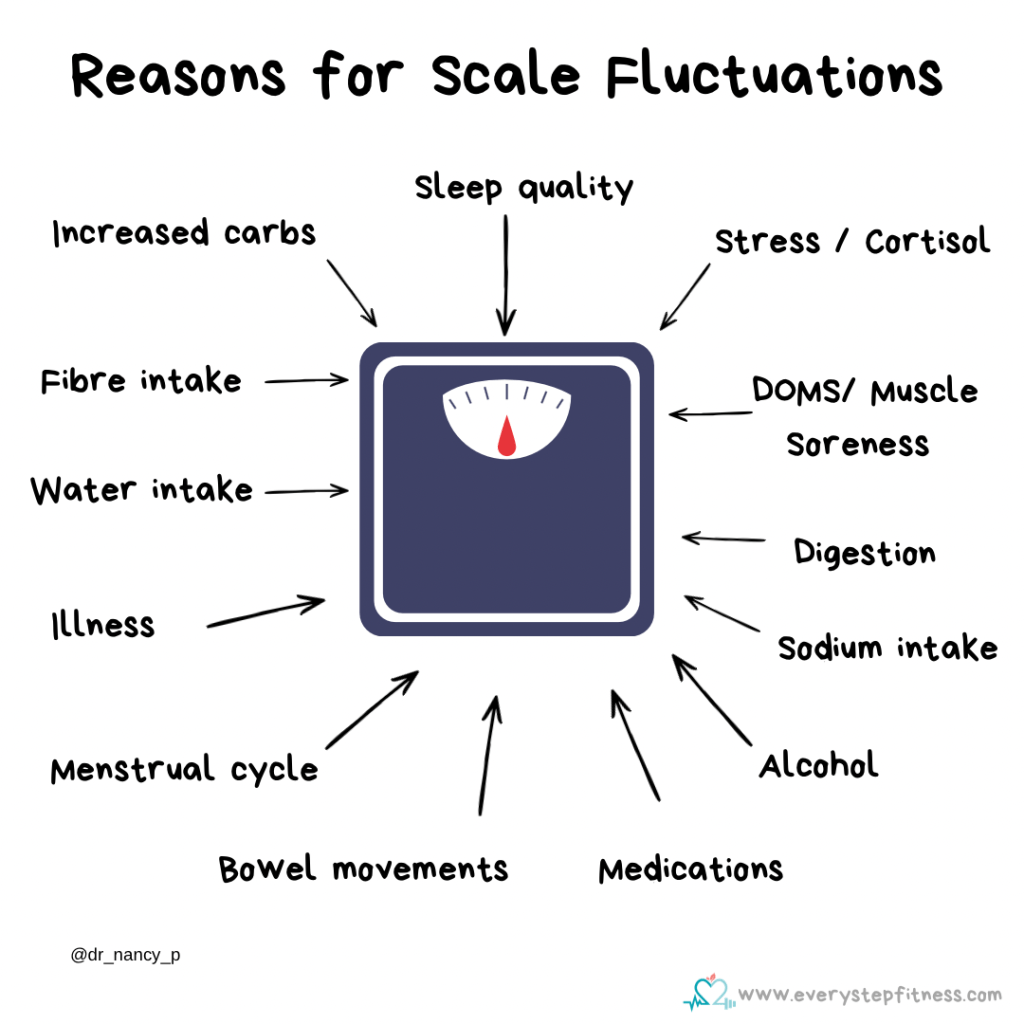
Your weight can fluctuate up to 6kg during the day depending on what you eat and drink, your digestion and how you exercise. If you drink 2–3 litres of water a day that’s up to 3kg straight away. Then how much do you pee, sweat and breathe out over the day? It’s impossible to measure. Our bodies are mainly water so changes in hydration cause significant weight fluctuations.
Food choices also play a role. A bowel full of food, a big meal the night before, increased carbs, high fibre or salty foods (sodium) can all increase water retention and temporarily push the scale up. Bowel movements and normal digestion patterns can also shift your weight from one day to the next.
Exercise can affect the scale both ways. If after a workout you’ve refuelled properly your muscles store glycogen along with water, which can increase weight. Muscle soreness (DOMS) from training can also cause temporary inflammation and fluid retention. On the other hand, if you’ve sweated a lot your weight may drop due to dehydration.
Other lifestyle factors matter too. Poor sleep, stress and higher cortisol levels, illness, medications, menstrual cycle hormone changes and alcohol can all influence fluid balance and appetite, leading to short-term scale fluctuations.
For many of us, seeing the scale go up despite ‘being good’ can make us give up. It’s vital to trust the process and think long term. We’re conditioned to focus on weight, but try using other measures such as how clothes fit, progress photos or cm measurements. If you do step on the scales, look at averages over time rather than daily changes and focus on the long-term trend.
🤗 xx

 Every Step Fitness