
Body Composition Changes: Is it Ageing or Menopause? 🤔
The top trendy topic at the moment on social media is menopause. There’s a strong tendency to blame changes in body composition — losing muscle, gaining fat, feeling ‘different’ in your body on menopause. And it’s completely understandable. It’s a big life transition, symptoms can be tough, and your body may not respond the way it once did. But how much of this is due to menopause and how much is just ageing which affects men and women? Why does it matter? Because people are preying on menopausal women and selling magic supplements and training programs as a way to make money.
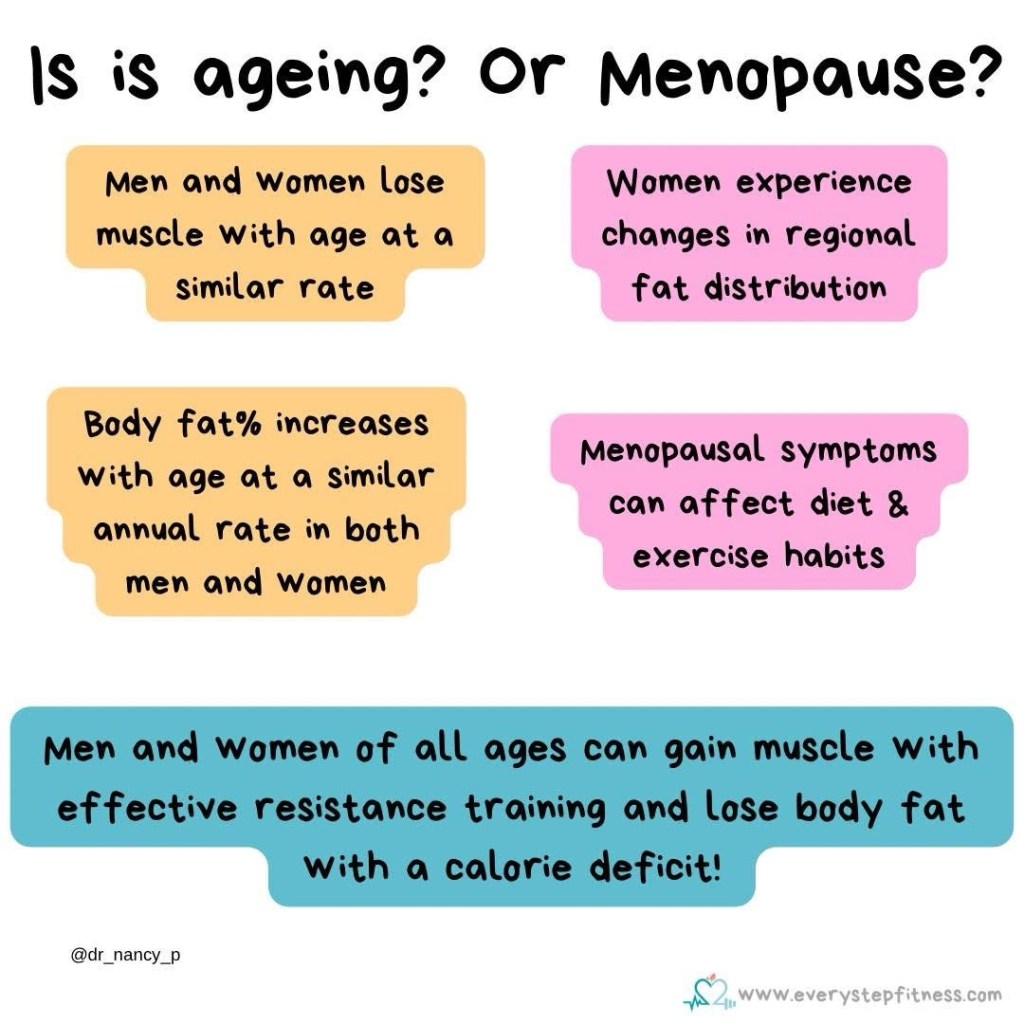
On average, men and women actually lose muscle with age at a very similar rate. Body fat percentage also tends to increase gradually over time in both sexes at similar rates . In other words, many of the changes we notice are driven by aging itself rather than menopause alone.
That doesn’t mean menopause is irrelevant, far from it. Hormonal changes can affect where fat is stored, often leading to more central or abdominal fat gain, which can feel especially frustrating. Menopausal symptoms like poor sleep, low mood, hot flushes, joint pain, or fatigue can also make it harder to train consistently or stick to usual eating habits. That disruption can absolutely influence results because it impacts your behaviour and diet.
But it’s good news because it means women aren’t doomed, broken, or ‘past it’. Men and women of all ages can gain muscle with effective resistance training. Body fat can be reduced with a sensible calorie deficit. Progress may look slower, and strategies may need adjusting, but the fundamentals still work.
So rather than blaming menopause or feeling defeated, focus on what is within your control- sensible training, adequate protein, enough calories to fuel life, and realistic expectations. The power of exercise and nutrition is unequivocal for everyone, at any age.
🤗xx

 Every Step Fitness