
‘High protein Babybel? Must be the best one…’🧀
I often talk about marketing when it comes to the foods we eat and protein is often something that’s used to market products.
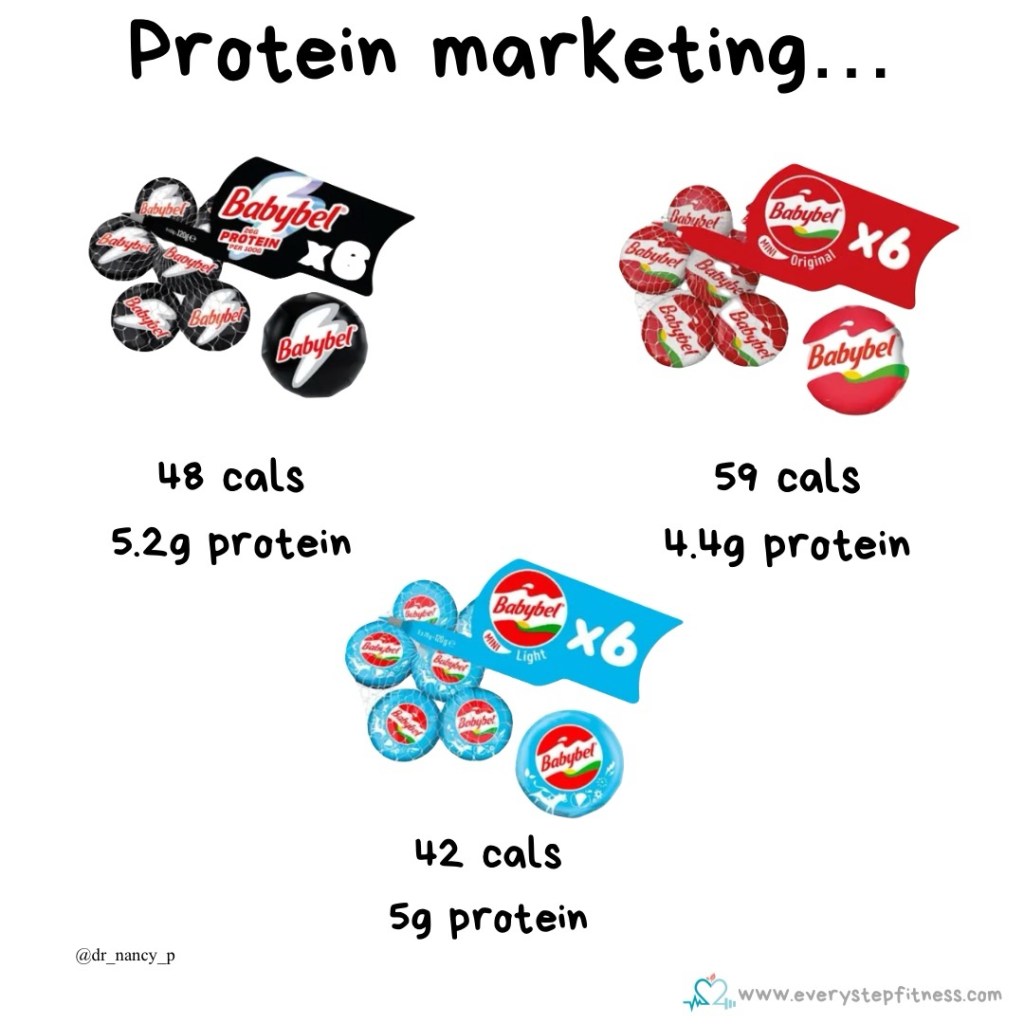
This is a great example – three types of Babybel. All small, all cheese, all decent snacks, but one is branded ‘High Protein’ with bold black packaging. So it must be the healthiest and best right?
Not necessarily!
‘Protein’ Babybel: 48 cals, 5.2g protein
Light Babybel: 42 cals, 5g protein
Original Babybel: 59 cals, 4.4g protein
So despite being marketed as a ‘protein’ has just 0.2g more protein than the light version and 6 more calories. It’s a minor difference, but branding it ‘high protein’ makes it feel like a superior option. In reality, they’re all pretty similar – and the light version is arguably better in terms of protein per calorie.
In this example it’s not really a major issue – they’re all pretty similar calorie wise but often you’ll find the ‘high protein’ options may be higher in calorie and not that high in protein really. Brands know that protein sells. Stick ‘protein’ on a label and it taps into everything we associate with health, fitness, and weight loss. But if you take two almost identical products and just call one ‘high protein’ most people will gravitate toward it, even if the numbers don’t back it up.
In this example all of these option are great snack choices but don’t let flashy packaging override common sense. Always flip the product over and read the label. Don’t pay more in calories or cash for an illusion of health. Don’t let marketing labels decide for you. Read. Compare. Choose based on facts, not hype.
Knowledge is power!
🤗Xx

 Every Step Fitness