
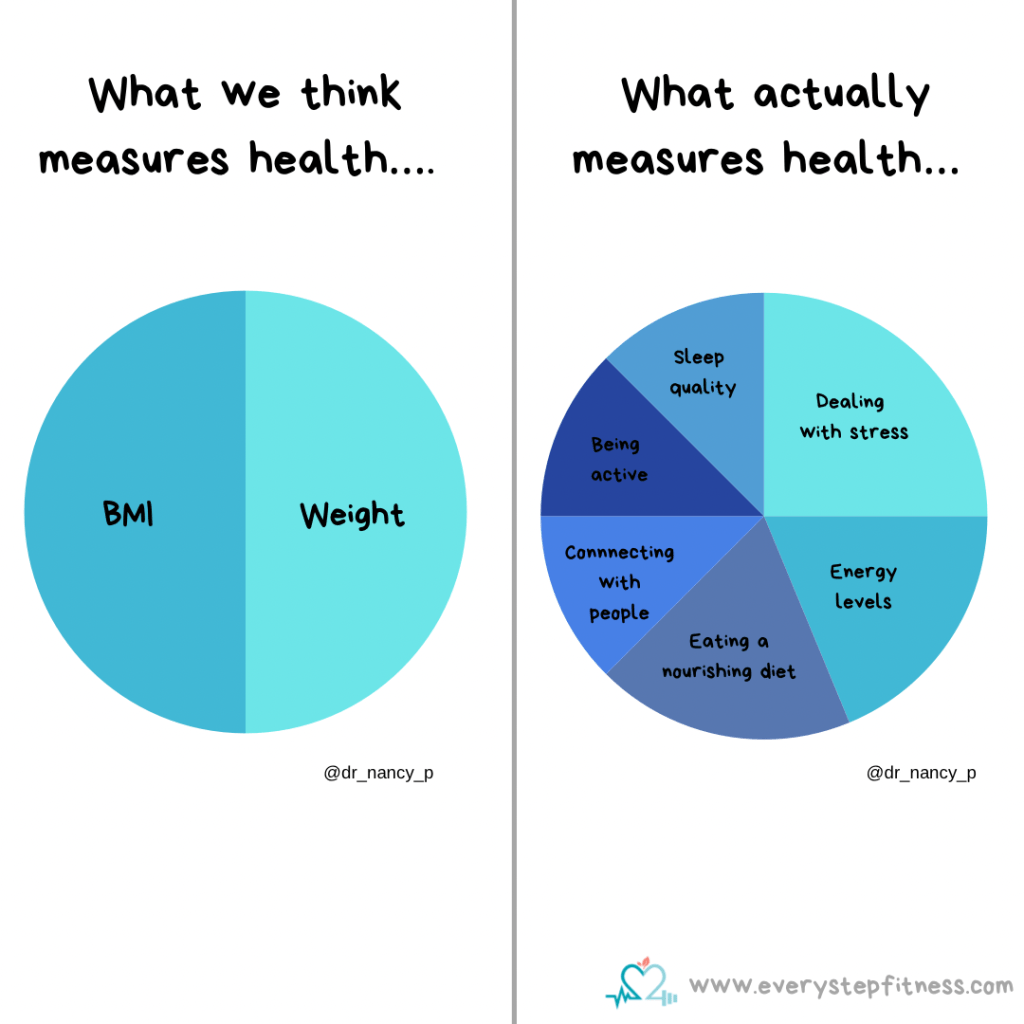
What we think measures health… 🏥
We are all pretty well conditioned to measure our health by either scale weight or Body Mass Index (BMI). As a result we are also hyper focused on weight when it comes to fitness and progress with fat loss too. These measures fail to capture the full picture of what it means to be healthy.
BMI is calculated using height and weight, classifying individuals into categories like underweight, normal weight, overweight, and obese. However, this doesn’t account for muscle mass, bone density, or fat distribution. As a result, individuals who are muscular may be categorized as overweight, while those with a normal BMI could have high body fat percentages. Similarly, weight alone can fluctuate due to various factors, such as hydration levels or muscle gain, which can misrepresent a person’s true health status.
So instead try to focus on a broader range of factors:
# Sleep Quality
Quality sleep is crucial for physical and mental health. Poor sleep leads to weakened immune function, increased stress and appetite, and impaired cognitive abilities. Prioritizing restorative sleep helps enhance overall well-being.
# Managing Stress
Chronic stress is linked to conditions such as anxiety, depression, and cardiovascular diseases. Finding ways to manage stress is vital – techniques such as mindfulness, exercise, or engaging in hobbies, can significantly improve one’s health.
# Physical Activity
Regular physical activity is essential for maintaining a healthy body and mind. It boosts mood, improves cardiovascular health, and enhances overall fitness. Doing physical activity you enjoy is the most important thing.
# Social Connections
Building and maintaining strong relationships can contribute significantly to our health. Social support fosters emotional well-being and can lead to a longer, healthier life. Engaging with friends and family helps combat feelings of isolation and loneliness.
# Energy Levels
Feeling energized is a vital aspect of health. Low energy can indicate underlying health issues, poor nutrition, or inadequate sleep. Ensuring you have adequate rest, nutrition, and exercise can help maintain high energy levels throughout the day.
# Nourishing Diet
Eating a variety of whole foods, including fruits, vegetables, lean proteins, and healthy fats, provides essential nutrients that support bodily functions and prevent disease. Adding in foods you also enjoy that may not be as nutrient rich (like cakes, chocolate etc) is also vital.
So try to take your focus away from what the scale says and instead take a more holistic approach that considers all these other aspects to really measure your health.
🤗
Xx

 Every Step Fitness