Tuesday Tip

Tuesday Tip: Low carb diets aren’t magic

Tuesday Tip: Low carb diets aren’t magic 🌟

Low carb (or keto) diets are ALL the rage, and for some people they do seem to work….but not because they magically make you burn fat. Here’s what actually happens

#1 A reduced carb intake leads to almost immediate loss of water weight, hence sudden drops in weight at the start. It’s not fat. It will come back once you eat carbs again.

#2 They involve eating more protein, which is important for hunger control. So you’ll feel fuller and eat less calories overall, and be in calorie deficit. Calories, not carbs, dictate fat loss and gain.

#3 Protein also plays a vital role in muscle preservation, and has the highest thermic effect of any nutrient (i.e. takes the most cals to metabolise). So you’ll be burning slightly more cals each day, contributing to the deficit.

#4 They also mean more veggies. These are high in fibre and water making you feel fuller, slowing digestion and less likely to eat as many cals.

#5 More fats are also consumed, another key for staying fuller for longer and slowing digestion. So once again you’re far more likely eat less.

#6 They revolve around reducing the amount of carbs; the biggest portion of people’s diets. AND most calorie dense junk foods are carb-based so you’d be cutting those out. When you remove a food group you’re removing calories too, so you end up in a deficit.

SO how do these diets work? By getting you to do things that lead to consuming fewer calories, whilst telling you it’s nothing to do with calories and all about magic low carbs….

Does this mean you should do it? If it works for you then sure! Do I think it’s sustainable? Nope. Avoidance of food groups creates a poor relationship with food leading to binges or blow outs. It can also lead to fatigue, health risks of increased fat intake, regaining water weight when you go back to carbs, etc and of course it will only work if you have a high refined carb-based diet anyway.

My advice – everything in moderation. We need carbs as much as we need protein and fat. If you want a long term sustainable diet then just focus on reducing overall calories by whatever means works for your lifestyle.

Happy Tuesday 🤗

Xx

Tuesday Tip

Tuesday tip: Not so healthy health foods

Tuesday tip: Not so healthy health foods 🥗

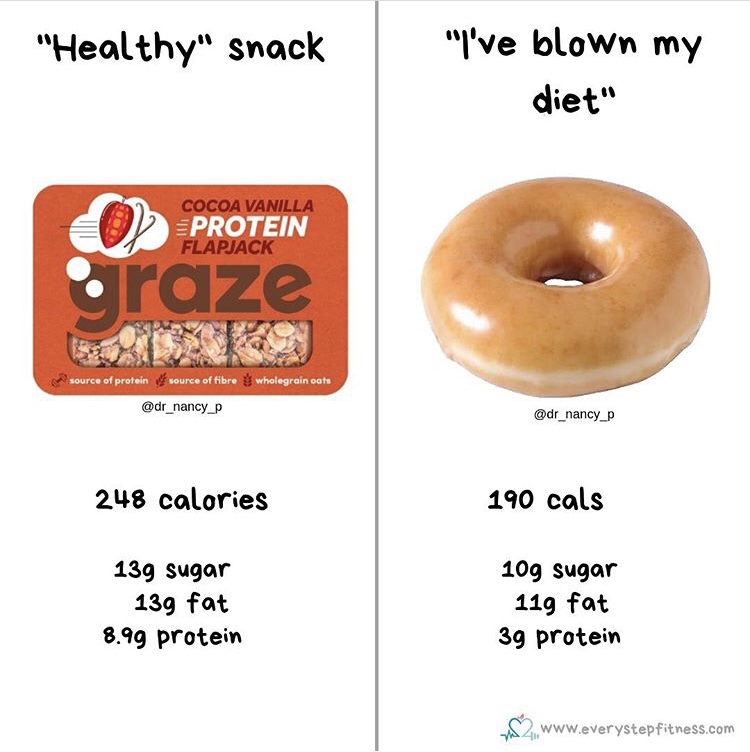
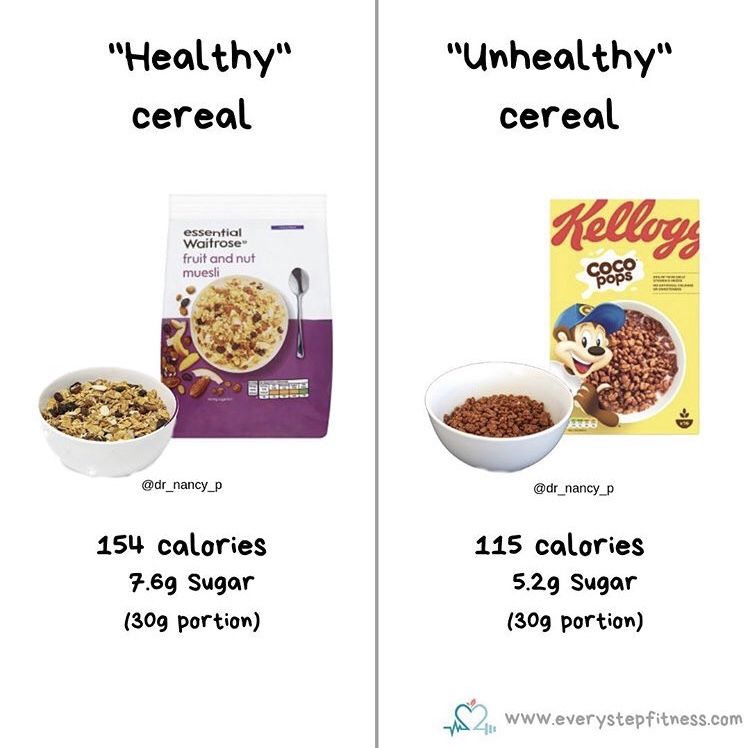
With so many “healthy” foods out there, deciding what foods are healthy and low calorie can be a minefield. Here are a few prime suspects which are not as low cal as people imagine.

# Granola

it’s full of fab foods like oats, nuts, dried fruit etc but is also very high in sugar, and calories. Portion sizes are vital here; try weighing the amount you have to check if you’re actually over doing the calories on this one. Or make your own, but that doesn’t automatically make it healthy either!

# Energy/Protein bars

A great snack option but in terms of calories they’re usually no better (and often worse) than a choc bar, BUT they are a better choice to keep you fuller for longer. Just don’t assume that if it’s called a protein bar that its a free pass to eat loads.

# Nut butters

A great source of fats and proteins, BUT that comes at a cost; they’re calorie dense. They are also loaded with extra fat and sugar too. Check the labels, monitor the amount you’re having (I suggest actually weighing it).

# Smoothies

Fruit only ones are high in sugar, and low in fibre and protein, so won’t keep you full. If you’re gonna have one then have it as a meal, not with it, and ensure it’s got protein and fats in too and go easy on the fruit.

# Gluten-free/ dairy-free

Sorry but despite what people think this doesn’t make food healthy, again these options can be higher cal. Only go for these options if you need to (coeliac/lactose intolerance), not just because you think it will be lower calorie.

# Salad dressings

We often forget that they’re actually far more calorific than we realise and high in sugars and fats. Make your own with a little olive oil, dijon mustard and balsamic vinegar, and include it in your calorie estimates.

# Vegetable Crisps

If you’re eating veggie crisps because you think they’re healthier than potato crisps you’re out of luck. If you like them – eat them, but otherwise stick to your favourite crisps if you’re going to have any! Better yet stick to real vegetables with your dips instead!

So make sure you read those labels guys, and don’t be sucked in by the hype!

Happy Tuesday 🤗

xx

Tuesday Tip

Tuesday tip: How long to give a new plan?

Tuesday tip: How long to give a new plan? 📝

So you’re on a new health plan but how long should you keep on it if you’re not seeing the results you want? It differs for everyone, but there are some things that can help you decide.

# 1 Realistic?

Is your goal realistic? Losing 20kg in a month, or running a marathon in 3 weeks when you’ve never run 5k, are not realistic and likely to leave you feeling frustrated and ready to give up when you don’t manage it. Take a good look at your goal and make sure it’s doable. If you’re not sure then chat to an expert about it.

# 2 Are you sticking to it?

You may feel like you’re working really hard but are you sure you’re sticking to it? This isn’t about self-blame, but finding solutions e.g. are you logging your food accurately; weighing food, checking portions, tracking workouts etc. Then look at the issues; if stress or lack of time is causing you to de-rail then focus on strategies to de-stress, or time-saving hacks, rather than just feeling guilty and vowing to “try again tomorrow”.

# 3 Measuring

Often we think we aren’t getting results because we’re only focused on weight, but changing body composition may mean your weight changes less than you expect (due to increased muscle and fat loss). Try other means of measuring progress: tape measure, photos, using clothes etc. I always use measurements with clients, rather than weight, as the main focus.

#4 Tweaks

If you feel like you’ve stalled it doesn’t mean the plan isn’t working, you may just need to make some tweaks, especially if body composition has changed, or you’re getting fitter (burning less cals). Maybe you need to recalculate your daily calorie goal? or need to change your exercise routine?

#5 Enjoyment

Are you still enjoying it? You want this to last beyond your goal right? So experiment, have fun, keep trying new stuff and keep it fun. Enjoyment will keep you going – find food and activities you enjoy! If you loathe every second then yeah it’s time to change!

In general give any new plan up to 3 months and if you’re not seeing results and genuinely sticking to it, then try something that’s better suited to you and your goals.

Happy Tuesday 🤗

xx

Tuesday Tip

Tuesday tip: healthy habit change

Tuesday tip: healthy habit change 🤞🏻

Do you find yourself sat on the sofa after dinner halfway through a box of chocolates? You started off with great intentions, and then somewhere, something happened and you’ve mindlessly snacked your way to bed.

Behavioural habits are incredibly difficult to break, because they affect neural pathways in the brain, encouraging you to feed the habit and reinforce it. So how can we change these habits? A few simple interventions can help.

#1 Write it down

Make a note of the habit as it happens . Write down what the habit is, why you think you’re doing it and if you can then jot down an alternative. e.g. post dinner choc munching 8:30pm, craving something sweet, could get some better dessert options in to help e.g. strawberries and greek yoghurt

#2 Write it down EVERY single time

Don’t just write it down once – keep track of every time it happens. This ensures it’s at the front of your mind, making you more aware of it, and forced to take steps to deal with the habit and try to replace it with better thoughts and behaviour.

#3 Remove the trigger

Once you’ve identified the habit and when it’s happening you can start to remove the trigger e.g. don’t just sit down in front of the tv, try doing something else – a walk, adult colouring book, read etc

#4 improve the environment

A recent study showed that however good your intentions are they can be derailed by your surroundings. Keep the junk food out the house or out of sight, have healthy snacks on hand.

#5 set yourself up

Set yourself up for success – drink enough water, eat sensible sized balanced meals, pack good snacks, get plenty of sleep – follow a regular routine, schedule downtime, put devices away etc, remove junk food from the house. Finally get your friends and family on board – let them help you with the habits too by helping you recognise when you’re doing it, and help with alternatives.

Happy habit changing!

🤗 xx

Tuesday Tip

Tuesday tip: Turning fat in to muscle

Tuesday tip: Turning fat in to muscle 💪🏼

How do you turn fat in to muscle?

Sadly you can’t! Fat is fat, muscle is muscle – totally different types of tissue. Both can be lost or gained – that’s it. So what’s happening when people say this? Well in reality people are losing some fat, and gaining some muscle, which is why it may seem like fat has “turned into” muscle. Fat is lost when you have a calorie deficit, muscle is gained by having a calorie surplus, working out (a muscle building stimulus) and having the raw materials to do it – protein. In most cases if you’re losing weight you are mostly losing fat, though if you are also upping your exercise then there will be some increase in muscle too – which is one reason why weight loss is often not a perfectly linear process. This will work best for those with a reasonable amount of fat to lose, on a moderate calorie deficit i.e. no starvation diets, who also increase their activity. This is what I design for many of my clients. It means you’ll be losing fat and also gaining a little muscle too. As muscle is denser than fat you’ll also shrink (they weigh the same… muscle just takes up less space than fat).

So what about when you stop working out? Does muscle magically turn in to fat?

Nope! it can’t! What happens though is if it’s short term your muscles are just less “pumped” so you “feel” fatter. Longer term you simply lose some muscle and probably gain some fat. This is because when you remove the stimulus which tells your body to build/maintain muscle (i.e. strenuous physical activity) you will lose the muscle mass. You’ll also end up burning fewer calories both through less activity, but also less muscle mass means a lower bmr (basal metabolic rate – i.e. calories burnt at rest), and so you are more likely to end up in a calorie surplus and put on fat.

The only way to prevent muscle being lost long term is to continue to workout! But you can prevent fat being gained – simply by ensuring you don’t eat more than your maintenance level of calories (easier said than done – though not impossible!)

So bottom line – fat can never be turned into muscle, and muscle is never turned into fat!

Happy Tuesday 🤗

xx