Articles, Fitness and Exercise

Exercise myths that might be holding you back

There’s so much advice out there about weight loss and exercise that it can be hard to separate the fact from fiction. So often I overhear participants talking about various exercise tips which are nothing but myths. So here are ten of the most common myths I hear that you shouldn’t believe.

#1 – Lots of steady state cardio will help you lose weight

When you’re trying to lose weight it’s far too easy to get sucked in to a pattern of stead-state cardio overload. You’ re loving your spin classes and long runs on the treadmill, some days you even mix it up with a bit of elliptical trainer work. You’re fitting in 5 sessions a week – with all that cardio surely you’re burning fat and losing weight… but your body shape isn’t changing and you’re not losing weight… sound familiar?

The problem with all that cardio is that it doesn’t really do much in terms of increasing fat burning, and can actually end up causing you to gain weight because it can make you very hungry afterwards leading to overeating after your sessions. Now I’m not saying all cardio is bad – obviously it isn’t, but it’s about balance. Aim for 2 – 3 cardio sessions a week, and then in the other two introduce some resistance work – weights in the gym, bodypump etc. When you do your cardio sessions make sure you’re including some high intensity interval work – which is a great way to burn fat.

This links in to the myth of the fat-burning zone – now whilst it’s true that exercising at 60-70% of your maximum heart rate will burn a higher percentage of fat calories, you burn fewer calories overall. That’s not to say it’s not good to include this in to your workout but setting the treadmill on 5 miles per hour and jogging for 45 minutes every day for months  is not going to do very much to change how your body looks. If it’s the only thing you’re doing you’re going to find you plateau and don’t see results.

So mix it up!

#2 Lifting heavy weights will make you bulk

I hear this so much, mostly from women! – “I don’t want to lift weights because I just want to get toned, not all muscly and big”… Well good news – you’re not going to get bulky. For women particularly it’s extremely hard to get bulky and build big chunky muscles. Women have too much oestrogen and not enough testosterone to build really large muscles. Even for men it’s not that easy to build big muscles! Of course, by lifting heavier weights in the gym or your pump class you’re going to build muscle and strength but you’re unlikely to be lifting anything heavy enough to make you look like a body builder and ladies – you’re certainly not going to get chunky – look at me – I lift big weights and I’m not massive! So chill. The truth is that by building your muscles you’re actually going to burn more calories and increase your metabolic rate, even when you’re just sitting at your desk, or watching tv –  win win!

photos.demandstudios.com-getty-article-110-195-78424651_XS.jpg

#3 Lots of abdominal exercises will give you a flat belly

Sadly it won’t. Yes doing abdominal exercises will strengthen the muscles of your core which means they’ll be toned, but if they’re still under a layer of fat you won’t see them. Abs are made in the kitchen – not from doing lots of sit-ups. Yes you need to strengthen those muscles so they look good when you do lose the fat, but you need a diet low in refined carbohydrates and full of lean proteins, healthy fats, and lots of vegetables, on top of a fat-burning resistance and cardio workouts.

#4 Your weight loss can plateau in only a few weeks

I often hear people talking about how they’ve been doing their new exercise/diet plan for a few weeks and have started to plateau… they feel low, they’re demotivated and they think that’s it and they may as well give up… Well good news – hope is not lost! A study has found that it takes about 6 months for an individual to reach a weight loss plateau (Journal of the American Dietetic Association). I can certainly relate to this – it took me about 6 months too. So if you are only a few weeks in to your new regime and your weight loss has slowed, then it’s probably time to re-check your diet, as you won’t have hit a plateau with your exercise. It’s more likely that increased activity is making you hungry and you may not be eating the right things (i.e. not enough protein or slow-release carbs).

#5 Doing lots of squats will give you a bigger butt

Squatting is not going to give you a big butt – sitting on it, on the sofa and not working out will! Squats are still awesome though. What squats will do is strengthen your glutes which means your butt will appear to be lifted, and will be firmer and stronger. Make sure you’re squatting properly – sitting back like you’re sitting into a chair and then squeeze your butt as you rise back up to standing.
I_love_squats_carpys__64827.1407521306.1280.1280-1024x1024

#6 Working out on an empty stomach burns more fat

Lots of people think that if you work out first thing in the morning before you eat that your body will have to use its fat reserves to fuel itself. Sadly this isn’t quite the case. In actual fact studies have shown that you need some glucose in your bloodstream in order to kick the body in to fat-burning. If you run out of glucose you start burning muscle. So always have something before you workout. For me a protein shake does the trick – I can have half before I do my workout and half after – it’s light, easy to digest and packed full of what you need to get the body going and burning fat (check out the recipes here and here).

#7 You can target trouble spots

This is probably the most common thing I hear from participants. They just want to lose a bit on their inner thighs, or stomachs or wherever… don’t we all! 🙂 Unfortunately it’s all down to genetics – the body burns fat from different areas preferentially in different people, regardless of the exercises you are doing. So for some the belly fat will be last to go, for others it’s butt or thighs and doing lots of sit-ups, or squats isn’t going to change that. However, as I’ve said before, targetting those muscles so that they are toned beneath the fat means that when you do lose it you will be looking awesome. Focus on whole body workouts and a protein packed, low refined carbs diet to lose overall body fat.

#8 Doing core work first builds better abs

Strengthening and working the core is really important and something everyone should do, but heading straight for the abs mat and bashing out a load of crunches, planks etc is not doing as much good as you probably think it is. It’s vital to remember that your core muscles are working in every single standing strength exercise that you do. So that includes squats, lunges, shoulder presses, even bicep curls and you’ll be recruiting your core during these exercises to enable you to balance. So if you’ve already worked your core and they’re fatigued you’re likely to perform these exercises less well which will affect your progress at best, but could cause serious injury at worst. It’s better to do your ab work last, that way you can maintain a strong core for the rest of your work out, and it means you can reduce the time spent doing just ab work at the end. Of course this only works if you really focus on actively engaging your core during those other exercises – so draw that belly button back to your spine the whole time and hold that belly tight.

#9 Isolation exercise overload is the way to build strength

It’s really easy to get into the habit of focusing on specific exercises for specific muscles – so heading up to the gym and doing three tricep exercises, then three bicep exercises, then three hamstring exercises and three quad moves etc etc. There’s nothing wrong with that, and if you have specific goals and want to build certain muscles then that’s cool. But if you’re looking for overall strength and fitness then the majority of your workout should involve compound exercises like squats, deadlifts, shoulder presses, chest presses etc These work more than one muscle at once and will deliver much better results. Chat to the PT’s at your gym if you need some advice on specifics or grab Colette or I in class or on facebook if you want to know more.

#10 Who needs rest?! More workouts equals better results

Ok ok, I know – pot, kettle, black…. but I’m very aware of the problems of not enough rest! One of the biggest mistakes people make is too much exercise. You’re loving the workouts – you’re hitting the gym every day, sometimes twice or three times a day and it’s all the same sort of stuff…. you’re going to find you either stop seeing results and/or you burn out. Remember your body needs time to rest and recover and it’s during the rest time that your body builds new muscle tissue to make you stronger. If you don’t rest your progress will slow. Aim for one day off a week at least, and ensure a couple of your sessions are lower intensity. For the average gym-goer wanting to lose some weight and get fit a good aim is 2 – 3 cardio based sessions, 2 strength sessions, 1 – 2 stretch/”relax” based sessions (e.g.  body balance, stretch, yoga etc).

FullSizeRender-1

So there you go – ten myths busted! Did you buy in to any of these – I think we all have at some point. If so, it’s no biggie, just change what you’re doing and you’ll see the benefits.

Nancy 🙂

xx

(This article was originally posted on pureformfitness.co.uk)

Articles, Nutrition

Cinnamon – Why we all need a bit more spice in our lives

You can’t open magazines, Facebook, Twitter or Instagram at the moment without being told about how eating some wondrous superfood will be the cure to every health problem known to man. These headline grabbing stories claim that all you need to do is eat these every day foods, drinks and spices and you’ll live a disease-free, medical drug free life. At best these articles are interesting, but at worse they are misleading and can be dangerous. Claims that turmeric, coconut oil and hemp oil are cancer cures, cashew nuts are better than antidepressants, raisins will detox your liver – the list is endless.  There are many reports of people abandoning medical treatment in favour of some of these super-foods, often with tragic consequences. However there is often also a little truth behind these claims, so I thought I’d take a closer look at a common spice, which has been claimed to help treat cancer, diabetes, Alzheimer’s, even HIV and delve a little in to the science behind it to provide you with some reliable information.

Cinnamon is a spice I absolutely adore – on my coffee, in my morning smoothie, sprinkled over stewed apple, in biscuits… any way at all! It’s been prized for its medicinal properties for thousands of years and there are also some really interesting scientific studies out there about its effects. So I thought I would share some pretty cool cinnamon facts with you.

What is Cinnamon?

Cinnamon is actually the inner bark of the Cinnamomum tree which is a type of Laurel that grows in tropical regions of the world from South America to South-east Asia. The inner bark is harvested, allowed to dry and then sold as sticks or ground in to a powder. The majority of commercial cinnamon comes from Sri-Lanka and Indonesia.

IMG_2215-1024x682-300x199.jpg

Cinnamon has been traded around the world since as early as 2000 BC, when it was imported in to Egypt. It has been so highly prized that it was considered a gift fit for Kings, and even Gods. It is still prized today though it is decidedly more common!

There are many varieties of cinnamon but the two main types are Ceylon cinnamon or “true “ cinnamon, and Cassia cinnamon which is the cinnamon you generally find in the shops. Both taste the same but the Ceylon cinnamon has a slightly more delicate flavour. It’s usually available in health food shops and if you have the choice it’s definitely worth buying.

The distinct smell and flavour of cinnamon is due to a compound which both varieties contain called cinnamaldehyde and it’s this compound that is also responsible for the medicinal effects of cinnamon.

cinnamon2-sm

Why is it so good?

Well firstly, cinnamon is packed with antioxidants, specifically polyphenols. Antioxidants are great as they protect the body’s cells from oxidative damage due to free radicals. In a study that compared the antioxidant activity of 26 spices, cinnamon was found to have the greatest antioxidant capacity, even outranking so called “superfoods” like garlic and oregano (Journal of Agricultural and Food Chemistry). Cinnamon has also been shown to be so powerful that it can be used as a natural food preservative.

Cinnamon also has anti-inflammatory properties. Inflammation in the body isn’t necessarily a bad thing – it’s a protective mechanism which helps the body fight infection and repair tissue damage. But it can be a problem if it becomes long term (chronic) or if it is directed against the body’s own tissues. The antioxidants that are so prolific in cinnamon are extremely good anti-inflammatories and studies have shown it can help to reduce muscle soreness in female athletes so is a great option for including in your post-workout shake (find my favourite recipe here). It may also be helpful for those suffering from arthritis.

Heart Disease and Diabetes

Cinnamon has been linked to reduced risk of heart disease and type-2 diabetes, one of the world’s most common causes of premature death. A study of people with type-2 diabetes showed that 1g of cinnamon per day reduced levels of serum glucose, triglycerides, LDL cholesterol and total cholesterol in the blood, whilst levels of HDL cholesterol (“good” cholesterol) remained the same and didn’t reduce. This suggests inclusion of cinnamon in the diet of people with type-2 diabetes may reduce the risk factors associated with diabetes and heart disease.  A large review study concluded that an even smaller dose of just 120 milligrams of cinnamon per day can have the same effects (Annals of Family Medicine). In this study cinnamon also increased levels of the “good” HDL cholesterol.  Studies in animals have also linked cinnamon consumption to a reduction in blood pressure, though this is yet to be tested in humans.  Overall though this suggests that adding cinnamon to your diet could cut some of the main risk factors for heart disease which is definitely a good thing.

Insulin Sensitivity

Insulin is a key hormone for regulating the metabolism and for energy use in the body. Its main role is involved in the transfer of blood sugar from the bloodstream into the cells. Many people are, however, resistant to the effects of insulin. Insulin resistance is one of the symptoms of conditions such as type-2 diabetes and metabolic syndrome.  Studies have shown that consumption of cinnamon extract by people with metabolic syndrome improves fasting blood glucose, systolic blood pressure, percentage body fat and increased lean body mass compared with the placebo groups. This suggests (and test tube studies confirm this) that cinnamon can help insulin to do its job and reduce blood sugar levels.

As well as reducing blood sugar through affecting insulin resistance, cinnamon also affects blood sugar in other ways. It has been shown to decrease the amount of glucose that enters the bloodstream after a meal. It does this by slowing down the breakdown of carbohydrates, through interfering with the digestive enzymes. In addition, a compound in cinnamon (a hydroxychalcone) acts as an insulin mimic and encourages cells to take up more glucose from the blood itself. Both these combined mean glucose uptake is improved and blood sugar levels are stabilised. Many human studies have demonstrated that cinnamon has anti-diabetic effects through lowering fasting blood sugar levels up to 29% (European Journal of Clinical Investigation). What’s great about cinnamon is that it is also generally very well tolerated and so is something that is easy, and pleasant to take. These data suggest that cinnamon could really help those with type 2 diabetes to assist in controlling blood sugar levels. It’s important though to realise that taking cinnamon doesn’t replace standard forms of management – such as insulin therapy, antidiabetic agents and lifestyle changes and the dose required is quite high, up to 6g per day (2 tsp), BUT what it can do is help and it certainly won’t do any harm.


What about other conditions?

Well cinnamon has been shown to have a beneficial effect on some neurological conditions. Diseases which cause progressive loss of the structure or function of brain cells are known as neurodegenerative diseases.  Two of the most well-known are Alzheimer’s and Parkinson’s. Although human studies have not been extensively trialled yet, studies in animals have shown that compounds in cinnamon seem to inhibit the build-up of a protein called “tau” in the brain, which is a hallmark of Alzheimer’s and can lead to an improvement of the symptoms associated with this build-up. In a study looking at Parkinson’s in mice, cinnamon helped to protect neurons, improve motor function and normalise neurotransmitter levels (Journal of Neuroimmune Pharmacology). These studies are very recent, only 2014, and much more investigation need to be done in humans, but it’s certainly promising.

Cinnamon and Cancer

One of the hallmarks of cancer is the uncontrolled growth of cells. One again studies are limited to in vitro (test tubes) and animal studies but they suggest that cinnamon extracts may protect against cancer.  These studies have shown that it reduces the growth of cancer cells, and the formation of blood vessels in tumours (which in turn inhibits growth). It also appears to be toxic to cancer cells, causing them to die. A study in mice with colon cancer specifically revealed that cinnamon (and cardamom) activated “detoxifying” enzymes in the colon (known as GST – glutathione S-transferase). These naturally occurring enzymes target and breakdown environmental and other toxins from outside the body including drugs, pesticides, carcinogens etc. By activating them in mice with colon cancer cinnamon protected against further growth of the cancer. This has been further supported by test tube experiments showing that cinnamon activated a protective antioxidant response in human colon cells.  This means there could be tremendous potential for cancer treatment and prevention with cinnamon and its extract. Of course whether it works in humans is another matter but it’s looking good so far and more studies are taking place all the time.

Cinnamon as an anti-bacterial, anti-viral and anti-fungal agent

Cinnamaldehyde has been shown to inhibit both bacterial infections and fungal infections. A study in the journal “Allergy” showed that cinnamon oil was very effective at treating respiratory tract fungal infections. It’s also been shown to inhibit the growth of certain bacteria, including Listeria and Salmonella (American Journal of Chinese Medicine).

Cinnamon oil has also been shown to be more effective than clove oil in inhibiting the pathogens (bacteria and yeast) involved in tooth decay (Journal of Pharmacy Research). It also helps to reduce bad breath by reducing the number of anaerobic bacteria in the mouth (which release sulphur compounds that produce the bad breath smell) (Journal of Clinical Dentistry).

There is also evidence in test tube trials of human cells that cinnamon can help to inhibit HIV infected cells. A study investigated 69 medicinal plants and cinnamon was found to be the most effective (Indian Journal of Medical Research and Current HIV Research). It was also shown to block entry of HIV into healthy cells (journal of Antiviral Chemistry and Chemotherapy). Much more research needs to be done but once again cinnamon shows promise.

So there you go…

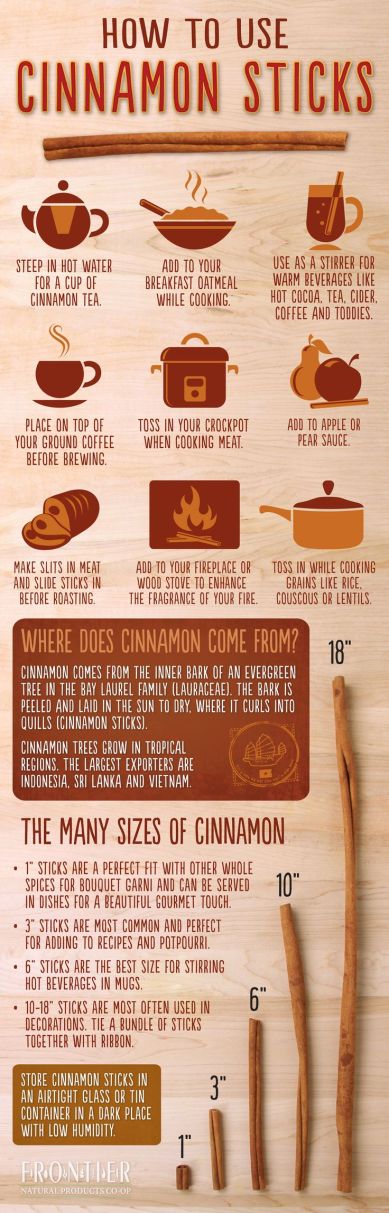
So there you go – that’s why we need a little more spice in our lives! It seems that some of those amazing claims about cinnamon may well be true – at least  on some level and all in all Cinnamon seems to be a pretty good thing to include in your diet. So load it up – add a tsp to your coffee, or sprinkle it on top of your cappuccino instead of chocolate, stir in to your porridge, add to your smoothies or include in your desserts and baking (it’s divine sprinkled on top of nut butter spread on toast!). You can even use it in savoury dishes like chilis. There’s a fab little infographic below with ideas for using the cinnamon sticks and  there are lots of recipes that use it, so do check them out some baked good recipes at Pure and Simple Bakes.  Enjoy!

Nancy 🙂

xx

(This article was originally published on pureformfitness.co.uk)

Cinnamon-stick-uses-2.jpg


Articles, Nutrition

The Low Down on Protein

Everyone always seems to go on and on about protein. .but what is it? How much should I have? What foods can I get it from?… are all questions I often get asked so I thought I’d give you the 101 on protein and give you a bit of info about where you can get your protein from.

Eating enough protein is important for everyone – whether you are trying to lose weight, just eat more healthily, put on muscle, recover from your workouts or just want to feel fuller after your meals. But it can be a bit confusing – especially if you’re trying to include more plant-based proteins, or are vegetarian/vegan. This article should help clear things up for you and give you a whole range of plant-based protein options to keep you happy and healthy.

protein2-e1422985312832.jpg

So what is protein?

Protein is a critical component of the body and is often called the body’s building block. All the organs, including the skin, are built from proteins and it’s used to both build and repair tissues (like skeletal muscle, bone, hair, fingernails, cartilage, skin and blood). Many hormones are also proteins, as are the enzymes that digest our food. Every system in the body relies on proteins to enable it to work correctly. Like carbohydrates and fat protein does also provide energy, but it can’t be stored by the body (and has so many other important functions) so it’s used as a last resort source of fuel. If our diet contained no protein to use for repairing and building tissues then our bodies would start to breakdown muscle to get the protein it needs. It’s therefore vital to continually replace the protein that the body is using – and this is even more important if you’re physically active. Children, adolescents and pregnant women also require higher levels of protein as they are all producing new tissue.

After eating a meal, any proteins are broken down in to amino acids – the building blocks of proteins. These amino acids are absorbed in the small intestine and then distributed around the body. The cells use what they need to make new proteins, or repair older ones. Anything left over can either be used for energy. Now, although protein in itself can’t be stored, it can be converted to other storable components. If the body is short on carbohydrates and fat then the amino acids can be converted into glucose (and then glycogen), or into fatty acids and stored. So while it’s important to get enough protein, it’s also important not to go overboard – eating excess protein can lead to weight gain just as much as eating excess carbs and fat can.

Some of the amino acids we need can be produced by the body, while we must get others from the diet. The ones we cannot produce and must get from our foods are called the “essential” amino acids. So protein is not just about quantity, it’s also about quality, but I’ll talk more about that later.

How much protein do we need?

As I’ve already said certain people will need more protein than others. The amount you need depends on your age, weight and levels of activity. Children and adolescents who are still developing need proportionately more protein in their diets than adults. People with high activity levels also need more – as protein is essential in building and repairing muscle and other tissues. A good rough estimation of how much you need to consume is to take your weight in kg and multiply it by 0.8. This gives you the number of grams of protein you should consume every day e.g. if you weigh 100kg you should be consuming roughly 80g protein a day. But this is really only a minimum guideline and there’s lots of evidence to suggest we need more than this. If you are physically active or trying to lose weight then the body of evidence now suggests you need quite a bit more.

Protein and weight loss

Protein is incredibly important in weight loss. Weight loss ultimately comes down to one thing – in order to lose weight, we need to take in fewer calories than we burn. How can eating protein help with this? Studies have shown that eating sufficient protein not only boosts your metabolic rate (meaning you burn more calories) but also reduces your appetite (meaning you take fewer calories in). A study published in the American Journal of Clinical Nutrition demonstrated that eating around 25 – 30% of your daily calories as protein boosts metabolism by up to 80 – 100 calories per day. But most importantly, in terms of sustainable weight loss, is the fact that protein actually reduces appetite, because it’s more satiating (filling) than both carbs and fat (studies from the Journal of the American College of Nutrition). In one study women who increased their protein intake until it formed 30% of their daily calorie intake ended up consuming up to 441 fewer calories per day. They also lost weight, and the only change in their routine was increasing the proportion of protein in their diet! That sounds pretty cool to me!

What’s even better is it can also help you avoid gaining weight in the first place. In another study an increase of protein from 15% to 18% of calories (a very small increase) reduced the amount of fat that people regained after weight loss by up to 50%. And of course higher protein intake also helps with muscle building and repair which means increased muscle mass and increased calorie expenditure. So by eating more protein you will find it much easier to stick to whatever weight loss or healthy eating plan you happen to choose to follow.

So overall it looks like a protein intake of around 30% of your daily calories may be about optimal for weight loss. This is roughly 150g per day for someone on a 2000 calorie diet (just multiply you daily calorie intake by 0.075). If you’re not into counting calories then just aim for a quarter of your plate to be protein every time you eat!

The-Plate-Method-517x400-e1422985520640

Can you have too much protein?

Well yes, obviously, you can have too much of anything! But in general no, it’s hard to consume excessive amounts of protein precisely because of the effect it has on your appetite. There have been numerous reports over the years about the dangers of eating too much protein – that it damages your kidneys, or causes bone loss etc. Now although protein restriction is certainly recommended for people with pre-existing kidney problems, there is no evidence that it can cause kidney damage in otherwise healthy people (Journal of the International Society of Sports Nutrition).  In actual fact, higher levels of protein have been shown to lower blood pressure and help against diabetes – which are two of the main risk factors for kidney disease. Studies have also shown that protein can help prevent osteoporosis too.

Overall, there is no evidence that a reasonably high protein intake has any adverse effects in healthy people trying to stay healthy.

Where do I get my protein?

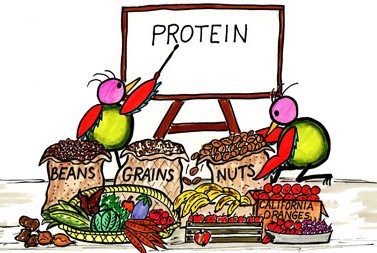
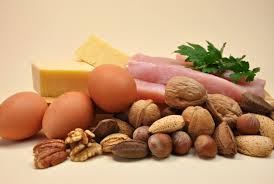
Here’s the good bit – protein is found in a variety of foods: meat, poultry, fish, dairy, eggs, legumes, nuts, seeds, soya and even grains.

Now as I mentioned before protein is not just about quantity but also quality. There are 20 different amino acids that can form a protein, and nine that the body can’t produce on its own. These are called essential amino acids—we need to eat them because we can’t make them ourselves. In order to be considered “complete,” a protein must contain all nine of these essential amino acids in roughly equal amounts. So proteins that provide all the amino acids required by our body are called complete proteins – these include meats, poultry, fish, eggs and soya beans.

Other proteins don’t provide adequate amounts of all the 9 essential amino acids by themselves (but they can when combined with other foods, as part of a balanced diet). These are called incomplete proteins and include legumes (beans and pulses), some nuts and seeds, and grains

So yes, meat and eggs are complete proteins, and beans and nuts aren’t. But we don’t need every essential amino acid in every mouthful of food in every meal that we eat; we just need a sufficient amount of each amino acid every day. Most nutritionists now recognise that plant-based diets contain such a wide variety of amino acid profiles that vegetarians and vegans are virtually guaranteed to get all of their amino acids with very little effort. Variety is the key!

Still, some people want complete proteins in all of their meals. No problem—meat’s still not the only option.

images-1

So how do we make healthier choices when it comes to protein?

The best sources are those that provide all the essential amino acids your body needs. So if you do eat meat then obviously meat, fish and egg. But if you’re vegetarian or vegan then soya beans are an obvious choice, but there are also other plant based sources which are high in protein – like quinoa, legumes and nuts.

Vegetarian or not we can ALL benefit from eating more plant-based proteins. In addition to being great sources of protein, beans, peas, quinoa, lentils etc are also rich in other nutrients like vitamins, minerals and fibre. They are also easier to digest, so they are kinder on the body, and on the planet.

Here are a few fantastic plant-based protein options:

  1. Quinoa (pronounced Keen-wah) – contains 8 grams protein per 1 cup cooked serving.  It looks like couscous but it is FAR better for you. It contains 8 of the essential amino acids, and is so good that in the USA it’s recognised as a “super crop” because of its health benefits. It’s full of protein, iron, magnesium and fibre and is a great rice substitute. It can also be used in baking (e.g. gluten free sticky toffee pudding) and for brekkie as porridge (check out this recipe for a quinoa and cinnamon comfort brekkie).

mg_7852-300x200

  1. Buckwheat – contains 6 grams per 1 cup cooked serving. Buckwheat isn’t a type of wheat at all – it’s actually a relative of rhubarb! Buckwheat can be found made in to the Japanese noodle – Soba, but more commonly it’s eaten by either grinding it into flour (making a great base for gluten-free pancakes or biscuits) or by cooking the hulled kernels like porridge. Studies have shown that buckwheat may improve circulation, lower blood cholesterol and control blood glucose levels.
  1. Chia – 4 grams of protein per 2 tablespoon serving. Chia seeds are the highest plant source of omega-3 fatty acids, and they contain more fibre than flax seeds or nuts. Chia is also full of iron, calcium, zinc, and antioxidants. And even better about these delightful little seeds is that when soaked in water they form a gel which makes them a fantastic substitute for eggs in baking (check out a recipe for egg-free brownies) and for making healthy jam,  puddings, and for thickening smoothies.

smoothie-with-chia-300x300

  1. Soya – 10 grams per ½ cup serving (firm tofu) or 15 grams per ½ cup serving (tempeh). I just had to mention the king of plant-based proteins! Soya contains all 9 essential amino acids and is therefore very often the go-to substitute for those wanting to avoid meat. Tempeh is made by fermenting the beans and is a great option as a sandwich filler/burger substitute and is delicious in stir-fries, but tofu is probably the best known soya product. There are so many uses for Tofu – even sweet ones like this mousse. As a rule, the harder the tofu, the higher the protein content.
  1. Mycoprotein (also known as Quorn) – 13 grams of protein per ½ cup serving. Originally developed to combat global food shortages, mycoprotein is more commonly known as “Quorn” and is made from a type of fungus. It is a complete protein, like Soya. Many Quorn products include egg whites however, so are not vegan-friendly, but the company is about to release a vegan range in the UK very soon so watch this space! It’s a great option for quick mid-week meals and can also be used to make a lovely lasagne or chili.

mg_7870

  1. Beans and Rice – 7 grams protein per 1 cup serving. One of the simplest, cheapest, and vegan-est meals in existence is also one of the best sources of protein around. Most beans (as well as lentils and chickpeas) are low in methionine and high in lysine, while rice is low in lysine and high in methionine. Put them together and you’ve got complete protein – on a par with meat! These meals are a great way to load up on protein and carbohydrates after an intense workout.
  1. Finally – Peanut Butter Sandwich! Yes the humble peanut butter sandwich contains 15 grams per 2-slice sandwich with 2 tablespoons of peanut butter. How easy is that? Every time legumes like beans, lentils, and peanuts are combined with grains like rye, wheat, rice, and corn, a complete protein is born. Peanut butter on rye bread or wholewheat bread is an easy snack that, while pretty high in calories, provides a massive dose of all the essential amino acids and plenty of healthy fats too.

See, there are so many options for plant-based proteins in your diet! But if you are going to eat animal protein then try to limit it to one portion a day (and limit red meat to once a week), and go for the best meat you can afford – free range, grass fed, high quality meat. Always go for lean cuts of meat like chicken breast, pork loin etc. Avoid ground meat, burgers, sausages etc as they tend to be produced from the fattier cuts of meat and often include skin and fat.

If you eat fish then aim to have 100 – 125g a week and choose fish high in Omegas like salmon, mackerel or tuna.

All this having been said, don’t get too hung up on tracking your protein. If you’re just a healthy person trying to stay healthy, then simply eating high quality protein with most of your meals (the majority from  plant-based sources) will mean you’re getting plenty of protein in your diet.

Do let me know if you try any of the recipes mentioned here and see how you get on adding a little more protein to your day!

Nancy 🙂

(This article was originally published on pureformfitness.co.uk)